A powerful radio signal has reached Earth after crossing a staggering stretch of the universe, giving astronomers a rare glimpse into a time when galaxies were young and furiously making stars. The signal is called FRB 20240304B, a fast radio burst that lasted only a few milliseconds but carried clues from nearly 80 percent of cosmic history.
That tiny flash is now one of the most important radio signals ever traced back to its source. According to the study, FRB 20240304B came from a redshift of 2.148, which means the burst occurred when the universe was only about 3 billion years old.
In plain English, it came from deep cosmic history, long before Earth had anything like oceans, trees, traffic noise, or people looking up at the night sky.
A burst from cosmic noon
Fast radio bursts, or FRBs, are short and bright pulses of radio energy. They are so brief that, if you blinked in human terms, you would miss them completely.
But for astronomers, that blink can be a gold mine. As the pulse travels, it passes through clouds of gas, magnetic fields, and the thin plasma between galaxies, picking up a kind of cosmic fingerprint along the way.
FRB 20240304B matters because it came from an era called “cosmic noon,” when the universe was forming stars at its fastest known pace. The authors write that the discovery “doubles the redshift reach of localized FRBs” and confirms FRB activity during the peak of cosmic star formation.
How astronomers caught it
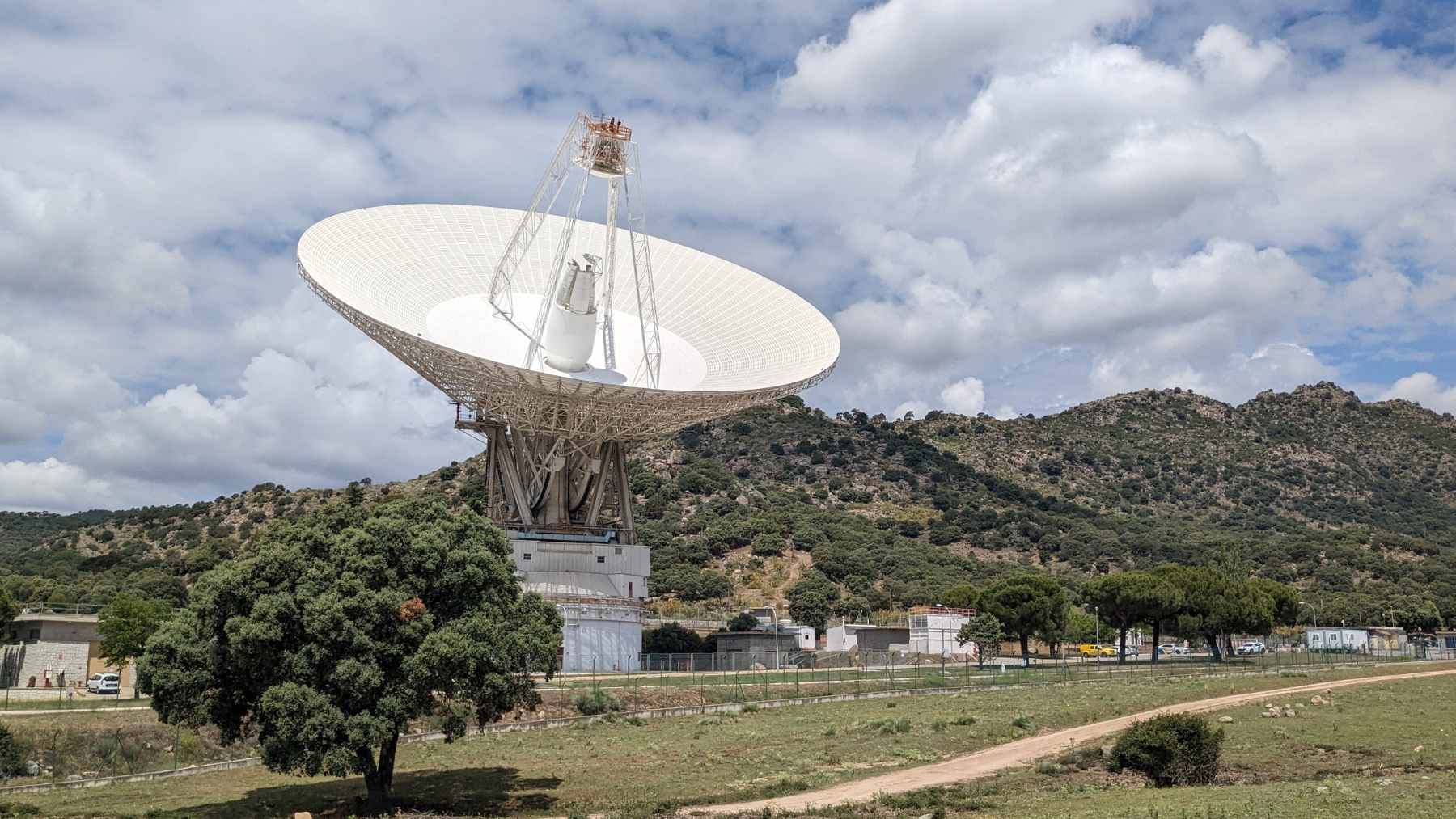
The burst was detected on March 4, 2024, using the MeerKAT radio telescope in South Africa. The research team, led by Manisha Caleb of the University of Sydney, then used the James Webb Space Telescope (JWST) to help identify the faint host galaxy.
That follow-up was crucial. Ground-based searches did not reveal the host clearly, so the team turned to JWST’s powerful infrared instruments to look deeper and confirm the galaxy through spectroscopy.
The burst had a peak flux near 0.49 jansky and showed a scattering time of about 5.6 milliseconds at 1.0 gigahertz. That sounds technical, and it is, but the basic idea is simple enough. The signal arrived stretched and delayed because it had traveled through a lot of ionized material on its way to Earth.
The galaxy behind the signal
The host galaxy was not a giant like the Milky Way. It was a small, clumpy, low-mass, star-forming dwarf galaxy with roughly 10 million solar masses in stars and a star formation rate of about 0.2 solar masses per year.
That may sound modest, but for a tiny galaxy, it is busy. In practical terms, it suggests a young and active environment where massive stars may recently have formed, exploded, and left behind compact remnants.

One leading explanation points to magnetars, which are young neutron stars with extremely strong magnetic fields. The study notes that the host’s low mass and ongoing star formation favor a short delay between star birth and FRB activity, making young magnetars a natural candidate.
Magnetism in the signal
FRB 20240304B was also highly linearly polarized, with a linear polarization fraction of 49 percent and only about 3 percent circular polarization. That detail helps scientists study magnetic environments near the burst and across the long path it traveled.
The team measured Faraday rotation, which is the way a magnetic field twists the polarization of radio waves. In this case, the rotation appears relatively low compared with the huge amount of material along the line of sight.
What does that mean? For the most part, it suggests the magnetic fields may be tangled or pointing in opposite directions, partly canceling one another out before the signal reached our telescopes.
Why this changes astronomy
FRBs are not just strange flashes. They are tools.
Each one can help scientists count ordinary matter that is otherwise hard to see, especially the thin gas spread between galaxies. The relationship between a burst’s delay and its distance is known as the Macquart relation, and it has already helped astronomers trace so-called missing baryons in the universe.
FRB 20240304B pushes that method farther back in time. By adding a well-measured burst from such a high redshift, researchers gain a new way to test how gas, galaxies, and magnetic fields behaved when the universe was still in one of its busiest chapters.
A new window into deep time
This discovery also shows what modern telescope teamwork can do. MeerKAT caught a signal that lasted only an instant, while JWST helped find the faint galaxy that sent it.
That pairing matters. Without precise localization, a fast radio burst can be a mystery with no address. With it, the burst becomes a measuring stick across the universe.
For now, FRB 20240304B is a reminder that even a millisecond can carry a story billions of years long. The signal is gone, but the information it delivered is still reshaping how scientists read the space between galaxies.
The study was posted on arXiv.