The universe
This is a very general space topic. We have information on the Big Bang, exoplanets in the ‘Goldilocks zone’, experiments recreating cosmic dust in laboratories, and big questions surrounding where life forming components came from. This is explained simply, with no equations.
82 stories · since 2025 · latest, November 18, 2026
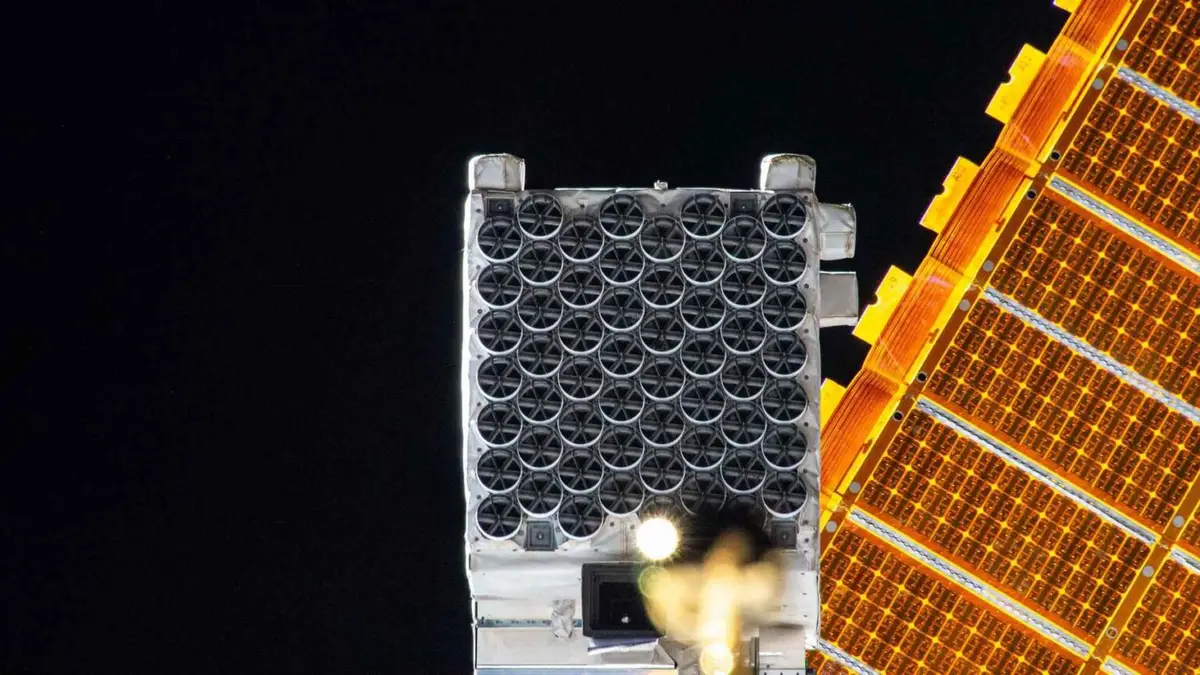
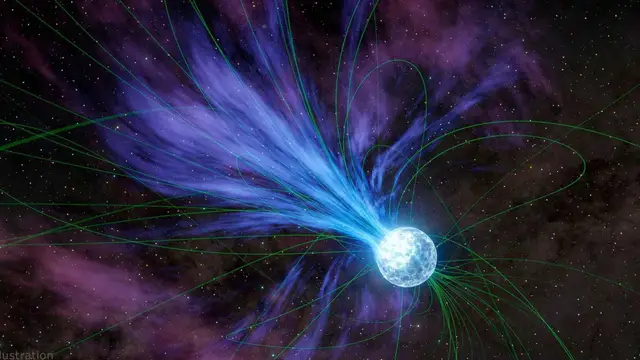
NASA’s NICER telescope studied neutron stars from the space station for six and a half years beyond its planned mission, and a motor engineers think has failed inside it has now ended its science operations
NASA’s NICER (Neutron star Interior Composition Explorer) X-ray telescope has ended science operations on the International Space Station. It had kept…
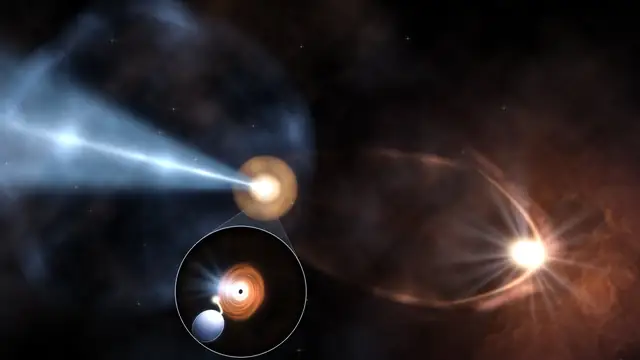
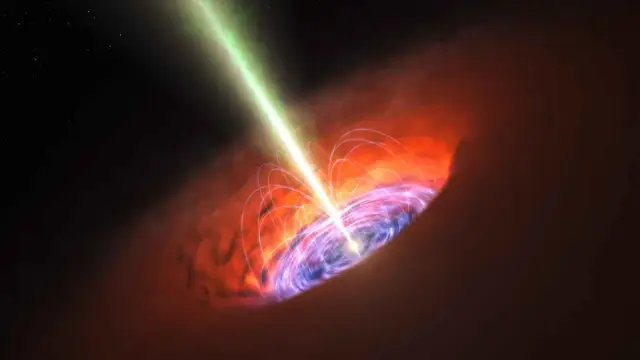
A black hole 12,000 light-years away is aiming a jet at Earth, and astronomers calling it the Milky Way’s first microblazar suspect its invisible twin jet is behind some of the galaxy’s most energetic particles

Rats given the cosmic radiation dose of a Mars mission ended up with twice as much scar tissue around their heart vessels, and it only became clear when scientists looked nearly a year later
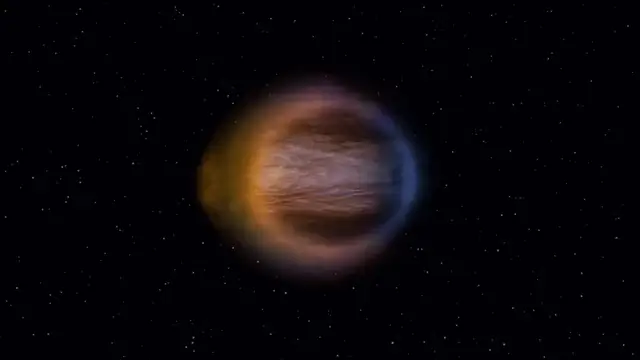
The James Webb Space Telescope traced the WASP-17b atmosphere 1,300 light-years away, and the giant planet’s outline is not the perfect circle that models had assumed, because one side is puffed up by heat
Astronomers using NASA’s James Webb Space Telescope have measured the real outline of the WASP-17b atmosphere. The gas giant lies about 1,300 light-years…
Adrian Villellas · November 5, 2026
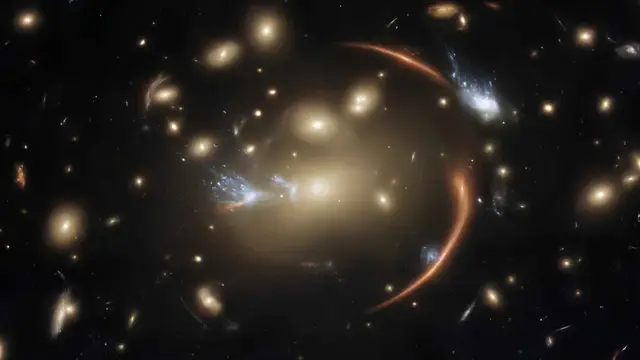
A giant ring appeared in the distant Universe, and the arc beside it may be pointing to something cosmology has missed
It has come again a time where we will talk about a completely new phenomenon that has been discovered by scientists in the distant Universe. Nicknamed as…
Adrian Villellas · September 9, 2026
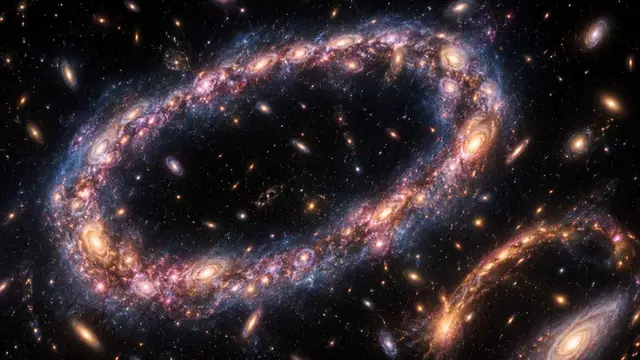
Six billion Suns weigh a hidden black hole in the young universe, revealed by how its gravity tugs on the surrounding stars in a distant galaxy
A black hole does not need to blaze like a quasar to reveal its weight. Astronomers have measured a hidden giant at the heart of the distant galaxy…
Adrian Villellas · August 8, 2026
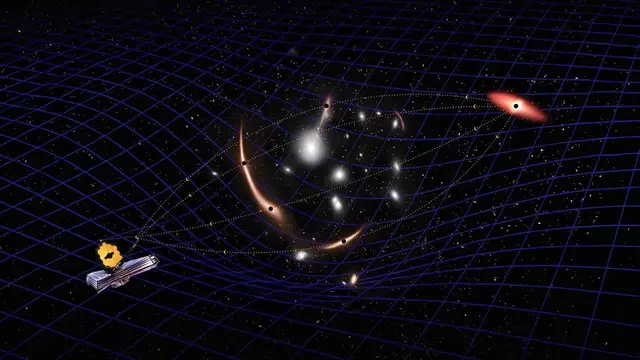
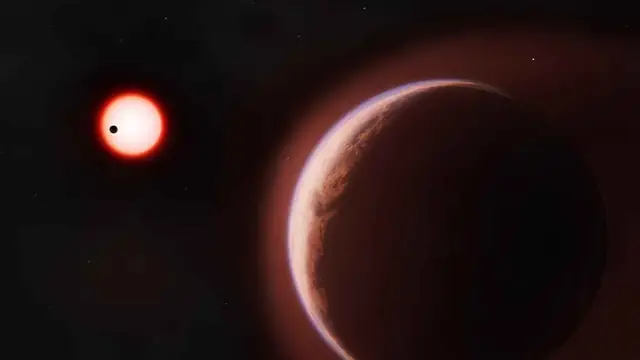
Astronomers found helium in the atmosphere of LHS 1140 b, a rocky exoplanet 48 light-years from Earth, the first confirmed atmosphere around a rocky planet orbiting another star
A rocky planet 48 light-years from Earth has revealed something astronomers have spent years trying to confirm. A team led by the Center for Astrophysics,…
Adrian Villellas · August 3, 2026
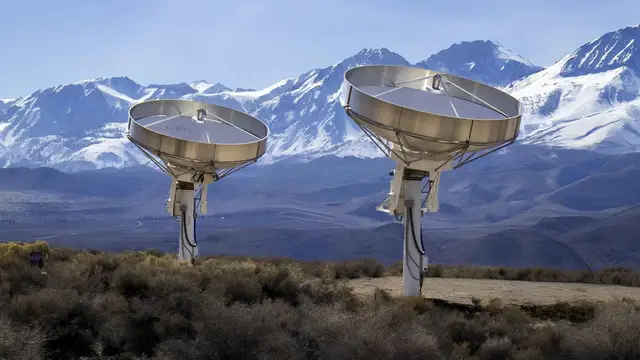
California will build 1,650 satellite dishes to create the world’s most sensitive radio telescope, a giant cosmic ear designed to catch weak signals that now get lost in the noise of the universe
A remote Nevada valley is set to become home to an instrument unlike any radio telescope operating today. The California Institute of Technology, better…
ECOnews Newsroom · July 22, 2026
For decades, Einstein had been mulling over an unsettling idea—that the most fundamental laws of the universe should not depend on arbitrary numbers—and now a study published in Physical Review Letters has just given it a rather compelling mathematical boost
Can nature’s deepest laws really contain numbers that sit outside the theory, waiting to be chosen by hand? A new study led by researchers connected to…
ECOnews Newsroom · July 8, 2026

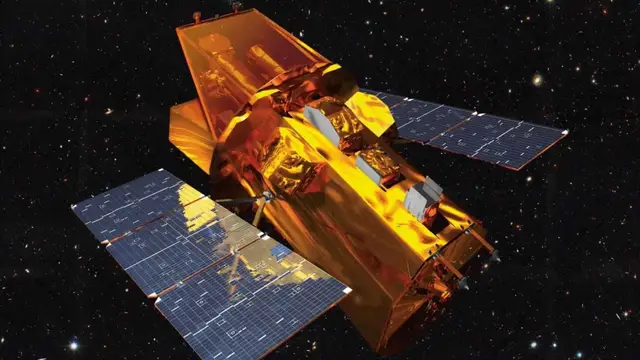
NASA is preparing an extremely unusual rescue mission to save the Swift telescope, an observatory launched in 2004 that has been recording cosmic explosions and was never meant to be recovered
NASA is preparing one of the most unusual rescue attempts in spaceflight history. The Neil Gehrels Swift Observatory, a working space telescope that has…
ECOnews Newsroom · July 2, 2026
It all began with a strange echo around 14 giant black holes; scientists now believe it could indicate massive concentrations of dark matter, the mysterious component that makes up 27% of the universe
Supermassive black holes have already gained the reputation of being the universe’s most extreme phenomena. They can weigh millions or even billions of…
Adrian Villellas · July 2, 2026
Our galaxy isn’t stationary but hurtling at full speed toward a hidden gravitational anomaly located between 150 and 250 million light-years away
Even when your phone is lying on a table, it is not truly standing still. Earth spins, orbits the Sun, and rides inside the Milky Way, while our galaxy…
ECOnews Newsroom · July 2, 2026
Neutron stars may double as dark-matter detectors — because who wouldn’t use cosmic wrecking balls for science?
Dark matter is still one of the biggest missing pieces in modern science. Astronomers can see its gravitational pull on galaxies, but they have not yet…
Adrian Villellas · June 27, 2026
The fastest subatomic messenger in the universe lands on the ice of Antarctica and points toward an “invisible” galaxy 11,000 million light-years away
A tiny particle that crossed the universe and reached Antarctica may have started its journey inside a distant galaxy wrapped in dust. A new study points…
ECOnews Newsroom · June 26, 2026
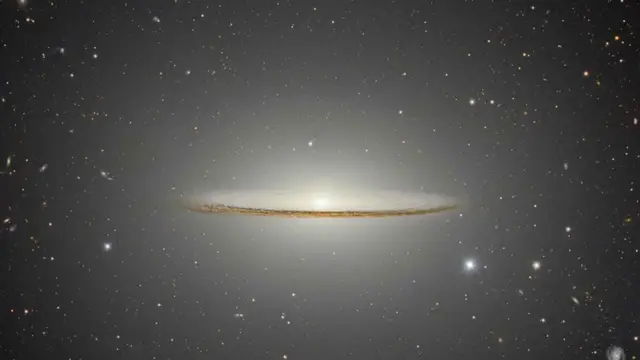
Scientists detect an invisible halo around the Sombrero Galaxy for the first time, 30 million light-years away, and its extra size changes what we thought we knew about a cosmic postcard
Most people know the Sombrero Galaxy for its clean hat shape, a bright central bulge with a dark band cutting across it like a brim. Now, a newly released…
ECOnews Newsroom · June 10, 2026