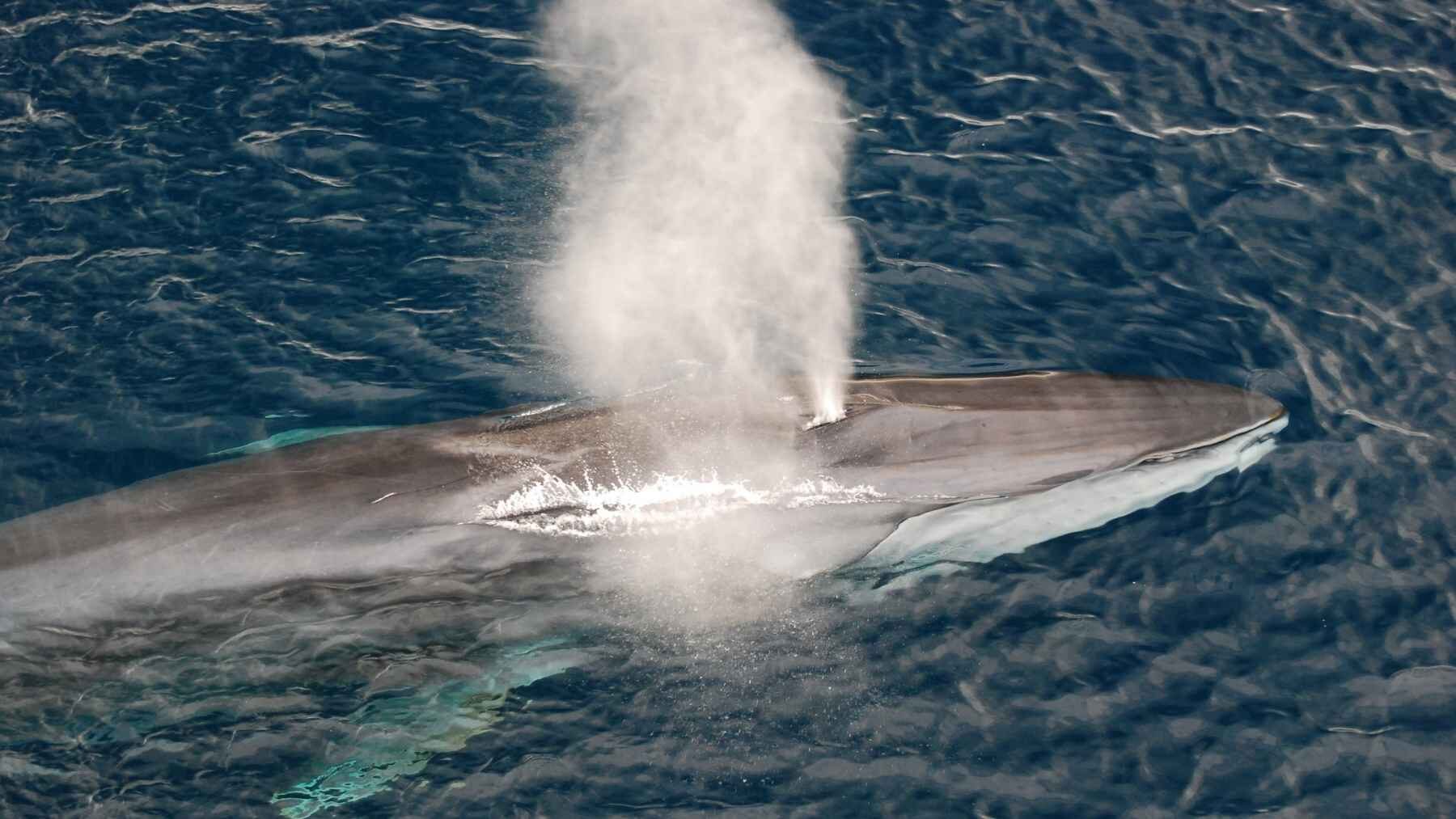
Did you know that the second biggest animal in the world swims at the speed of a greyhound and goes unnoticed? The fin whale can measure more than a city bus and can weigh dozens of tons, but it remains one of the most mysterious giants of the ocean. Now, scientists have discovered something really amazing: about 6,000 fin whales are gathering in the coastal waters of East Greenland every summer, a place where it was historically very rare to see them around.
What is happening here? A group of researchers chose different investigation methods to solve the enigma. They used for example satellite tags, ship observations and underwater microphones. The answer is a fascinating combination: the whales finally are recovering from the industrial whaling of the last century, but at the same time the climate change is completely rewriting their feeding map in the Arctic.
Following capelin north
But… Why did they decide to move all together to the north? The main reason is because of capelin, a small cold-water fish that has supposedly migrated from Iceland toward East Greenland.
It seems that the sea-surface temperatures in the region increased by about 1°C after the mid-1990s, and then, coastal sea ice declined pretty fast down after 2000. So having less ice blocking the way, the whales (which hate getting trapped in heavy drifting ice) found a clear path to follow the fish.
Built for a massive meal
And it is that these creatures are authentic eating machines. A fin whale can measure between 75 and 85 feet and weigh between 40 and 80 tons. However, thanks to their ultra-streamlined bodies, they can reach about 23 mph. Now yes you can understand why they have earned the nickname “greyhounds of the sea.”
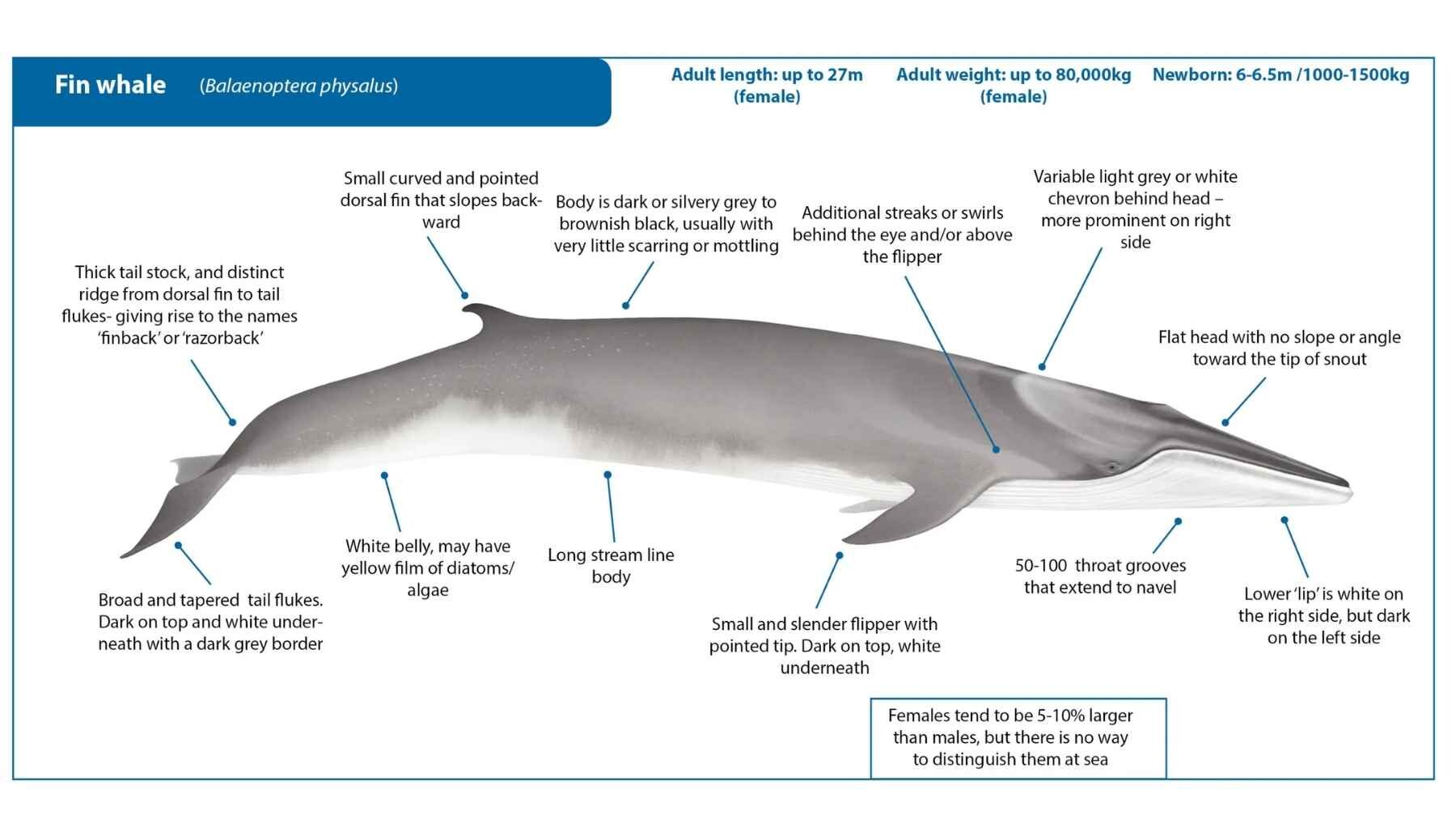
And this in general happens when they find large amounts of fish or krill, expanding up to around 100 throat pleats before they swallow tons of water filtering it with their baleen plated. According to NOAA one single whale can consume up to 2 tons of food in one single day!
The comeback is complicated
For you to have an idea of the bad time, fin whales had in the past, the Industrial whaling killed nearly 725,000 of them in the Southern Hemisphere alone. Fortunately, the protective laws later helped global numbers to recover, and the IUCN reclassified their status from “Endangered” to “Vulnerable” in 2018.
However, scientists warn that the large number of whales in Greenland does not mean that there are more of them around the world. Actually this means that they are relocating as their traditional environments change.
New habitat brings old dangers
Unfortunately, their new home brings along old dangers. As there is less ice in the Arctic, the sea routes “open” to more vessel strikes. And no matter how fast they can be, their speed is nothing compared to an enormous ship crossing their way while they are eating. So yes, speed offers little protection when a large vessel crosses a feeding area.
A million-ton appetite
Across fin, humpback, and minke whales, researchers estimated more than 800,000 metric tons of prey consumed during a four-month stay. And if the summer were extended the numbers could exceed 1 million metric tons!
The study was published in Frontiers in Marine Science.