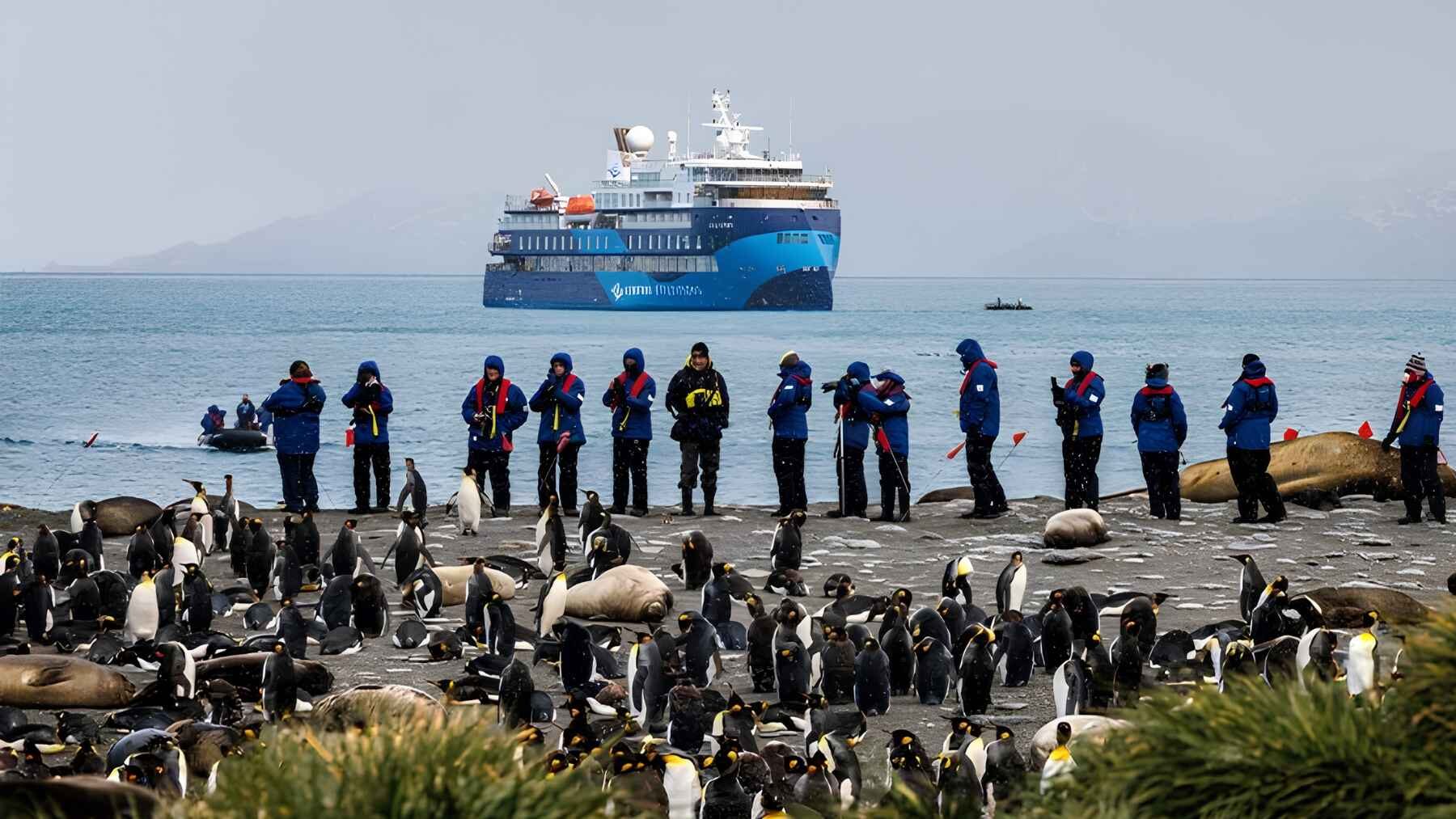
For years, it looked like a dream job. Antarctic guides passed the seasons among penguin colonies, orcas, icebergs, and glaciers, yet some finally concluded that helping more people reach the icy continent was working against the place they loved.
A new peer-reviewed study based on interviews with 25 former guides found that quitting was rarely sudden. It was a painful, gradual response to a widening gap between environmental concern and participation in one of tourism’s most carbon-intensive markets.
An adventurous job became a moral trap
The guides were not outsiders criticizing Antarctica from an armchair. They had built careers around observing its wildlife and climate, but repeated flights, cruise operations, overrun landing areas, and the industry’s continued growth made that role harder to justify.
One former guide summed up the conflict in a straightforward question, asking, “how can I go there, talk to people about climate change, and do nothing?” The researchers found that such doubts developed through three connected stages: moving from identifying a problem to choosing a solution, and finally taking action.
Visitor numbers remain high
The International Association of Antarctica Tour Operators counted over 113,500 visitors across all tourism categories in the 2025-26 season as of April 10, 2026. That included roughly 85,200 passengers who reached land, an increase of about 6% from the previous season, alongside 27,200 cruise-only visitors and 1,100 deep-field travelers.
The pressure could become much heavier. A separate peer-reviewed forecast concluded that Antarctic tourism could quadruple within a decade, with the fastest growth anticipated among trips that put passengers ashore.
The carbon bill is unusually large
Getting to Antarctica usually requires long-haul flights followed by days or even weeks aboard a passenger ship. A 2025 emissions study estimated an average footprint of about 7 tons of CO₂-equivalent per tourist, including roughly 2.5 tons from aviation and 4.6 tons from cruise travel.
Modern ships and more efficient fuels have not resulted in a major drop in overall emissions. The researchers said longer routes, more frequent trips, and growth in operations have outweighed many efficiency gains, leaving the industry with a dilemma that cannot be solved by marketing strategy alone.
Climate change was no abstraction
One participant recounted being in Antarctica during the 2020 temperature record, hiking in a T-shirt and driving small boats without gloves. The World Meteorological Organization later verified 64.9°F at Argentina’s Esperanza station on Feb. 6, 2020, the highest recorded temperature for the Antarctic continent.
Glacier calving often happens naturally, so one collapse alone is not proof of climate change. For the guides, the distress came from watching those spectacles against a backdrop of documented climate extremes while passengers cheered on the entertainment.
Wildlife pressure can be intensely local
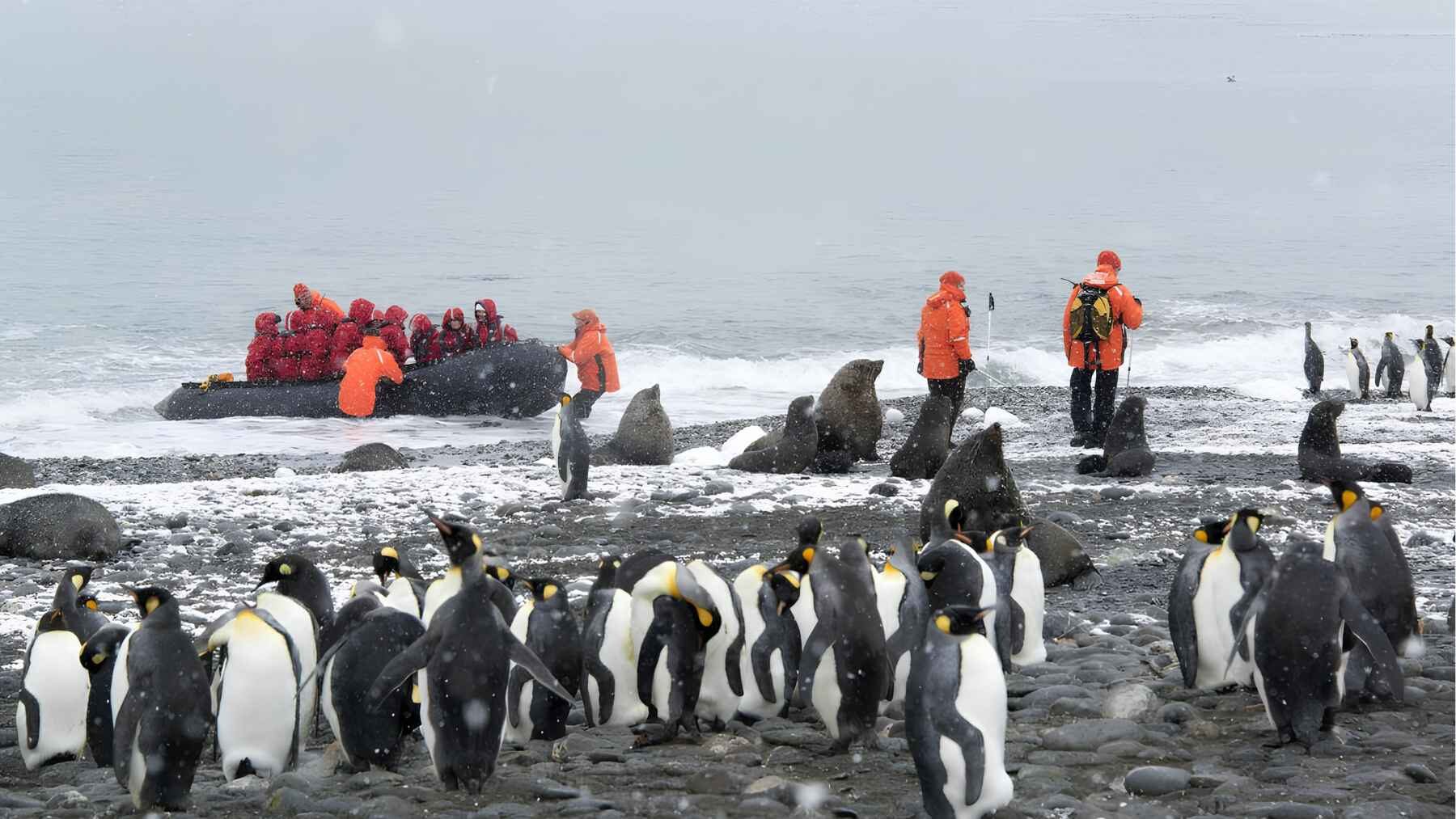
Former guides also recalled spells when penguin colonies received only brief nighttime relief before tourist groups returned. Those accounts are personal observations rather than a continent-wide measurement of interference with wildlife, but they show why some workers felt that daily operating schedules conflicted with their own conservation messages.
That concern tracks with a broader management problem. Landings are concentrated at relatively few sites, and the Antarctic Treaty Consultative Parties are developing a wider tourism framework as researchers look at quantity controls, nudges, and more stringent certification.
Awareness does not guarantee action
The industry often claims that visiting Antarctica can turn travelers into environmental ambassadors. That may be possible, but because the quitting study probed former guides, it cannot establish whether visitors later drive less, change voting behavior, donate to conservation organizations, or take other actions important enough to offset the journey’s footprint.
Related research involving Antarctic guides identified 13 mechanisms of moral disengagement and three broader justification narratives used to appease the contradiction between caring about the continent and repeatedly traveling there. Indeed, educational value can be real while also becoming a reason to avoid facing the full environmental truth.
Leaving became an act of care
The study’s most striking and perhaps counterintuitive conclusion is that environmental commitment does not always require staying involved. Some guides viewed resigning as a high-impact, pro-environmental behavior, and several described improved well-being after leaving work that had begun to feel incompatible with their values.
One participant said the tough decision brought immediate relief, saying, “it was like I could breathe again.” The lesson here is not necessarily that every guide or traveler must act similarly, but that claims of responsible tourism need close scrutiny when an experience depends on high emissions and repeated access to fragile sites.
The study was published in the journal Annals of Tourism Research.