

A new United Nations Environment Program report revealed that for the first time, developing economies’ spending on utility-scale renewable energy projects have surpassed that of developed economies in 2010, contributing to a record-breaking total in investment in renewables.
The report “Global Trends in Renewable Energy Investment 2011” done jointly by the U.N.E.P. with London-based Bloomberg New Energy Finance and Frankfurt School of Finance and Management, highlighted that a sum of $72 billion was invested in developing economies, as opposed to the $70 billion invested in developed economies.
“The continuing growth in this core segment of the green economy is not happening by chance. The combination of government target-setting, policy support and stimulus funds is underpinning the renewable industry’s rise and bringing the much needed transformation of our global energy system within reach,” said Achim Steiner, U.N.E.P. executive director.
The report also underscored the fact that 2010 saw the record breaking total in investments when it comes to renewables amounting to $211 billion. This figure translates to a one-third increase from the $160 billion invested in 2009, and a 540 percent rise since 2004.
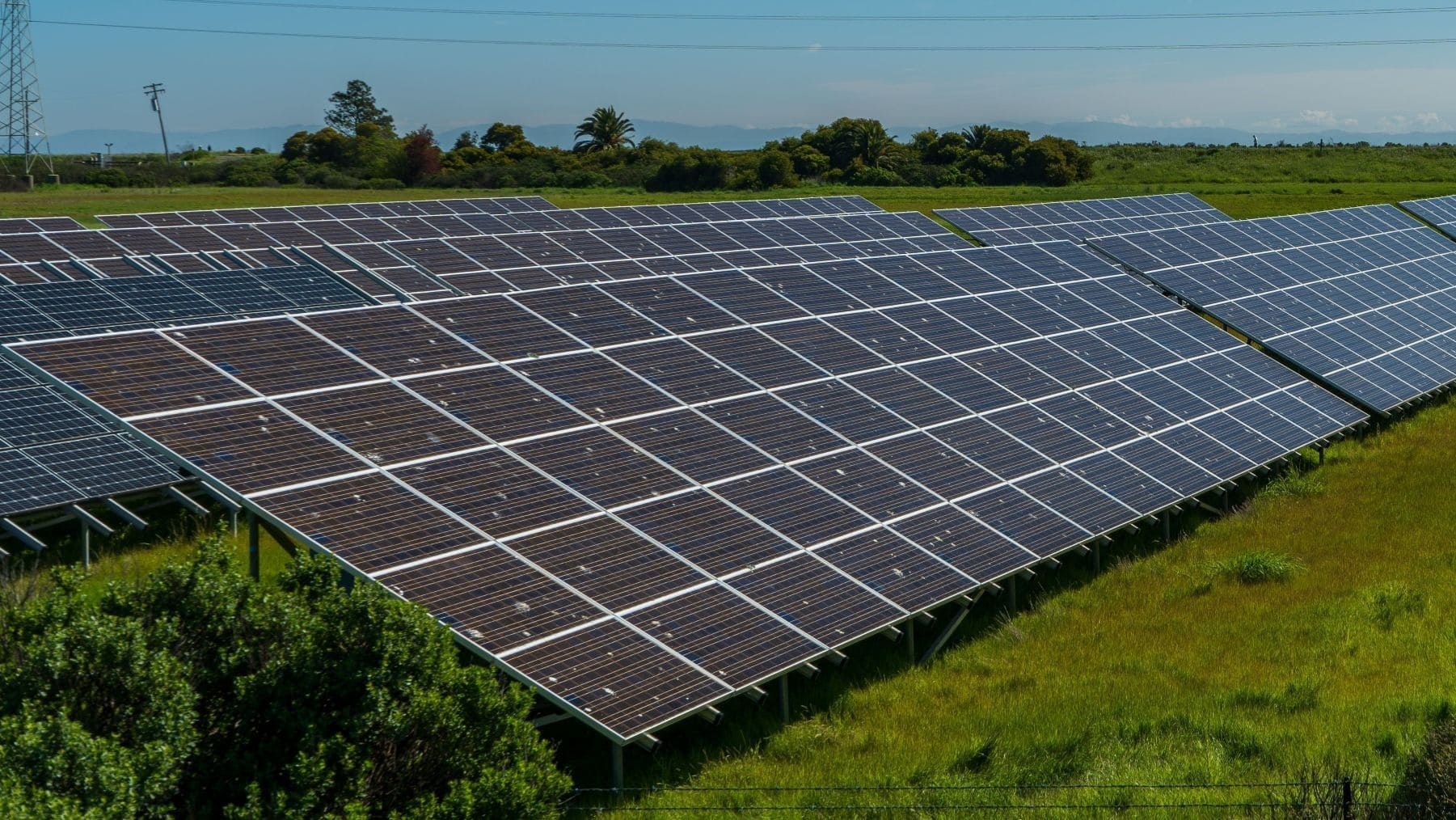
China’s wind farms and Europe’s small-scale solar panels on rooftops were cited as the ones responsible for the increase in green energy investments globally last year – accounting for a 32 percent increase.
Breaking it down, China’s financial investment in renewables went up by 28 percent from 2009’s figures, spending as much as $48.9 billion, making it the world leader in 2010.
South and Central America investments totaled $13.1 billion, an increase of 39 percent; Middle East and Africa went up by 104 percent investing $5 billion; India’s investments increased by 25 percent to $3.8 billion; and developing countries in Asia accounted for $4 billion, an increase of 31 percent.
“The finance industry is still recovering from the recent financial crisis. The fact that the industry remains heavily committed to renewable demonstrates its strong belief in the prospects of sustainable energy investments,” said Udo Steffens, president of the Frankfurt School of Finance and Management.
When it comes to renewable energy investment breakdowns, wind energy projects attracted the largest investment worldwide with the volume jumping 30 percent to $94.7 billion in 2010 from 2009 levels. Solar energy got $86 billion worth of investments while energy production from biomass and waste combined got $11 billion.
The report also showed a positive trend when it comes to government-backed research and development projects concerning renewable energy. Investments in the endeavor surged 120 percent to $5 billion in 2010, as compared to 2009 investments.
The authors of the report credit this growth in 2010 to the policy-makers with their increasing focus on encouraging the growth of the low-carbon economy in 2009. This is partly because of the need to create jobs and to counter the forces of recession, as well as to curb emissions.
“The U.N. climate convention meeting in Durban later in the year, followed by the Rio+20 summit in Brazil in 2012, offer key opportunities to accelerate and scale-up this positive transition to a low carbon, resource efficiency green economy in the context of sustainable development and poverty eradication,” noted Mr. Steiner.
Meanwhile, following the release of the report, the U.N.E.P. Collaborating Center for Climate and Sustainable Energy Finance at the Frankfurt School was opened. The facility’s goal is to develop cost-effective ways to reduce energy-related carbon emissions by mobilizing sustainable energy investments and strengthening their associated markets.
The center will approach this by combining project implementation on the ground with research, think tank activities, training and education. (L.J. Polintan)