

Renewable Energy Group Inc., said to be the largest biodiesel producer in the United States, has filed plans for an initial public offering on the Nasdaq Global Market to raise as much as $100 million to acquire a production facility and expand overseas.
The Iowa-based company makes biodiesel from inedible animal fat, used cooking oil, inedible corn oil, and other feedstocks. The fuel produced can be used in existing diesel engines without modification. To trade under the symbol “REGI,” the firm has yet to announce how many shares it will offer or their price.
The company plans to spend about $12 million of the proceeds from the offering to purchase a plant in Seneca, Illinois that it currently leases. The remainder of the proceeds will be used on plans to expand into Europe, South America and Asia and potential acquisitions and joint ventures, according it its S-1 filed with the United States Securities and Exchange Commission last Monday.
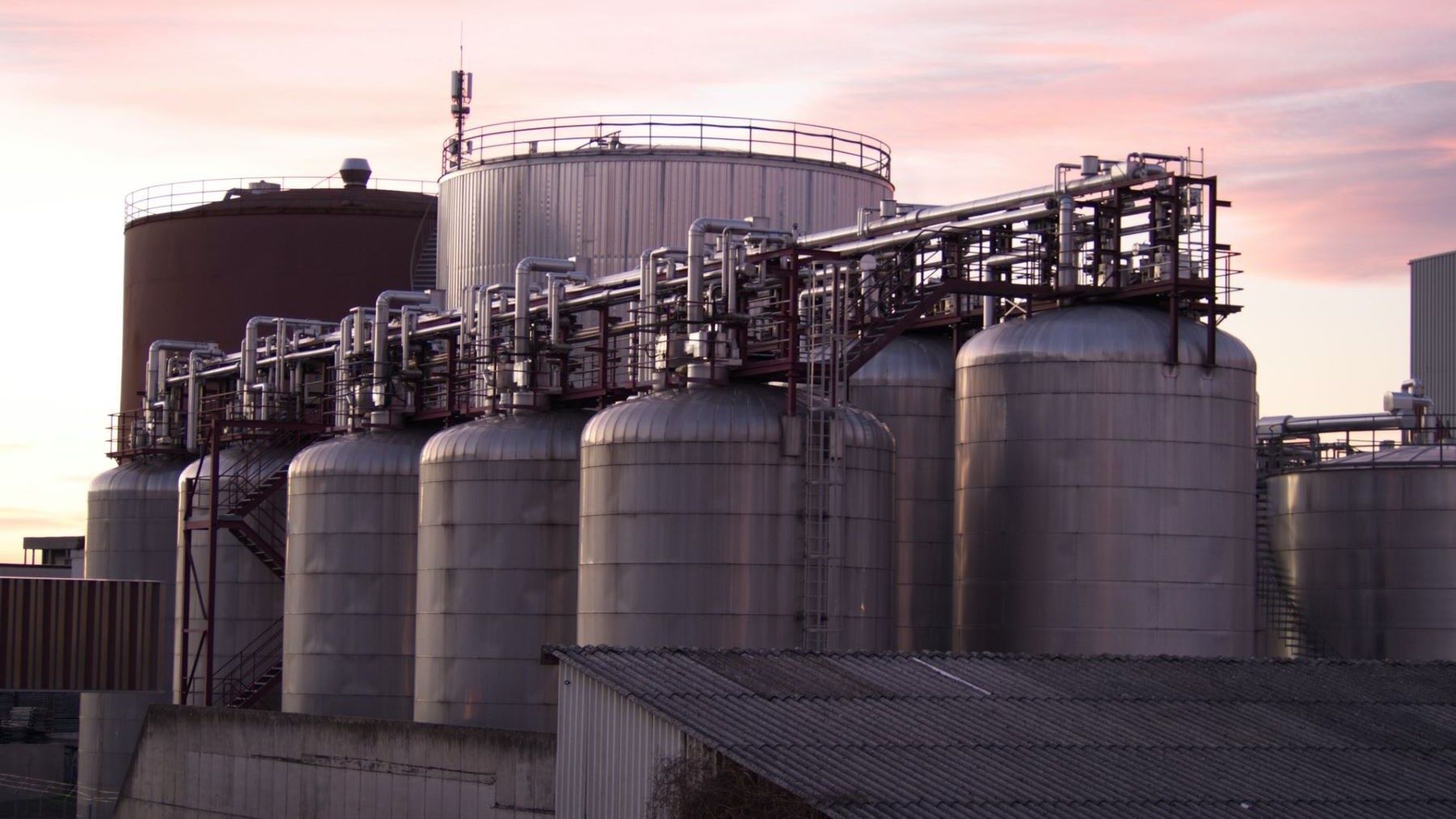
Renewable Energy runs six biodiesel plants in Iowa, Minnesota, Texas and Illinois with a total capacity of 212 million gallons per year and owns five of them. It also has three partially completed plants in Louisiana, Kansas and New Mexico.
The company also seeks to produce other chemicals and make use of other types of feedstocks including algae, camelina, and jatropha oil. For 2010, approximately 91 percent of its biodiesel came from inedible animal fat, used cooking oil or inedible corn oil feedstock while the rest was from soybean oil.
The company originally used soybean bean oil for its biodiesel but shifted away in 2009 because it has become expensive and was eating into the company’s profit. Assuming 7.5 pounds of soybean oil yields one gallon of biodiesel, the average price for soybean oil last year was $0.42 per pound, or $3.16 per gallon compared to $0.25 per pound, or $1.88 per gallon, in 2006.
Founded in 1996, Renewable Energy bills itself as the largest biodiesel producer in the United States. It sold almost 68 million gallons of biodiesel in 2010, about 22 percent of the total biodiesel production of the country, according to the filing.
Revenues
The company posted revenues of $216.46 million in 2010, $131.5 million in 2009, and $85.45 million in 2008. Renewable Energy also started the year strong, with sales for the first three months of this year to $100.1 million, up from $32.97 million in the same period a year ago.
The company’s biggest customer is Pilot Travel Centers, which sells diesel and biodiesel to truck drivers. The Tennessee-based company accounted for 29 percent of Renewable Energy’s revenues in 2010 and 24 percent in 2009.
The firm said losing Pilot will potentially harm its revenues.
“In the event we lose Pilot as a customer or Pilot significantly reduces the volume of biodiesel it buys from us, it could be difficult to replace the lost revenues in the short term and potentially over an extended period,” the company said in the filing.
Renewable Energy has yet to earn profits on a yearly basis but it has fared better quarter on quarter. The company posted losses of $21.59 million in 2010, $68.86 million in 2009 and $15.88 million in 2008. But for the first quarter of this year, the company posted a net income of $3.74 million, up 21 percent from $3.08 million in last year’s first quarter.
The implementation of the Renewable Fuel Standard 2 by the United States Environmental Protection Agency put in place in July 2010 could have helped boost biodiesel demand for the company and the rest of the industry.
Through R.F.S.2, the government is gradually increasing the amount of renewable fuels, from cellulosic ethanol or biodiesel, the country needs to use every year until 2022. The rule requires 800 million gallons of biomass-based diesel to be used in 2011, 1 billion gallons in 2012.
In June 2011, the E.P.A. proposed a 1.28 billion gallon biomass-based diesel requirement for 2013.
“We expect that the E.P.A. will increase the requirement each year thereafter based on its evaluation of the availability of biodiesel and renewable diesel. As such, we expect R.F.S.2 to create a consistent and stable demand for biodiesel,” Renewable Energy said in a statement.
Currently, more than 40 states have implemented various programs that encourage the use of biodiesel through blending requirements as well as various tax incentives.
Competition
“While we are the largest producer of biodiesel in the United States, we still face competition in the biodiesel market from other biodiesel producers, marketers and distributors,” Renewable Energy said in a statement.
In the United States and Canada, which also has renewable fuel requirements, the company said it will compete against large companies it claims have “greater resources.” It includes Archer Daniels Midland Company, Cargill, Incorporated, Louis Dreyfus Commodities Group and Ag Processing Inc.
The companies cited make biodiesel from more expensive virgin vegetable oils such as soybean or canola oil, which they produce as part of their integrated agribusinesses.
As for independent biodiesel producers, Renewable Energy said most of these firms own only one biodiesel plant and can also process only virgin vegetable oils.
Its biggest competitor for the near term could be Diamond Green Diesel, a proposed joint venture between Valero Energy Corp. and Darling International Inc. that is expected to produce 137 million gallons of biodiesel every year. In March, the department offered $241 million to Diamond Green Diesel so it could build a plant in Louisiana.
However, Diamond Green pulled out from the loan guarantee negotiations in May, saying it would build the plant using money from a Valero subsidiary. Valero will use feedstock similar to Renewable Energy’s supplied by Darling International.
As of January 2011, there was less than one hundred million gallons of renewable diesel production capacity in the United States, and no operating facilities in Canada, but companies are planning to install more facilities in the coming years, according to the company.
A report from Pike Research published in February 2010 said that renewable feedstocks such as waste grease and oils, algae, and jatropha will boost biodiesel revenues to $71 billion worldwide by 2020, a 286 percent increase from $18.4 billion last year.