
As power demand surges while “heat waves” blanket New England, wind energy will have the opportunity to provide more electricity, proponents of the United States’ Cape Wind offshore wind energy project said.
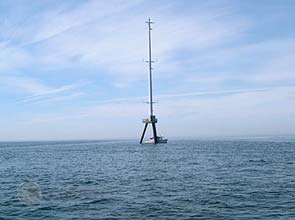
Citing information from its wind data-gathering facility in Nantucket Sound, proponents of the project said the Cape Wind offshore wind farm would have been running at its full capacity of 420 MW on Thursday, July 21 last week.
Thursday and Friday last week saw the highest demand for electricity recorded for the year.
They said Cape Wind generally will meet about 75 percent of the electricity demand of Cape Cod and the islands of Martha’s Vineyard and Nantucket.
The statement came with the observation that hot summer afternoons in Nantucket Sound tend to be windy.
Meanwhile, demand for electricity also tends to go up during periods of high temperature during the summer days, the statement from Cape Wind showed.
The phenomenon is called the “sea breeze effect.” A report published by Cape Wind in 2007 discovered a strong correlation between hot summer days, record electric demand, and strong afternoon winds offshore which was attributed to the a cool breeze blowing from the sea toward the land, which can occur regularly during the warm season along mid-latitude coastlines.
Cape Wind is the United States’ first offshore wind farm to secure federal and state approval and to be issued a lease to operate by the federal government.
The $1 billion, 428-MW wind farm is expected to reduce about 700,000 tons of carbon dioxide emissions every year, equivalent to the removal of 175,000 cars on the road.