«Emissions from aviation are growing faster than from any other sector, and all forecasts indicate they will continue to do so under business as usual conditions. Firm action is needed,” said European Commissioner for Climate Action, Connie Hedegaard. “By publishing the data on which allocations will be based, we prepare for the full inclusion of aviation in the emissions trading system.”
The number of aviation allowances to be created in 2012 will be 212,892,052 metric tons of carbon dioxide, which represents 97 percent of the region’s historic aviation emissions figure for the period of 2004-2006.
The commission declared the total historic aviation emissions figure or the mean average of the estimated annual emissions of the aviation sector for 2004, 2005 and 2006 to be 219,476,343 metric tons of carbon dioxide.
Consequently, the number of aviation allowances to be created each year from 2013 onwards will be 208,502,525 metric tons of carbon dioxide, which is 95 percent of the historic aviation emissions figure.
The years 2004 to 2006 were chosen as the basis for calculating the baseline figure because those years represent a significant growth in the aviation sector over the last 15 years.
Eurocontrol – the European organization for air navigation safety – and 30 aircraft operators provided data for calculating the historic aviation emissions figure.
Over 4,000 aircraft operators going to and from European airports will be covered by the bloc’s emissions trading system. This means any aircraft operator, whether based in the European Union or not, will be integrated in the trading scheme. Exemptions will apply only on very light aircraft and flights under the government, military, police, customs, rescue, and training operations.
The commission stated that 82 percent of the allowances are to be given for free to the operators, while 15 percent will be allocated by auctioning. The remaining 3 percent will be allocated to a special reserve for later distribution to fast-growing airlines and new entrants in the market.
Member states have agreed that all revenues from auctioning must be used to address climate change, including issues that involve the transport sector.
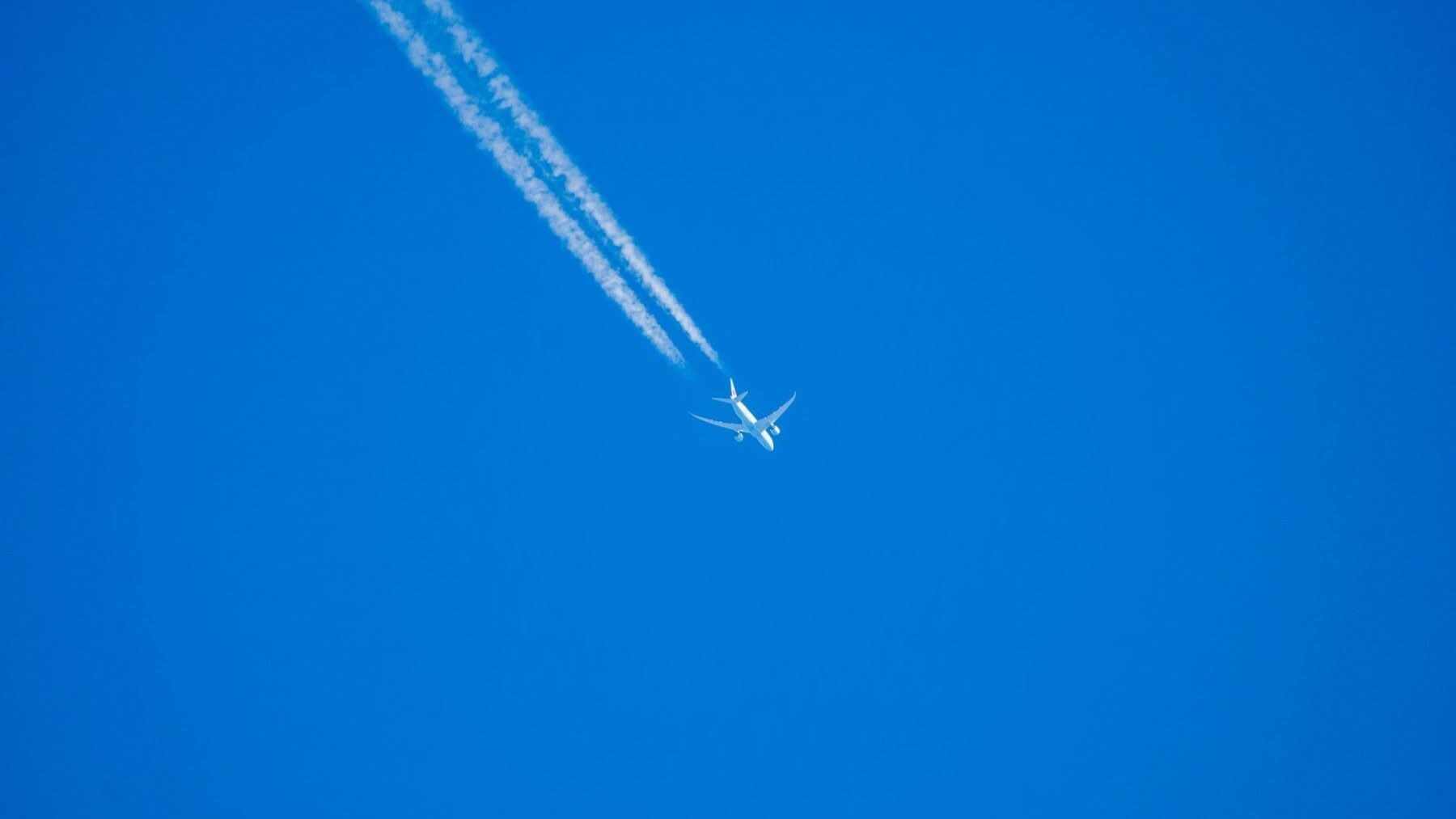
The commission has set its sights on the aviation sector as aviation emissions almost doubled since 1990. The sector represents around 10 percent of greenhouse gas emissions covered by the bloc’s emissions trading system. The Intergovernmental Panel on Climate Change also estimates that aviation’s total impact is about 2 to 4 times higher compared to its past carbon dioxide emission impact.
Direct emissions from aviation also accounts for about 3 percent of the European Union’s total greenhouse gas emissions, majority of which come from international flights. This figure still excludes indirect warming effects from nitrogen oxide emissions, contrails, and cirrus cloud effects, which means that the overall impact may be higher.
By including the aviation sector in the emissions trading system, the European Union’s aviation emission figures will be capped below their average 2004-2006 levels. A total of 183 million metric tons of carbon dioxide will also be saved every year, representing a 46 percent reduction compared with business-as-usual figures. The savings will be equal to twice of Austria’s yearly greenhouse gas emissions from all sources.
As for the prices of tickets, the commission expects only a minimal increase. Even if an airline would charge customers for the full carbon dioxide price given the current carbon prices, the price of an economy class return ticket from Brussels to New York would rise by only about twelve euros ($16.78), said the commission.
Ticket price increases are also expected to be lower than the extra costs airlines have passed on to consumers due to world oil price hikes in recent years.
The commission advices operators to invest in efficient planes or buy emission allowances in the market apart from the allowances which will be allocated for them to avoid ticket price increases.
Meanwhile, the Air Transport Association of America Inc. and three of its member carriers (American Airlines, Continental Airlines and United Air Lines) have filed a case questioning the legality of the European Union directive of including non-E.U. airlines in the emissions trading. The airlines will comply with the directive pending the resolution of the case by the European Court of Justice and all concerned agencies.