The asteroid 2024 YR4 shifted its course from Earth but brought fresh dangers to the Moon. Astronomers have tracked this space rock, which scientists first discovered in late December 2024. Research data indicates the asteroid 2024 YR4 is moving toward a potential strike with the Lunar surface. A comprehensive review exists regarding the asteroid’s current spatial movement.
Scientists designated the asteroid 2024 YR4 a ‘city killer,’ which is why Earth became fearful
Scientists declared asteroid 2024 YR4 a significant problem of investigation soon after astronomers identified it. They detected a possible high danger of Earth’s impact from the asteroid, which triggered rapid observations while providing preparations for potential space impacts. This 53—to 67-meter-wide asteroid qualified as a city killer because it posed severe destruction risks to urbanized areas.
Additional space telescope examinations, specifically incorporating the James Webb Space Telescope (JWST), allowed scientists to make detailed improvements in asteroid orbit tracking. The newly calculated orbits comforted scientists because they established that 2024 YR4 would avoid Earth on its projected 2032 flyby. The asteroid’s path changed, and it now pointed toward the Moon as a potential target.
Scientists predict the Moon could become the target of this asteroid since they believe such a scenario is no longer science fiction. Researchers focused their observations on the Moon since Earth appeared safe from harm. Research conducted last month demonstrates that 2024 YR4 has a 3.8 per cent probability of colliding with the Moon. This new risk level exceeds the original half-percent Earth threat. This cosmic event now originates from the surface of the Moon.
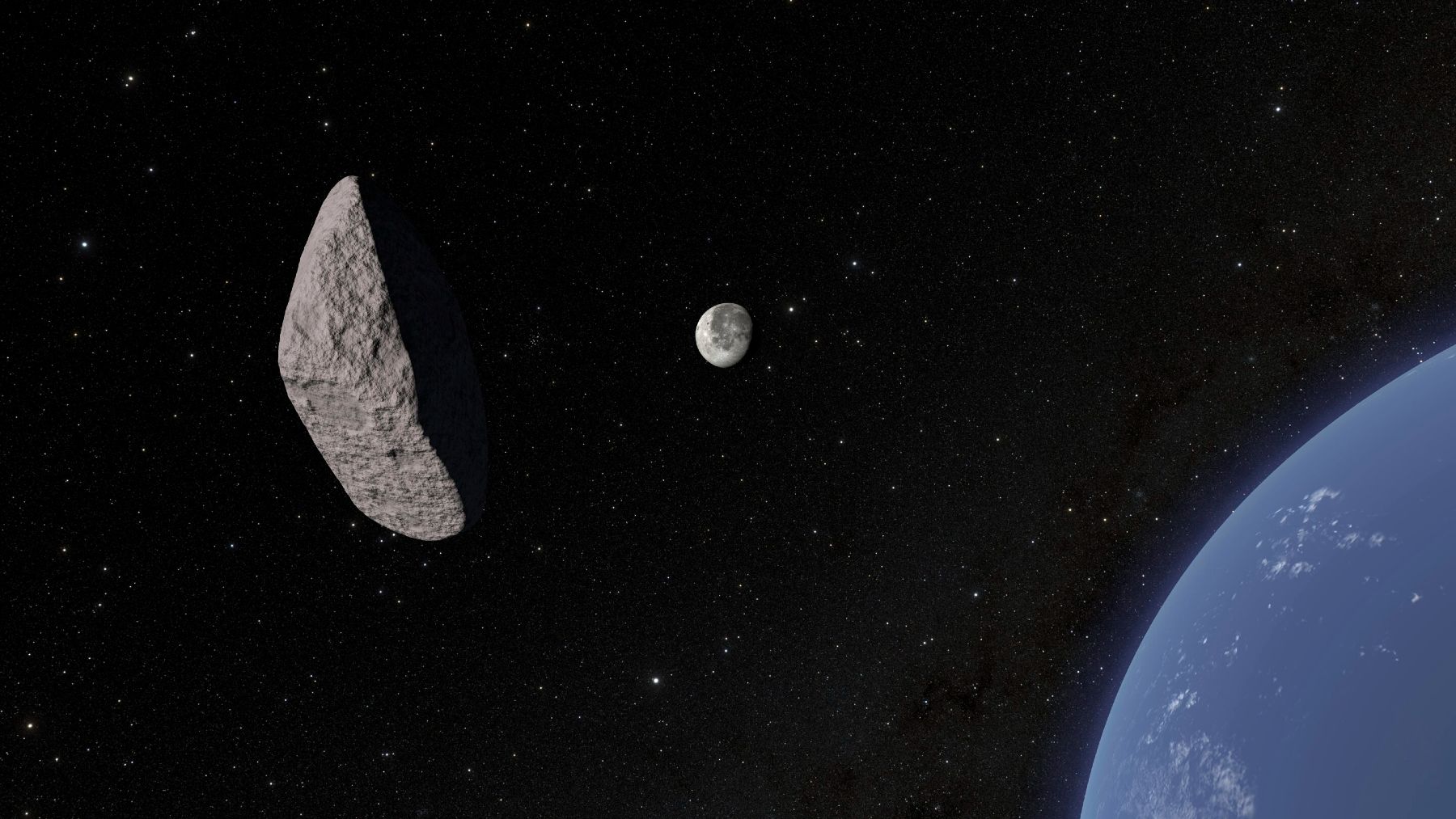
The asteroid 2024 YR4 reveals its appearance when observed from less than 20-minute orbit distances
Orbital data enhancement allowed Dr. Andrew Rivkin of Johns Hopkins University to determine that 2024 YR4 was moving in an arc that positioned it above Earth and towards the lunar surface. An impact from 2024 YR4 against the Moon would generate an extraordinary event visible across Earth, which could form a lunar crater measuring 1 kilometre across. Scientists are showing a strong desire to observe this uncommon phenomenon.
The JWST and other telescopes have delivered crucial details about the physical aspects of the 2024 YR4. The space rock spins at high speed since it completes one twenty-minute rotation. The asteroid displays an irregular and flat shape that resembles a hockey puck, unlike the common potato form seen in most asteroids. Studies of these events can be used to conduct anthropological research about rapid rotators, which remain relatively scarce in nature.
The collected data serves fundamental purposes in establishing defence protocols against space hazards. The compiled information concerning asteroid 2024 YR4’s dimensions, form, and substance enables scientists to devise protective measures if it threatens Earth. By analyzing the data, scientists improve their knowledge of near-Earth objects and their characteristic movements. Scientists have identified 2024 YR4 as a critical test case for their research.
The wild trajectory of this asteroid was triggered when Jupiter altered its course
Scientific research into the 2024 YR4 focuses on identifying its unknown origin point as a primary study area for scientists. Studies show that 2024 YR4 came from the middle region of the main asteroid belt between Mars and Jupiter. Scientists find it peculiar that 2024 YR4 came from this part of space since this area does not generate Earth-crossing asteroids. Its unexpected change in direction happened without following conventional patterns.
Earth scientists have traced the path of the 2024 YR4 from the asteroid belt while it approaches the Moon, demonstrating ongoing solar system movements. Scientists can analyze the potential for the Moon to collide with Earth as it remains secure, but they have obtained valuable research opportunities from this space event. Astronomers’ ongoing monitoring of 2024 YR4 will yield additional data to help better define its orbit characteristics.