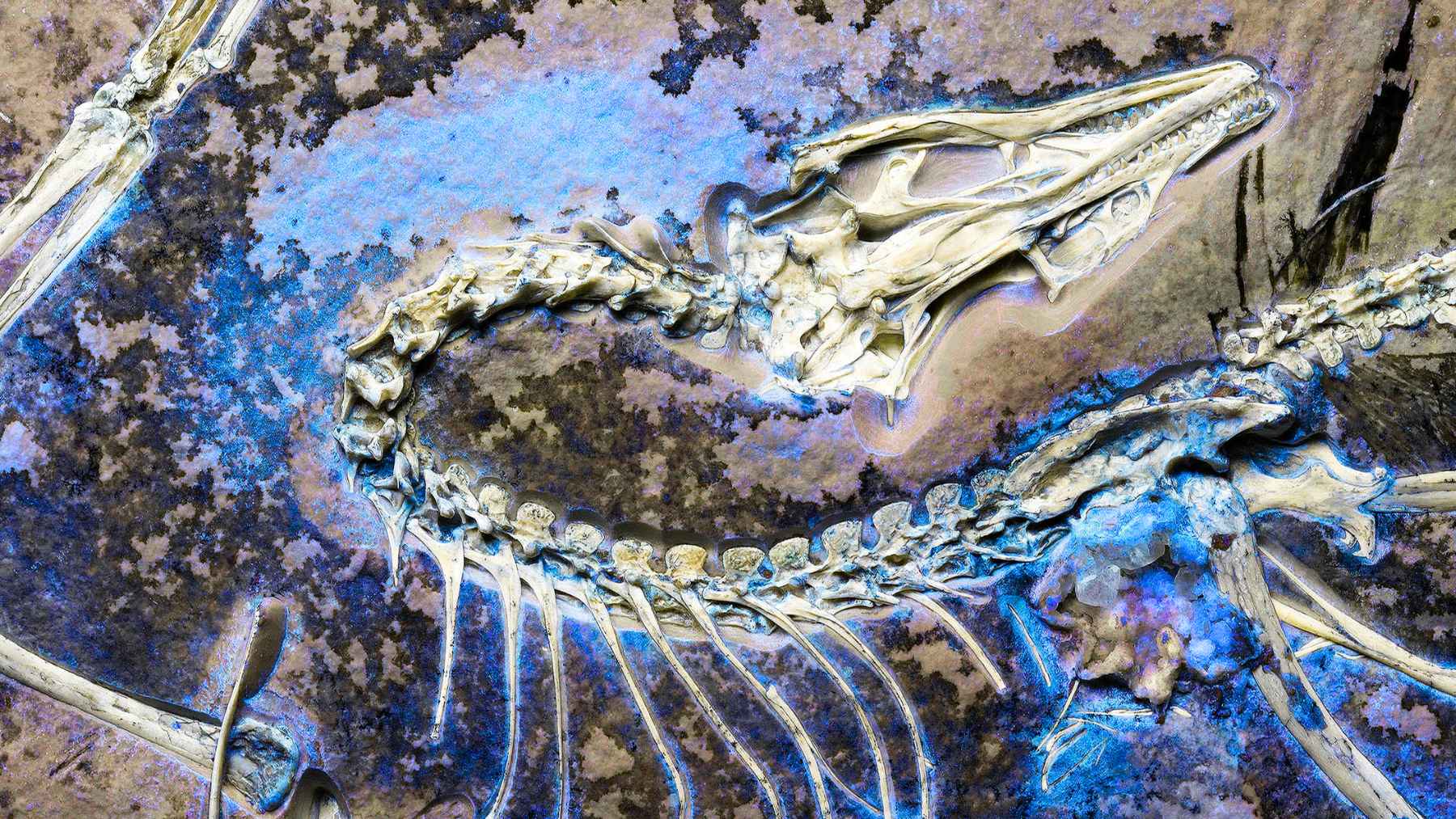
A newly analyzed Archaeopteryx fossil is giving scientists a clearer look at how the earliest birds moved and how they may have flown. In a study published May 14, 2025, fossil-bird researcher Jingmai O’Connor at the Field Museum of Natural History used CT scanning and ultraviolet light to spot wing feathers and soft tissues that are often missed.
That matters because Archaeopteryx has long been treated as a key “in-between” fossil, linking modern birds to older feathered dinosaurs from roughly 150 million years ago. Even after more than 160 years of debate, this new specimen suggests its wings were closer to flight-ready than many researchers could show with older fossils.
The Chicago Archaeopteryx enters the spotlight
Like every known Archaeopteryx, this one comes from the Solnhofen limestone deposits in Germany. Scientists describe it as the 14th known specimen, and it is nearly complete and not crushed flat, which helps preserve fine details.
The specimen was collected before 1990 and stayed in private hands for decades until supporters helped bring it to the museum in August 2022, followed by a public display in 2024. That kind of timeline is common in paleontology, and it can shape what questions researchers get to ask.
Archaeopteryx is often called the oldest known fossil bird, and it has been used for generations to explain Darwin’s idea that species change over time. The Chicago specimen strengthens that story, because it lets researchers test old claims with new evidence instead of relying on sketches and partial bones.
A year of careful prep
It is small, about the size of a pigeon, with thin hollow bones pressed into an extremely hard slab of limestone. That rock is so unforgiving that researchers could not simply free the fossil like a big dinosaur skeleton, so they had to work with what the stone would allow.
Preparing the fossil took more than a year, in part because the bones and the remaining soft tissues are close to the same color as the surrounding rock. When the boundaries are that subtle, one wrong chip can erase information that no camera can bring back.
CT scanning, similar to the imaging used in hospitals, helped solve that problem by letting the team look inside the slab before removing more stone. The scans showed, for example, that bone could sit 3.2 millimeters under the surface, about 0.13 inches, so preparators knew when to stop digging.
A skull built for change
Ultraviolet light, similar to a blacklight, added another layer of protection because certain Solnhofen fossils can make soft tissues glow under UV, even when they look invisible in normal light. Researchers have also tested related fluorescence methods on Solnhofen fossils and found they can reveal details that standard photography misses.
The new paper focuses on areas where the Chicago fossil preserves especially useful detail, including the head, the hands and feet, and the wing feathers. In the background is a bigger question about the early bird “body plan,” meaning how bones, muscles, and feathers fit together to support a lifestyle.
One standout is the roof of the mouth, where small bones help scientists track the rise of cranial kinesis, a feature in modern birds that lets the beak move more independently from the rest of the skull. Researchers think that flexibility could have helped birds adapt to different foods and habitats, a shift that eventually led to more than 11,000 bird species today.
Feathers that seal the wing
Soft tissue traces in the hands and feet point in a more everyday direction, toward how the animal got around. The fossil supports the idea that Archaeopteryx spent much of its time walking on the ground and may have been able to climb trees, with foot pads described as better suited to terrestrial movement than the gripping style seen in raptors.
So why did one feathered dinosaur get airborne while close relatives stayed earthbound? Archaeopteryx was not the first dinosaur with feathers, and it was not the first with wing-like limbs, but the team argues it may be the earliest known dinosaur that could use its feathers for flight.
The key clue is a set of long inner wing feathers called tertials, which sit along the upper arm and help close the wing surface near the shoulder. In the Chicago specimen, these feathers are preserved clearly, and the paper notes they are missing in closely related non-avian dinosaurs, a contrast that supports the case for flight.
Why this fossil still matters
The flight debate did not start in 2025, and this paper is not the only evidence on the table. Its conclusions fit with earlier work, including a 2018 Nature Communications analysis of wing bone geometry that pointed to active flight in Archaeopteryx and a 2014 Nature description of another specimen that added new detail to debates about early feather evolution.
One reason the Chicago fossil is so informative is not only how it was preserved, but how it was prepared. The lead author notes that some features may have existed in older specimens but failed to survive “cruder” preparation methods, and she calls this study “just the tip of the iceberg.”
There is also a transparency angle that can change how fast research moves. The paper reports that raw CT data and digital models are available through MorphoSource, which means other scientists can recheck the anatomy without needing the slab in their hands. It adds up. (doi.org)
The main study has been published in Nature.