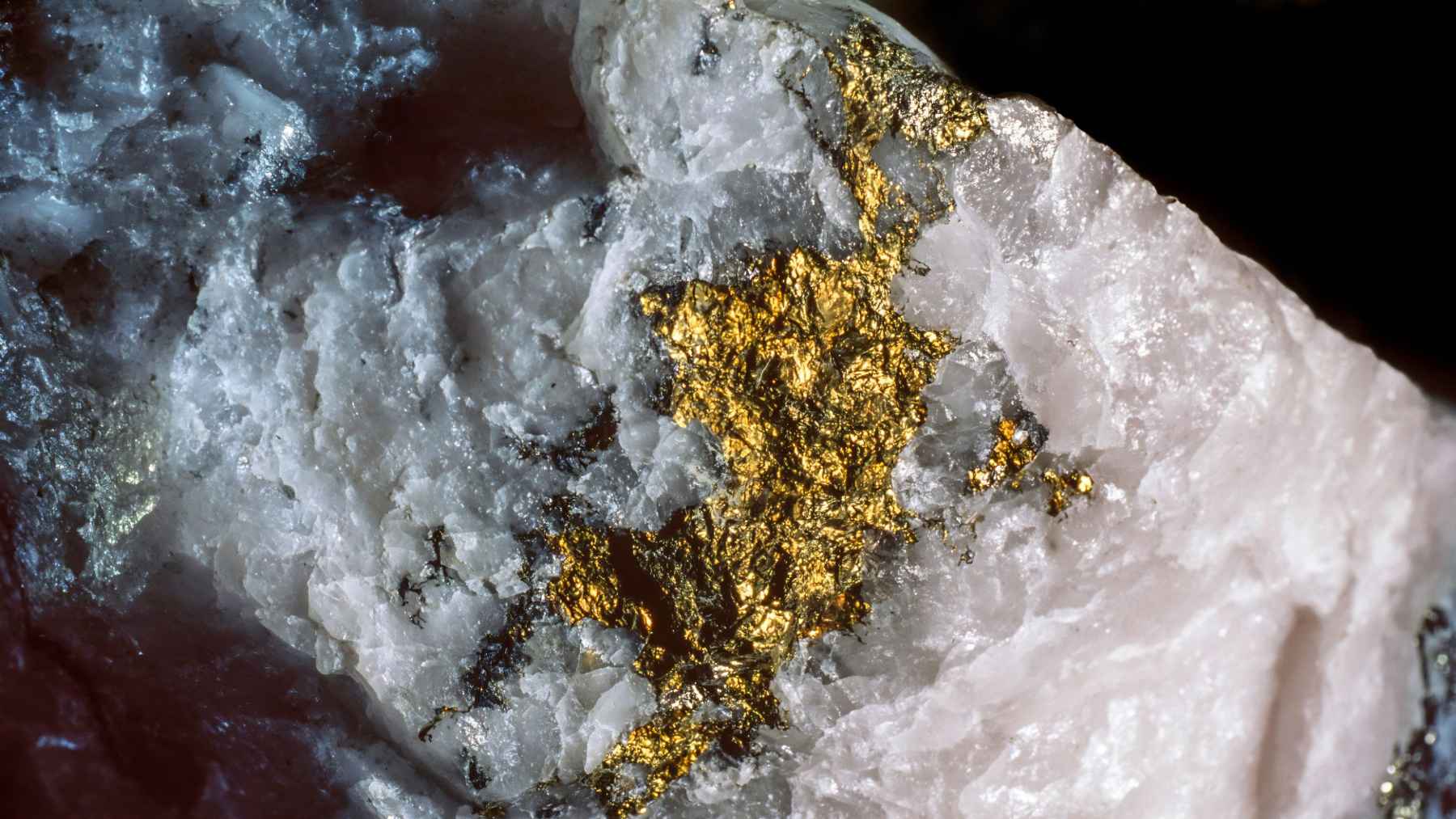
Could an earthquake do more than crack rock and rattle the ground? New research suggests seismic shaking may help build gold nuggets inside quartz veins, giving geologists a sharper explanation for one of mining’s strangest puzzles.
The idea is not that earthquakes create gold from nothing. The metal is already dissolved in hot underground fluids, but quartz may help pull it out of those fluids and gather it into small patches that can grow over many shaking events. That turns a hidden crack in the crust into something closer to a slow, natural plating system.
Why quartz matters
Quartz is one of the most common minerals in Earth’s crust, and it often hosts the gold veins that have fueled gold rushes and modern mines. Its special trick is piezoelectricity, a word that simply means it can produce an electric charge when squeezed or stressed.
You have probably seen the same basic effect in a barbecue lighter, where a small click helps make a spark. Deep underground, the squeeze is not a finger pressing a button, but the sudden stress of moving rock during an earthquake.
The puzzle of gold nuggets
The old explanation is still useful. Hot fluids move through cracks in the crust, cool down, change chemically, and leave gold behind in quartz veins.
But there has always been a catch. Those fluids usually carry very little gold, so it is hard to explain why some veins end up with chunky nuggets or dense gold networks instead of just thin, scattered traces. That is where the new study tries to fill the gap.
The lab test
Dr. Chris Voisey and colleagues at Monash University in Australia tested the idea by placing quartz crystals in a gold-bearing fluid. They then applied fast stress to the quartz to imitate the shaking and squeezing that rocks may feel during earthquakes.
After the experiment, the team examined the samples and found gold deposited on the quartz surface as tiny particles. Professor Andy Tomkins, a coauthor, said the stressed quartz deposited gold and also formed gold nanoparticles, while Voisey described the process as quartz acting “like a natural battery, with gold as the electrode.”
How nuggets could grow
That detail matters because quartz is an insulator, while gold conducts electricity. Once a speck of gold forms, it can become the favored landing spot for more gold, a bit like a tiny metal seed collecting layer after layer.
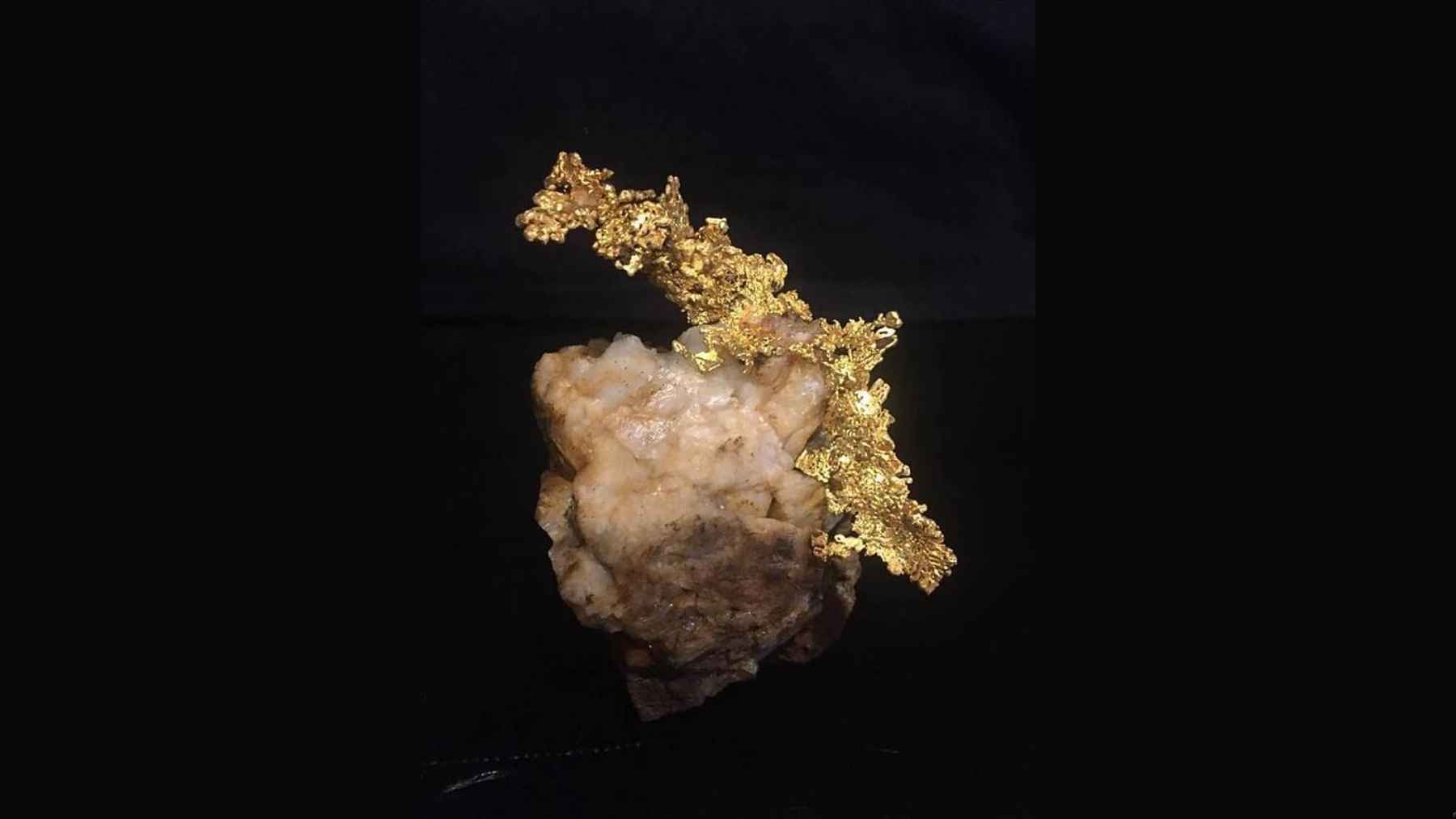
In plain English, the rock provides the charge, and the gold becomes the surface where more gold can attach. Over time, that small start may become something much larger.
The earthquake cycle
A single earthquake would not explain a museum-size nugget. The more realistic picture is a long cycle, with fractures opening, fluids moving, quartz being stressed, and tiny amounts of gold sticking in the same places again and again.
That slow repetition is important. The paper reports that stressed quartz can generate enough voltage to deposit dissolved gold from solution and accumulate gold nanoparticles, while existing gold grains become the focus for continued growth.
Why mountain belts matter
Many of the world’s important gold systems are known as orogenic deposits. Orogenic means they form during mountain building, when pressure, heat, fluids, and fault movement interact over long periods.
A 2022 study in Scientific Reports noted that these deposits make up complex quartz vein arrays and account for about one-third of global gold production. That background helps explain why a new mechanism tied to faults and quartz could matter far beyond one laboratory experiment.
What it does not mean
This is not alchemy. The process does not make new gold, and it does not offer a simple gadget for finding treasure under your backyard.
At best, the finding helps explain why some quartz veins become richer than others. Detecting quartz or electrical effects alone would not prove that gold is present, because the metal must already be in the circulating fluid for nuggets to begin growing.
A better map of hidden geology
The study also fits with other research showing that pressure changes shape how quartz veins and gold form. A U.S. Geological Survey summary of work on Grass Valley, California, found that gold in orogenic systems can appear along quartz grain boundaries and fractures, rather than sealed inside the quartz itself.
That is a useful clue. Gold may not always be trapped in an obvious chemical pocket, so the missing ingredient could be physical stress that keeps nudging the metal toward the same surfaces.
Why this discovery matters
For geologists, the appeal is not just the glitter. The finding links earthquakes, electricity, fluids, and chemistry in a way that could make old gold districts easier to understand.
For the rest of us, it is a reminder that Earth is still building, breaking, and rearranging itself far below the surface. The next nugget pulled from a quartz vein may look like a lucky accident, but it could also be the quiet record of countless ancient tremors.
The official study has been published in Nature Geoscience.