A new mathematical study looks at one of medicine’s most frustrating problems, the moment bacteria stop being easy targets. It suggests that antibiotic resistance can emerge during treatment not only because resistant bacteria were already there, but also because random mutations and drug pressure can help create them.
The main takeaway is careful, but important. In the model, resistance was most likely to take hold at intermediate drug concentrations, while stronger treatment reduced that chance in many scenarios. That does not mean anyone should change a prescription. It means the timing, dose, and type of antibiotic may matter even more than they appear on the label.
Antibiotic resistance starts small
Antimicrobial resistance happens when germs develop ways to survive medicines meant to kill them or slow them down. The CDC calls it an urgent public health threat and reports that resistant infections are linked to at least 1.27 million deaths worldwide and more than 2.8 million infections each year in the United States.
For most people, this is not an abstract hospital problem. It can show up as a urinary tract infection that keeps coming back, pneumonia that needs stronger drugs, or a wound infection that does not respond as expected. The scary part is simple. Bacteria are always trying new survival tricks.
A model watches treatment in motion
Chimezie Izuazu and Cameron Browne, from the Department of Mathematics at the University of Louisiana at Lafayette, built a model that follows sensitive and resistant bacteria inside a treated host. Their approach uses a continuous-time Markov chain, which is a way of tracking random events as they happen over time.
The study is based on pharmacokinetics and pharmacodynamics, often shortened to PK/PD. In plain English, pharmacokinetics asks how the body absorbs, moves, and clears a drug, while pharmacodynamics asks what that drug does to bacteria.
What makes this work different is the starting point. Many models begin with resistant bacteria already present, like a villain waiting backstage. This one also allows resistance to appear from scratch during treatment, through random mutation, drug-induced mutation, and horizontal gene transfer, which is when bacteria share genetic material.
The dangerous middle
The most striking result is that the riskiest zone was not always the lowest antibiotic concentration. Instead, resistance peaked at intermediate concentrations, a finding that lines up with earlier stochastic research in PLOS Computational Biology on dose, drug mode, and bacterial competition.
Why would the middle be dangerous? At very low levels, sensitive bacteria may still compete with resistant ones for food and space. At very high levels, the drug may crush the whole bacterial population quickly enough to leave fewer chances for a resistant strain to settle in.
The middle can be awkward. It may weaken sensitive bacteria without fully shutting down resistant newcomers. In practical terms, that can open a window where a rare mutant is no longer crowded out, but also not yet wiped out.
Biostatic drugs may have an edge
The model also separates antibiotics by how they act. Biostatic drugs mainly slow bacterial replication, while biocidal drugs mainly increase bacterial death. Both can be useful, but they may shape evolution differently.
In this model, drugs that target replication suppressed resistance more strongly than drugs that target killing. That makes intuitive sense. Fewer bacterial divisions can mean fewer rolls of the genetic dice, and fewer chances for a mutation to become the seed of a resistant population.
Still, this is not a popularity contest between drug classes. A doctor may need a fast-killing antibiotic for a severe infection, especially when a patient is very ill. The model is a warning light, not a prescription pad.
Genes can move sideways
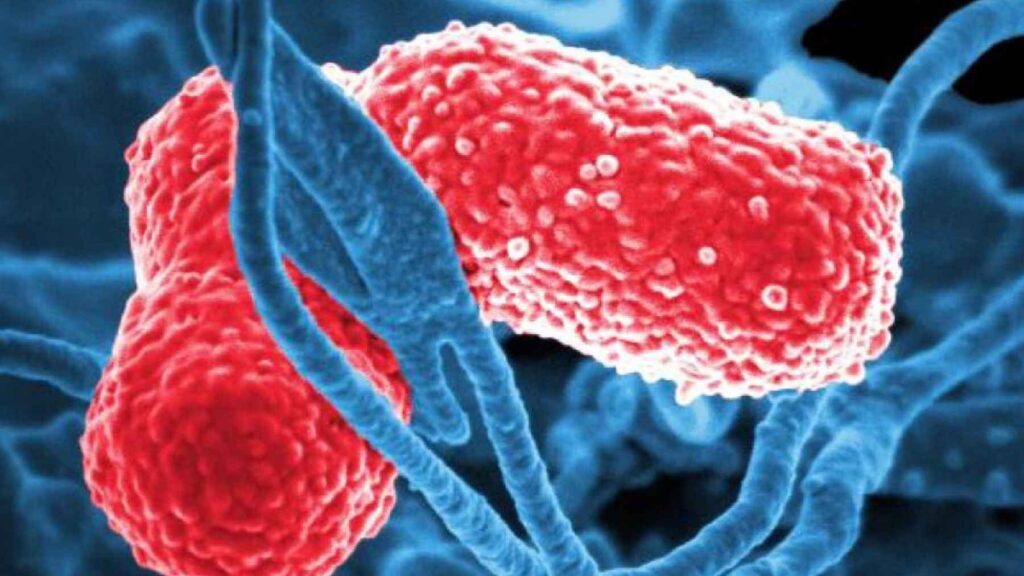
Mutation is only part of the story. The researchers also considered horizontal gene transfer, a process that lets bacteria pass useful genes to one another. In the poster version of the work, the team described this gene sharing as a major driver of resistant strain survival.
Nutrients matter too. When resources are limited, sensitive and resistant bacteria have to compete harder, like shoppers reaching for the last item on a shelf. When the environment is richer, some treatment strategies may give resistant strains more room to expand.
That detail gives the work a more realistic feel. Inside a body, bacteria are not floating in a blank test tube. They live in tissues, fluids, immune pressure, and changing food supplies, all while the drug level rises and falls.
What patients should not do
The study does not say people should take extra pills, stretch a prescription, or stop early because a model looked promising. Antibiotic dosing has to balance killing bacteria with avoiding toxicity, and PK/PD principles are already used to help optimize effectiveness while limiting harm.
This matters because high doses are not automatically safe. Kidney function, age, infection site, other medications, and the specific bacterium can all change what the right dose looks like.
There is also a basic caution about the source. bioRxiv says articles posted there are not peer reviewed before appearing online, so this work should be read as early scientific evidence that still needs testing.
What scientists can do next
The useful part of this study is not that it gives a one-size-fits-all answer. It gives researchers a sharper way to ask what happens when bacteria mutate during treatment, when genes move sideways, and when drug levels change inside the body.
That is where mathematical biology can help. Recent work by Fernanda Pinheiro in Current Opinion in Microbiology argues that predicting antibiotic resistance will require models that connect bacterial physiology, ecology, and evolution.
The next step is the hard one. Lab experiments and clinical data will have to test whether these simulated patterns hold up in real infections. If they do, future antibiotic plans could become more precise, with fewer openings for bacteria to slip through.
The official preprint has been published on bioRxiv.