Thought you became a fully-fledged adult the day you turned 25 and your brain finally snapped into place? A major new study of more than four thousand people suggests something very different.
The brain’s wiring keeps reshaping across five distinct phases from birth to old age, with a particularly active period that stretches all the way to about 32 years.
A five-stage brain
In the new research, a team led by Alexa Mousley at the University of Cambridge pulled together diffusion MRI scans from 4,216 volunteers ranging from newborns to 90 year olds.
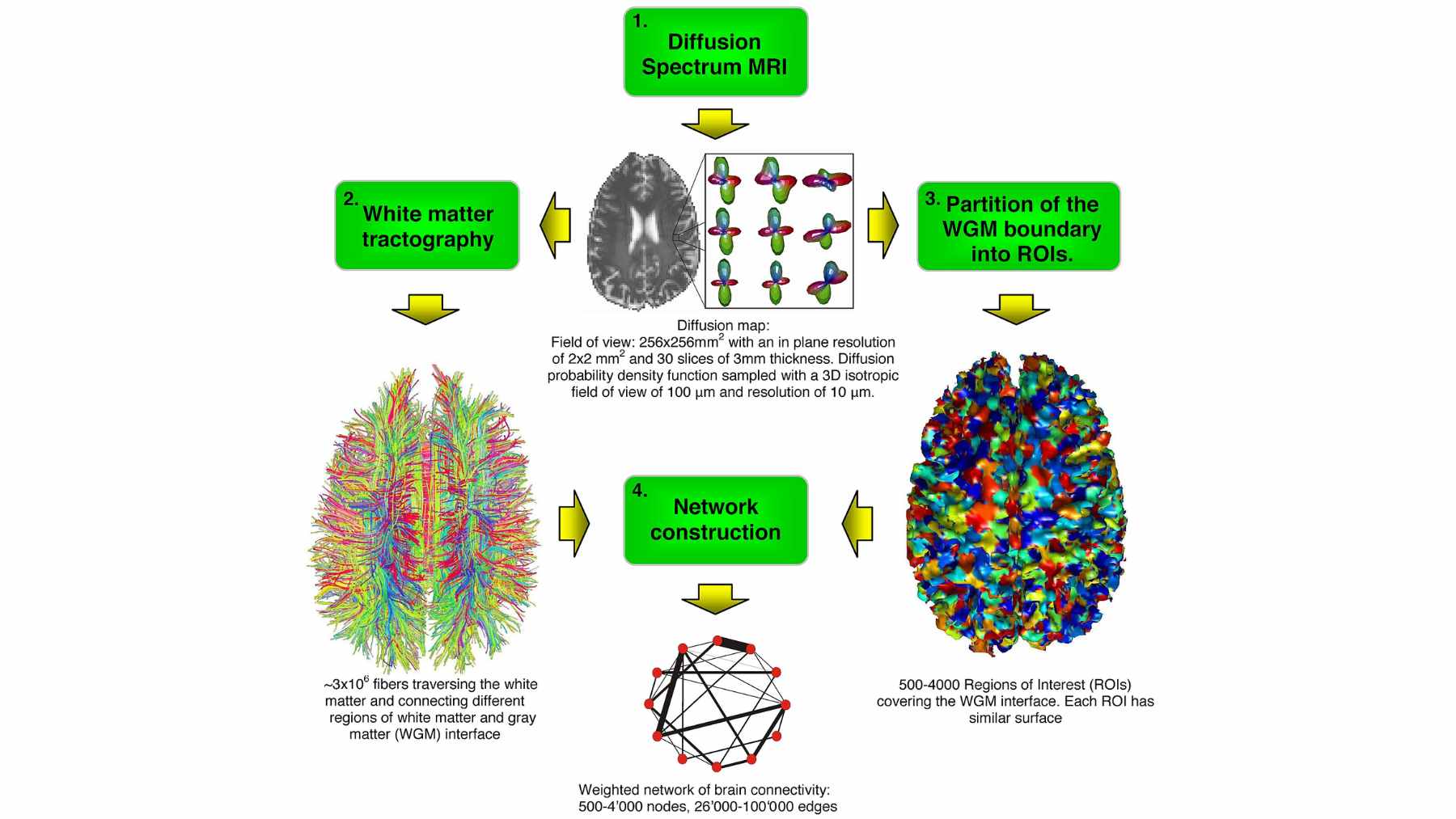
Diffusion MRI tracks water movement along white matter fibers, the long nerve cables that connect different brain regions, so it is a powerful way to study the brain’s wiring.
Instead of looking at one region at a time, the scientists treated the brain like a network. They used graph theory metrics to measure how efficiently information can travel, how specialized different “neighborhoods” are, and which hubs are most central. Then they used a method called manifold learning to see how all these measures shift together over the lifespan.
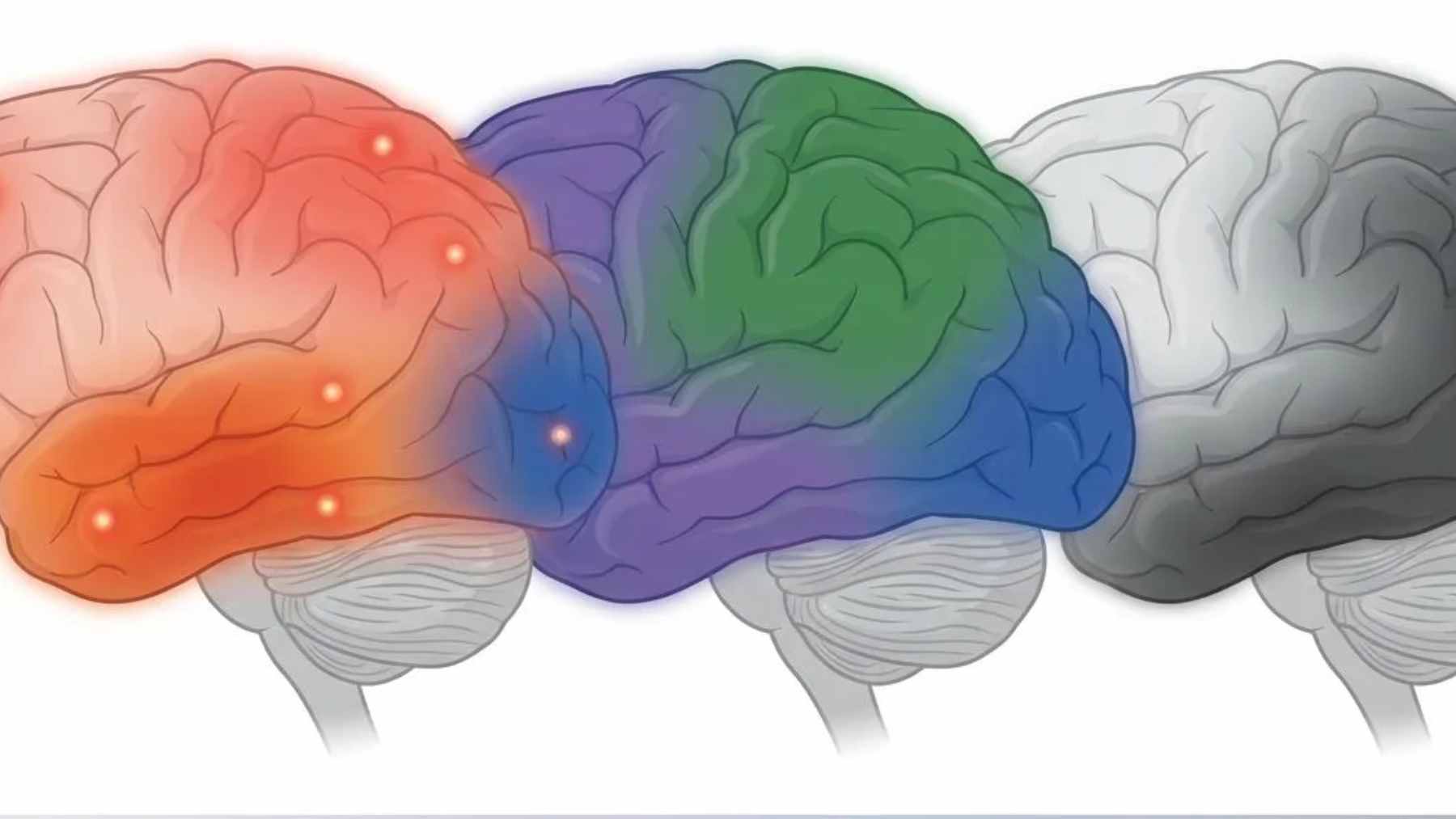
Four clear “turning points” emerged around the ages of nine, 32, 66 and 83. These ages mark the boundaries of five broad wiring epochs that the authors describe as infancy into childhood, adolescence, adulthood, early aging and late aging.
Between nine and 32 in particular, the brain’s structural network becomes steadily more efficient and more finely tuned. A measure called small worldness, which captures the balance between strong local clusters and fast long-distance links, turned out to be the best overall marker of brain age in this period. The pattern fits everyday experience.
During those years many people juggle school, new skills, new jobs and new social circles, and the brain seems to be busy upgrading both its shortcuts and its specialist hubs to keep up.
At around 32, the curve bends. Integration starts to decline slowly, while segregation increases, meaning networks become more compartmentalized and streamlined. Later turning points at 66 and 83 come with further reorganizations that the team links to aging, health changes and the gradual thinning of weaker connections.
Debunking the 25 year myth
So where did the famous “your brain is done at 25” idea come from? As Canadian neuroscientist Taylor Snowden explains in a recent analysis, the myth has its roots in brain scans from the late 1990s and early 2000s.
Those early studies focused on gray matter, the thinking tissue packed with neuron cell bodies, and followed volunteers only into their early twenties. They saw frontal regions still maturing near the end of the available data and people simply assumed the process stopped a few years later.
The new connectivity work paints a more nuanced picture. White matter wiring continues to change through the 30s. The Nature Communications team even labels the nine to 32 window as an extended adolescence in structural terms, because the overall direction of change is still one of growing efficiency and reorganization.
In other words, there is no magic birthday when the brain suddenly becomes “adult” and fixed. Development is a decades-long process of building, strengthening and trimming connections.
What this means for everyday life
If the wiring is still evolving well into adulthood, what can people actually do with that knowledge? Snowden and other experts point to neuroplasticity, the brain’s ability to form new pathways and reshape existing ones.
Plasticity never disappears, but the new data suggest ages nine to 32 are particularly favorable for large-scale structural change. That sounds abstract, yet it shows up in very down to earth habits.
Research summarized in Snowden’s piece highlights several activities that appear to support healthy plasticity. High-intensity aerobic exercise can boost blood flow and growth factors that nourish brain tissue.
Learning new languages or tackling demanding hobbies like chess challenges many networks at once. These are not quick hacks. They are more like long-term investments in the way your internal wiring evolves.
On the flip side, chronic stress seems to push the system in the wrong direction. Persistent overload can interfere with the formation of new connections and may even accelerate some age-related changes.
Here the science lines up with everyday experience. When life feels like an endless traffic jam of worries and deadlines, flexible thinking and good decisions are much harder to maintain.
None of this means people over 32 are locked in place. The later epochs in the new study still show ongoing remodeling, just with a different balance of integration and pruning. Learning, movement and social connection continue to matter for the brain’s health, right up to the final turning point in the 80s.
At the end of the day, the message is simple. Your brain is not a finished machine at 25. It is more like a living network that keeps rewiring itself in response to what you do, how you live and the world you move through.
The study was published in Nature Communications.