If you have ever watched a toddler “pour” tea from an empty cup, you have seen the mind do something odd and impressive at the same time.
New research suggests at least one great ape can follow that kind of make-believe, and a separate study hints that chimpanzee tool traditions can slowly “build” across generations. If an ape can do that too, what else have we been missing in the forest?
These findings are not just cute trivia for animal lovers. They add weight to a basic conservation point that can get lost in statistics, because when a population disappears, it may take unique skills and a surprisingly rich mental world with it.
Kanzi and the imaginary juice
In tea-party-style experiments run by Johns Hopkins researchers, an experimenter mimed pouring pretend juice from an empty pitcher into two empty clear cups. After acting out dumping one cup, the experimenter asked Kanzi, a bonobo trained to communicate with humans, “Where’s the juice?”
Kanzi pointed to the “still full” cup more often than chance, and later picked real juice when it was offered alongside pretend juice. The Associated Press reported he chose the correct pretend cup about 68% of the time, and chose the real drink in 14 out of 18 trials, or roughly 78 percent.
A third task used pretend grapes instead of pretend juice, and Kanzi again tracked the fictional object across containers when prompted. It is not a claim that bonobos live in fantasy worlds, but it is experimental evidence that this bonobo could represent a pretend object and answer questions about it.
The science of pretending
The researchers describe this as “secondary representation,” which is a mental move that lets an animal step away from the here and now. In plain English, it means you can keep track of something you know is not real while still cooperating in the pretend scenario.
The paper argues this capacity likely reaches back 6 to 9 million years to a shared evolutionary ancestor, but it also emphasizes a key limitation. Kanzi had an unusual “enculturated” life around humans, and even supporters agree the next test is whether other apes show the same ability with less human scaffolding.
Chimpanzees and cumulative culture
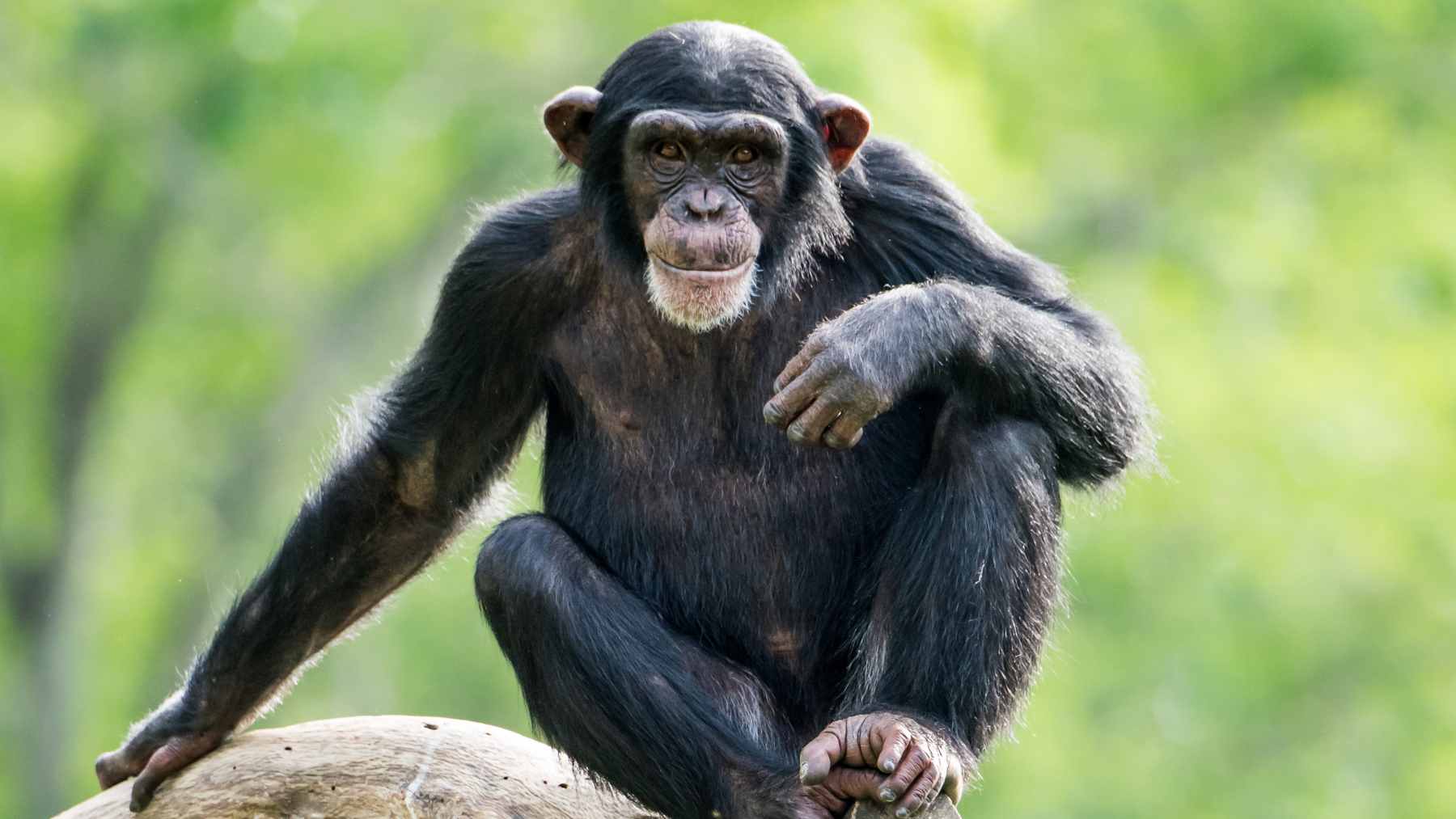
A separate Science study from 2024 tackled a different human badge of honor, which is cumulative culture. The University of Zurich-led team leaned on genetics to reconstruct long-term links between chimpanzee groups, since sticks and leaves do not leave an easy fossil record.
The dataset blended genetic markers of connectivity with records of 15 foraging behaviors from 35 chimpanzee study sites across Africa. Researchers grouped those behaviors into no tools, simple tools like leaf sponges, and complex toolsets used in sequence to access hidden food.
One example comes from the Congo region, where chimpanzees may first dig toward an underground termite nest with a strong stick, then shape a second probe with a brush tip to fish termites out.
The study found these most complex toolsets were the ones most strongly linked across populations that are now distant, suggesting they are rarely reinvented and more likely to spread between groups.
Why female migration matters for forests
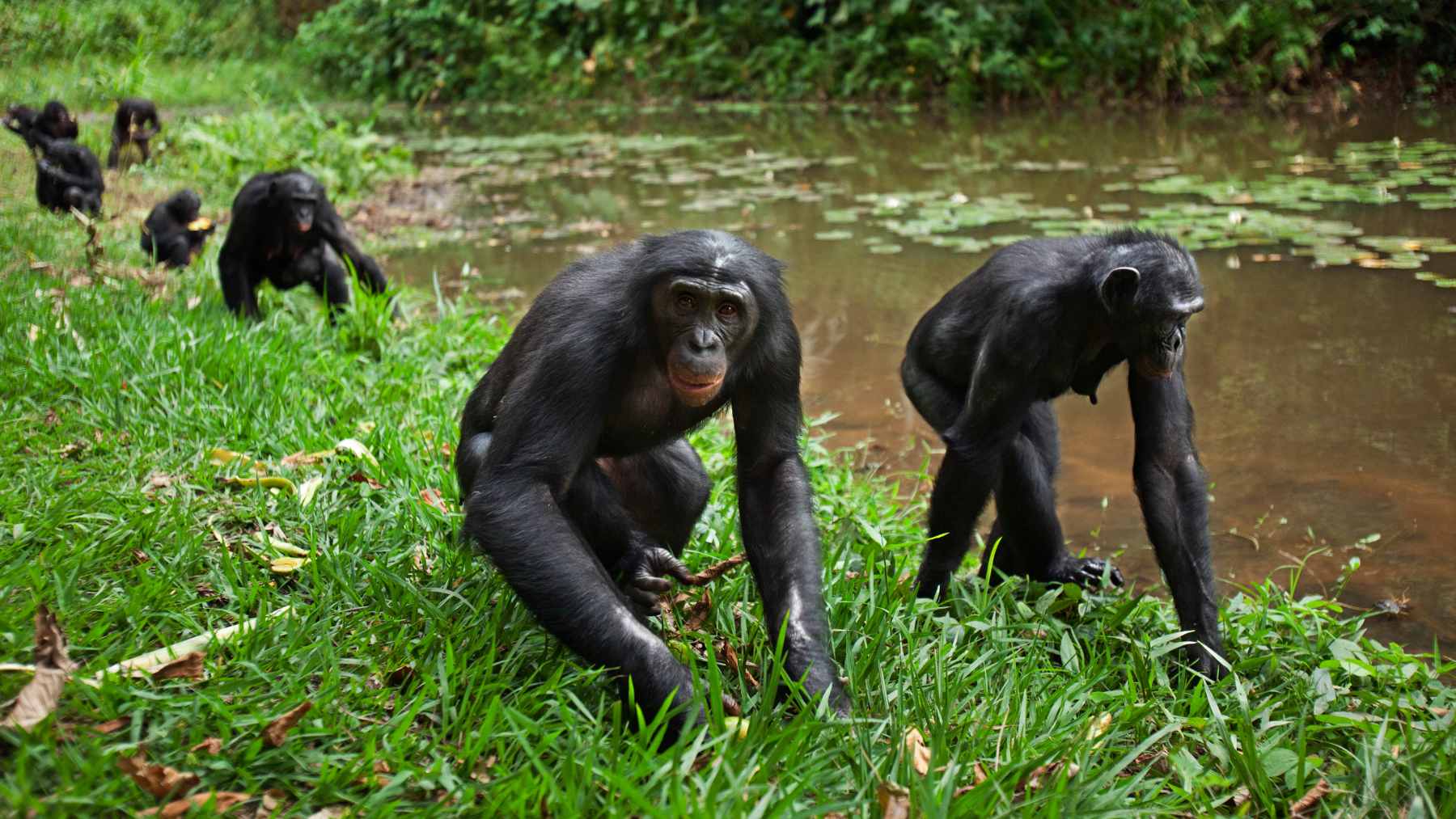
Chimpanzees have a built-in movement network, and females are often the couriers. As sexually maturing females migrate to new communities to avoid inbreeding, they move genes between groups and, the study suggests, can also move cultural know-how.
So what happens when a female arrives in a new group with a different technique? The Zurich researchers found that when complex toolsets and simpler “component” behaviors appear at different sites, genetic patterns indicate those sites were connected in the past by female migration, hinting that complex versions were built by adding to simpler ones.
Conservation that protects minds and knowledge
WWF lists habitat loss and hunting among the major pressures on chimpanzees, and it also highlights the deadly role of infectious disease outbreaks in some regions.
When you combine those threats with what the new studies suggest about culture and imagination, conserving apes starts to look less like saving a species label and more like saving a library of local know-how.
Bonobos are endangered too, and even basic headcounts are difficult because only about 30% of their historic range has been surveyed, according to the African Wildlife Foundation. AWF suggests a minimum of 15,000 to 20,000 bonobos remain, and it notes that only a small portion of habitat is protected, which is why forest loss and hunting pressure still loom large.
WWF DRC reports that surveys from 2015 to 2018 estimate Salonga National Park and its corridor hold around 15,000 bonobos, even while documenting high levels of poaching. If females help carry ideas between communities, then protecting corridors and reducing threats outside park borders becomes a way of protecting culture itself.
What to watch next
Researchers say they want to test other apes and other species for pretend tracking, and to explore other parts of imagination, like thinking about the future or following what others know.
For the chimpanzee work, the genetics-based method could help identify where connectivity and cultural complexity overlap, giving conservation planners one more evidence-based way to prioritize protection.
Kanzi’s story also lands with a quiet punch, because these discoveries come from individual lives, not just graphs. Ape Initiative reported that Kanzi died on March 18, 2025, at age 44, and it was still awaiting necropsy results when it shared the news.
The study was published in Science.