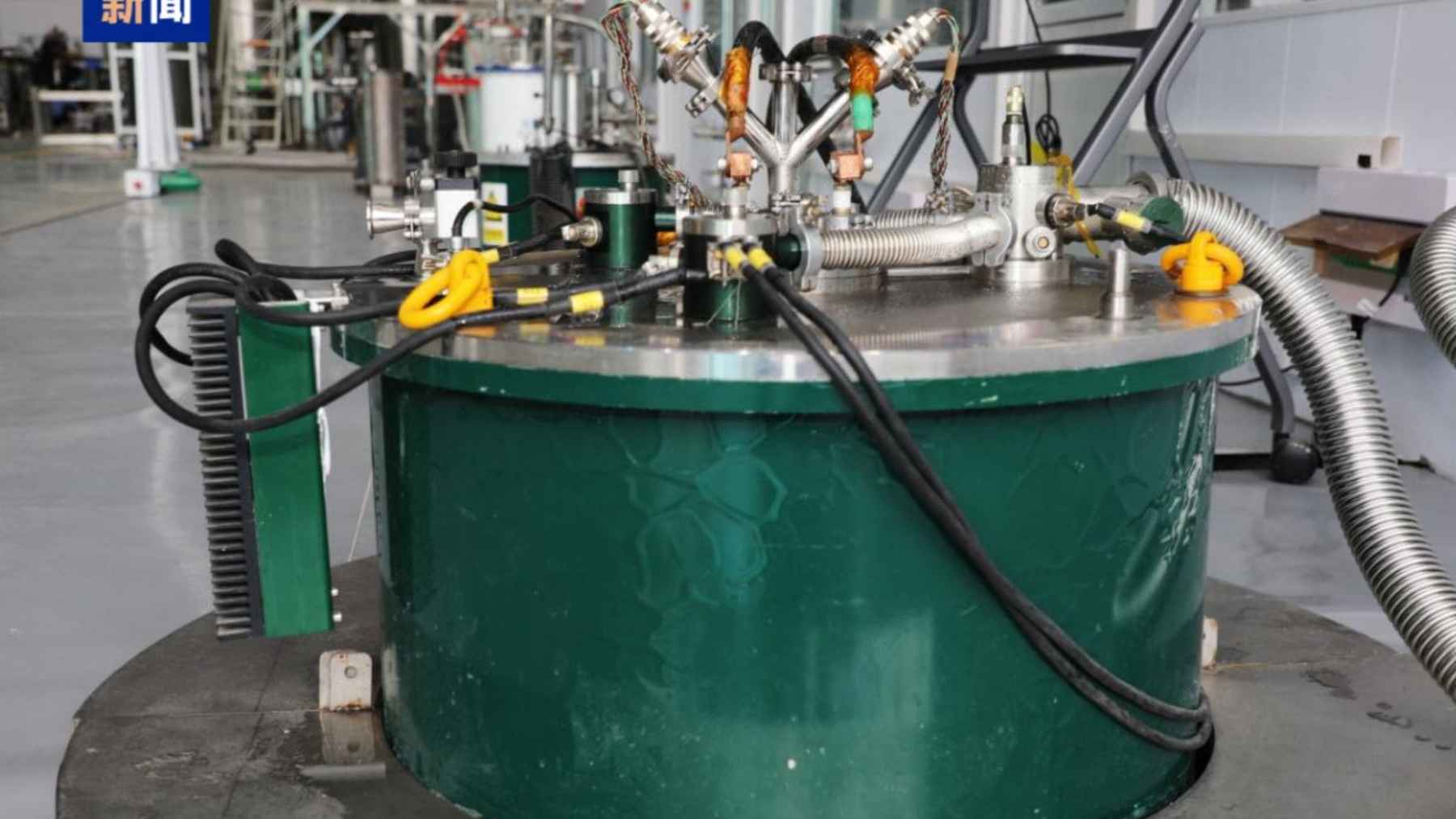
On January 28, 2026, scientists in Beijing announced a new record for a fully superconducting research magnet designed for shared use.
The device reached 35.6 tesla, about 356,000 gauss, in the center of the magnet, with a usable opening 35 millimeters wide, about 1.4 inches. Researchers say the field is more than 700,000 times stronger than Earth’s magnetic field and about 12 to 24 times stronger than a hospital MRI scanner.
That headline number is only half the story. Superconductivity is the ability of certain materials to carry electrical current without energy loss after they are cooled below a critical temperature, which helps powerful magnets run without wasting as much energy as heat.
In plain terms, it can make long experiments more practical, because the system is not constantly fighting its own electric bill.
How strong is 35.6 tesla
Magnetic fields are reported in tesla, but many U.S. readers are more familiar with gauss. One tesla equals 10,000 gauss, while Earth’s field near the surface is about half a gauss and a fridge magnet is around 100 gauss. This new magnet’s field sits in a range you simply do not encounter outside specialized labs.
The closest everyday comparison is an MRI machine, the tunnel-like scanner used in hospitals. Many clinical MRI systems operate around 1.5 tesla, and many higher-field systems run around 3 tesla, with research scanners reaching higher under strict controls. That is why the jump into the mid-30-tesla range is treated as a different class of tool.
A magnet built for sharing
This device is described as a “user magnet,” which is lab shorthand for shared equipment that visiting researchers can apply to use. It was tested at the Synergetic Extreme Condition User Facility, a platform designed to support experiments that need unusually strong magnetic fields.
The official announcement emphasizes that both domestic and international teams are meant to benefit.
The campus sits in Huairou Science City, roughly 37 miles from central Beijing, and the facility says it has already hosted experiments from institutions in 11 countries since trial operations began in 2022.
It also describes a competitive proposal process that grants approved teams free access for scheduled runs. That setup turns a record magnet into a community resource, more like booking time on a telescope than buying a lab gadget.
Superconductors in plain terms
Superconductivity gets called “frictionless electricity” for a reason. In an ordinary wire, moving electrons lose energy as heat when they collide with atoms, but superconductors can avoid that once they are cold enough. Less heating means engineers can push higher currents, and higher current is what builds stronger magnetic fields.
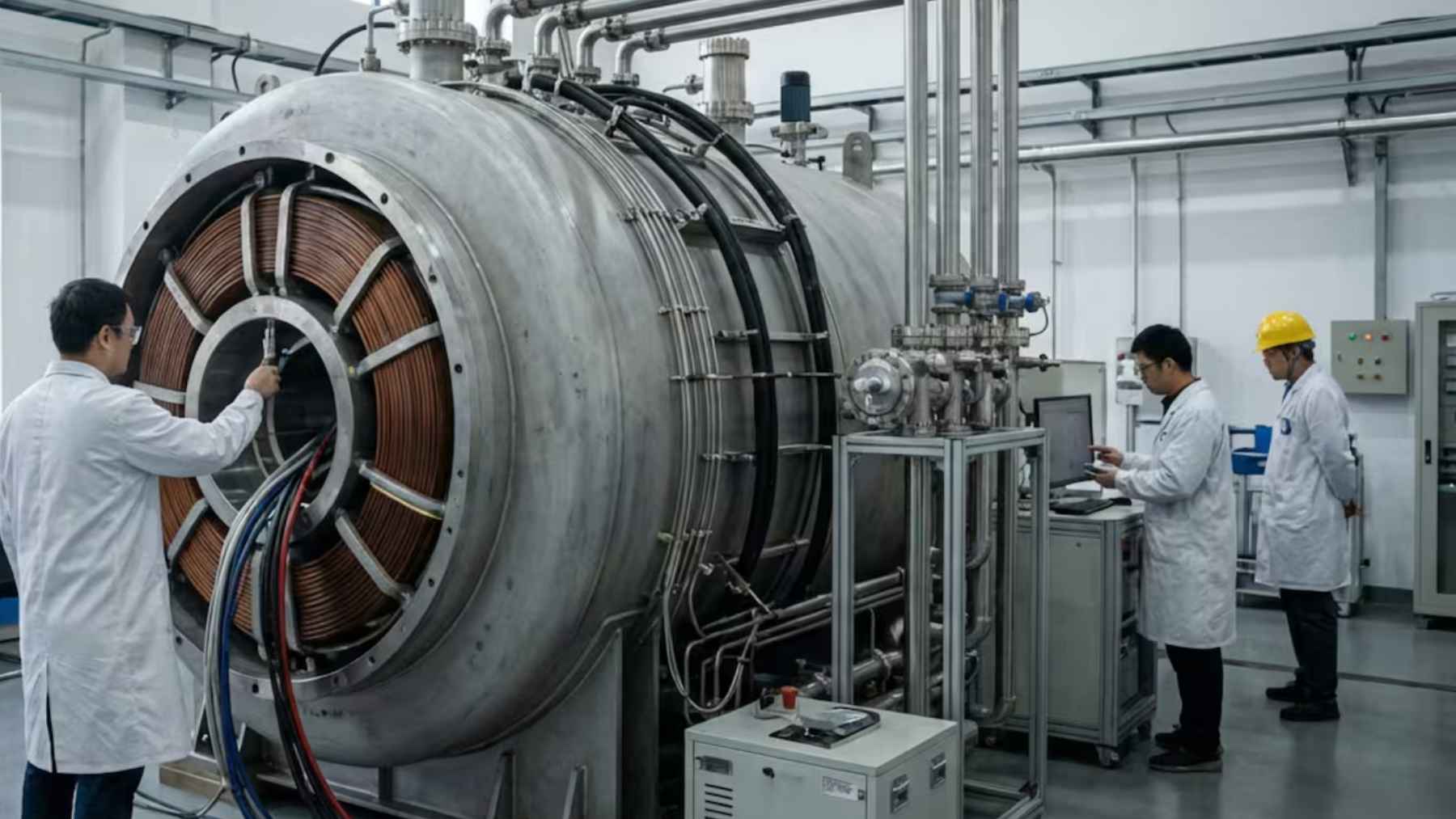
The record system uses an insert magnet made from a high-temperature superconductor, nestled inside a more traditional superconducting outer magnet.
A February 2026 paper in the journal ScienceDirect describes using REBCO, a tapelike material that can keep working in stronger fields than older superconductors. If this sounds like stacking engines, that is not far off. You boost the core to lift the final field.
Stability measured in days
Many ultra-high magnetic fields are made in pulses that last only moments, which limits what you can measure.
Luo Jianlin of the Institute of Physics said this magnet can hold its maximum field for more than 200 hours, over eight days, and the measurement options “greatly meet the needs of the research community.” The same report points to tools like nuclear magnetic resonance, a method related to MRI that lets scientists read molecular structure with finer detail.
What does that buy you in real life? Time to repeat an experiment, double-check a surprising result, and run a longer scan without rushing the data. In science, that kind of patience is often where the discoveries hide.
Who built it and what comes next
The magnet was developed through collaboration, with the Institute of Electrical Engineering leading design and integration and a separate physics team focusing on monitoring and precision measurement.
Wang Qiuliang said the work faces “engineering bottlenecks,” and he described the next target as “aiming toward 40 tesla” along with efforts to widen the opening and reduce operating costs. Those goals may sound incremental, but they are what decide whether more researchers can realistically use a machine like this.
The next milestone is not just higher numbers, but more usable hours. A March 2026 notice for the facility describes two application windows each year, after which approved teams reserve experiment time across many stations. In other words, the magnet’s impact will be measured by the results it produces, not the record it set.
How it fits into the global magnet race
This new record is for an all-superconducting user magnet, not the strongest steady field of any type. For overall steady magnetic fields, a hybrid magnet in Hefei produced 45.22 tesla on August 12, 2024, about 452,200 gauss, by pairing a resistive insert with a superconductive outer magnet. That context matters, because different magnet designs optimize for different goals.
At the U.S. National High Magnetic Field Laboratory, a 45-tesla hybrid magnet combines an 11.5-tesla superconducting magnet with a 33.5-tesla resistive magnet, and the lab says the resistive part uses about 33 megawatts of power and around 4,000 gallons of cooling water per minute.
All-superconducting magnets aim to shrink that footprint, but doing it while keeping stability is the hard part. That is why the 35.6-tesla result is drawing attention.
The official press release has been published by the Chinese Academy of Sciences.