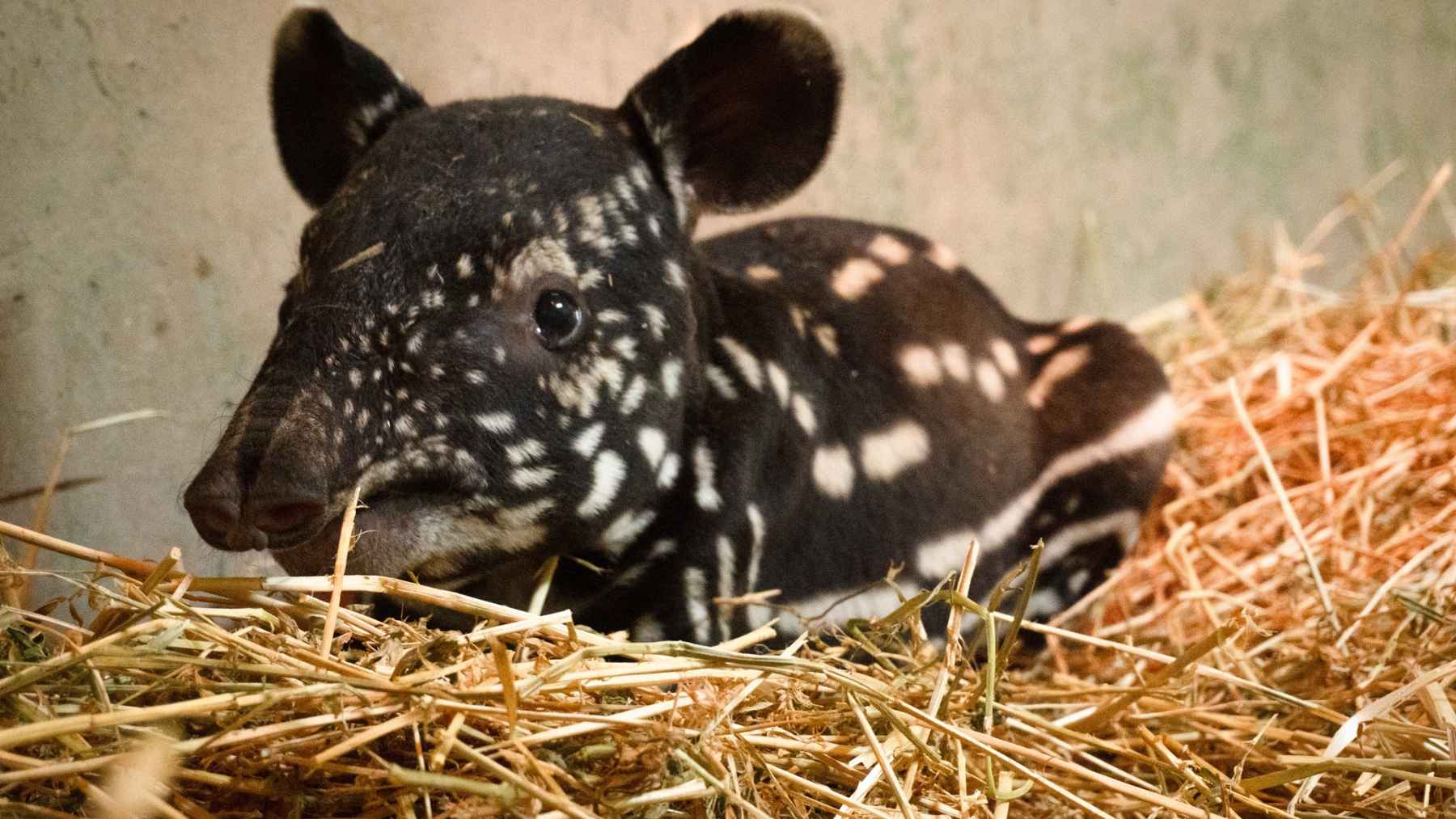
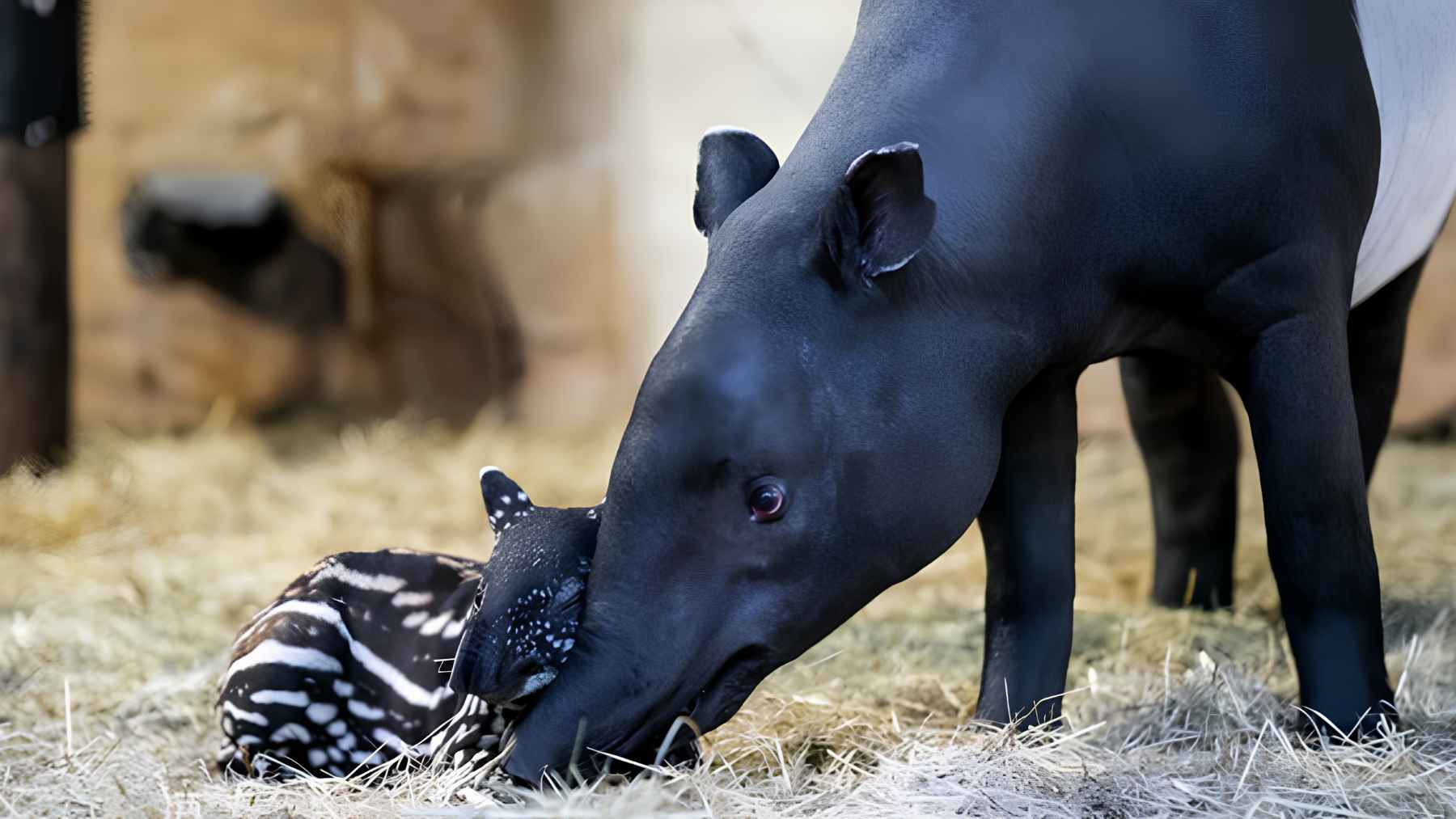
A Malayan tapir calf has been born in southern Spain, the first birth of this endangered species ever reported in the country. The newborn is estimated to weigh about 18 to 22 pounds, and early updates say both mother and calf are doing well as the baby learns to nurse and follow along.
It is easy to file this under “cute zoo news” and keep scrolling. But conservation groups warn the Malayan tapir’s rainforest home is being squeezed by deforestation, farming, hunting, and even things like road deaths and pollution. So what does one birth in Europe really change?
A birth years in the making
The calf arrived before dawn on Saturday, March 29, 2025, after a pregnancy of about 14 months, around 424 days, and the park said it had been able to do ultrasound checks right up to the final days. It also reported constant monitoring, including cameras, and described a quarantine period indoors while staff focused on feeding and steady development.
Javier Vicent, who leads the zoology team, said the next step would be the calf’s first supervised move into an outdoor area.
In late 2024, the same park had already outlined the groundwork behind the scenes. It described extra training, regular checks, and camera monitoring meant to reduce stress while still catching problems early, a bit like a baby monitor but for a species that rarely breeds in human care.
What a Malayan tapir is
The Malayan tapir is a large plant-eating mammal with a flexible nose that helps it pull leaves and shoots, and it is the only tapir species found in Asia.
A Malaysian government biodiversity profile lists the species as Endangered on the International Union for Conservation of Nature’s Red List, describes adults as having a two-tone black-and-white body and babies as striped and spotted, and points to threats that include habitat loss, forests broken into smaller pieces, hunting, road deaths, and snares.
In size, this is no small animal. Conservation specialists describe adults as reaching about 6 to 8 feet long and weighing up to roughly 700 pounds, and they note that one estimate in Malaysia put the population at only 700 to 800 individuals as of 2020.
Why tapirs matter to forests
Tapirs do more than walk through the undergrowth. The Tapir Specialist Group describes them as seed spreaders and uses the phrase “gardeners of the forest” to capture their role in helping new plants grow as they move and feed.
This matters because a forest is not just trees standing still. It is also the constant movement of seeds, animals, and nutrients, and tapirs are part of that everyday circulation.
How the European breeding plan works
This Spanish birth is connected to a coordinated breeding effort that began in 2003 and involves dozens of zoos working together. The aim is to manage pairings and transfers over time so the population in human care stays healthy and genetically diverse.
The European Association of Zoos and Aquaria runs the Malayan tapir plan through its EAZA Ex Situ Programme, which is designed to keep an “insurance population” in zoos. In practical terms, it is a backup plan that can buy time while conservation work continues in the species’ natural range.
Early care can look quiet from the visitor side, but it is highly structured. In an April 2025 update, the park said the calf had begun exploring an outdoor enclosure with its mother in a progressive, controlled way, while the male was kept separate to keep things calm.
A tiny calf and a long watch list
Veterinarian Adrián Martínez told Spain’s public broadcaster RTVE that the birth is “great news for conservation” and a “genetic reserve for the future.” He also said the species is difficult to manage in captivity and pointed to the continued reduction of natural habitat as the main threat.
Later updates from the park described a careful reintroduction process so the young tapir could eventually share outdoor space with both parents. In the same report, the park pointed to an estimated wild population of fewer than 2,500 mature individuals and cited deforestation, hunting, and habitat fragmentation as ongoing pressures.
Why genetics keeps coming up
“Genetic diversity” can sound like lab language, but the basic idea is simple. The more different family lines a species has, the better its odds of staying healthy when disease, food changes, or extreme weather hit.
Researchers also use genetics to understand how isolated populations are from each other. A 2022 study on Malayan tapirs in the Malay Peninsula used genetic evidence to map population structure, information that can help conservation planners think about where habitat connections matter most.
The official press release has been published on the BIOPARC Fuengirola.