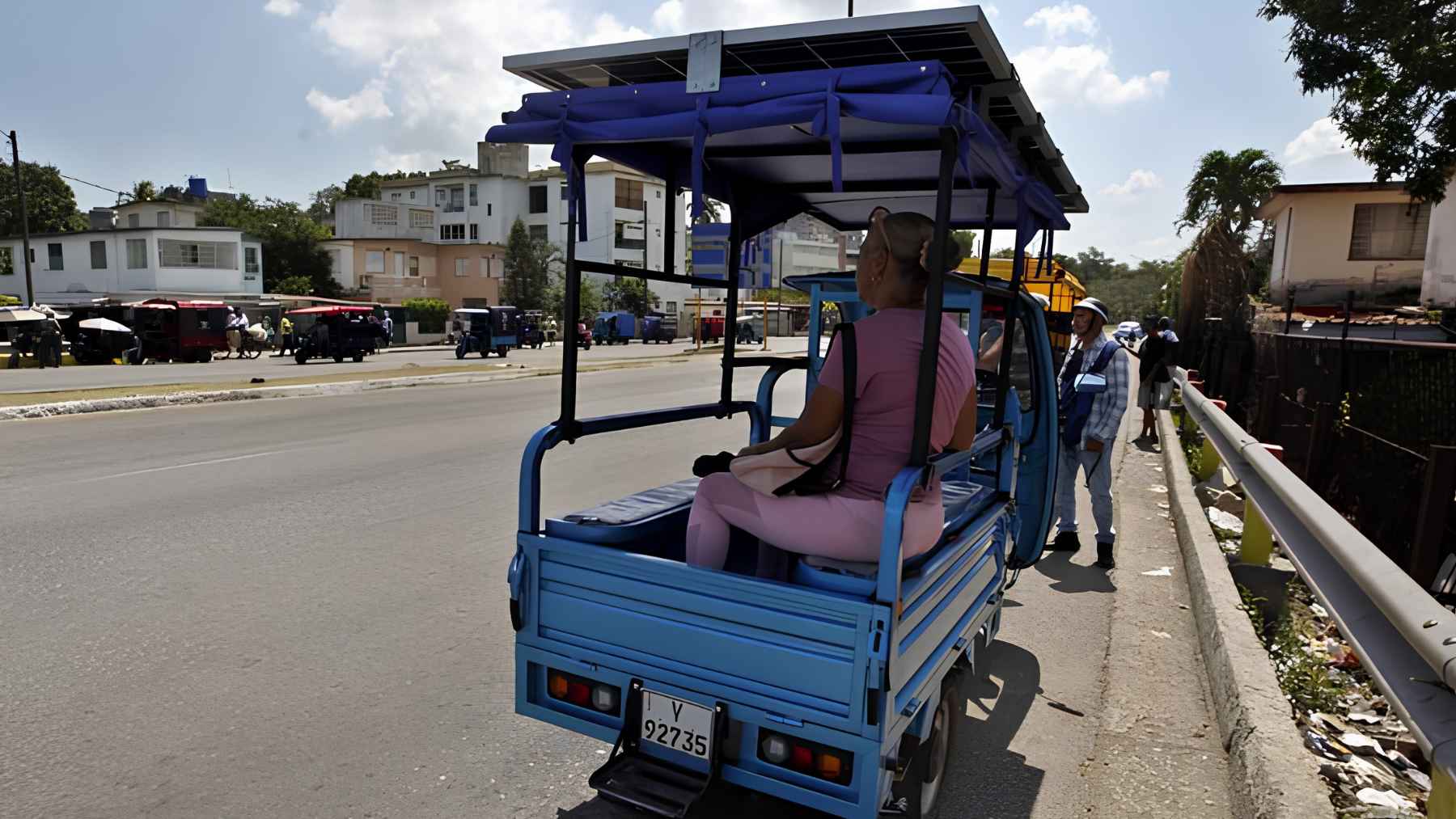
Cuba’s fuel shortage and rolling blackouts have turned daily transportation into a test of patience, planning, and sometimes pure luck. In Havana, 21-year-old Yadán Pablo Espinosa has responded with a practical idea that sounds almost too simple. Put solar panels on electric tricycles and let the sun help keep workers moving.
The project is not a miracle cure for Cuba’s energy crisis, but for drivers who carry food, goods, and passengers through hot streets, traffic jams, and long workdays, a little extra power can mean more deliveries, fewer forced stops, and a better chance of bringing money home.
Espinosa told EFE that his installation sends “constant and direct” power to the motor while the tricycle is moving and charges the battery when the vehicle stops.
A rooftop that earns its keep
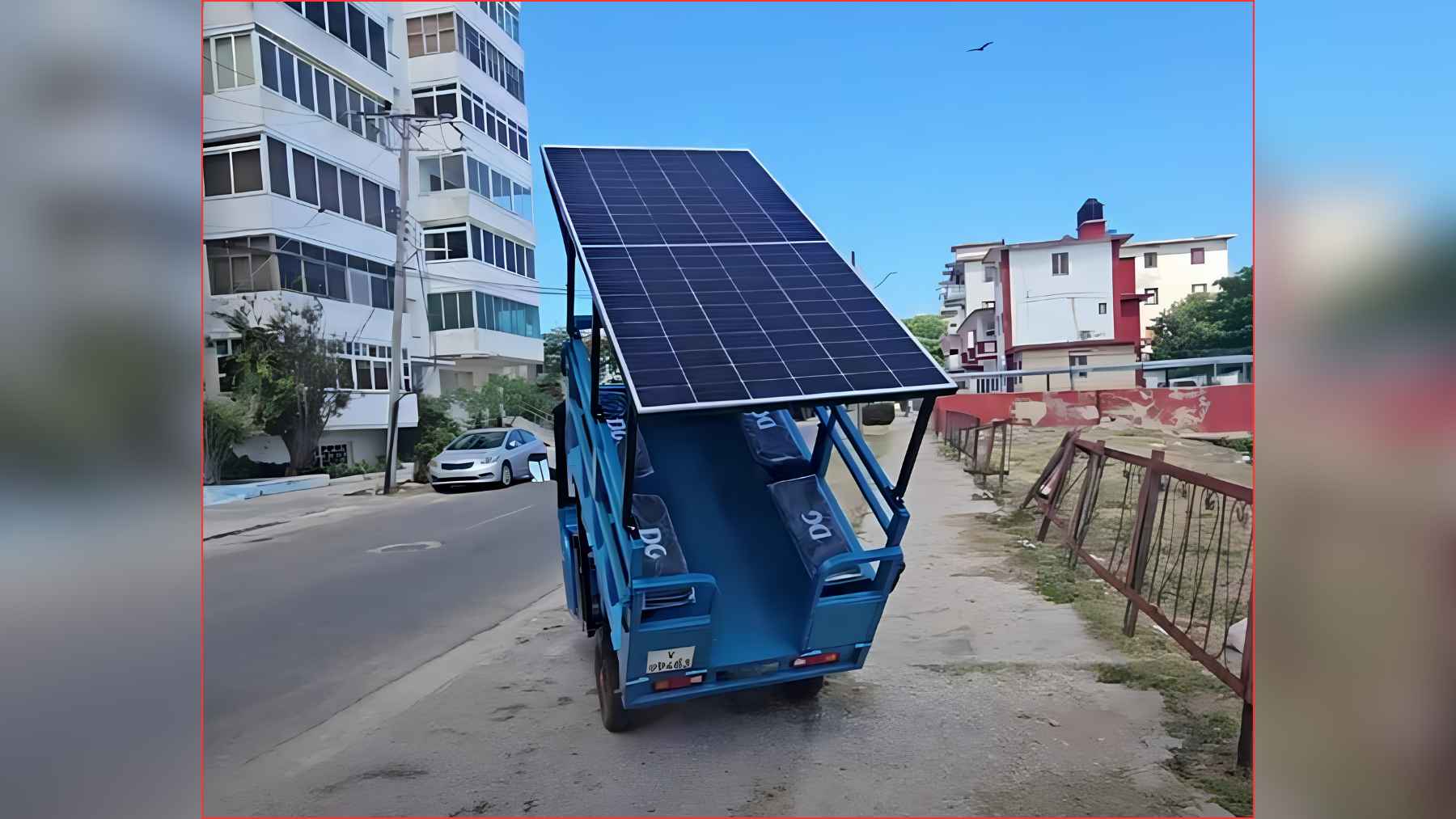
Espinosa started the installations in Arroyo Naranjo, on the outskirts of Havana, with help from his father, three brothers, and a friend. In less than a month, the small team had already placed more than 15 solar panels on electric tricycles, using panels rated between 550 and 650 watts, or about 0.74 to 0.87 horsepower.
The setup also solves a very Cuban problem in a very practical way. The metal frame that holds the panel becomes a roof, shielding drivers from sun and rain while turning the vehicle itself into a small solar workstation. That sticky summer heat we all know suddenly becomes part of the power source.
Why the math matters
A 550- to 650-watt panel will not fully run a tricycle motor by itself, especially under real-world conditions with traffic, hills, battery losses, and changing sunlight. That matters, because overpromising solar power is easy. Espinosa’s system is more modest and more believable.
Think of it as battery relief. In strong sun, a panel in that range can add roughly 2.6 to 3.2 kilowatt-hours across about five peak sunlight hours, depending on the panel, wiring, and weather. Cuba also has a strong solar resource, with the Ministry of Energy and Mines estimating solar radiation at about 0.46 kilowatt-hours per square foot per day.
Workers need range, not slogans
Electric tricycles have become more visible in Havana because gasoline is scarce and public transport has been under heavy strain. For many people, these vehicles are not gadgets. They are rolling workplaces.
Yoandis Castro, a 47-year-old Havana resident who transports goods for markets, told EFE the panel is “very good” because it helps with charging. Orlando Muñoz, 62, who carries passengers near the busy 100 and Boyeros avenues, said the system gives his tricycle “greater performance” and helps keep the battery alive while he works.
What does that mean in everyday life? Less fear that the battery will die before the last delivery. Fewer lost fares. Maybe an extra trip at the end of the day, when the electric bill, food prices, and family needs do not wait.
Solar is moving onto the street
Cuba has been trying to push more renewable energy into its strained power system. Reuters reported in 2025 that the government’s 2030 target was to generate 24% of total electricity from renewable sources, including 92 solar parks, batteries, hydropower, and wind projects.
More recently, Cuba’s Ministry of Finance and Prices updated the purchase tariff for renewable electricity delivered to the national grid, setting one rate of 90 Cuban pesos per kilowatt-hour. The ministry described renewable energy, batteries, and efficiency as part of a strategy to reduce dependence on imported fuel.
A national plan, however, can feel far away when a driver has a half-charged battery and a line of customers waiting. That is where Espinosa’s workshop stands out. It brings solar power down from policy speeches and solar parks to the roof of a working vehicle.
A family workshop, not a government program
Espinosa’s project did not come from a state subsidy, a university lab, or a major manufacturer. According to reports, the family team builds the iron supports, sources the panels, and installs the system for customers from a small workshop.
That homemade character is part of the story. It shows how people adapt when official systems move slowly or cannot meet the need. Still, there are real limits. Panels can be expensive, supply chains can break, and not every driver will have the cash to install one.
There is also the question of safety and durability. A solar roof has to survive vibration, rain, heat, and rough roads. A loose bracket is not a small problem when a tricycle is carrying passengers or goods through busy streets.
The bigger lesson
The most important part of this story may not be the panel itself. It may be the shift in thinking. A vehicle does not have to depend only on a wall outlet, and solar energy does not have to be limited to large infrastructure projects.
For the most part, this is a small-scale survival technology. It does not replace fuel imports, fix Cuba’s grid, or end blackouts, yet it does keep some workers on the road a little longer, and in a country where every charged battery counts, that is no small thing.
The report was published on OnCubaNews.