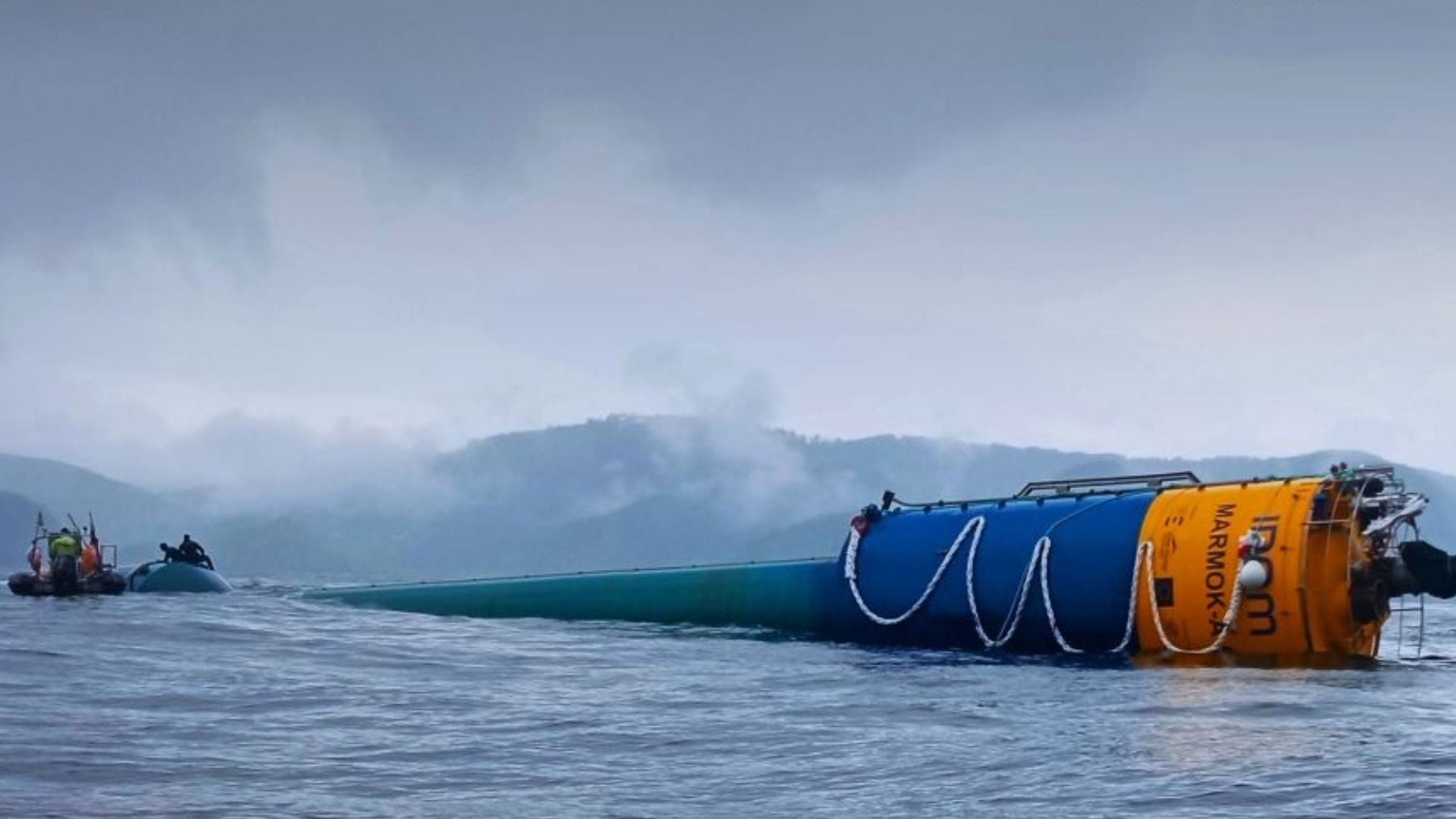
A huge floating buoy off northern Spain is turning ocean waves into electricity, and its latest test campaign is giving Europe another reason to look at the sea as part of its clean energy future. The device, called MARMOK-A-5, was deployed at the Biscay Marine Energy Platform in May 2026 as an upgraded wave energy converter designed to work in real offshore conditions.
This is not a giant power plant yet. It is a serious sea trial. But for anyone thinking about the electric bill, the idea is easy to grasp. Waves keep moving after sunset, during cloudy weather, and often when other renewable sources are changing. The big question is whether engineers can make the machines tough, efficient, and affordable enough to matter.
How waves become power
MARMOK-A-5 uses a system called an oscillating water column. That means waves make a column of water inside the buoy rise and fall, pushing air through a chamber near the top. That moving air spins a turbine, and the electricity can then be sent to shore through a seafloor cable.
The device is about 138 feet long and 16 feet wide. Most of it sits below the surface, with about 118 feet underwater and about 20 feet above it. Earlier project data listed its installed capacity at 30 kilowatts, with two turbines rated at 15 kilowatts each, so the point here is testing and learning rather than powering thousands of homes today.
What changed this year
The upgraded version now being tested includes controllable blades, onboard batteries, and smarter control systems. In practical terms, that means the buoy can better adjust to changing sea conditions instead of working the same way in every wave.
IDOM, the Spanish engineering company behind the device, also improved the mooring setup, cable routing, and offshore installation process. Those details may sound dry, but they matter. In the ocean, a weak cable or a slow repair can turn a promising machine into an expensive headache.
Borja de Miguel, project manager at IDOM, described the safe installation and grid connection as “a key step” toward bringing wave energy closer to commercial reality. The new campaign is now expected to test the power system and gradually increase operations in real sea conditions.
Why waves matter
Wind and solar power already carry much of the renewable energy conversation. Waves offer something different. They can be forecast hours or even days ahead, and they often arrive at different times than sunlight or wind, which makes them a useful partner for a cleaner grid.
Could wave energy replace wind farms or solar panels? Not anytime soon. The more realistic idea is that it could add another layer of power, especially for coastal regions, islands, and places where grid pressure is already a daily issue.
Ocean Energy Europe says most ocean energy development is taking place along Atlantic and North Sea coasts, including Spain, Portugal, France, Ireland, the United Kingdom, Belgium, and the Netherlands. That geography helps explain why a buoy in the Bay of Biscay is attracting attention beyond Spain.
The ocean is the hard part
The sea is not a friendly laboratory. Saltwater corrodes metal, storms punish moving parts, and repairs can require boats, calm weather, and specialized crews. That is why European research programs keep focusing on devices that can survive harsh offshore conditions while keeping costs down.
MARMOK-A-5 has already built a useful track record. An earlier version operated in open waters from 2016 to 2019, survived three winters in the Bay of Biscay, and endured waves as high as about 46 feet. It also gave engineers a large amount of data on design, installation, operation, maintenance, and removal.
That matters because wave energy has seen plenty of ambitious ideas struggle once they left the drawing board. The trouble is simple. Making electricity is one thing. Making it reliably, in heavy seas, year after year, is another.
Europe is watching
The new deployment is part of EuropeWave, a program backed by the European Commission, the Basque Energy Agency, and Wave Energy Scotland. Its goal is to push promising wave energy technologies toward pre-commercial stages, where they can prove whether they are ready for larger projects.
Sweden shows why this conversation matters across the continent. The country has four electricity bidding areas, and its grid operator says northern Sweden produces more electricity than it needs while southern Sweden has the opposite problem. When transmission limits get in the way, prices can differ by region.
Swedish company Waves4Power has also worked on buoy-based wave systems, including a full-scale demonstration at Runde in Norway that began delivering electricity to the local grid in 2017. So Spain’s test is not happening in isolation. It is part of a wider effort to see whether waves can earn a real place beside wind, solar, hydro, and nuclear power.
What happens next
For now, MARMOK-A-5 is mainly a test machine. Over the coming months, engineers will study its performance, reliability, maintenance needs, and ability to work safely in a demanding marine environment. The data will help shape future versions that could be larger and closer to commercial use.
There is a long road ahead. The technology still has to become cheaper, easier to install, and robust enough for routine operation. Still, the message from northern Spain is clear. A 138-foot buoy can turn ocean motion into usable electricity, and that is a step worth watching.
The official project information and latest deployment details have been published by IDOM.