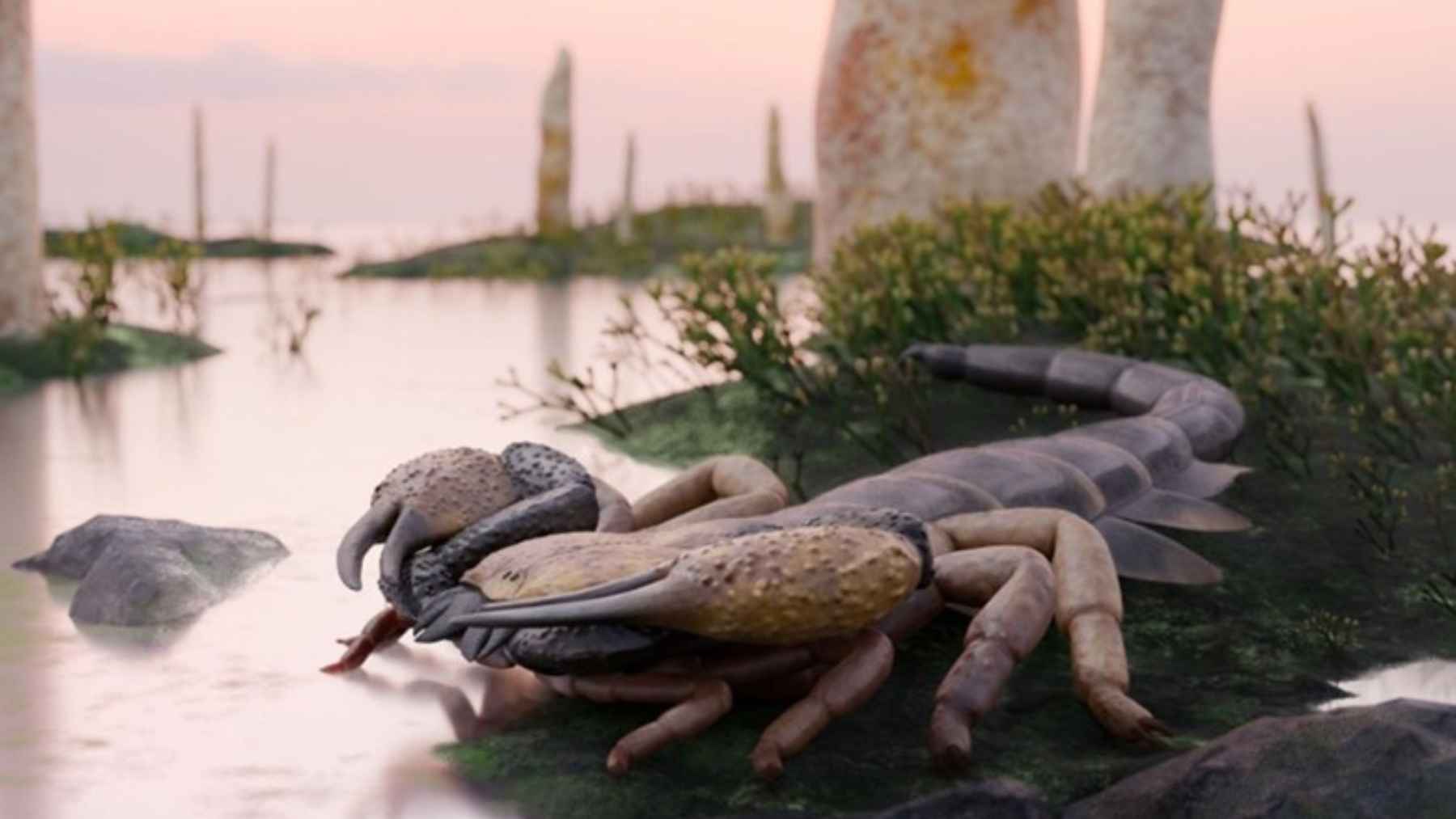
A scorpion longer than a yardstick? That is the startling picture emerging from a new study of British fossils that had been sitting in museum collections since the 19th century.
Researchers now say the extinct species Praearcturus gigas may have been the largest scorpion known so far, reaching more than 3.3 feet long and carrying pincers about 6.3 inches long.
The twist is that this was not a brand-new fossil dug out of a cliff last summer. It was an old puzzle, reopened with modern imaging and fresh anatomical comparisons. And that matters, because this giant lived around 415 million years ago, when life on land was still just getting started.
A monster in a drawer
The fossils of Praearcturus gigas were known for more than 150 years, but scientists could not agree on what kind of animal they were looking at. When researchers first described the species in the 1870s, they thought it was related to isopods, the crustacean group that includes pill bugs.
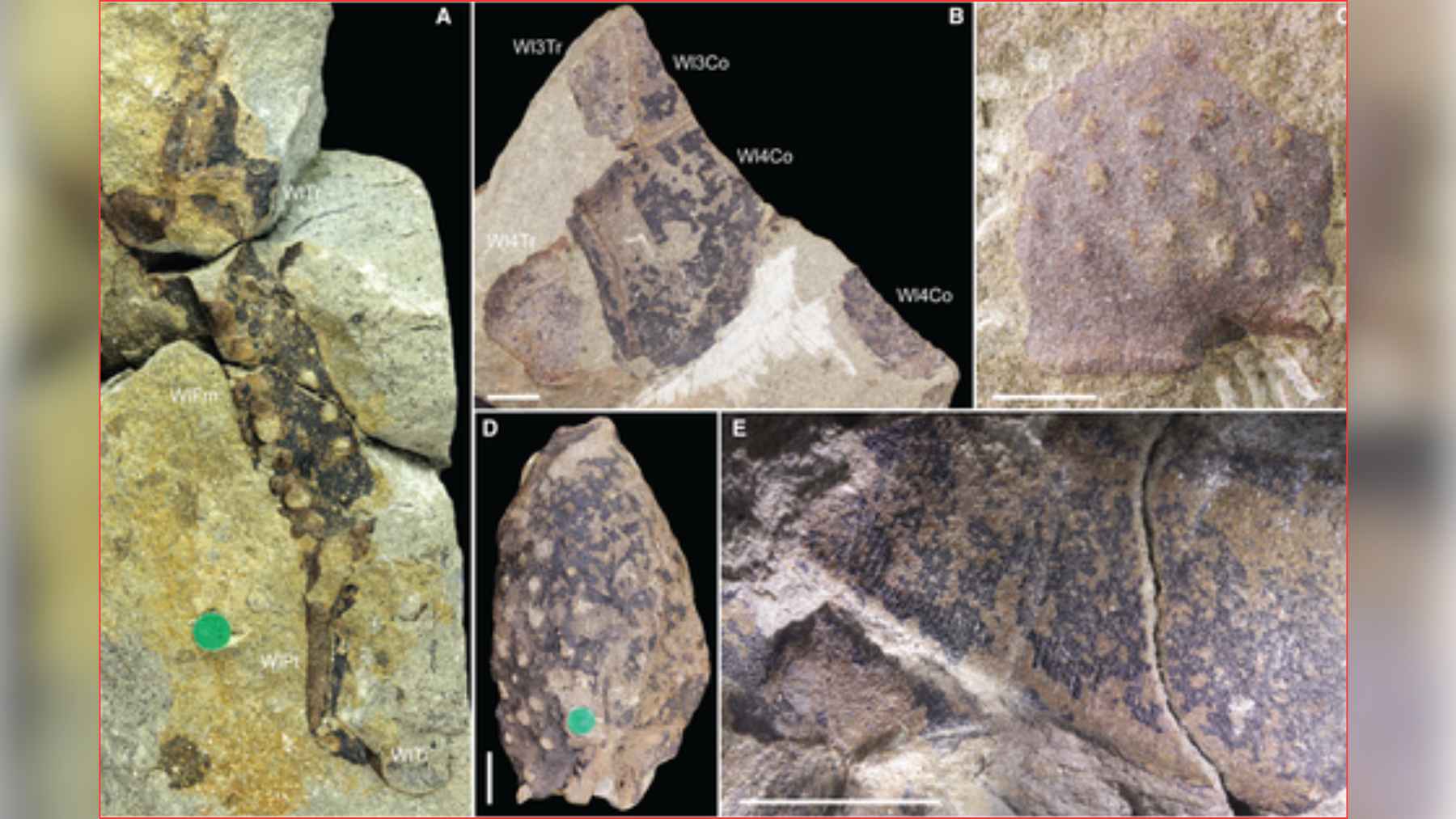
That confusion was understandable. The fossils are fragmentary, and some of the most familiar scorpion features, especially the tail, were not preserved. Imagine trying to identify a car from a door, a wheel, and part of the hood.
Later, some researchers suggested it really was a giant scorpion, but the case remained unsettled. Now, a team from the University of Manchester and the Natural History Museum in London has taken another look, using detailed drawings, photography, tomographic data, and comparisons with better-known fossil scorpions.
Why it looks like a scorpion
The new study points to several clues that support a scorpion identity. The animal had large claw-bearing limbs with both fixed and movable fingers, along with body structures that match features seen in ancient scorpions already accepted by scientists.
To a non-specialist, that may sound like fossil fine print, but in paleontology, small shapes can carry big meaning. A groove, a joint, or the angle of a body plate can be the difference between an ancient crustacean and a fearsome arachnid predator.
Lead author Dr. Richard J. Howard said “confirming that this animal is a scorpion” changes how researchers understand its evolution. The point is not just that the animal was big. It was big at a time when many land ecosystems were still young, sparse, and strange.
Not a desert scorpion
Today, when most people picture a scorpion, they think of dry ground, rocks, and desert heat. Praearcturus gigas appears to belong to a very different world. Its fossils come from river-linked deposits in the Old Red Sandstone of England and Wales, and the study suggests it may have been aquatic or amphibious.
One reason is the presence of lateral structures called epimera on parts of its body. These features, along with the fluvial setting that preserved the fossils, led the authors to suggest the animal could have moved between water and land.
That makes the discovery feel even more unusual. This was not simply a modern scorpion scaled up like a nightmare from under the porch. It may have belonged to a shoreline world where evolution was still testing the line between river, floodplain, and dry land.
The size changes the story
For years, many people have associated giant ancient arthropods with the Carboniferous Period, when high oxygen levels helped support enormous insects and relatives of millipedes. Praearcturus gigas lived more than 50 million years earlier, before complex forests became a major feature of the planet.
That timing is the real headline beneath the headline. If a scorpion could grow to more than 3.3 feet in the Early Devonian, then oxygen-rich forests may not be the whole story behind arthropod gigantism. Opportunity may have mattered too.
This means an animal’s size can reflect more than the air it breathes. A rich supply of prey, fewer large competitors, and the support of water could all have helped this predator grow so large, though the researchers are careful to frame those ideas as explanations to test rather than final answers.
A young world on land
The Early Devonian was not a world of birdsong, mammals, reptiles, or forests filled with shade. Small plants, fungi, and early arthropods were spreading across landscapes that would have looked bare compared with any park or backyard today.
That makes Praearcturus gigas stand out. In a land ecosystem still finding its footing, a predator this size would have been a major presence. What did it eat? The official museum account suggests it may have hunted small arthropods on land and could also have been an aquatic predator.
There is still room for caution. Fossils do not preserve behavior like a wildlife documentary, and missing body parts leave gaps. Yet even with those limits, the animal now gives scientists a clearer glimpse of the moment when life was pushing beyond the water’s edge.
Old fossils, new answers
This discovery is also a reminder that museum collections are not dusty storage rooms. They are scientific time capsules. A specimen collected generations ago can become new again when researchers bring better tools and better comparisons to the table.
That is exactly what happened here. By revisiting old fossil fragments, scientists have reshaped the story of one of Earth’s earliest large predators and raised fresh questions about how animals adapted to land and water during a critical chapter in evolution.
So, the biggest surprise may not be the giant pincers or the 3-foot body. It may be that the answer was waiting in a drawer all along.
The study was published in Palaeontology.