For decades, many paleontologists thought they had the Ediacaran fossil record sorted. The oldest “Avalon” fossils showed up first, then came the richer “White Sea” communities, and finally a simpler “Nama” world just before the Cambrian explosion.
But a new fossil site in Newfoundland raises an uncomfortable question. What if one of the first big die-offs in animal history was worse than we realized, and we missed it because the timeline was off?
A fossil site that shifts the timeline
The site, known as Inner Meadow, preserves a diverse set of soft-bodied fossils and has been dated to about 551 million years old, roughly 13 million years younger than other classic Avalon finds nearby.
The study argues this pushes estimated losses in the “Kotlin Crisis” to about 80% of known large Ediacaran organisms. In the paper, the lead author calls the extinction “much more profound than we previously thought.”
Lead author Duncan McIlroy of Memorial University of Newfoundland and colleagues say the simplest explanation is that the Avalon assemblage lasted longer than expected. In practical terms, that means Avalon-style communities overlap the full time window traditionally assigned to the White Sea assemblage.
That overlap matters because it changes how scientists count disappearances. Here is the twist. If older-looking fossils survive later than the textbooks say, the end of the Ediacaran may have been a sharper biological cliff than it first appeared.
The three Ediacaran “neighborhoods” scientists talk about
Ediacaran fossils are more than half a billion years old, from a world with few hard shells. Scientists often group them into three big “assemblages,” which is a tidy way of saying they cluster in rocks of certain ages and environments.
The Avalon assemblage is usually associated with deeper-water settings and includes rangeomorphs, frond-like organisms with repeating, branching patterns that can look almost fernlike.
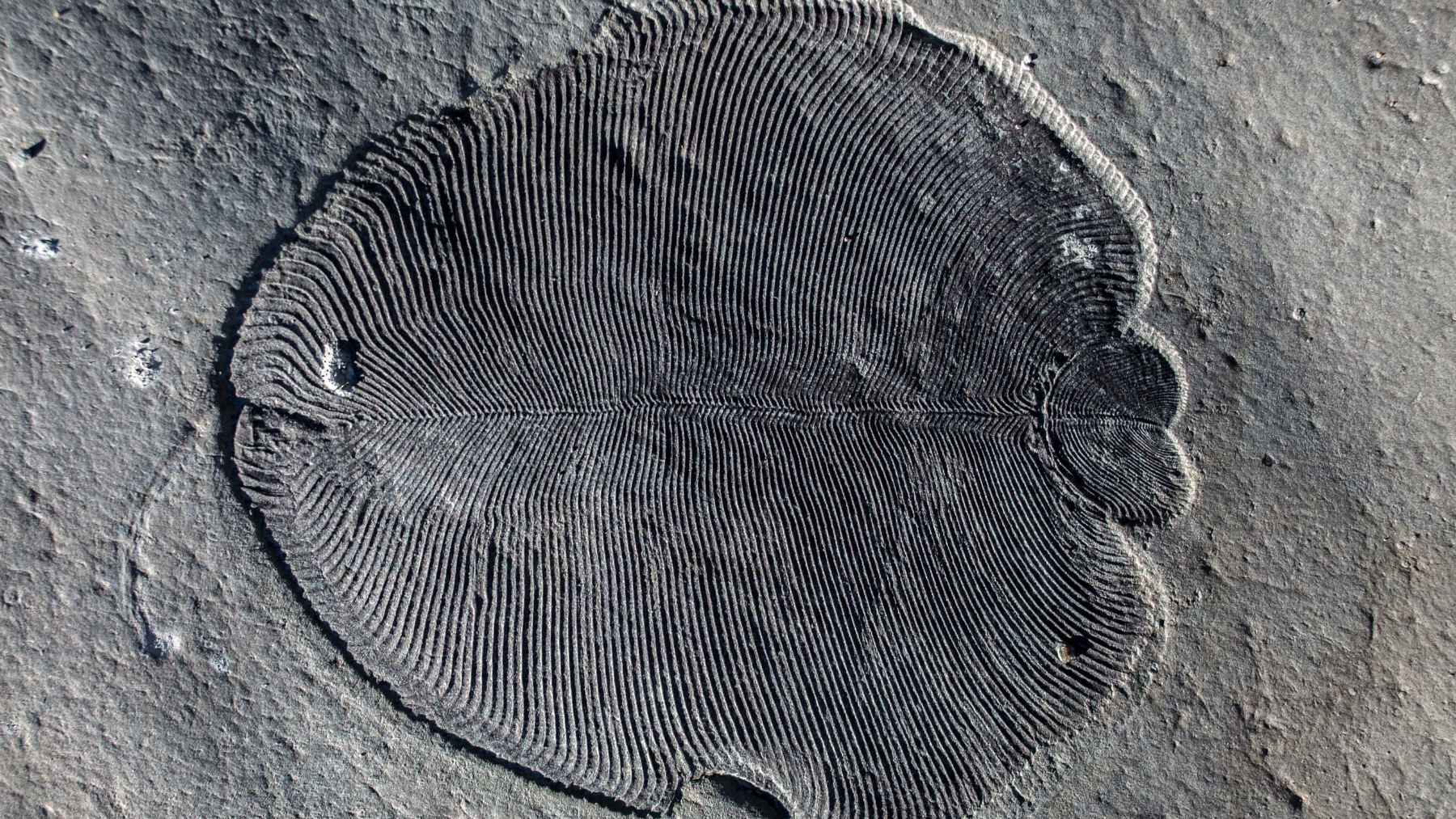
The White Sea assemblage is better known from shallower marine rocks in places like Australia and Russia. It includes famous forms such as Dickinsonia and Kimberella, which are often discussed as early relatives of animals.
Then there is the Nama assemblage, a lower-diversity set of fossils that persists closer to the Cambrian boundary. For a long time, this sequence was treated like a simple relay race, with one community handing off to the next.
Why Inner Meadow’s preservation is such a big deal
Most Ediacaran organisms did not have hard shells or bones, so they usually decay without leaving a clear trace. When you do get a good imprint, it can feel like a lucky snapshot, like footprints that hardened before the tide came back in.
Sites with unusually rich fossils or unusually detailed preservation have a special name, “lagerstätten.” The U.S. National Park Service describes these rare deposits as exceptionally rich fossil sites, including some that preserve delicate details that usually vanish.
Inner Meadow is being described as one of those rare windows, a place where diversity and preservation quality make comparisons sharper. That is part of why its age is so disruptive, because it offers a clearer look at who was still around right before the Kotlin Crisis hit.
The Kotlin Crisis looks more like a mass extinction
So what is the Kotlin Crisis? It is a sharp drop in the variety of large, visible Ediacaran life around 550 million years ago, recognized in parts of ancient Avalonia and Baltica.
Earlier estimates suggested the losses were real but did not quite meet the bar many scientists use for a “mass extinction.” The Inner Meadow fossils change that picture, because they make the later disappearances harder to explain away.
Researchers say the crash looks sharper because the earlier Ediacaran record shows little steady decline. Instead, the new data paints the Kotlin Crisis as a sudden break, not a slow fade.
A new way to read early ecosystems
If Avalon-style fossils and White Sea fossils overlap in time, then their differences may be less about “before and after” and more about “where and how.” In other words, ecology may be doing more of the sorting than the calendar, with depth, light, and seafloor conditions shaping who lived where.
That idea fits with what is known from other Newfoundland sites, where many Ediacaran communities lived on the deep seafloor and were preserved as seafloor impressions. A UNESCO listing for Mistaken Point describes more than 10,000 fossil impressions along a rugged coastline about 11 miles long, with some fossils reaching nearly 6.5 feet in length.
It also nudges the bigger story of animal evolution. The Cambrian explosion is often described as a rapid burst of new body plans, but University of California, Berkeley, notes that it followed many millions of years of earlier evolution and that Ediacaran fossils predate it.
What scientists will watch for next
A single fossil site cannot answer everything, and the cause of the Kotlin Crisis is still debated across the field. The next step is testing whether other regions also hold late-surviving Avalon-style communities that have been misdated or overlooked.
Work in Newfoundland is already showing how much information can be hidden in soft-bodied fossils when preservation is good. A campus report on earlier finds from the Inner Meadow area notes that some Ediacaran organisms could reach about 3.3 feet in length, which was genuinely “large” for that time.
It also notes that this period began after Earth thawed from an extreme global ice age, when melting glaciers likely helped fuel a boom in bigger life.
And researchers are still trying to pin down which Ediacaran creatures were true animals. A 2018 Australian National University press release describes cholesterol molecules preserved in a Dickinsonia fossil, evidence that at least some of these strange forms belonged on the animal side of the family tree.
The main study has been published in Geology.