A newly described fossil site in Newfoundland, Canada is shaking up a long-standing timeline of Earth’s earliest large life. The rocks hold soft-bodied fossils that look like classic “Avalon” organisms, but they appear much later than expected, right before a major crash in biodiversity.
The takeaway is simple but surprising. The new evidence suggests the Kotlin Crisis, an extinction event around 550 million years ago, likely wiped out far more early life than many researchers had assumed, and it may have hit multiple ecosystems at once. What if one of Earth’s first big die-offs has been hiding in plain sight?
A hidden fossil jackpot at Inner Meadow
The site is called the Inner Meadow Lagerstätte, a term scientists use for a place where fossils are preserved unusually well, sometimes capturing soft bodies that normally rot away. Think of it like a rare high-resolution snapshot from a time when most of the fossil record is blurry.
This matters because many Ediacaran organisms had no shells, bones, or teeth. Without special conditions, they leave almost nothing behind, which is why every new “exceptional preservation” site can change the story fast.
In practical terms, Inner Meadow gives paleontologists a fresh window into a world that existed long before dinosaurs, trees, or even fish. It also gives them something else that is just as valuable as fossils – a precise time stamp in the rock.
The three Ediacaran “communities” people thought were separate
For years, researchers have loosely grouped Ediacaran fossils into three big assemblages, basically recurring communities of organisms found in rocks of different ages and environments. The traditional picture put the Avalon Assemblage first, then the White Sea Assemblage, then the Nama Assemblage, each one replacing the last.
The Avalon fossils, best known from Newfoundland, are famous for strange, frond-like rangeomorphs such as Charnia. They are often described as “fractal,” meaning their branching shapes repeat like patterns you might see in a fern.
The White Sea fossils, found in places like Australia and Russia, include other headline-grabbing forms such as Dickinsonia and Kimberella. The Nama assemblage, which comes later, is often described as lower diversity, like a quieter final act before the Cambrian Explosion.
A date that collapses two chapters into one
The surprise at Inner Meadow is timing. The fossil-bearing surface was dated to about 551 million years ago, give or take about 600,000 years, which lines up with the youngest part of the White Sea interval rather than the older Avalon window.
That means Avalon-style organisms did not simply disappear and then get replaced by the White Sea biota in a neat sequence. Instead, the study argues these assemblages overlap in time, and their differences may mostly reflect ecology, meaning where they lived and under what conditions, rather than when they lived.
It is a little like finding a “classic” song on a playlist you thought ended years earlier. Same vibe, later date. That kind of overlap forces scientists to rethink how they use these assemblages to tell time in ancient rocks.
The Kotlin Crisis, explained without the jargon
The Kotlin Crisis is the name given to a sharp drop in Ediacaran diversity around 550 million years ago. In plain English, many kinds of large, visible organisms vanish from the record in a geologically short span.
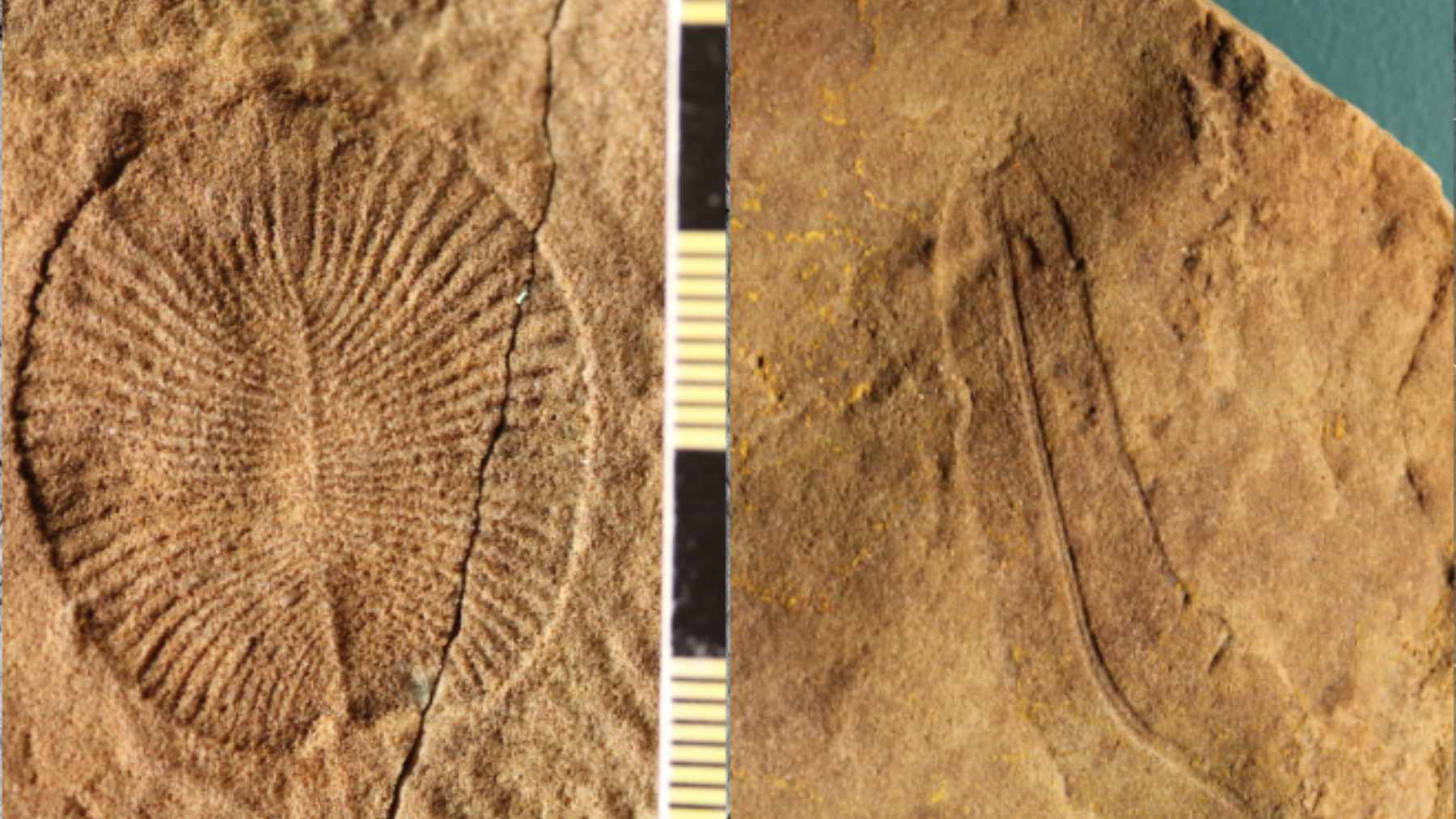
The new reporting around Inner Meadow argues that the loss may have been enormous, with roughly 80% of known Ediacaran macroorganisms disappearing. “Macroorganisms” just means larger life you could see without a microscope, not just tiny microbes.
The lead author, Duncan McIlroy of Memorial University in Newfoundland, said the expanded fossil ranges at Inner Meadow boost the estimated loss, because the site documents “endling” occurrences. An endling is the last known appearance of a species or group in the fossil record, a final sighting before it is gone.
How scientists put a date on a world this old
Dating a fossil surface that is about 551 million years old is not like reading a calendar. Researchers look for materials in the rock that formed at the time of deposition, and one of the best is volcanic ash that settled into the seafloor and later hardened.
Tiny zircon crystals inside that ash can act like natural clocks. By measuring radioactive decay inside the zircons, scientists can estimate when the crystal formed, which is often very close to when the ash fell and the sediment layer was laid down.
Supporting material for the study describes uranium-lead dating of zircons from the ash layer tied to the Inner Meadow surface. That kind of dating is one reason this new age estimate is treated as a strong anchor point, not just an educated guess.
Why this matters beyond one fossil site
Scientists have debated for years whether the late Ediacaran drop in diversity reflects a true extinction, or whether later rocks simply failed to preserve soft-bodied organisms well. That question is not academic trivia – it shapes how we think about the early rise of animals and the pressures they faced.
A major 2022 analysis in PNAS compiled a global database of Ediacaran fossils and reported that around 80% of White Sea taxa do not show up in the Nama interval. It also argued the pattern fits an environmentally driven extinction, potentially linked to lower oxygen in the oceans.
Inner Meadow adds a new twist to that bigger debate. If Avalon-type communities lasted longer and still crashed at the Kotlin Crisis, the extinction story looks harder to dismiss as a simple preservation problem, and more like a real biological turning point.
To read more, the official Geological Society of America news release summarizes the findings, and the main study DOI page provides publication details.
The main study has been published in Geology.