Have you ever opened an old jar of honey in the back of the pantry and wondered whether it was still safe? Now stretch that same question across more than 3,000 years, into a sealed Egyptian tomb where food, oils, waxes, and perfumes were meant to follow the dead into the afterlife.
The popular story says archaeologists found ancient Egyptian honey that was still edible. The science says something a little more careful, and far more interesting.
Properly sealed honey really is one of nature’s toughest foods, but the famous tomb-tasting tale deserves some skepticism.
The legend needs a closer look
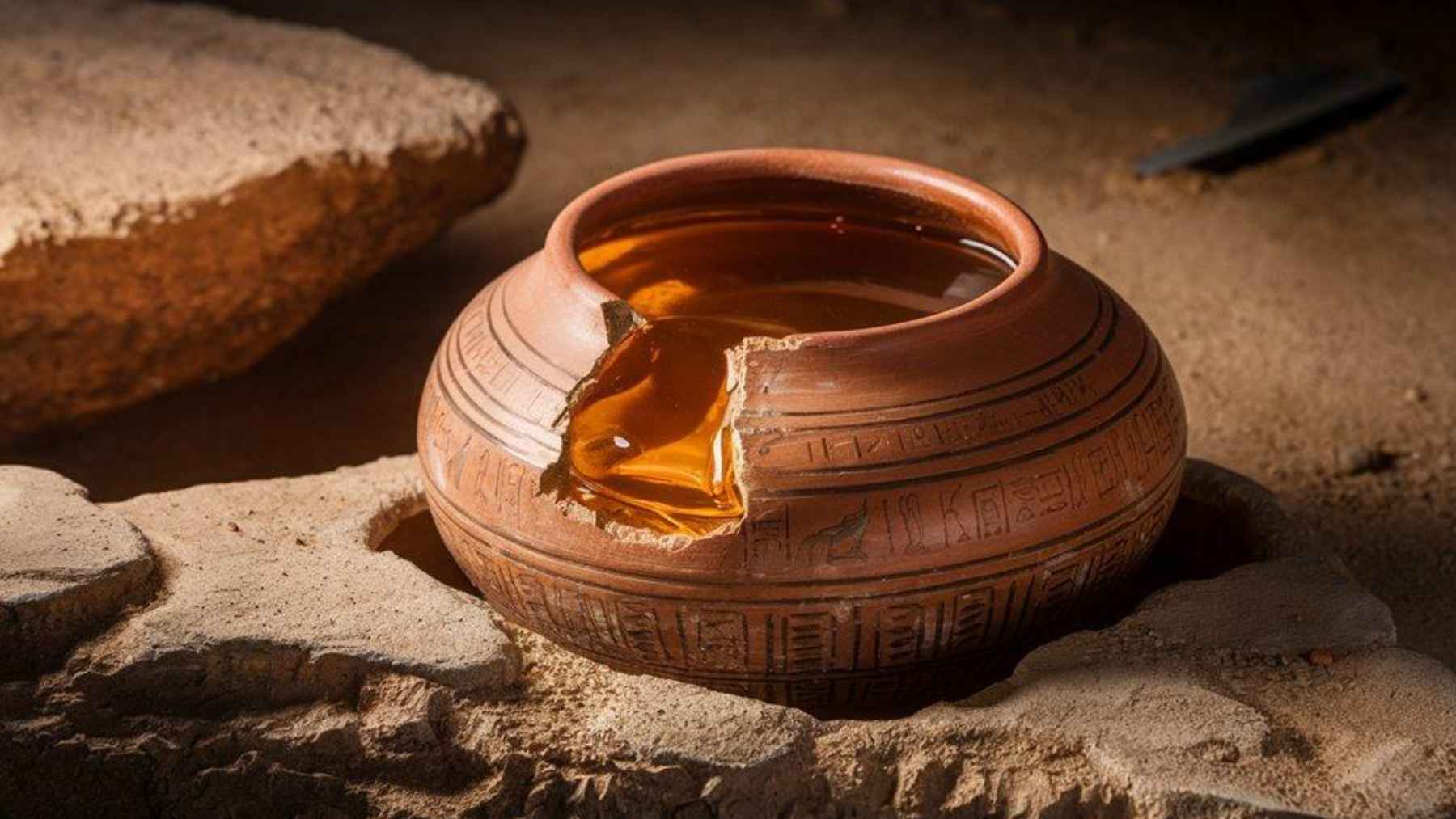
Howard Carter’s work in Tutankhamun’s tomb did include two pottery jars marked “honey of good quality”, but later chemical tests on the tiny dried residue did not confirm edible honey.
The analysis found only a faint caramel-like trace, and the researcher warned that the material may have changed so much that normal tests no longer worked.
Another famous Egyptian find was even trickier. A liquid once described as honey or syrup from the tomb of Yuya and Thuya was later identified by Alfred Lucas as very acidic castor oil, not honey, and a later review urged caution when judging ancient samples without pollen evidence.
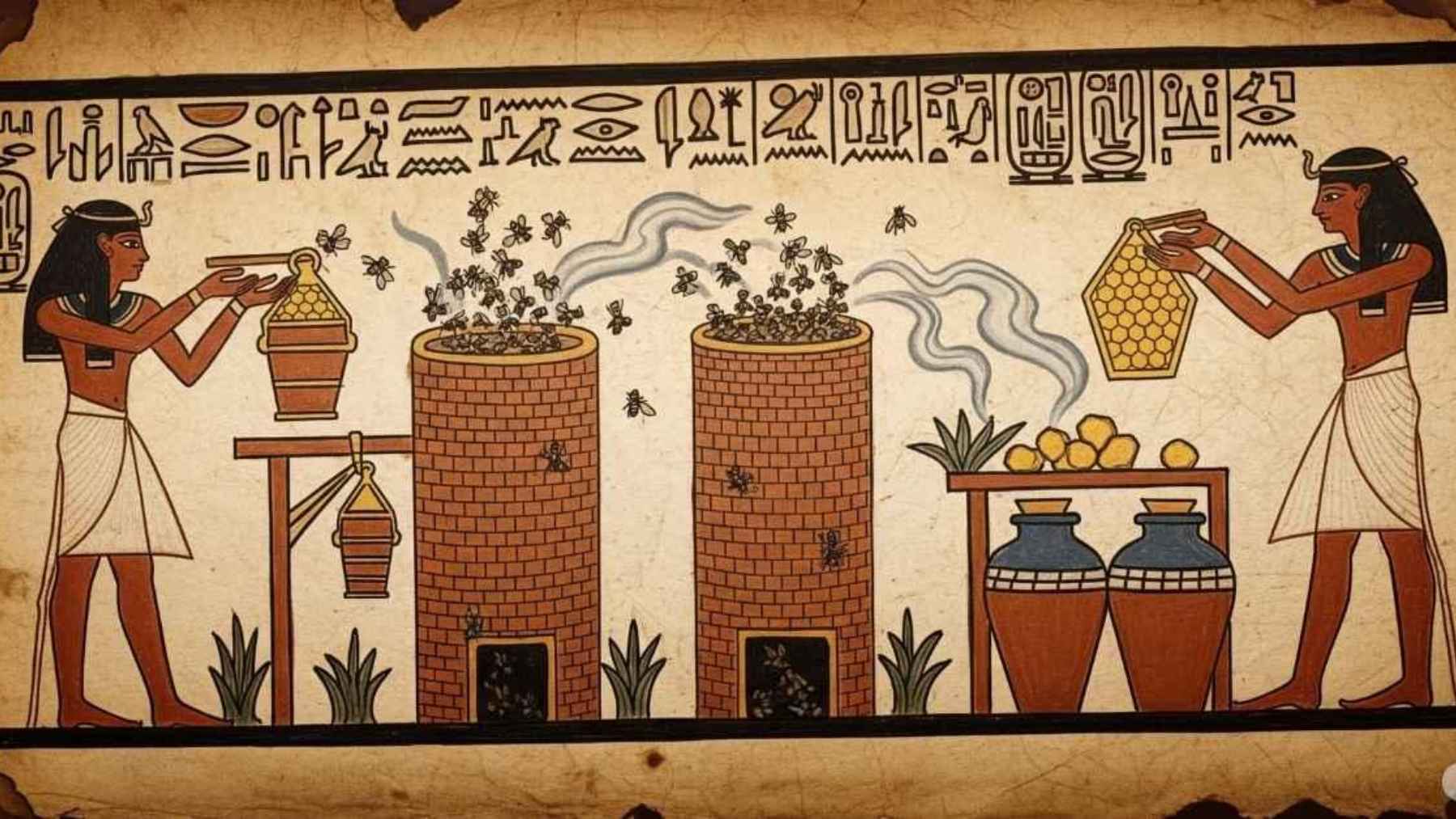
So, was there honey in ancient Egyptian tombs? Almost certainly, yes. Tomb scenes and inscriptions show beekeeping, honey gathering, jar filling, and sealing across long periods of Egyptian history, including Eighteenth Dynasty scenes from around 1450 BCE.
Why honey fights decay
The reason honey can last so long starts with water, or rather the lack of it. Modern honey is mostly glucose and fructose, and it often contains more than 70% sugar while holding less than 20% water.
That matters because bacteria and mold need usable water to grow. In honey, the sugar pulls water away from microbes by osmotic pressure, leaving many of them unable to function. It is a tiny desert inside a jar.
Honey is also acidic. The National Honey Board lists honey’s average pH at about 3.9, with a typical range from 3.4 to 6.1, which is uncomfortable territory for many food-spoiling organisms.
Bees add the hidden chemistry
Bees do more than collect nectar. During the honey-making process, they add enzymes, including glucose oxidase, which helps turn glucose into gluconic acid and hydrogen peroxide.
That last compound is familiar from the medicine cabinet. In honey, hydrogen peroxide appears at low levels, but it still helps explain why research links honey’s antimicrobial power to high sugar content, low water activity, low pH, and peroxide production.
But this does not mean honey is magic or that every jar should become a home remedy. Honey may contain spores of Clostridium botulinum, which is why health organizations recommend not feeding honey to infants under one year old.
Tombs made the perfect pantry
For honey to last, it has to stay sealed and dry. Leave a jar open in a humid kitchen and it can absorb moisture from the air, giving wild yeasts a better chance to ferment the sugars.
Egyptian tombs, for the most part, did the opposite. Thick vessels, clay seals, waxy coatings, darkness, and stable dry chambers could slow the normal chemistry of decay to a crawl. In practical terms, that means a sealed tomb could act less like a grave and more like a strangely effective archive.
Recent mummy research points in the same direction. A University of Bristol team reported that volatile compounds from ancient embalming materials can still be measured, including chemical signals tied to fats, oils, beeswax, plant resins, and bitumen.
Ancient does not mean fresh
Even when honey does not become dangerous, it does change. Crystallization is natural because honey is a supersaturated sugar solution, and glucose can separate into a grainy form over time.
Over centuries, bright floral aromas would fade, and the color could darken from amber toward deep brown. A spoonful from an ancient sealed vessel, assuming it really were honey, would probably taste more like dark sugar and caramel than fresh orange blossom or clover.
There is another catch. Some of honey’s active enzyme chemistry weakens with time, light, and storage conditions, so ancient honey should not be treated like modern medical-grade honey. Sweet, perhaps. Fresh, no.
A small lesson from an old jar
The real wonder is not that someone may have tasted honey from a pharaoh’s tomb. The better story is that bees built a food preservation system long before humans understood water activity, pH, or antimicrobial chemistry.
That little jar also connects ecology to archaeology. Flowers fed the bees, bees transformed nectar, humans sealed the result, and a dry tomb protected the chemistry for longer than many languages have survived.
So the next time honey crystallizes on the shelf, don’t rush to throw it away. Warm it gently, keep the lid tight, and remember that the same sticky chemistry once helped preserve a taste of the ancient Nile.
The scientific review was published on Antibiotics.