In 1994, a New South Wales (NSW) park ranger named David Noble lowered himself into a remote rainforest canyon in Wollemi National Park, about 93 miles northwest of Sydney, and walked into one of the strangest botanical moments of the century. Around him were tall, dark-barked trees whose family line had been known mainly from fossils and was widely believed to have vanished millions of years ago.
The tree is now known as the Wollemi pine, or Wollemia nobilis, and its survival story is not just about a lucky discovery. Australia’s latest recovery plan lists only 45 mature wild individuals and 46 juveniles in one wild population, spread across four stands, with the exact site still kept from the public. One muddy boot, one hot fire season, one new root disease could change everything.
A fossil that never left
The Wollemi pine belongs to the Araucariaceae family, a plant family that dates back roughly 200 million years. Fossil evidence linked to the species goes back about 91 million years, meaning its ancestors were growing while dinosaurs still moved through ancient forests.
That is why scientists often call it a “living fossil” or even the “dinosaur tree.” The phrase sounds dramatic, but in this case it fits pretty well. A tree thought extinct around 2 million years ago had simply been hiding in the right canyon all along.
The name also carries the story of its rediscovery. “Wollemi” comes from the national park, while “nobilis” honors David Noble, the ranger whose off-duty canyoning trip brought the tree back into modern science. Not a bad weekend hike.
Inside the hidden canyon
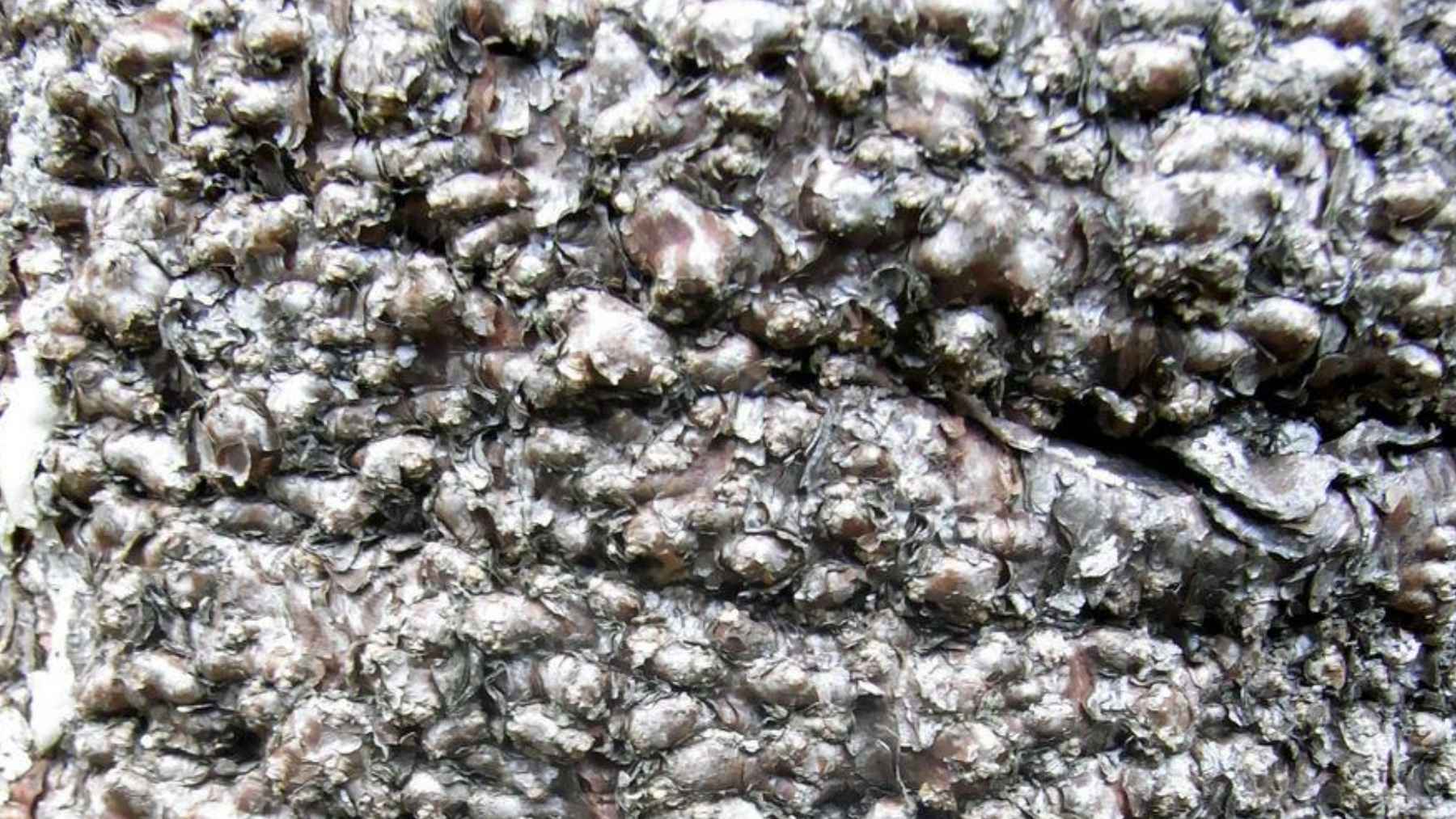
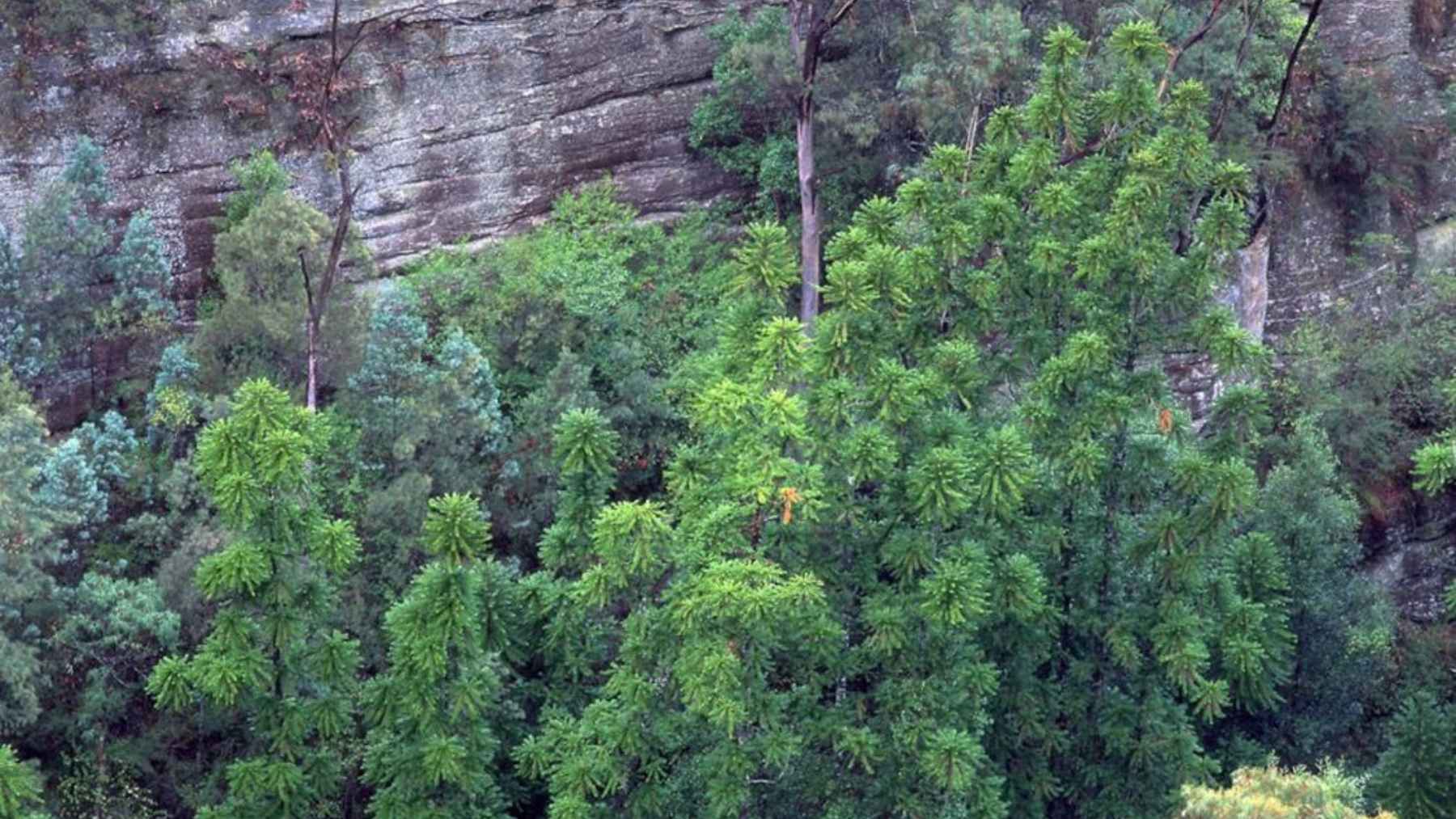
The canyon where the trees grow is cool, damp, and protected by steep sandstone walls. In that pocket of stable conditions, Wollemi pines can reach about 131 feet tall, with bubbly reddish bark and fern-like foliage that looks more ancient than ornamental.
Mature trees often grow several trunks from the same base, and NSW National Parks says a single tree can produce up to 40 trunks. One trunk may live up to 450 years, while some of the larger trees could be hundreds or even thousands of years old.
So, is this one grove or many trees wearing the same disguise? To a large extent, both ideas are true. The Wollemi pine can reproduce through seeds, but its habit of resprouting means some stems may be part of much older living systems.
Why secrecy matters
The location is not hidden to make the story more mysterious. It is hidden because the trees are extremely vulnerable. Unauthorized visits can trample seedlings, compact fragile soil, damage exposed roots, spread weeds, and introduce pathogens.
The biggest disease concern is Phytophthora, a waterborne root rot pathogen that can move in mud, runoff, and contaminated gear. That means the ordinary mess of a bushwalk – muddy soles, damp clothing, and dirty equipment – becomes a real conservation risk here.
Australia’s recovery plan says access is restricted to the minimum essential staff. Authorized visitors must disinfect footwear, clothing, and equipment before entering the area. It is not glamorous conservation work, but it may be what keeps the species alive in the wild.
Fire came close
The 2019 and 2020 Black Summer bushfires brought another warning. Fire impacted the wild Wollemi pine population and three translocated stands, according to the national recovery plan.
A major emergency response helped limit the damage. Fire crews used irrigation systems, aerial water bombing, fire retardant around the catchment, and remote-area firefighters to keep the worst of the blaze from destroying the last natural stands.
Still, the fires caused severe losses among seedlings and juveniles, and damaged several adult trees. The plan warns that rebuilding the juvenile bank from seed could require at least 20 to 30 years without another fire. The trouble is, the climate clock is not slowing down.
A genetic warning
For years, researchers found almost no genetic variation among Wollemi pines. That matters because a population with little genetic diversity has fewer biological “backup plans” when disease, heat, drought, or fire pressures change.
There has been one hopeful development. Botanic Gardens of Sydney announced that new genomic techniques found small genetic differences between some individual Wollemi pines for the first time, a breakthrough that could help guide future conservation work.
A 2023 genome study also described the Wollemi pine as a critically endangered “living fossil” with very low genetic diversity. This means every surviving wild tree carries more weight than its size suggests.
From canyon to gardens
After the species was confirmed, they began propagating Wollemi pines outside the wild canyon. That move was strategic. If a pathogen or fire wiped out the wild population, cultivated trees in botanic gardens and managed collections could help prevent total extinction.
The recovery plan notes that commercialization began in 2005 to release cuttings to the public for sale and propagation. The purpose was partly to reduce illegal collection pressure on the wild population, while also raising conservation funds and increasing the tree’s presence in international botanic gardens.
That is why a tree once known only from fossils can now be seen safely in selected botanic gardens. At the end of the day, the public version protects the secret one.
What it teaches us
The Wollemi pine reminds us that the fossil record is a window, not a complete inventory. A species can disappear from science without disappearing from Earth, especially if it survives in a small, sheltered place that barely leaves a trace.
However, the rediscovery also comes with a hard lesson. Finding a species is not the same as saving it. For the Wollemi pine, survival now depends on quiet coordinates, clean boots, fire planning, genetics, and patience.
The official recovery plan was published on the Australian Government Department of Climate Change, Energy, the Environment and Water’s website.