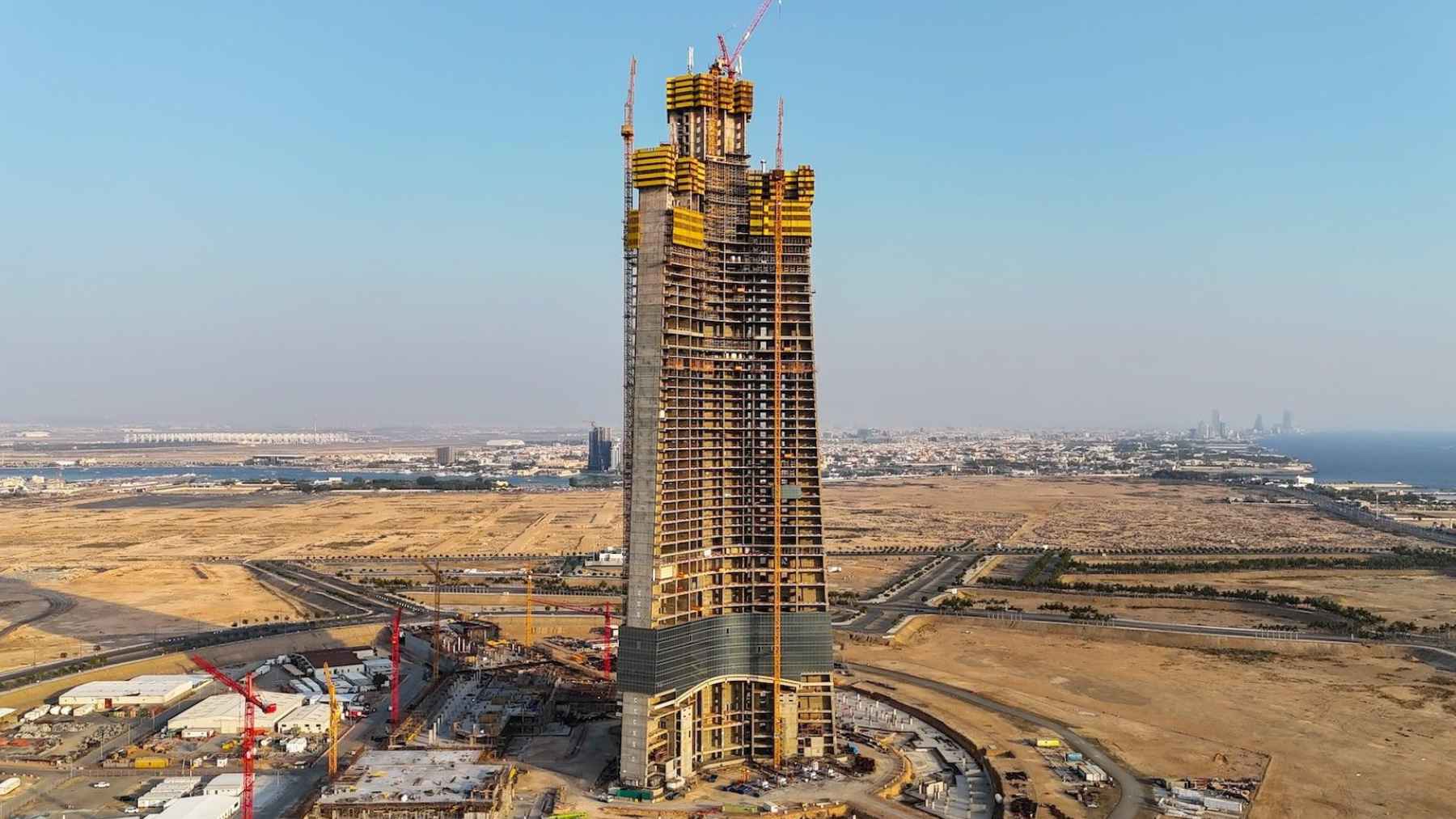
Saudi Arabia’s Jeddah Tower has moved past a milestone that once sounded almost unreal. The long-delayed megatower in Jeddah has officially reached 100 floors and about 1,312 feet in height, putting it back in the global spotlight as the structure designed to become the world’s tallest building.
When finished, the tower is expected to rise more than 3,280 feet above the Red Sea city, making it the first human-made structure to cross the 0.62-mile mark. That is not just an architecture story. It is also a test of how the next generation of giant buildings handles heat, energy use, materials, and everyday urban life.
A 100-floor comeback
The project’s return is striking because Jeddah Tower spent years frozen in place. Kingdom Holding Company announced in 2024 that Jeddah Economic Company had signed a new agreement with Saudi Binladin Group to resume the tower, a deal valued at about $1.9 billion, including roughly $293 million already paid for earlier work.
At that point, the company said 63 floors had been completed out of a planned 167, with an anticipated construction period of 42 months. Now, after crossing 100 floors, the building is no longer just a stalled symbol on the skyline. It is moving again, floor by floor.
Why height matters
It is easy to focus only on the record. After all, who would not stop and stare at a tower built to rise higher than any building before it?
Jeddah Tower is planned as a mixed-use structure, with a luxury hotel, office space, serviced apartments, condominiums, and what its designers describe as the world’s highest observatory. Adrian Smith and Gordon Gill Architecture (AS+GG) says the building will contain about 5.7 million square feet of built area and anchor a wider $20 billion urban development.
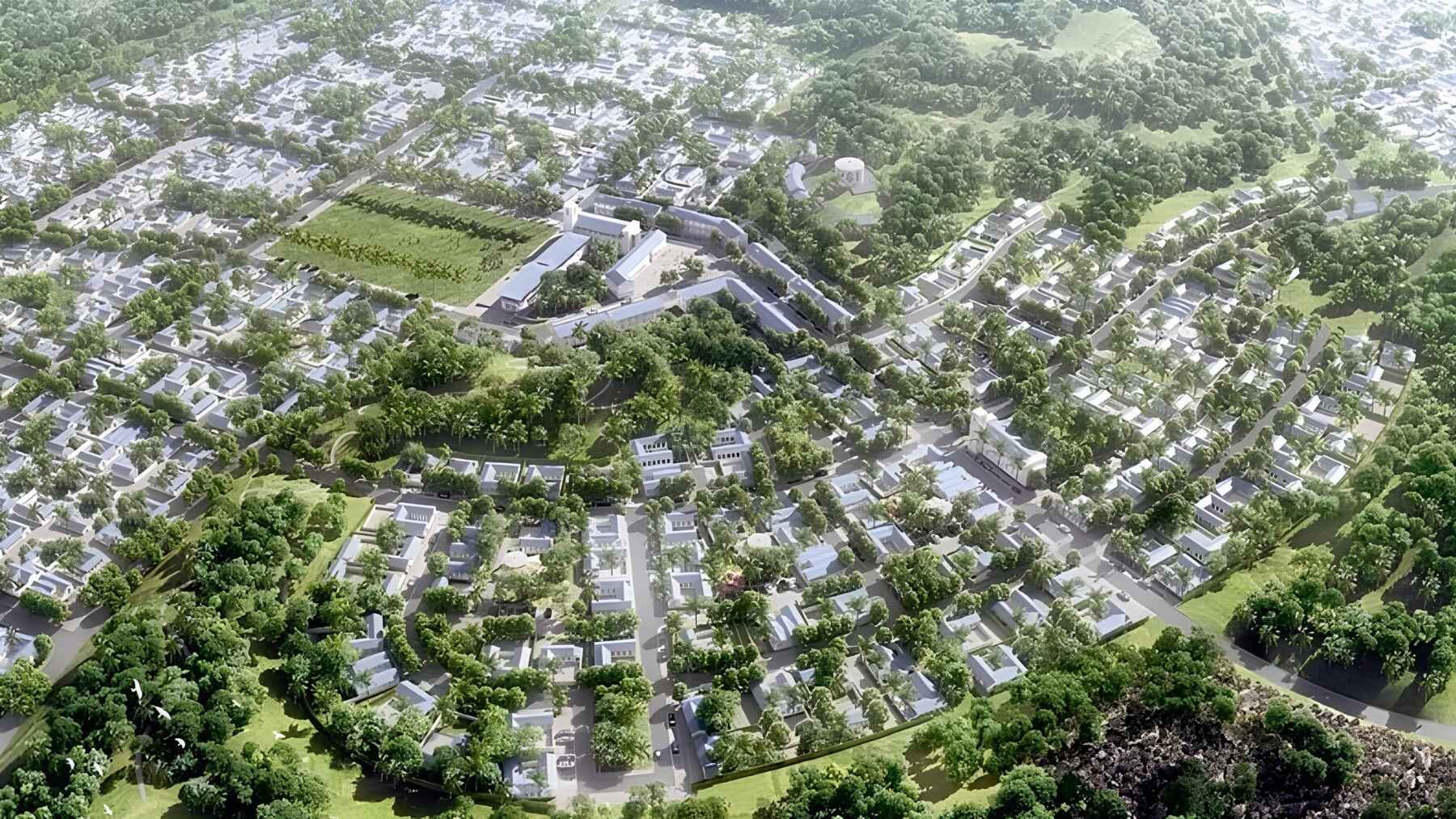
That wider project matters. Kingdom Holding said the first phase of Jeddah Economic Company City covers about 14 million square feet, inside a total planned area of roughly 57 million square feet. This is not just one tower but the beginning of a new district.
The environmental question
The big question is not only how high the tower can go. It is how well it can perform in a hot coastal climate where cooling demand can make the electric bill feel like a second rent payment.
Buildings and construction are a major climate issue worldwide. The United Nations Environment Programme says the sector accounts for around 37% of global CO2 emissions and nearly 50% of global material extraction, which means every major project now sits under a much brighter environmental spotlight.
That does not automatically make a skyscraper good or bad. Density can reduce land use in some cases, but megatowers also require enormous amounts of concrete, steel, glass, cooling, elevators, water systems, and maintenance. The real scorecard comes later, when the building is occupied and the daily energy use starts to show.
Design against the heat
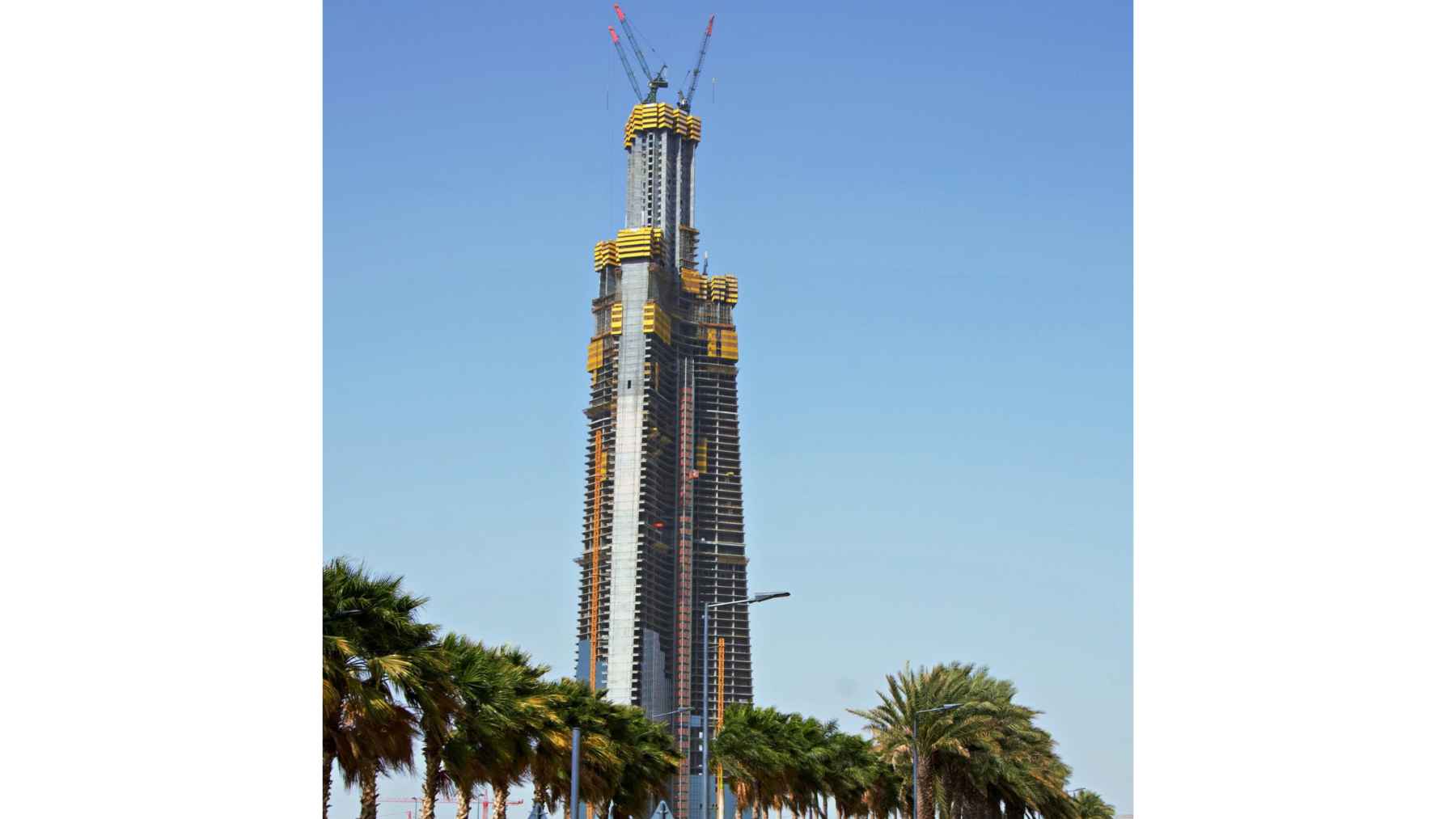
The design team says Jeddah Tower was shaped with both engineering and climate in mind. Its three-petal footprint and tapering wings are meant to reduce wind loads, a serious challenge when a building climbs into extreme elevations.
There are also measures aimed at heat and sun exposure. AS+GG says the project will use a “high-performance exterior wall system” to reduce thermal loads, while notches along the tower’s sides create pockets of shade and outdoor terraces with views toward Jeddah and the Red Sea.
That might sound technical, but the idea is simple. Less direct heat on the building can mean less stress on cooling systems, especially during that sticky summer heat that people in hot coastal cities know all too well.
Engineering at 1,312 feet
At 100 floors, the tower is already high enough to make wind, movement, and material efficiency central concerns. Structural engineer Thornton Tomasetti says the building required rational wind-load design at extreme elevations, control of lateral and vertical movement over time, and an efficient structural system.
The firm describes the design as a concrete-based system using regional construction practices and concrete strengths. It also says the tower relies on a massive foundation system, including a 16-foot-thick raft foundation supported by 270 bored piles that extend as deep as about 344 feet.
That foundation is the invisible part of the record. People will photograph the spire, the observation deck, and the skyline. The real story, however, starts underground.
A vertical city
The tower’s observation level is planned around the 167th floor, and the sky terrace is expected to measure roughly 98 feet across. Elevators serving the observatory are expected to move at about 33 feet per second, turning a trip through a huge vertical distance into something that feels almost routine.
Still, a vertical city has to work at street level too. Shaded sidewalks, transport links, water management, waste systems, traffic, noise, and exhaust fumes will matter just as much as the record books. A tower can become a landmark, but a district becomes livable only when people can move through it comfortably.
That is where Jeddah Tower may become more than a height contest. If the broader city around it is built with efficient infrastructure and climate-aware design, it could help show how extreme vertical construction fits into the future of urban living. If not, it risks becoming a very tall reminder that height alone does not equal sustainability.
What comes next
For now, Jeddah Tower’s 100-floor milestone is a clear sign that one of the world’s most ambitious construction projects is back on track. The building is no longer a frozen promise on the Red Sea coast. It is rising again.
The environmental verdict, however, will take longer. In the age of climate pressure, the world’s tallest building will be judged not only by how far it reaches into the sky, but by how intelligently it uses energy, materials, land, and water once people move in.
The project update was published on Thornton Tomasetti.