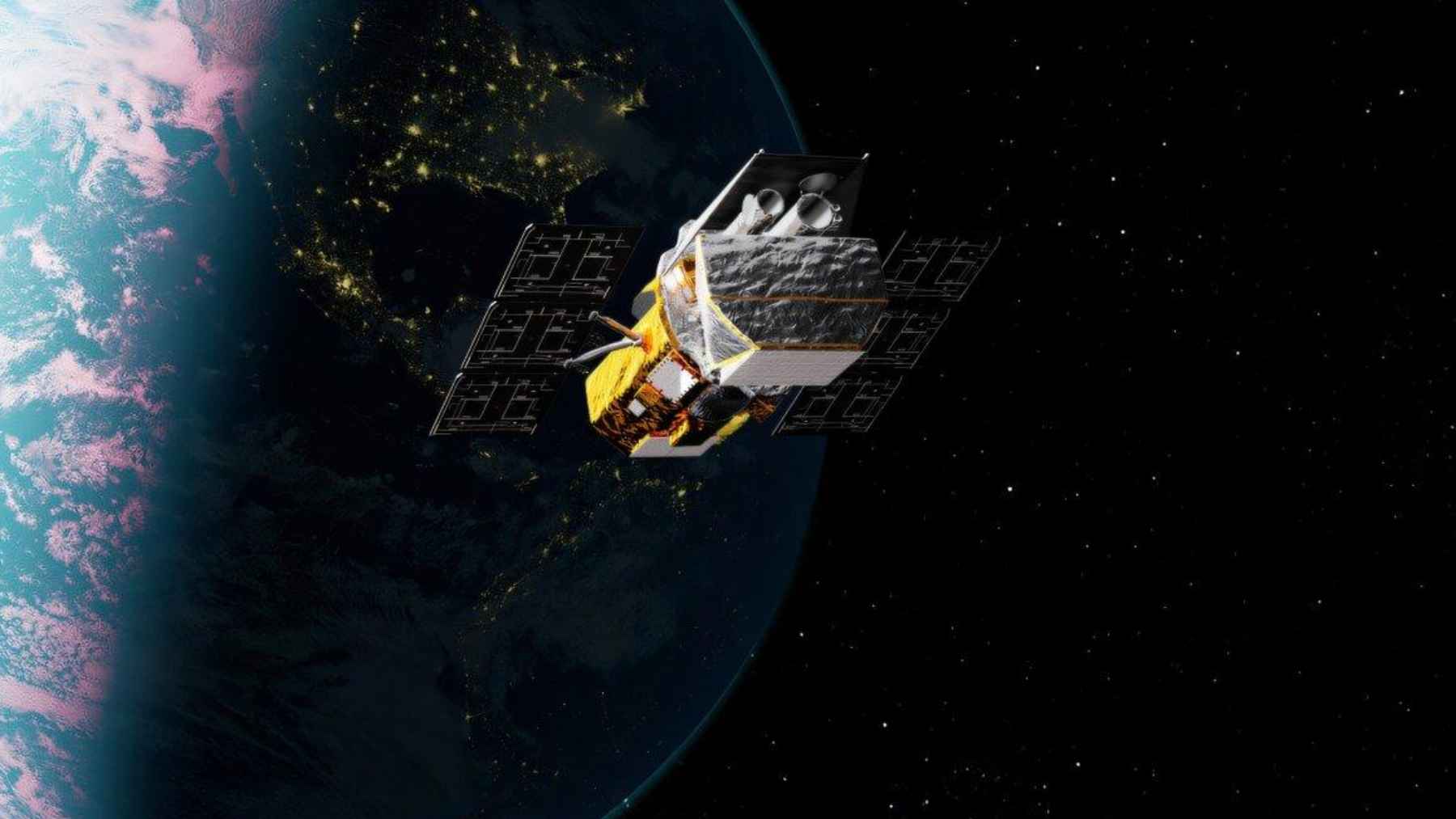
NASA is moving into the final stretch of an unusually fast rescue attempt for the Neil Gehrels Swift Observatory, a space telescope launched in 2004 that still helps astronomers catch some of the universe’s most violent explosions. The problem is not that Swift has stopped working. It is that Earth’s outer atmosphere is slowly pulling it down.
On June 17, the agency previewed a plan with Katalyst Space to send a robotic spacecraft called LINK to meet Swift, grab it, and push it back upward.
The newest public update came on June 19, when Northrop Grumman’s Stargazer aircraft left NASA’s Wallops Flight Facility carrying the Pegasus XL rocket and LINK for a later June launch from Kwajalein Atoll in the Marshall Islands.
Why Swift needs a rescue
Swift circles Earth in low orbit, where space is not quite as empty as it feels in our imagination. There is still a very thin layer of atmosphere up there, and over time it creates drag, a tiny braking force that slowly lowers a spacecraft’s path.
That drag has become a bigger problem because recent solar activity heated and expanded Earth’s upper atmosphere. Swift has no onboard propulsion system to push itself higher again, so the observatory has been sinking faster than expected. NASA says the spacecraft could re-enter Earth’s atmosphere in fall 2026 without help.
To buy time, teams at NASA’s Goddard Space Flight Center and Penn State’s Eberly College of Science changed Swift’s operations to reduce drag. In practical terms, they adjusted how the spacecraft points itself so it presents less surface area to the thin air it is flying through. The goal is to keep Swift above about 185 miles, where the boost attempt has a better chance of working.
A robot will try to catch it
The spacecraft coming to Swift’s aid is LINK, built by Katalyst Space in Flagstaff, Arizona. If the mission works, it would mark the first time a commercial robotic spacecraft captures a NASA satellite that is uncrewed and was not originally designed for servicing in space.
The June 17 briefing brought together Shawn Domagal-Goldman from NASA Headquarters, Brad Cenko from NASA Goddard, Kieran Wilson and Robert Lamontagne from Katalyst Space, and Wes Collier from Northrop Grumman. NASA has described the effort as a race against time, and Domagal-Goldman previously put it plainly. “We are in a race against the clock,” he said.
LINK will not simply slam into Swift and shove it upward. First, it will check its own power, sensors, and navigation, then approach the telescope and make a visual survey. After that, it is expected to use three robotic arms to secure Swift and slowly raise it toward an altitude of about 370 miles over several months.
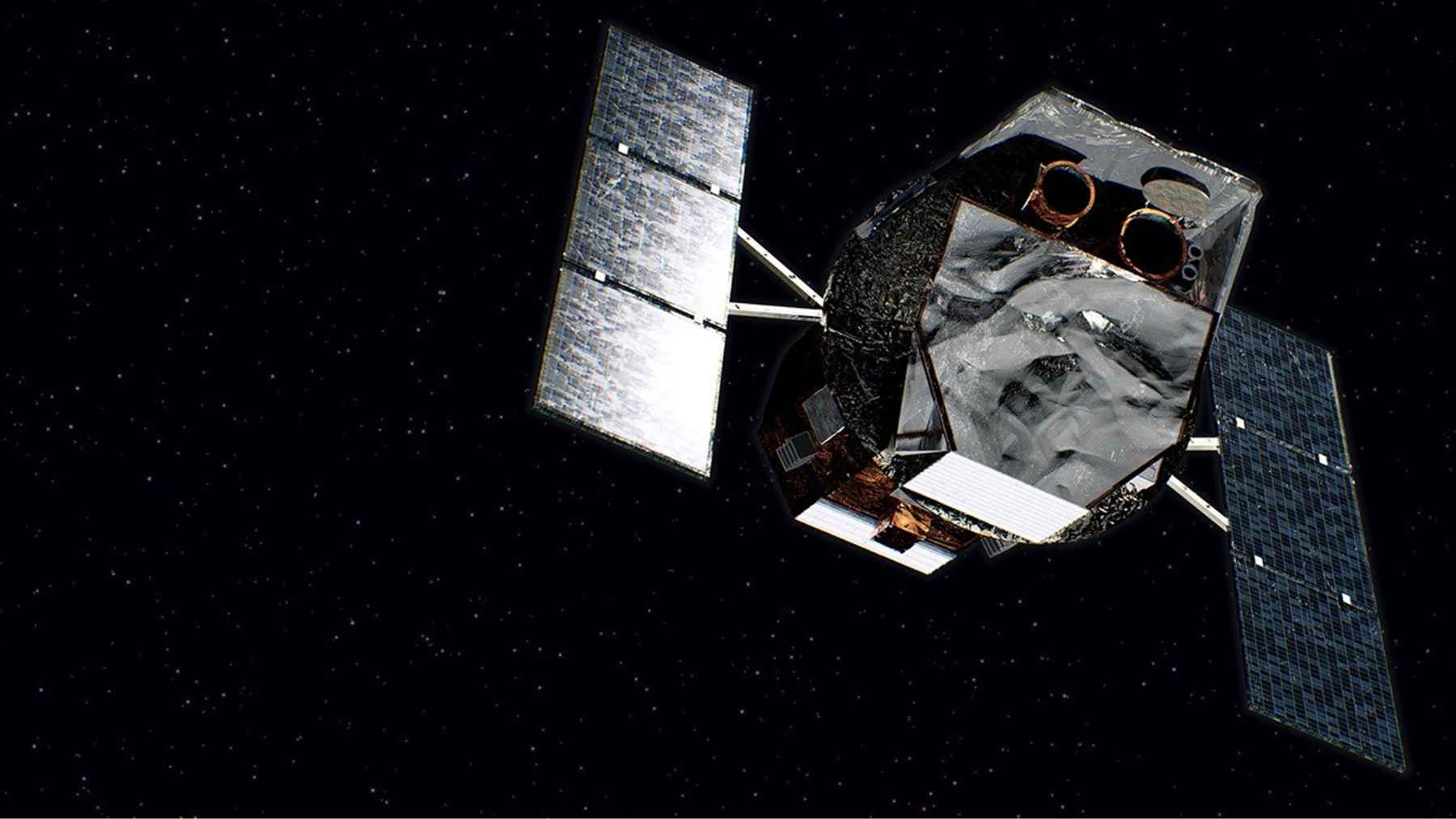
NASA’s Neil Gehrels Swift Observatory has spent more than two decades detecting gamma-ray bursts and other powerful cosmic phenomena. The aging space telescope is now the focus of a proposed robotic servicing mission to extend its operational life.
Why Swift still matters
Swift studies gamma-ray bursts, which are short, powerful blasts of high-energy light from some of the most extreme events in space. They can come from collapsing stars, colliding stellar remnants, or other sudden cosmic violence. Blink, and the best part may already be over.
That is why Swift has been so valuable for more than two decades. NASA describes it as a kind of “dispatcher” for astronomy because it can quickly spot a sudden event and alert other telescopes to look in the same direction.
Swift also observes the sky in visible, ultraviolet, X-ray, and gamma-ray light. That range lets scientists study fast-changing objects in several ways, not just through one narrow window. For astronomers, timing is everything, and Swift was built to move fast.
The launch plan
The rescue begins with an unusual launch system. Pegasus XL is an air-launched rocket, meaning it is carried under Stargazer, a modified L-1011 aircraft, before being released high above the ocean. After several seconds of free fall, the rocket fires and can deliver its payload to orbit in about 10 minutes.
NASA says Stargazer will carry Pegasus and LINK to Kwajalein Atoll, with stopovers in California and Hawaii. Later this month, the aircraft is expected to release the rocket from about 40,000 ft. That launch site helps Pegasus place LINK closer to Swift’s orbital path.
LINK is a small yet carefully packed spacecraft. NASA lists it as about 5 ft. tall, with solar panels stretching about 20 ft. and three xenon-fueled thrusters for propulsion. It is not a giant machine, but for Swift, it may be just enough muscle at the right moment.
What success would mean
NASA awarded Katalyst Space $30 million in September 2025 to move forward with the mission. The agency has said boosting Swift is more affordable than trying to replace its capabilities with a brand-new telescope, especially on such a tight schedule.
Still, the job is risky. Swift was not designed with friendly docking ports for a future rescue craft, and more than 20 years in orbit can change what engineers expect to see. That is why LINK must inspect possible grab points before it commits to the capture.
If it works, the mission could become more than a one-time save. It would show that commercial robotic servicing can help extend the lives of useful satellites that were never built for repair. That matters because replacing spacecraft is expensive, slow, and often unnecessary if the old machine still has good science left in it.
A race measured in months
This is not like fixing a car in a garage. Swift is moving around Earth at orbital speed, losing altitude day by day, while engineers prepare a new spacecraft to find it, approach it, hold it, and lift it without causing damage.
That tension is what makes the mission so striking. A telescope launched in 2004 is still scientifically useful, but the sky around Earth has changed enough to threaten its future. Now NASA and its commercial partners are trying to turn a falling satellite into a test case for the next era of space repairs.
The official press release has been published on NASA.