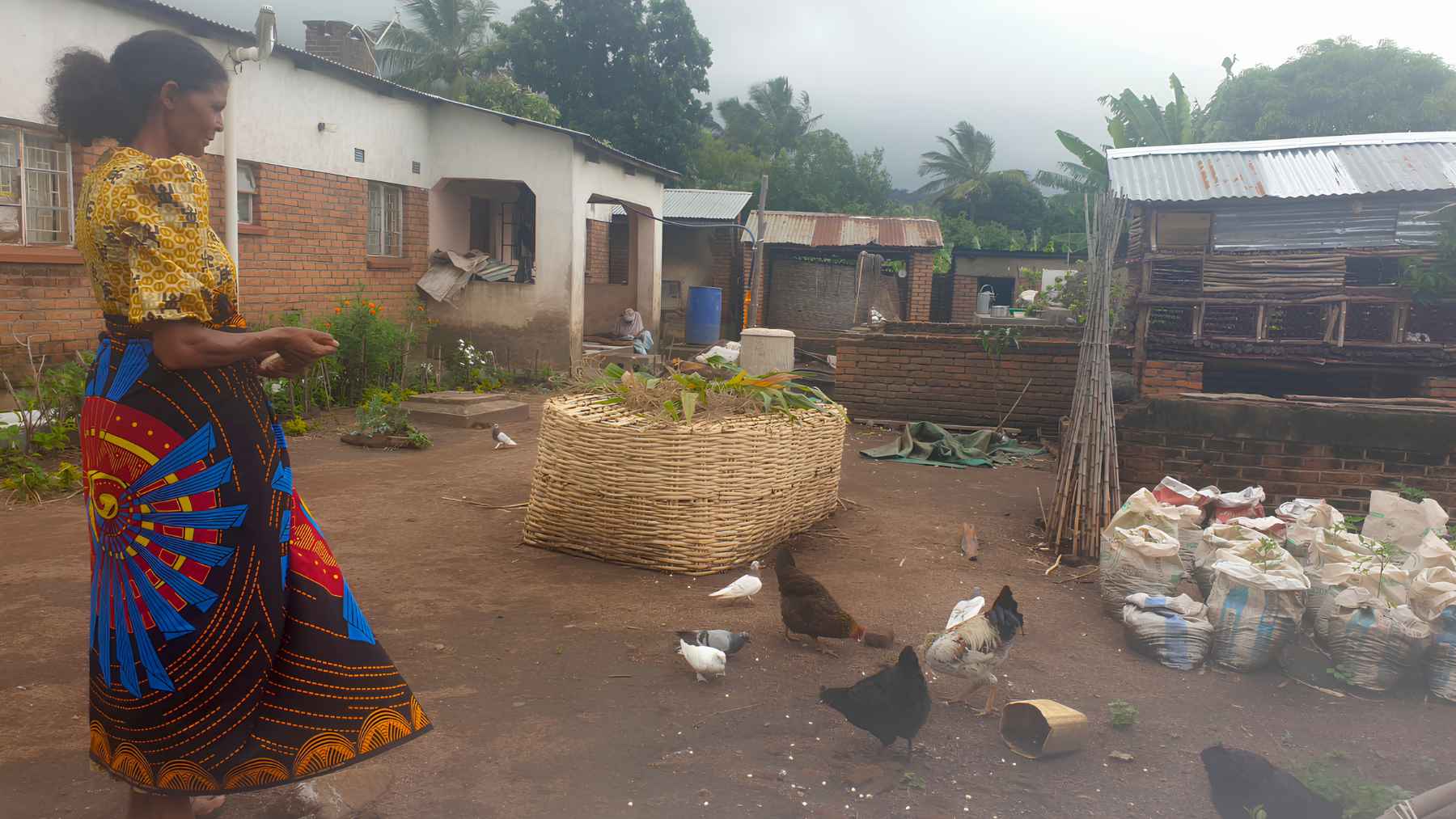
In Malawi’s southern Chiradzulu district, Diana Sitima’s farm stands out for a simple reason. On 8.6 acres near Blantyre, she is not betting everything on maize. Her land produces sweet potatoes, pigeon peas, vegetables, bananas, avocados, eggs, fish, and livestock products, bringing in about $1,200 a week and supporting six permanent jobs.
The bigger lesson is not that every farmer should copy every pond, coop, and crop. It is that secure land ownership can give small farmers the confidence to build for the long haul. For women farmers in particular, that stability can decide whether a good idea stays a dream or becomes a business.
A farm built piece by piece
Sitima started farming in 1993 while working as an office assistant in Blantyre. At first, it was a side hustle, supported by microloans, rented plots, and tomato crops grown for sale in the city. By 2006, she had saved enough to buy her own land in Chiradzulu, about 9 miles east of Blantyre.
That purchase changed everything. Once she had land she could keep, Sitima began investing in a more complex farm system instead of chasing short-term harvests. She also turned to government extension workers, the field advisers who help farmers make better choices on crops, soils, and livestock.
The case was reported by Charles Mpaka, who documented how Sitima’s farm became both a working business and a learning site for other women farmers. Her path was not instant success. It took about two decades of trial, advice, savings, and steady adjustment.
What agroecology means here
Agroecology sounds technical, but the idea is straightforward. It means farming in a way that uses natural relationships among crops, animals, trees, water, and soil instead of relying heavily on bought chemicals. The Food and Agriculture Organization describes agroecology through ideas such as diversity, recycling, resilience, efficiency, and cooperation between parts of a farm.
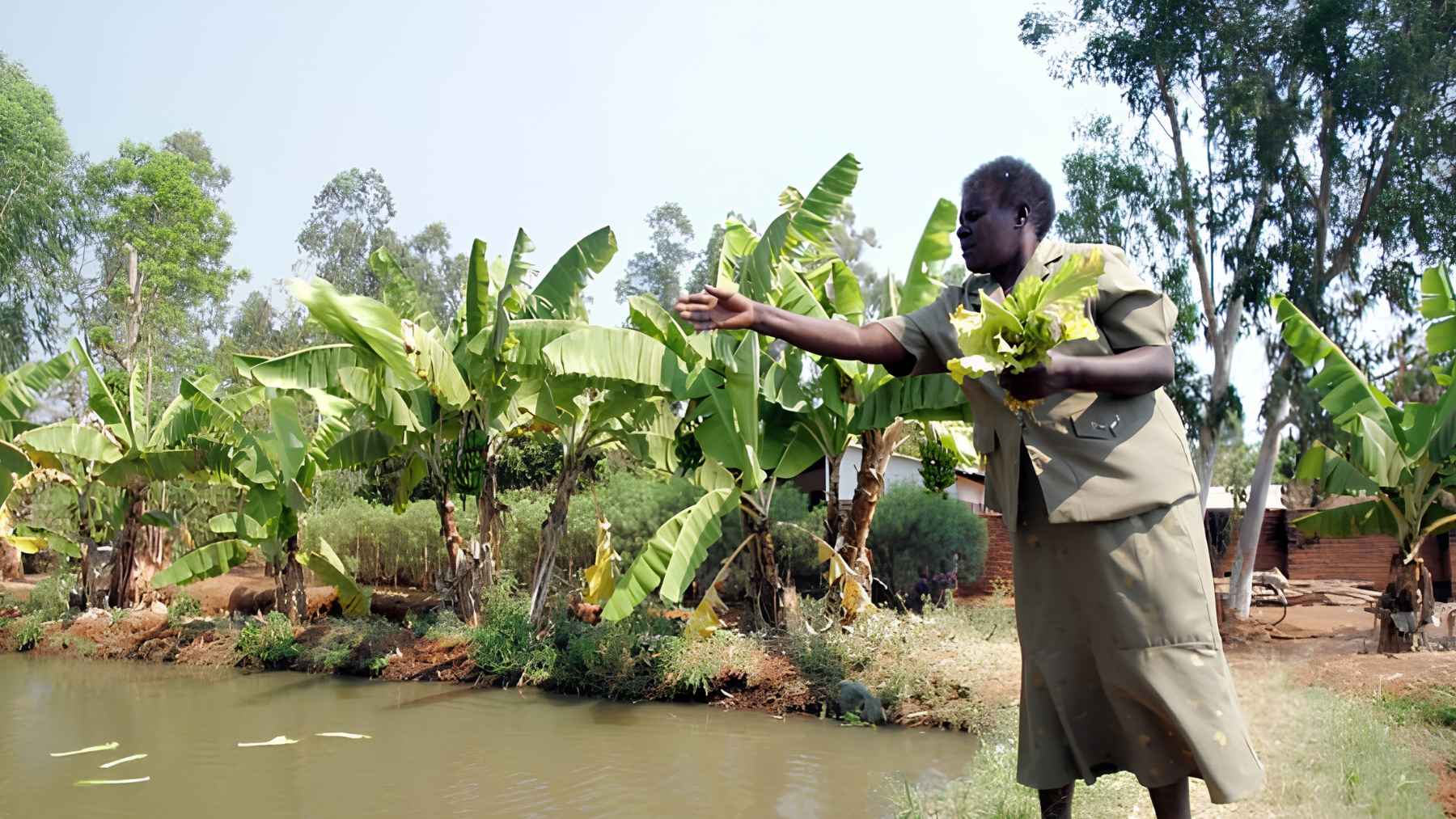
On Sitima’s farm, that is not just a theory. Manure from animals goes into a biodigester, a sealed tank that turns waste into biogas for cooking and for powering an egg incubator. Fish ponds sit near crops, while azolla, a small aquatic fern, helps feed the animals.
In practical terms, waste is not really waste. It becomes fuel, fertilizer, or feed. “The animals and the crops support each other,” Sitima says, summing up the idea in plain language.
Land changed the math
Many nearby farmers still depend mostly on maize, the staple crop that anchors much of Malawi’s food system. Agriculture accounts for more than one-quarter of the country’s gross domestic product, and maize remains a major focus of national food policy. That makes Sitima’s diversified farm unusual, but also revealing.
Why does land ownership matter so much? Trees, ponds, soil recovery, animal housing, and organic systems all take time. A farmer who fears losing rented land may hesitate to plant the kind of future that only pays off years later.
Sitima puts it more sharply. When someone can push you off the land, “you can’t implement your ideas.” That sentence explains why secure land rights are not just a legal issue, but also a business issue and a food security issue.
Women farmers are learning from her
Sitima also chairs a local group of 60 members of the Rural Women’s Assembly, a grassroots movement of small-scale women farmers active across Southern Africa. The network says it works on land and water rights, food sovereignty, climate justice, and women’s leadership. Its own materials describe it as a self-organized rural women’s network across 11 countries in the region.
Through that network, women learn about microfinance, agroforestry, and soil-building methods. Agroforestry means growing useful trees alongside crops, often to improve soil, shade, water retention, or long-term productivity.
It is not glamorous. But for a farmer watching fertilizer prices rise, healthier soil can feel like money kept in the pocket.
The learning goes both ways. Sitima says other women farmers helped her improve the layout of her own farm, including planting bananas around fish ponds to help preserve water. That is the quiet power of peer-to-peer farming knowledge. One good idea travels.
The model has limits
Still, Sitima’s story should not be flattened into a neat success slogan. She had some advantages, including earlier employment, access to loans, and a household that was not fully dependent on farming income when she began. Not every woman farmer in Chiradzulu starts from the same place.
There is also a broader challenge. Mongabay’s reporting notes that agroecology is still not widely practiced by women or other farmers in Malawi. That means training, financing, land security, and technical support all matter if this model is going to move beyond a handful of strong examples.
The trouble is, inspiration alone does not buy land or build a fish pond. For the most part, farmers need practical backing. They need credit they can repay, advice they can trust, and rights that are strong enough to survive family pressure or local custom.
Why this matters now
Malawi’s agriculture sector is deeply tied to jobs, food, exports, and rural survival. The country is also trying to move toward more diversified and resilient farming, especially as climate shocks and soil problems put pressure on smallholders. Sitima’s farm offers one small but concrete example of what that shift can look like on the ground.
International development groups have been making a similar point for years. IFAD says equitable access to land is central to investing in rural development, fighting hunger, and protecting biodiversity. The World Bank also links secure land rights for women with higher productivity, better access to credit, and stronger resilience.
At the end of the day, Sitima’s farm is not just about organic vegetables or clever use of manure. It is about what can happen when a woman has land she can count on, support she can use, and enough time to turn knowledge into income.
The main report has been published by Mongabay.