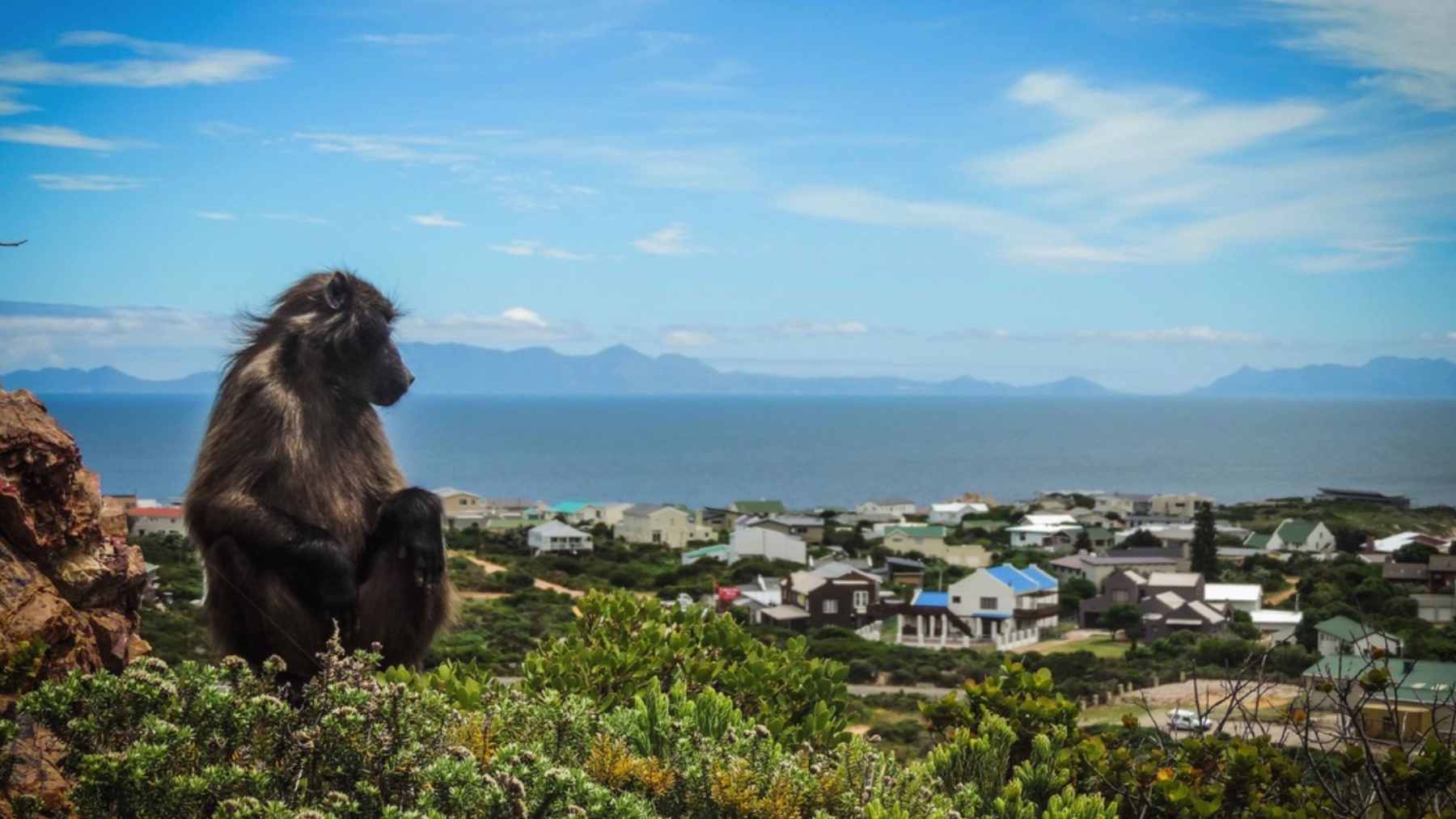
In Rooiels, South Africa, the baboons do not arrive on a schedule. Still, residents know the rhythm well enough to lock doors, watch windows, and keep lunches out of reach when the troop comes down from the cliffs toward the village.
The coastal town has become a rare test case for human-baboon coexistence. Rooiels shows that people can learn to live with wild animals without turning every encounter into a battle, but it also shows why the idea is fragile.
A village in baboon country
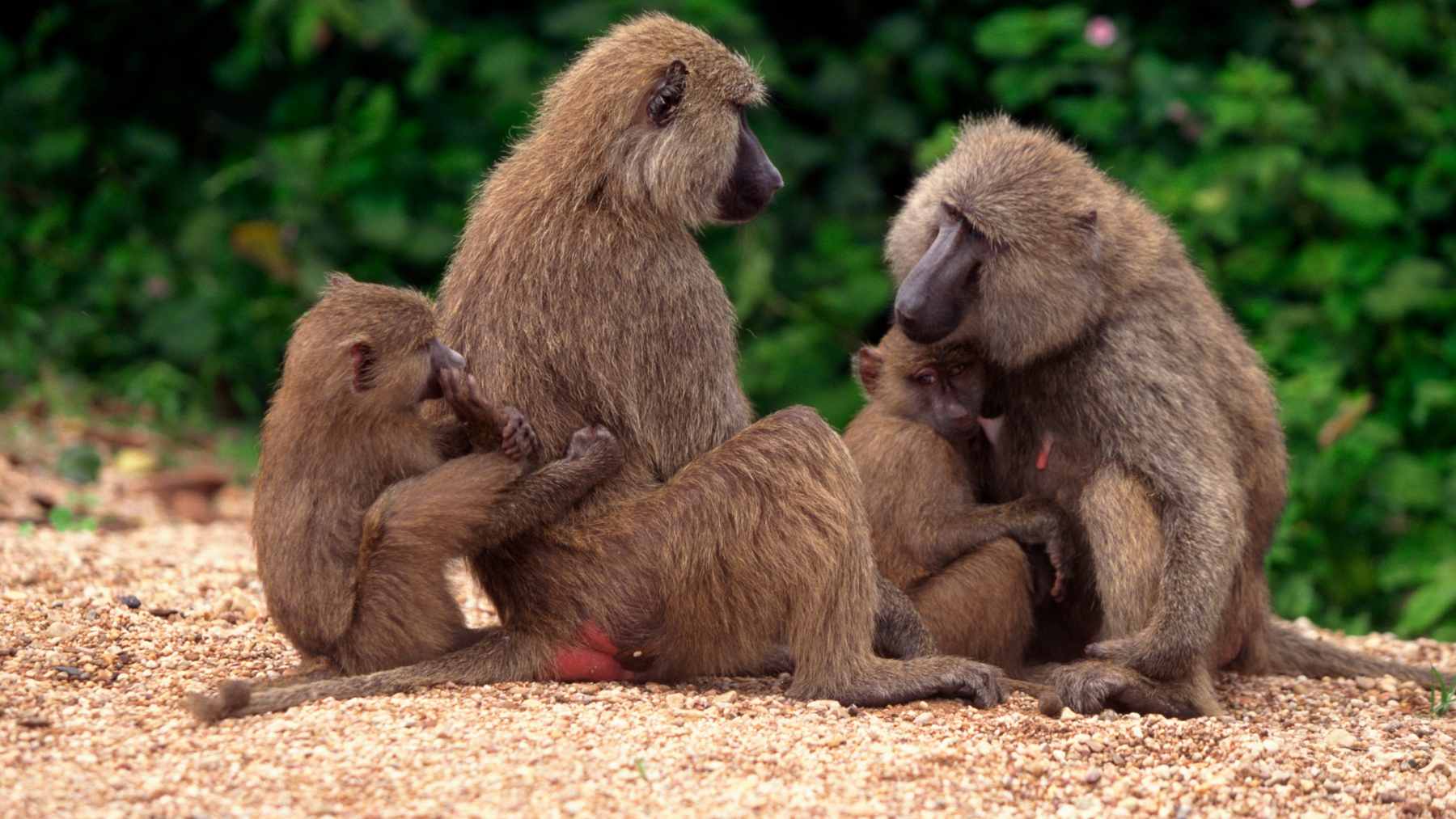
Rooiels sits on False Bay, about 50 miles from central Cape Town. The village spreads from coastal flats up toward Klein Hangklip mountain, in an area linked to the Kogelberg landscape, which CapeNature describes as one of the Western Cape’s finest mountain fynbos areas and a World Heritage Site.
Fynbos is the low, hardy shrubland of the Cape. To a baboon, it is not scenery. It is a pantry, a hiding place, and a route between cliffs, gardens, roads, and water.
The baboons here are chacma baboons, a highly social southern African species. SANBI says they are omnivores, meaning they eat many kinds of food, from roots and seeds to small animals, seashore life, and sometimes human trash.
Why the baboons come down
Conservation scientist Joselyn Mormile, whose doctoral research at the University of Cape Town focused on Rooiels, told Mongabay that baboons would have used this place naturally. The problem is not simply that baboons entered a village. It is also that people built homes in low coastal areas that baboons already favored.
That changes the way the story feels. Are the baboons invading, or are they moving through a habitat that humans have made more complicated?
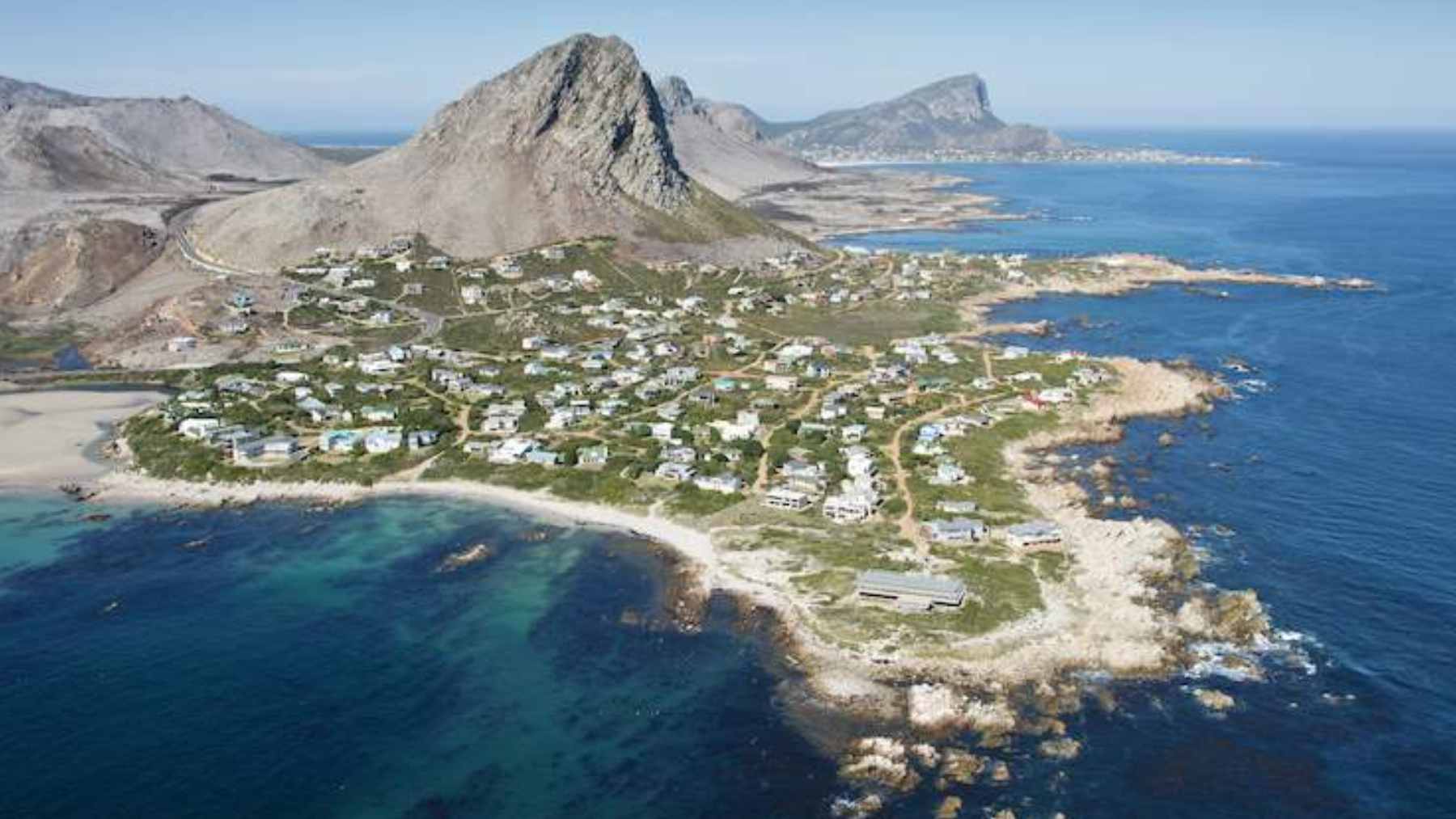
In warmer months, the Rooiels troop feeds on flowers, seeds, and berries. In winter, when native plants slow down, they turn to kikuyu grass in gardens, limpets along the shore, and fresh water from the river.
Rooiels chose a different playbook
In some nearby communities, baboon monitors use paintball guns and loud vuvuzelas to push troops away from homes. Rooiels has mostly taken another route, built around prevention, calm behavior, and fewer rewards.
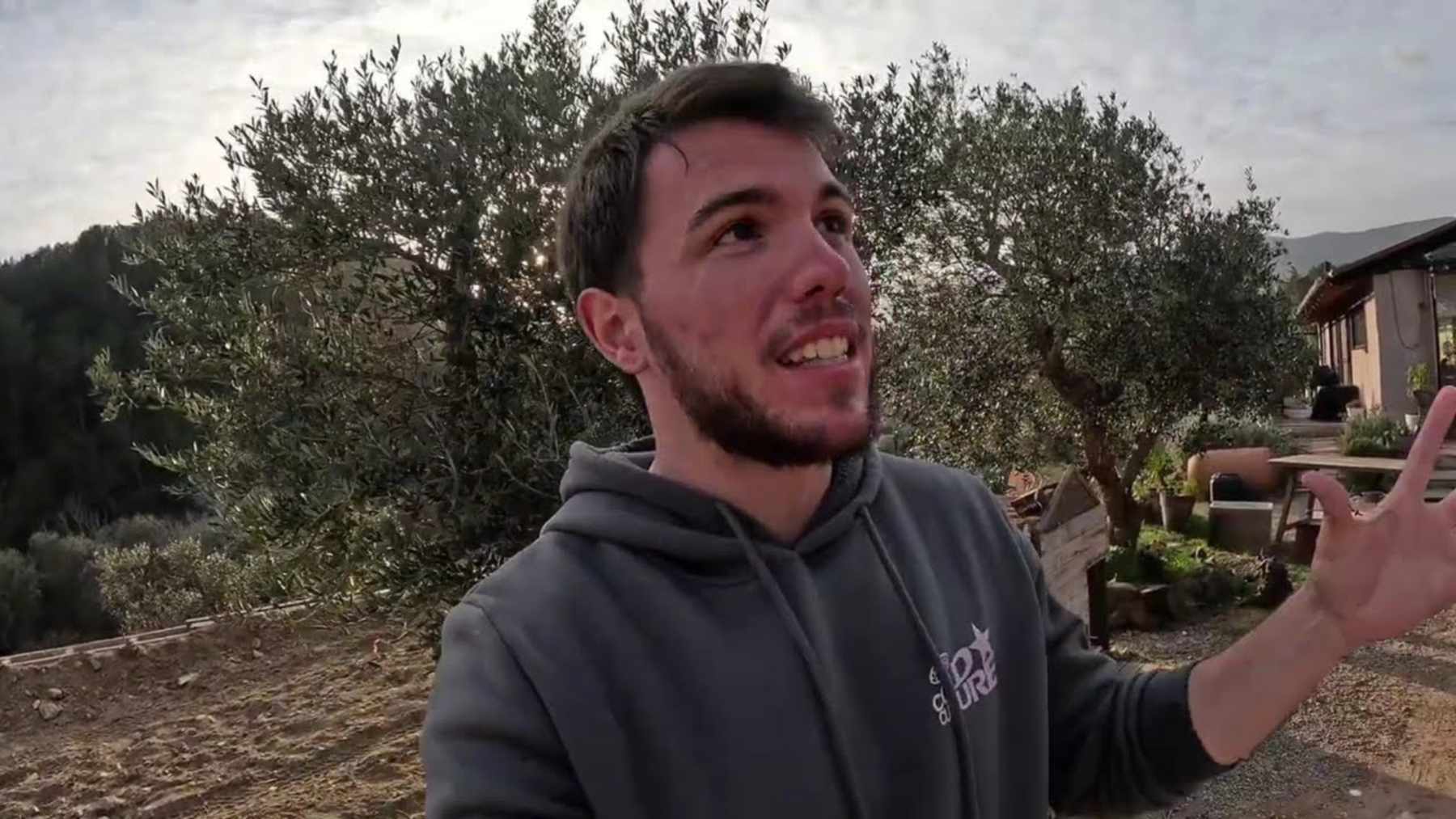
One small scene captures the shift. When a worker threw stones at passing baboons after a lunch had been stolen, resident Gavin Lundie told him the animals were not there to hurt him. The better answer, he explained, was to keep food secured.
That is the whole idea in practical terms. Do not turn a baboon visit into a buffet, a chase, or a photo opportunity. Make the village boring.
The simple tricks that matter
Many residents use baboon-proof window devices, homemade or bought, that keep openings smaller than about 3 inches. Others install door stops or steel mesh sliding doors so air and light can come in while baboons stay out.
Trash is another big piece. Rooiels guidance tells residents to keep waste locked away and reduce anything that attracts baboons, because baboons quickly learn where easy food can be found. The community’s Baboon Indaba page says coexistence depends on limiting access to food, waste, and houses.
The advice inside a home is simple but not always easy. Stay calm, raise your arms, speak firmly, and let the baboon leave with a clear escape path. Panic can make the animal panic too.
Why this success has limits
Mormile’s doctoral record shows the hopeful side first. Most Rooiels residents in her study had positive attitudes toward baboons, reported low fear and stress, and became more accepting over time.
Then comes the warning. The same research found high mortality in the troop, with 20 deaths during the study period and most linked to human causes such as vehicles and dogs. The work concluded that applying this inclusion model elsewhere would be unwise if those risks are not reduced first.
In Rooiels, the R44 road remains one of the hardest problems. Baboons cross it to move between village, river, and resting places, while drivers do not always slow down. That is where a peaceful morning can turn dangerous in seconds.
A changing village
Rooiels is also changing. Longtime residents worry that new homes are taking over undeveloped fynbos where baboons once fed, leaving fewer natural places between houses.
Kay Leresche, who has lived there for more than 25 years, described how fear often begins when newcomers first meet the troop. People who are not used to baboons may see a wild animal in the kitchen and assume danger, even when the real problem is unsecured food and an open door.
Jaco Grobler, another longtime resident, put the balance more bluntly. Loving baboons does not mean letting them climb into cars or homes. Coexistence, in his view, still needs firm boundaries.
What Cape Town can learn
The wider Cape Peninsula is dealing with a tougher human-baboon conflict. In November 2025, the Cape Peninsula Baboon Management Joint Task Team, made up of SANParks, CapeNature, and the City of Cape Town, adopted an action plan that includes sanctuaries, fencing, and a waste strategy.
That larger plan shows why Rooiels matters. The village offers a softer model, but not a magic one. It works only when residents, businesses, workers, and visitors all follow the same basic rules.
At the end of the day, Rooiels is not teaching baboons to become less wild. It is teaching people to stop making human spaces so rewarding. That may be the hardest lesson of all.
The main reporting behind this article was published by Mongabay, and the related doctoral work is available through the University of Cape Town’s OpenUCT repository.