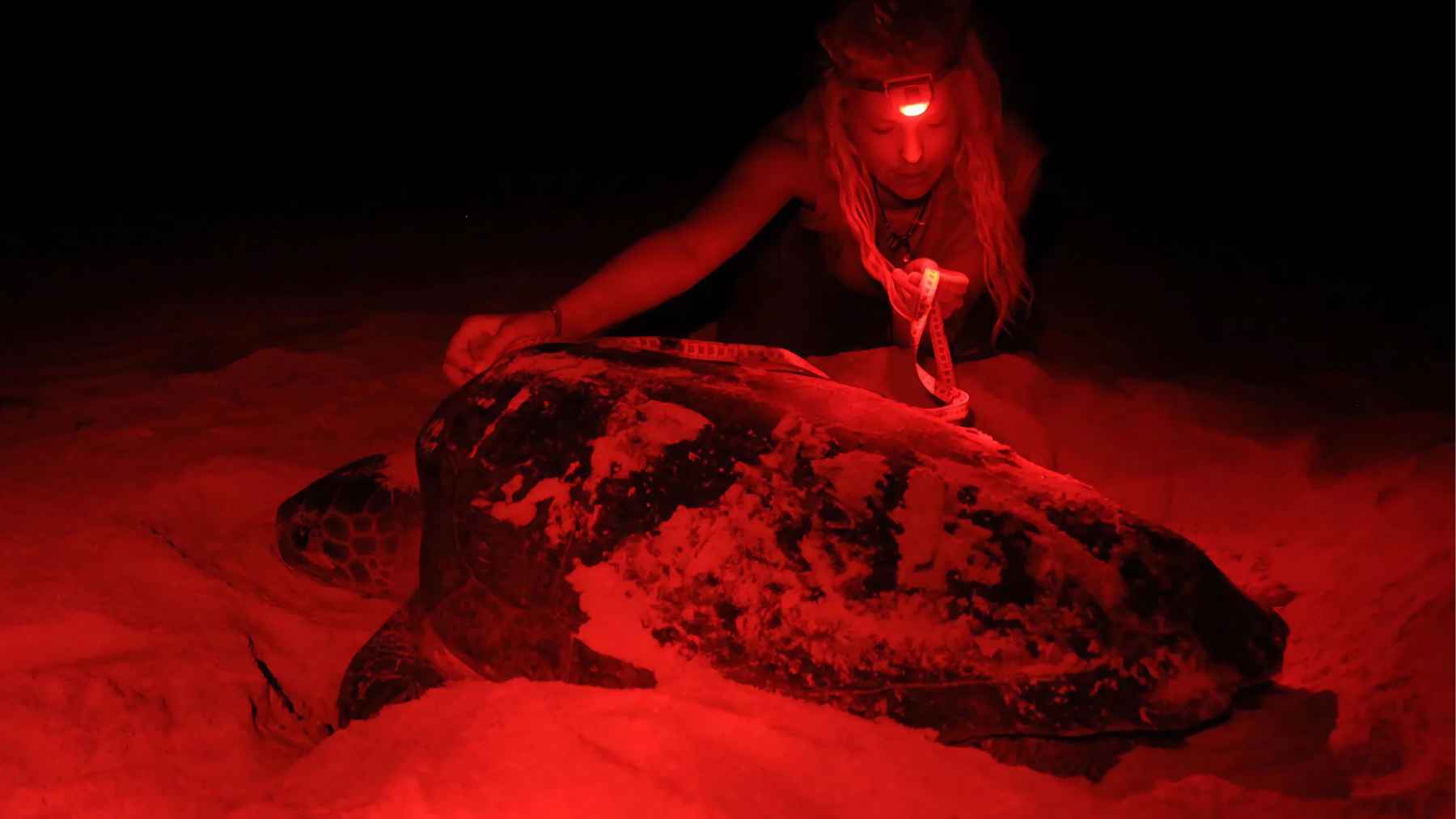
A quiet change began showing up on Boa Vista’s beaches in 2018. Night patrol teams that once found five to 10 female loggerhead turtles in a shift were suddenly seeing 20 to 30, and by 2021, some teams were counting 30 to 40 nesting females in a single night.
Now, a long-term study has put numbers behind that nighttime surprise. Across three major nesting beaches on Boa Vista, loggerhead turtle nesting activity increased 80-fold between 1998 and 2024, a rebound researchers link to years of local patrols, anti-poaching work, habitat protection, hatchery programs, and community involvement.
A beach success story
Loggerhead turtles (Caretta caretta) are not built for quick comebacks. They live for decades, migrate across oceans, and females can take many years to reach breeding age.
That is what makes the Boa Vista trend so striking. The turtles that hatched early in the monitoring period would only have started returning as nesting adults around 2013 or 2014, according to marine turtle biologist Jeanette Wynecken, who was not involved in the study.
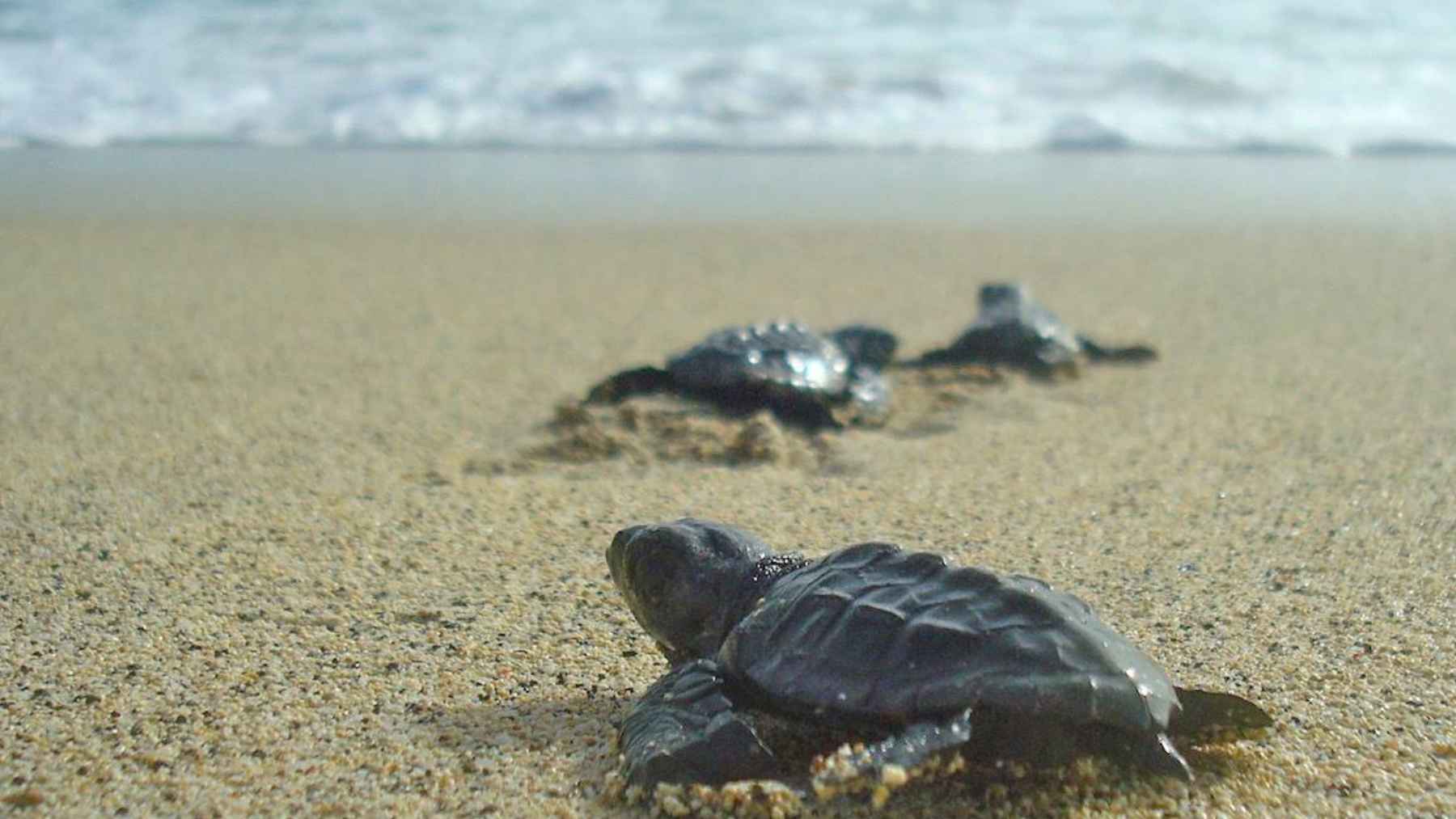
“Since sea turtles age slowly and mature late, an analysis over such an extended time period is essential to understand the effect that conservation has on turtle populations,” Wynecken told Mongabay. In practical terms, this is conservation measured not in months, but in generations.
Numbers that stand out globally
Boa Vista is not just seeing more nests. It is seeing densities that are unusual even when compared with other major loggerhead nesting sites around the world.
In Florida and Oman, two other globally important loggerhead areas, biologists have recorded up to about 965 nests per mile of beach. On Boa Vista, the three largest sites reached more than 35,000 nests per mile in 2021, according to the new study.
That does not mean every beach in Cabo Verde is overflowing with turtles. But it does suggest that Boa Vista has become one of the most important loggerhead nesting aggregations anywhere, especially for the North East Atlantic population.
How researchers counted the rebound
The story depends on patient fieldwork. Since 1998, Cabo Verde Natura 2000, known as CVN2, has built a nesting database through repeated beach patrols during the breeding season.
Starting in June, staff and volunteers search the sand at night for new nests. They count each egg in each clutch, then erase the female turtle’s tracks so the same nesting event is not counted twice.
Later, usually in October, teams return to check how many eggs hatched successfully. It is slow work, often done in darkness, wind, and salt air, but without it, this recovery would be much harder to prove.
Local protection changed the odds
The authors point to decades of conservation as a major reason for the increase. That includes protecting nesting habitat, discouraging poaching, moving vulnerable nests when needed, and helping local communities see turtles as living assets rather than only as meat or eggs.
“This study is a good example of how long-term conservation datasets from NGOs can be transformed into scientific evidence that supports both local conservation and the global understanding of sea turtle recovery,” said Carlos Angulo-Preckler, a study co-author and marine researcher at King Abdullah University of Science and Technology.
That local piece matters. CVN2’s staff is mostly Cape Verdean, and turtle watching has helped connect the recovery to everyday livelihoods. A turtle on the beach is no longer only a protected animal. For many residents, it is also part of the island’s identity and future.
The wider picture is still fragile
The good news from Boa Vista does not erase the global pressure on loggerheads. The species is still listed as vulnerable by the IUCN, and the global population has declined by 47 percent over the past three generations.
The familiar threats remain. Loggerheads can be caught accidentally in fishing gear, lose nesting habitat to coastal development, ingest marine litter, or face poaching in areas where protection is weak. Climate change adds another layer of uncertainty, especially on nesting beaches.
Why does warmer sand matter? In sea turtles, incubation temperature helps determine the sex of hatchlings, and hotter nests tend to produce more females. A few warmer summers may not decide the future of a population, but over time, the balance can shift.
Success can create new risks
Here is the twist. A beach full of nests is a conservation victory, but it can also become vulnerable in new ways.
When many turtles crowd into the same stretch of sand, a single disturbance can affect a large share of the season’s reproduction. That disturbance might be coastal construction, concentrated poaching, severe storms, or shoreline changes that wash away nesting areas.
There is also a simpler problem. Turtles need space. Researchers warned that nesting females can accidentally dig up existing nests while making their own, turning success into a kind of traffic jam on the sand.
What comes next
The lesson from Boa Vista is hopeful, but not finished. Long-term patrols helped reveal the recovery, and the same kind of monitoring will be needed to protect it.
“Sea turtles have survived major climate disruptions,” said lead author Cassandra Roch. “Therefore, constant and continuous monitoring of their populations is crucial to identify climate change adaptation strategies.”
At the end of the day, Boa Vista shows what protection can do when it lasts long enough for slow-growing animals to respond. The challenge now is making sure today’s crowded beaches remain safe enough for the next generation of hatchlings to come back.
The study was published in Biological Conservation.