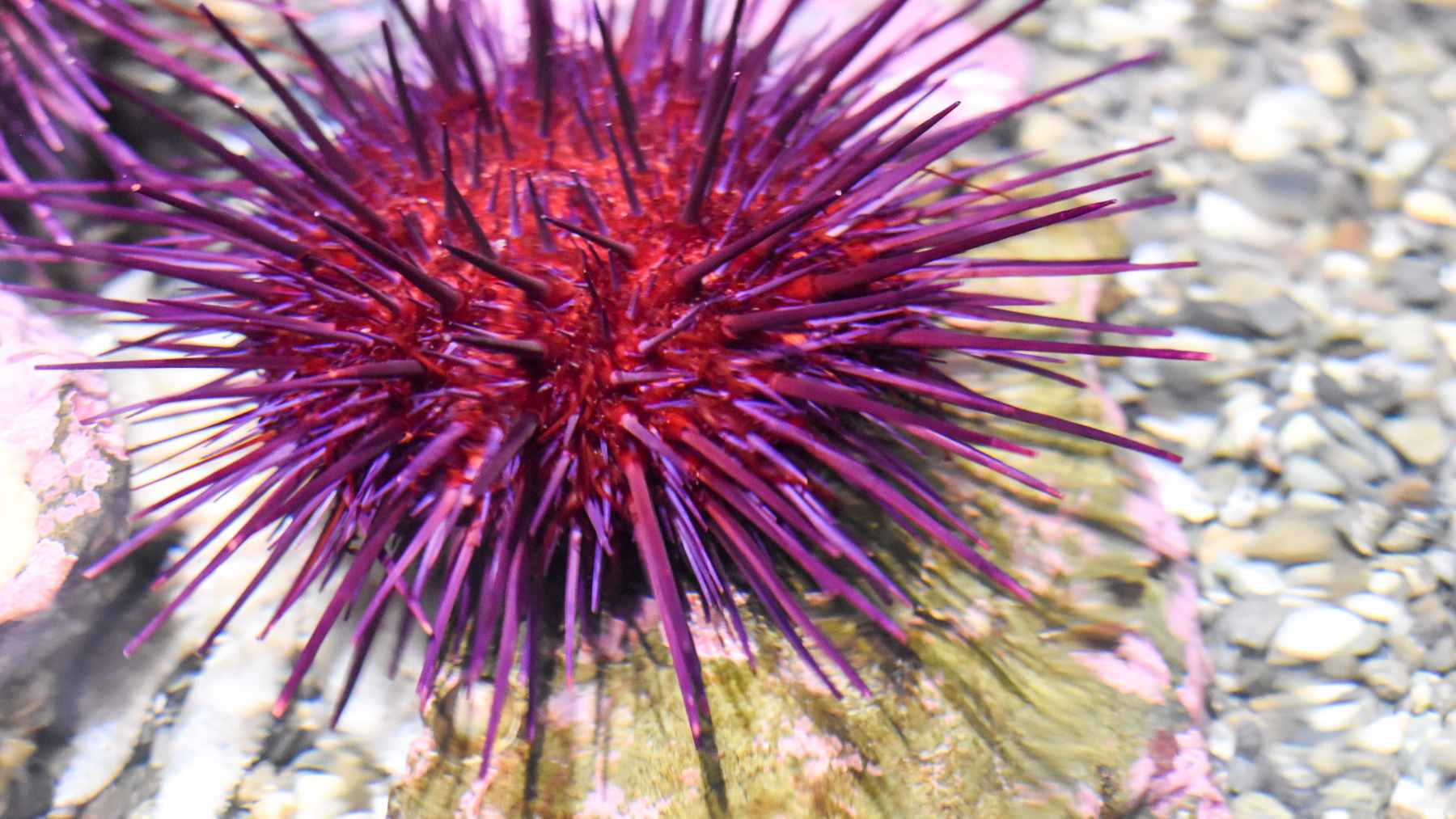
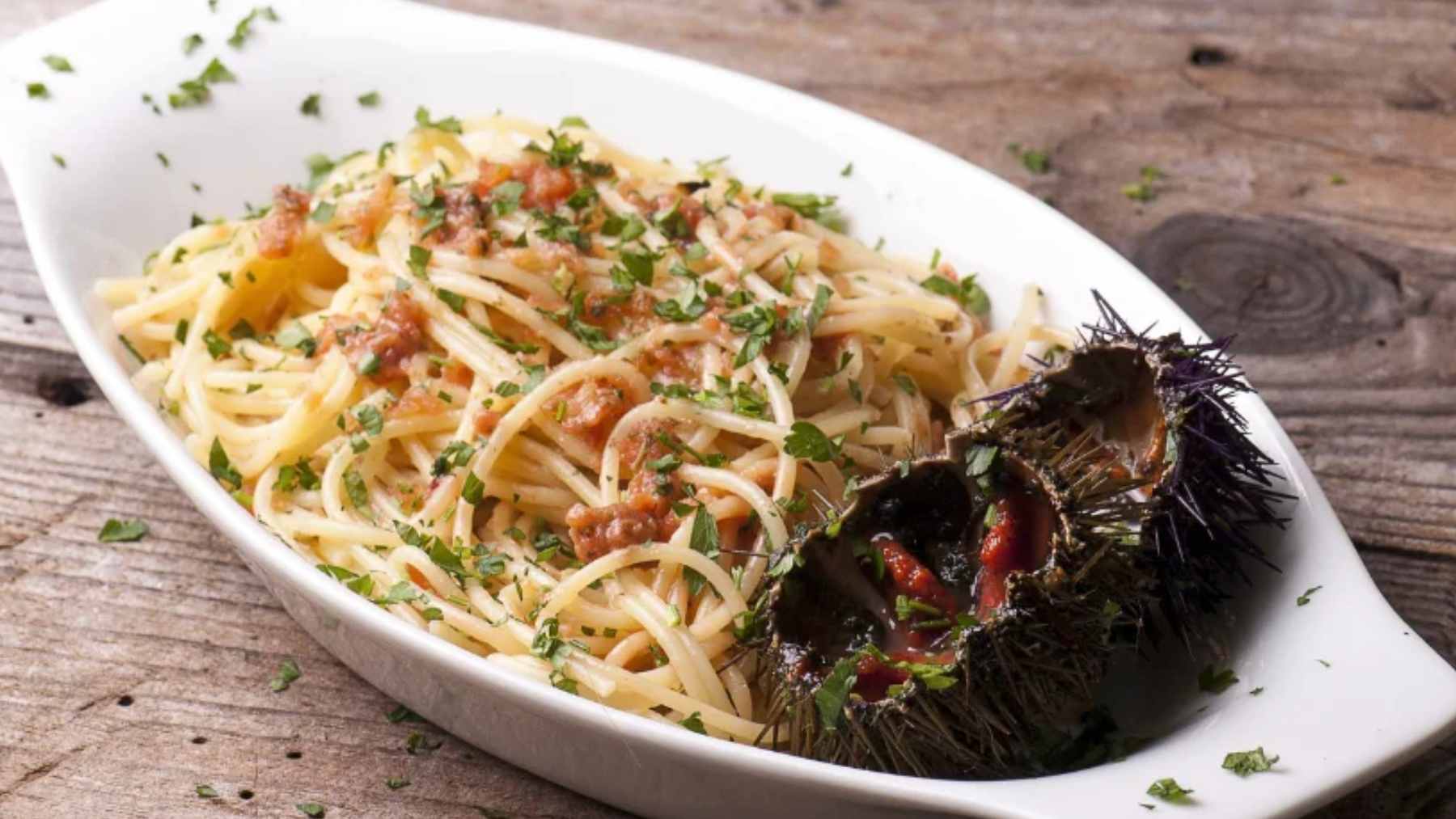
A moonlit raid near Naples has exposed a growing problem beneath Italy’s coastal waters. Poachers are stripping purple sea urchins from protected seabeds to feed demand for “spaghetti ai ricci,” a creamy pasta made with sea urchin roe that has become fashionable far beyond its older strongholds in Sardinia, Apulia, and Sicily.
The issue is bigger than one plate of pasta. Scientists and local authorities warn that illegal harvesting is weakening marine ecosystems, hurting legal fishers, and turning small protected areas into the last places where these spiny animals can still be found in meaningful numbers.
Midnight raids off Naples
On a warm night in May, Maurizio Simeone was watching a grainy live feed from cameras inside the Gaiola Underwater Park Marine Protected Area, about 6 miles south of Naples. “It was midnight. There they were again,” the marine scientist and park director told Mongabay.
The poachers were using an illegal method known locally as the “cachivache” system. A compressor on a small boat pumped air through a hose to a diver, allowing him to stay underwater for long stretches while collecting purple sea urchins from the rocks.
Every few minutes, the diver surfaced with a full net, swapped it for an empty one, and went back down. When the Coast Guard moved in, the men began throwing urchins and gear into the sea, a familiar tactic meant to erase the evidence before officers could count it.
Why sea urchins matter
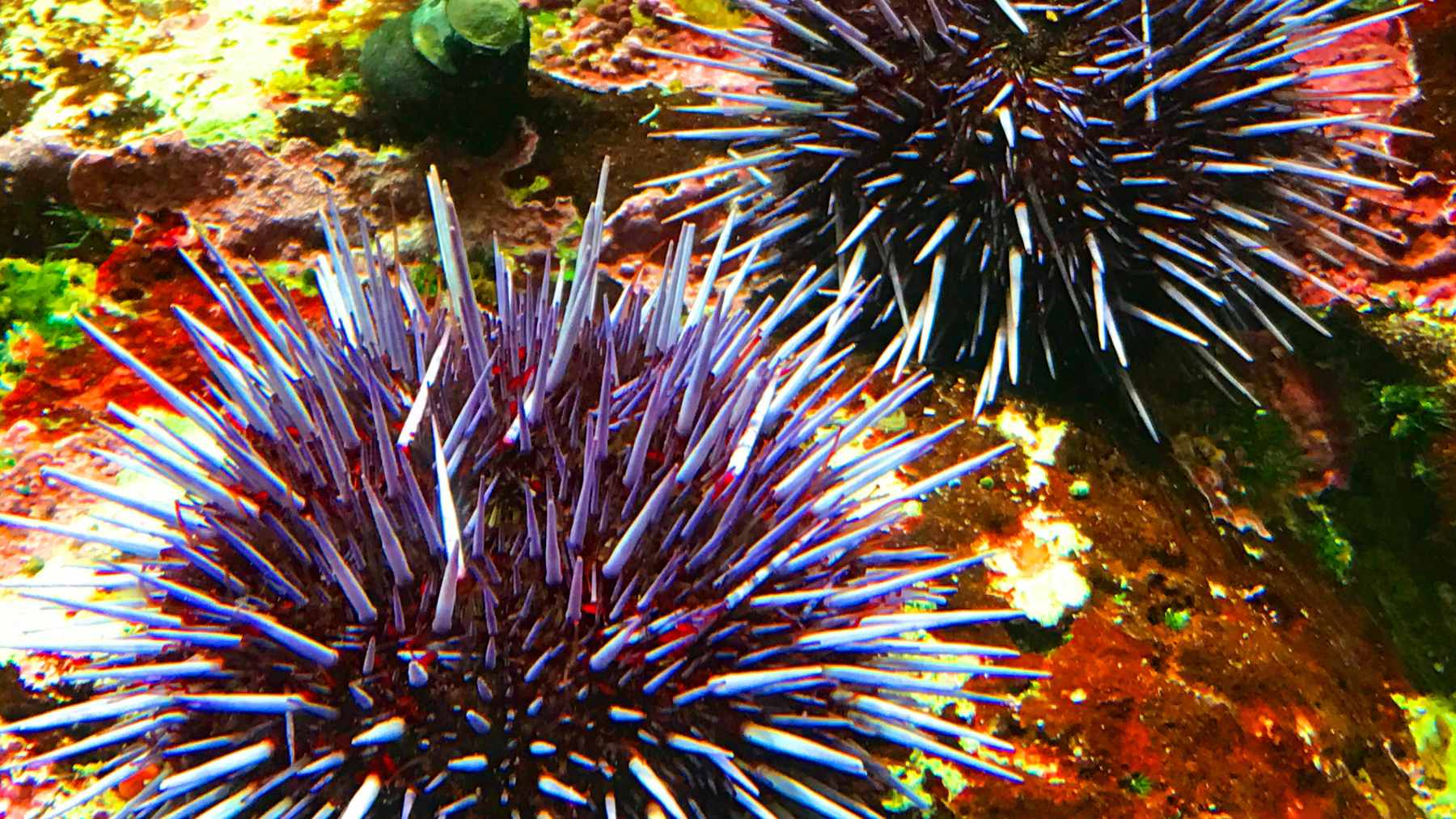
Purple sea urchins are small, often just 2 to 3 inches wide as adults, but their ecological role is not small at all. They graze on algae, helping prevent underwater monocultures from spreading across rocky seabeds.
In practical terms, they help keep the seafloor from becoming too simple. Too many urchins can overgraze an ecosystem, but too few can also upset the balance, leaving predator fish with less food and changing the way reefs function.
The Gaiola project page describes Paracentrotus lividus as a species with a key role in the coastal marine environment, noting that its grazing helps control algal growth and that its abundance can indicate habitat health. The park also says the species is increasingly threatened by poaching driven by restaurant demand.
A delicacy with a hidden cost
For diners, sea urchin pasta can look like a simple summer luxury. For a poacher, it can be quick money, especially when tourists arrive and restaurants want fresh “ricci di mare” on the menu.
That is where the trouble starts. According to the material gathered by Gaiola staff and reported by Mongabay, one earlier raid recovered nearly 1,000 sea urchins in just 75 minutes, while another involved roughly 500 animals collected in less than an hour.
Local fishers say the damage shows up in their nets. “When poachers clean the rocks, leaving only one sea urchin, the fish have no reason to stay in our waters,” one fisherman told Mongabay while checking his gear in Marechiaro, a small coastal area in Naples.
The law is struggling to keep up
Italy’s national rules on sea urchin harvesting date back to 1995. Fishing is banned in May and June to protect spawning, while other limits set quotas and minimum sizes, but scientists now warn that those rules may no longer match the scale of the pressure.
A 2025 Scientific Reports study found that Paracentrotus lividus is the most exploited echinoid species in the Mediterranean Sea. It also reported extremely low average densities in Apulia and Sicily, about one urchin across 54 square feet, and found that only 6% of sampled urchins in Apulia were large enough for commercial harvest.
The same study said current Italian rules are based on scientific information more than 30 years old and do not appear sufficient to guarantee sustainable exploitation. It recommended cutting professional quotas and abolishing recreational harvesting, since removals by casual collectors are difficult to measure.
Protected areas under pressure
The Gaiola Underwater Park is not a huge wilderness. Its official site says the protected area covers just 103 acres in the Bay of Naples, stretching from Marechiaro to Trentaremi, with volcanic, biological, and archaeological features packed into a small coastal zone.
That small size matters. Simeone and researchers found that sea urchin densities inside the most protected part of the area could exceed about eight animals per square foot, while unprotected areas outside the park had fallen to roughly one urchin across 54 square feet.
So why do poachers go there? Because, to a large extent, protected areas are where the resource is still visible. The park becomes a pantry for the black market, even though it was created to be a refuge.
Data from crime scenes
Gaiola staff are now trying to turn enforcement actions into scientific evidence. After seizures, they count, measure, and weigh stolen urchins, then share the information with Italy’s Ministry of Environment to show how serious the problem has become.
Simone Farina, a marine ecologist at the Anton Dohrn Zoological Station’s Genoa Marine Center, told Mongabay that poachers could take about 1,500 sea urchins in two hours from Gaiola. That would represent around 17% of the protected area’s population in a very short time.
He also warned that illegal fishing may account for 80% to 90% of total sea urchin extraction in some contexts. Without standardized data from seizures, experts say management models based only on legal catch records can badly underestimate the real pressure.
What comes next
Some Italian regions have already moved further than national law. Sardinia approved a multi-year stop on local sea urchin fishing in 2022, while Apulia approved a three-year ban in 2023, a measure later supported by evidence of severe stock decline.
But regional bans can push the problem elsewhere. Simeone argues that Italy needs a national moratorium and a science-based rewrite of the rules, rather than a patchwork of local restrictions that sends fishers and poachers across regional borders.
For now, the simplest warning is also the most practical. If fresh sea urchin appears on a restaurant menu in Campania, authorities say it is likely from the black market, unless it is clearly preserved or sourced legally from elsewhere.
The official project information was published on Gaiola Underwater Park, and the full report was published by Mongabay.