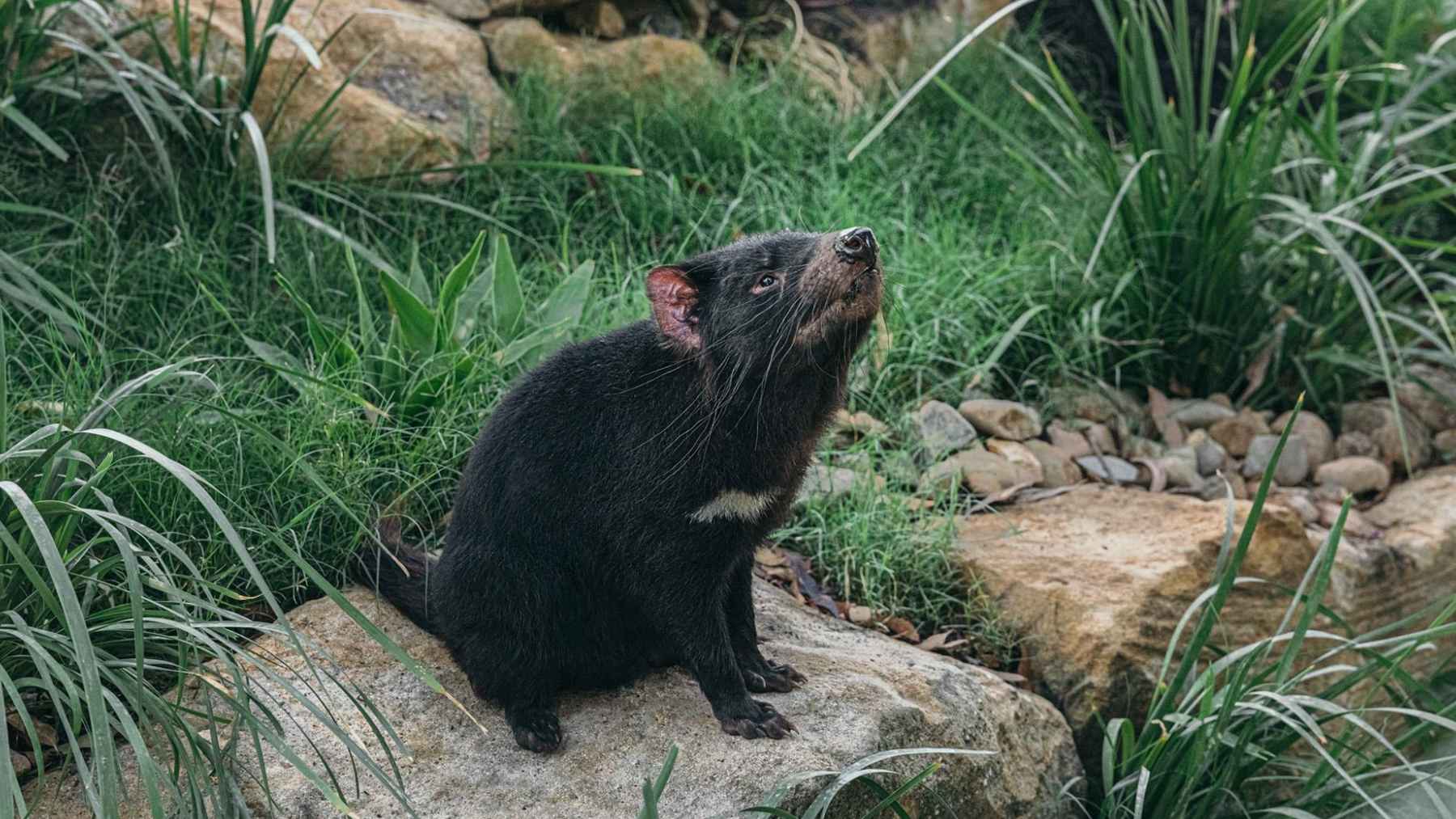
Mary, a two-year-old Tasmanian devil, has been found alive after spending 15 days outside her enclosure at Paradise Country on Australia’s Gold Coast. The shy carnivorous marsupial was discovered in bushland less than 1.2 miles from the wildlife park, but she was in an unstable condition and needed urgent veterinary care.
The rescue ends one mystery but opens another. How did an animal known by keepers as extremely timid manage to clear her quarantine area and survive for more than two weeks between suburbia and bushland?
For conservationists, Mary’s escape is more than a strange wildlife story. It is a reminder of how vulnerable this endangered species remains, even when surrounded by expert care.
Mary’s long escape
Mary escaped from her enclosure on June 2 after what staff described as an “abnormally large leap.” CCTV later showed her moving through the park grounds around 4 a.m., long before most visitors would have been thinking about coffee, traffic, or the day ahead.
A search team made up of wildlife staff and specialists used sniffer dogs, thermal drone technology, humane traps, CCTV sightings, and geographic modeling to track her movements. She was eventually located near Kopps Road in Oxenford, still close to the park but far enough away to face real dangers.
A fragile recovery
When Mary was found, Paradise Country said she was in an “unstable condition.” Staff assessed her, rushed her to a specialist veterinary hospital, and veterinarians were able to stabilize her before beginning further diagnostic testing.
The latest update brought a small but hopeful sign. Mary has taken her first bites of food since being rescued and is on a high-protein diet, although 7NEWS reported she had brain swelling and had been in critical condition after her 15-day ordeal.
“We are seeing a level of improvement that we’re quite satisfied with in this stage of the game,” Paradise Country wildlife curator Lauren Mousley said.
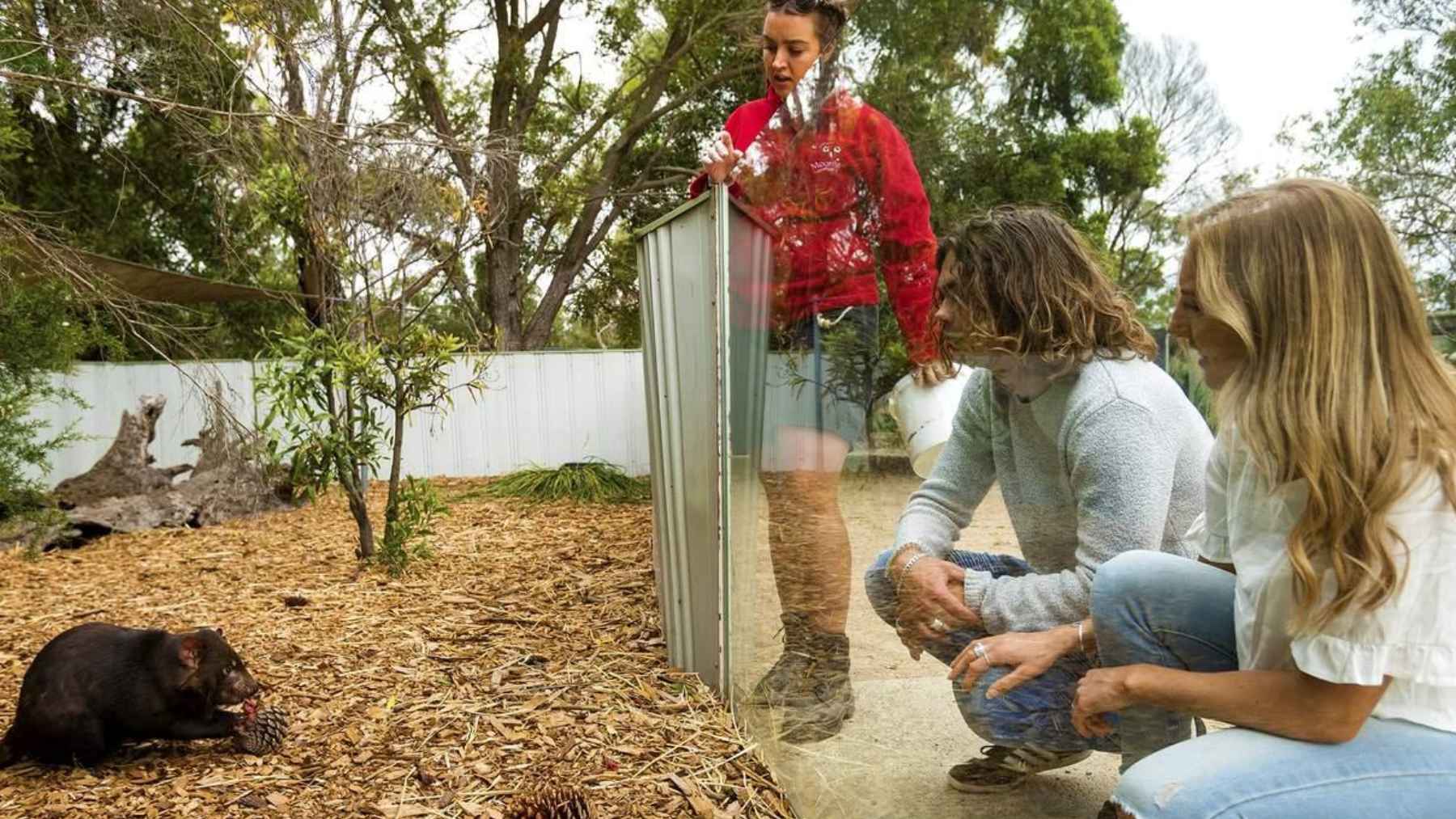
Mary, a two-year-old Tasmanian devil, is seen inside her enclosure at Paradise Country after being rescued following 15 days in bushland near Australia’s Gold Coast.
How did she survive?
Tasmanian devils are not soft, cuddly cartoon characters, despite their small size and round ears. They are powerful scavengers and hunters with strong jaws, and Tasmania’s environment department says they can eat bones, fur, and all when feeding on prey or carrion.
That may help explain how Mary made it through those two weeks. Searchers found devil droppings and the remains of kangaroo and wallaby carcasses in nearby bushland, signs that she may have found food while on the run.
Still, finding food is not the same as being safe, especially for a captive-bred animal suddenly facing a host of dangers such as cars, dogs, heat, dehydration, and unfamiliar terrain.
Why devils matter
The Tasmanian devil is the world’s largest surviving carnivorous marsupial. Adult males can weigh up to about 30 pounds and stand about 12 inches high at the shoulder, while wild devils usually live up to six years.
These animals once lived across mainland Australia, but fossil evidence suggests they disappeared there more than 3,000 years ago. Today, they are strongly associated with Tasmania, where they still roam from coastal heath to forest and mountain habitats.
The bigger conservation story
Mary’s case attracted attention because it was unusual, but also because every Tasmanian devil now carries extra conservation weight. The species is listed as endangered, and one of its greatest threats is Devil Facial Tumor Disease, a transmissible cancer that spreads through direct contact during social interactions.
Wildlife Health Australia says the disease has caused Tasmanian devil population declines greater than 70 percent in areas where it has circulated.
There is vaccination research underway, but the organization notes there is currently no effective treatment for affected individuals. That’s why carefully managed breeding, quarantine, and zoo programs matter so much.
The enclosure question
After an animal escape, the first question is always simple. Was something wrong? In this case, Queensland’s Department of Primary Industries said it had investigated the premises and was satisfied the enclosures were already compliant with legal requirements.
That does not make the story less serious. It makes it more complicated. Wildlife care often depends on layers of planning, animal behavior, staff response, public cooperation, and a willingness to expect the unexpected , because a frightened or curious animal can sometimes do unpredictable things.
Mary’s next steps
For now, Mary’s world is much smaller again. Instead of bushland corridors and suburban backyards, she is under veterinary supervision, with staff watching her food intake, hydration, injuries, and neurological condition.
The hope is that she can eventually return home and reunite with Mavka, the other Tasmanian devil who arrived with her from a New South Wales zoological facility. After all that noise, searching, and worry, a quiet recovery would be the best possible ending.
The official statement was published on Paradise Country’s Facebook page.