A new diabetes pill lowered blood sugar and body weight more than oral semaglutide, but the convenience came with a harder trade-off

Published On: August 31, 2026 at 5:00 PM
Follow Us
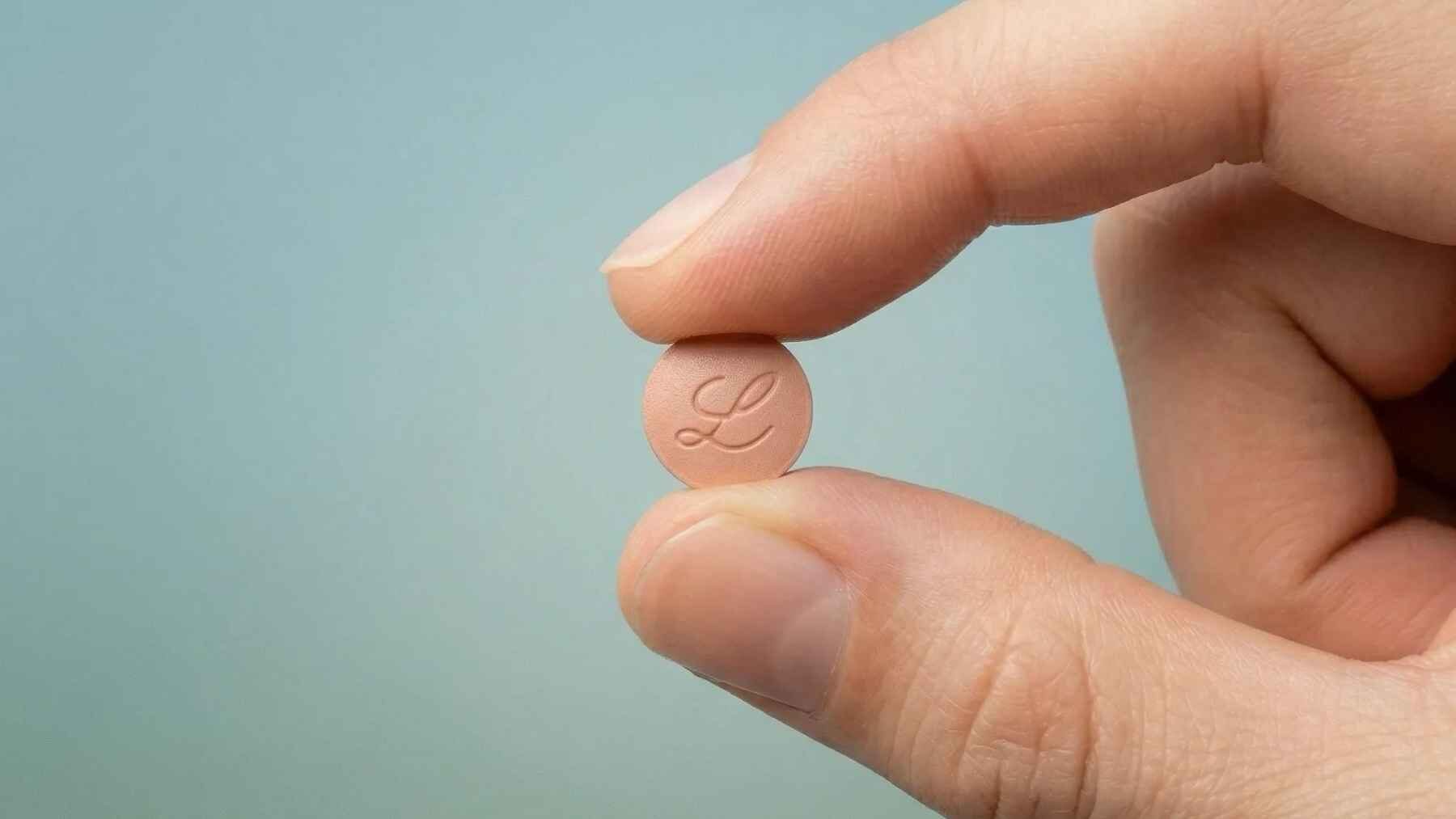
Orforglipron oral GLP-1 pill developed by Eli Lilly for adults with type 2 diabetes.

The pill called orforglipron showed that it can lower blood sugar and body weight much more than oral semaglutide in adults with type 2 diabetes

A recent study compared orforglipron with oral semaglutide at 7 and 14 milligrams, not with a weekly semaglutide injection. Also this new option can be taken at any time without the need to plan around meals or water. 

How the pill works

GLP-1 is a hormone released after eating that sends a signal to the brain that the body has enough food. The digestion slows down and the pancreas releases insulin. That explains why medications that imitate this effect are so effective for the control of diabetes and for weight loss.

Developed by Eli Lilly, orforglipron is a small synthetic molecule that activates the GLP-1 receptor. The difference with the oral semaglutide is that the orforglipron can be swallowed at any time of the day, with or without food.

What the trial found

The study that united 1,698 adults gave participants different doses of orforglipron or oral semaglutide, while researchers measured the A1C. This is a blood test that reflects the  average of glucose during approx 3 months.
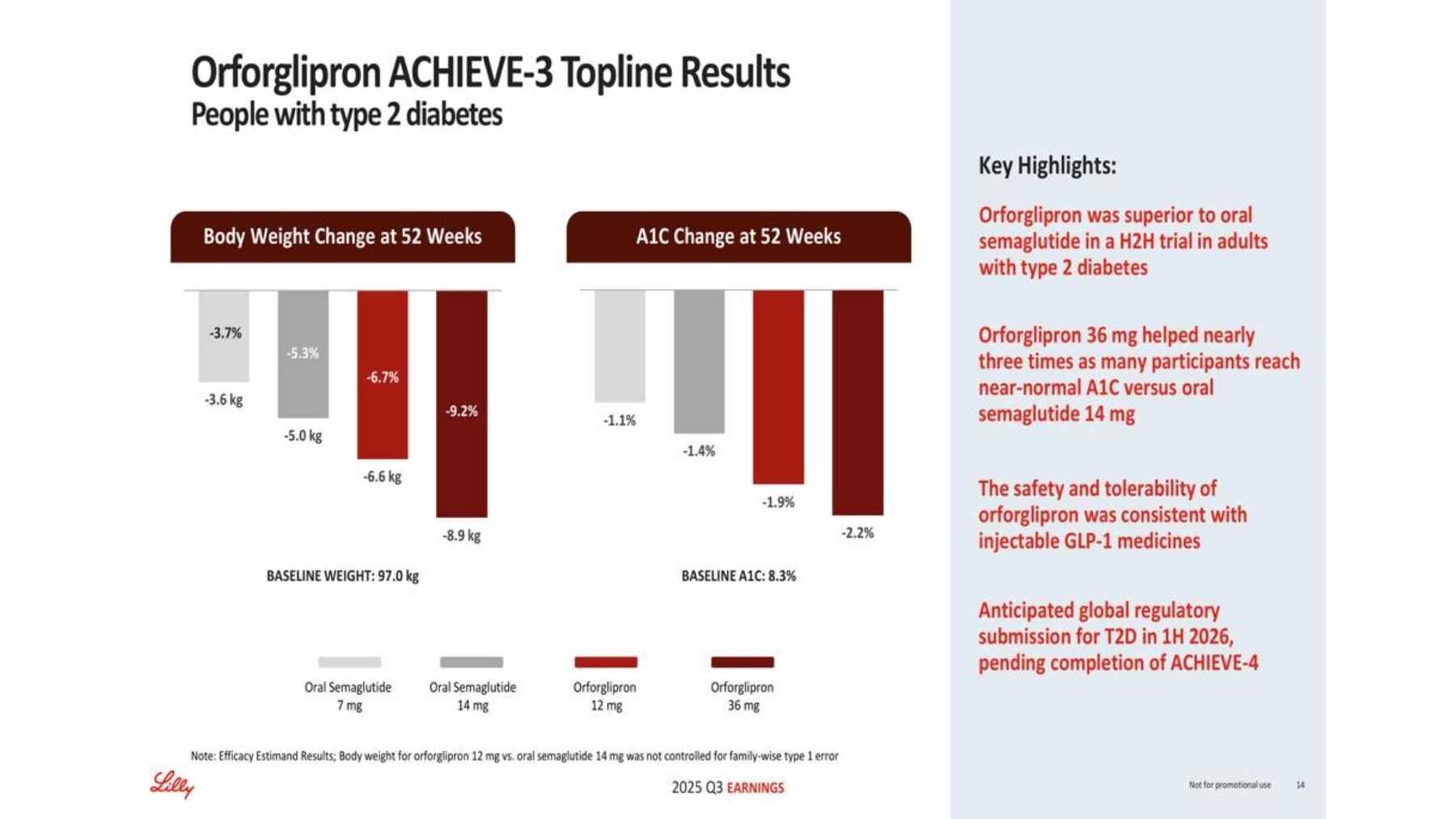
ACHIEVE-3 trial results comparing orforglipron with oral semaglutide for weight loss and A1C reduction.
Eli Lilly’s ACHIEVE-3 results show greater reductions in body weight and A1C with the highest tested dose of orforglipron than with oral semaglutide 14 mg after 52 weeks.

Participants lost an average of 19.7 pounds, versus 11 pounds with oral semaglutide.

Convenience has a cost

The pill is very practical. It does not need refrigeration or a specific waiting period before breakfast. 

On the other hand, the trial shows that this treatment has a weakness. Nausea, diarrhea, vomiting, indigestion, and extreme reductions of appetite were common. Almost 10 percent of those taking orforglipron decided to stop the treatment because of side effects.

Where it stands now

The FDA approved orforglipron under the brand Foundayo on April 1, 2026, for chronic weight management in adults with obesity or adults with overweight and at least one weight-related condition. 

The U.S. prescribing information includes warnings related to acute pancreatitis, severe gastrointestinal reactions, kidney injury from dehydration, and possible thyroid tumors. Anyone considering GLP-1 medication needs to consult a doctor to evaluate the benefits taking into account their personal medical history.

The main study was published in The Lancet.
Adrian Villellas

Adrián Villellas is a computer engineer and entrepreneur in the fields of digital marketing and advertising technology. He has led projects in data analysis, sustainable advertising, and solutions for new audiences. He also contributes to scientific initiatives related to astronomy and space observation. He writes for science, technology, and environmental media outlets, where he makes complex topics and innovative advances accessible to a broad audience.

Related Post

Children using tablet computers in a classroom

Researchers followed 260 Finnish children for eight years expecting more screen time to signal weaker thinking skills, but by age 15 those reporting greater use actually showed better overall cognitive performance, although the study could not prove screens caused the difference

September 20, 2026 at 6:00 PM
Australian magpie perched on a branch in Sydney

Researchers fitted five Australian magpies with GPS trackers to map their movements, but within an hour the birds began helping one another remove the harnesses, turning a failed tracking experiment into an unexpected observation of cooperation and problem-solving

September 20, 2026 at 2:30 PM
People cycling along a canal street in Amsterdam, Netherlands

Dutch men went from averaging about 5 feet 5 inches in the mid-1800s to nearly 6 feet today, gaining almost 8 inches in roughly 150 years, but researchers found natural selection may explain less than 2% of that extraordinary national growth spurt

September 20, 2026 at 11:48 AM
Three tall men walking together on a street in Amsterdam with Dutch canal houses behind them

Dutch men grew about 20 centimeters in 150 years, going from among Europe’s shortest to its tallest, and a simulation shows natural selection explains less than half a centimeter of that change

September 20, 2026 at 6:33 AM
Microscopy images of epithelial tissue showing keratin networks and cell nuclei

Scientists stretched living tissue for hours and watched its internal keratin scaffolding rebuild itself into thick networks spanning multiple cells, but the strangest part came when the same process gradually pushed the nuclei out of the protective cages surrounding them

September 20, 2026 at 5:38 AM
Brown and white mouse sitting on a white background

A drug first developed for spinal cord injuries reduced DNA damage and brain inflammation in mice with Alzheimer’s, and because it already passed a safety trial in 109 people, researchers believe it could reach patients faster

September 19, 2026 at 12:38 PM