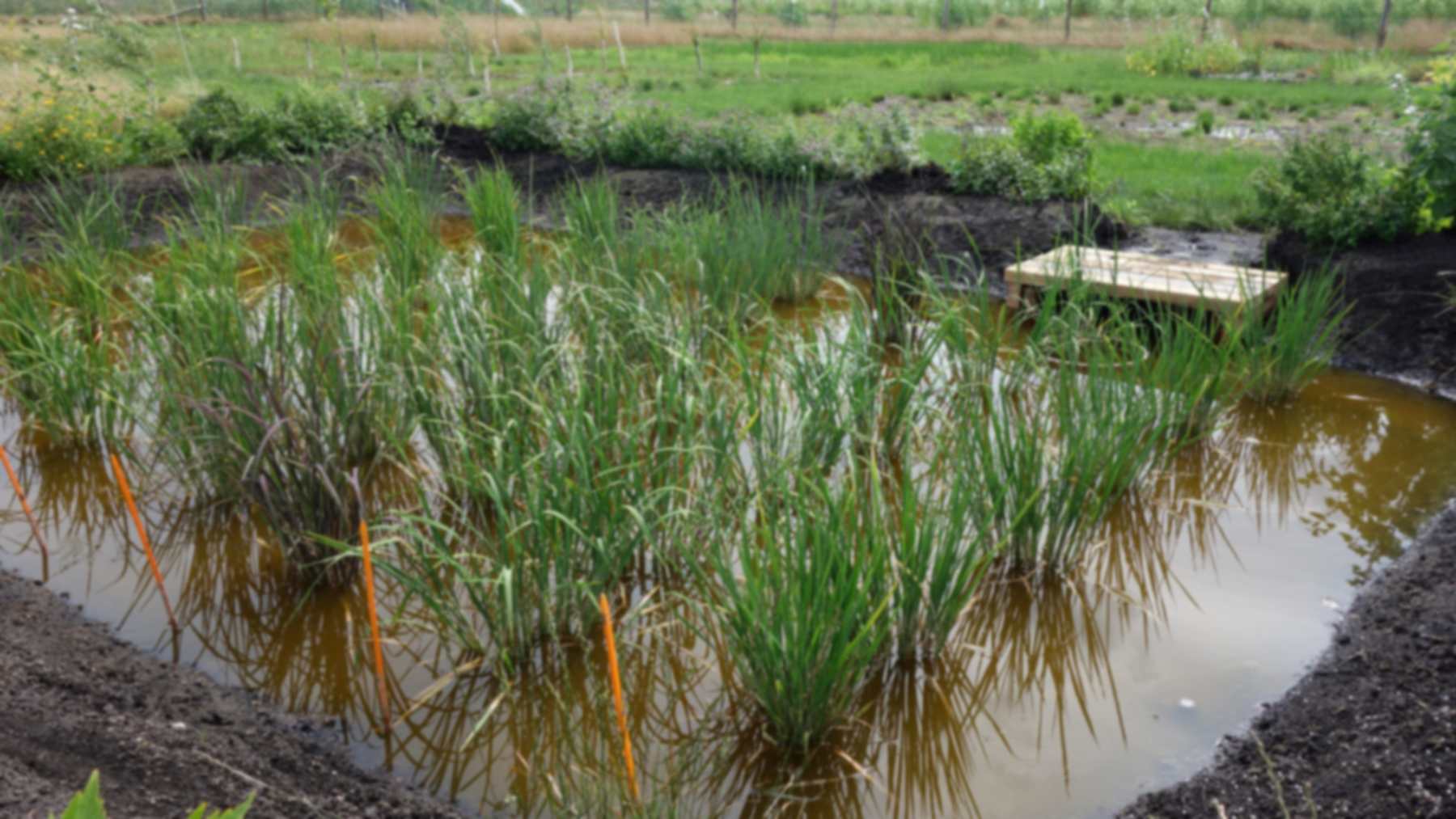
In the summer of 2025, rice plants stood in calf-deep water on a farm a few miles north of Ely, in the Cambridgeshire Fens of eastern England. Those four small paddies held the UK’s first rice crop, planted for a trial run by the UK Centre for Ecology & Hydrology (UKCEH) together with the family that farms the land.
Nine varieties went into the flooded plots, including arborio for risotto, a basmati type called Dellmati and Koshihikari, the Japanese sushi rice. They grew through what the Met Office confirmed as the warmest summer on record for the UK at the time, with a mean temperature of 61°F (16.1°C) between June 1 and August 31.
Seeds from the USDA and a glasshouse start
The seeds were supplied by the USDA Agricultural Research Service and grown into seedlings in UKCEH’s glasshouse in Oxfordshire, according to the institute. The young plants were moved into four specially built mini paddy fields on the rewetted peat in early summer.
UKCEH describes the nine as cold-hardy varieties from Brazil, Colombia, Italy, Japan, North Macedonia, the Philippines and the United States, picked to suit the climate of the Fens.
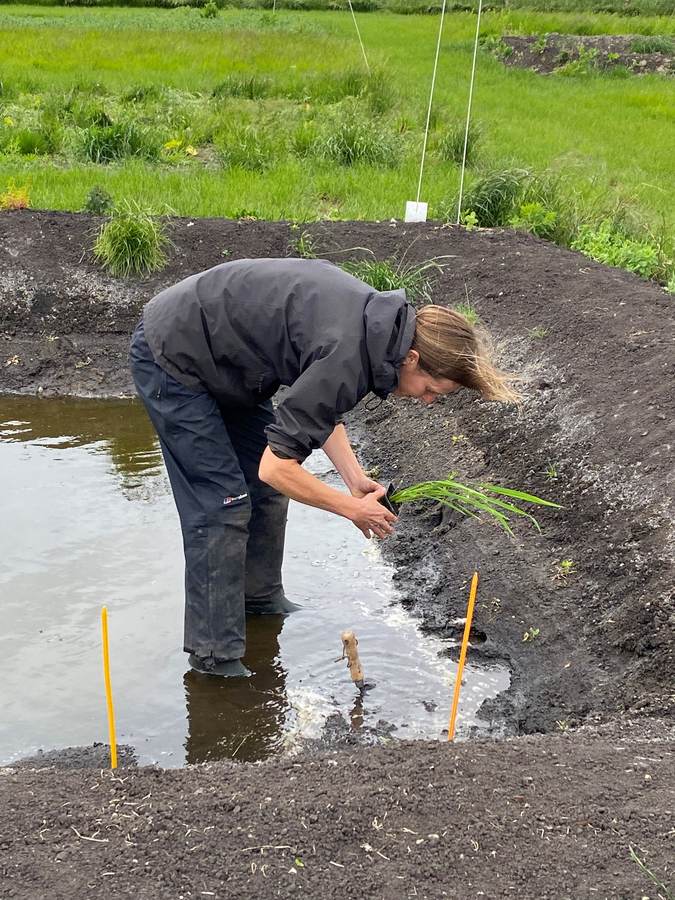
The trial is led by Professor Richard Pywell, the lead UKCEH scientist on the project. “By its very nature, this is an experiment and so it will be interesting to see how the traditional produce and novel crops like rice perform on the rewetted peat soils alongside other land use options such as biomass production and habitat for nature,” he said in the institute’s announcement.
The Fens are losing their peat
The Fens are some of the most productive farmland in Britain. According to UKCEH, they grow crops worth around £1.2 billion a year and a third of the country’s fresh vegetables.
Keeping that land dry enough to farm strips away as much as 12 millimeters (about half an inch) of peat every year, releasing carbon that built up in the soil over thousands of years, the institute says.
Peat is partly decayed plant matter that piles up in waterlogged ground, where the lack of oxygen keeps it from rotting. Once air reaches it, that ancient carbon escapes into the atmosphere as carbon dioxide.
The Fens once held around 150,000 hectares (about 370,000 acres) of peatland, and roughly 24,000 hectares (about 59,000 acres) are thought to remain.
Farmers who want to try something new
Craig and Sarah-Jane Taylor farm the land near Ely where the trials are taking place. “Our Fenland soils are some of the most productive in the country but are very susceptible to the changing climate and we need to adapt the crops we grow and how we grow them,” Sarah said in the UKCEH announcement.
“The trials are critical to understanding the practicalities of how we might go about large-scale rewetting of peat, including its impact on yields and farm income, as well as the potential wider benefits for wildlife and flood prevention,” she added.
Methane is the trade-off to watch
Flooded rice fields give off methane, a potent greenhouse gas made by microbes that live in waterlogged soil without oxygen. Any climate gain from wetting the peat has to be weighed against that gas.
The institute’s announcement did not include any emissions measurements from the paddies.
“Our detailed measurements of the rewetted peats will include greenhouse gas emissions, carbon stocks, water use, crop yield and the impacts on nature. These will help farmers and policymakers decide on the best path to take for the Cambridgeshire Fens for livelihoods, the environment and nature,” Pywell said.
Hotter summers are changing the crop list
The Met Office estimated at the time that a summer as hot as 2025 was about 70 times more likely than it would be without human greenhouse gas emissions, a shift that has also changed how scientists see the famous summer of 1976.
“In a natural climate, we could expect to see a summer like 2025 with an approximate return period of around 340 years, while in the current climate we could expect to see these sorts of summers roughly 1 in every 5 years,” said Dr. Mark McCarthy, head of climate attribution at the Met Office. A year later, summer 2026 beat that record at 61.7°F (16.5°C), and the Met Office said climate change had made it around 130 times more likely.
A 2025 UKCEH study with the University of East Anglia modeled more than 160 crops under 3.6°F and 7.2°F (2°C and 4°C) of warming above preindustrial levels. It found that wheat and strawberries could become harder to grow in South East England and East Anglia, while chickpeas, soybeans and citrus could gain ground.
“Clearly, it’s unlikely to be feasible just to switch large-scale food production from Britain’s agricultural heartlands of southeastern England to Scotland, for example,” said lead author Dr. John Redhead, a spatial ecologist at UKCEH.
One hot summer leaves questions open
Four small paddies and one record-hot season are all the trial has made public, and as of October 2026 UKCEH has not reported yields or a second season. “We hope to be monitoring the site over the coming years to assess the long-term viability and resilience of these land use options to a changing climate,” Pywell said.
The trial, part of the AgZero+ research program, was announced by the UK Centre for Ecology & Hydrology on September 28, 2025.
Photo: UKCEH