Siberia is releasing far more methane during its growing season than it did just over a decade ago. How much more? Emissions roughly doubled between 2010 and 2023.
A new study warns that this trend could become a serious problem. If emissions keep climbing under a very high-emissions future, Siberia alone could cancel out about one-fifth of the human-caused methane reductions needed by 2050. And what happens in the Arctic doesn’t necessarily stay there.
Methane emissions doubled
Professor Liu Yi and first author Dr. Sihong Zhu of the Institute of Atmospheric Physics at the Chinese Academy of Sciences led the international research. The team combined measurements from Japan’s GOSAT satellite with data from monitoring stations on the ground.
They then worked backward from methane detected in the atmosphere to estimate where it was coming from. Think of it a little like smelling smoke and figuring out where the fire is.
Growing-season methane output increased by about 13.2 million U.S. tons between 2010 and 2023. The total rose by around 1.2 million U.S. tons each year.
That is a lot. In fact, the yearly growth was equivalent to 92% of the increase in emissions from wetlands worldwide, which produce nearly one-third of global methane.
A difficult source to track
Siberia contributes only about 5% of global methane emissions. Still, figuring out exactly what is happening there has never been easy.
The region is huge. Ground monitoring is sparse. Conditions can also change dramatically from one area to another.
Satellites help fill those gaps. Instead of relying on a handful of observation points, researchers can look across vast stretches of land from above.
The new study did not rely on satellites alone. Researchers checked the trend against several independent data sets and measurements taken closer to the ground. Independent experts have described that combination as one of the study’s strengths.
One river, two climate stories
So, what is actually driving all this methane?
The answer depends on where you look.
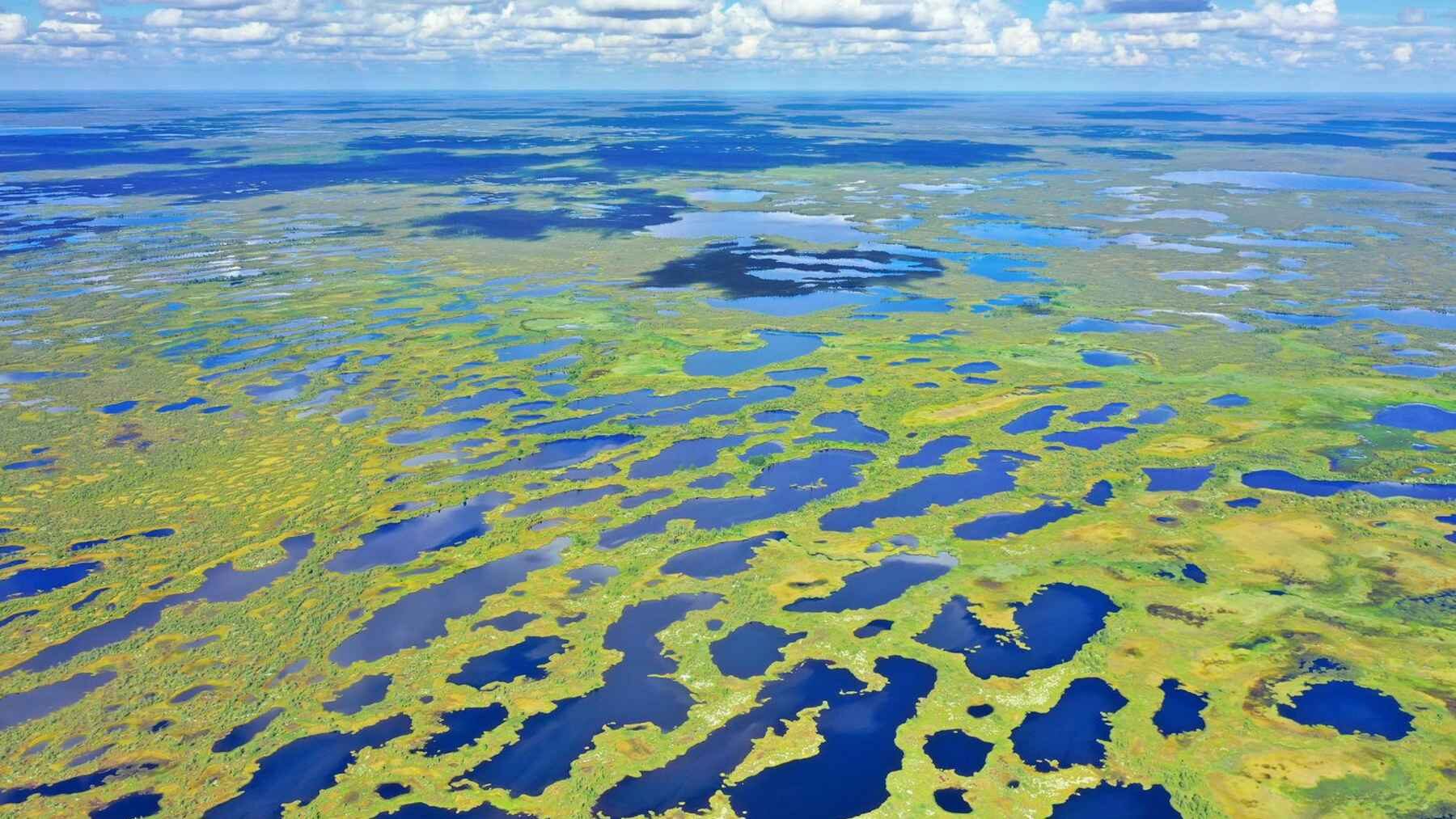
The Yenisei River roughly separates two emerging climate patterns. Western Siberia is becoming wetter. Eastern Siberia, meanwhile, is becoming warmer and drier.
And that difference matters.
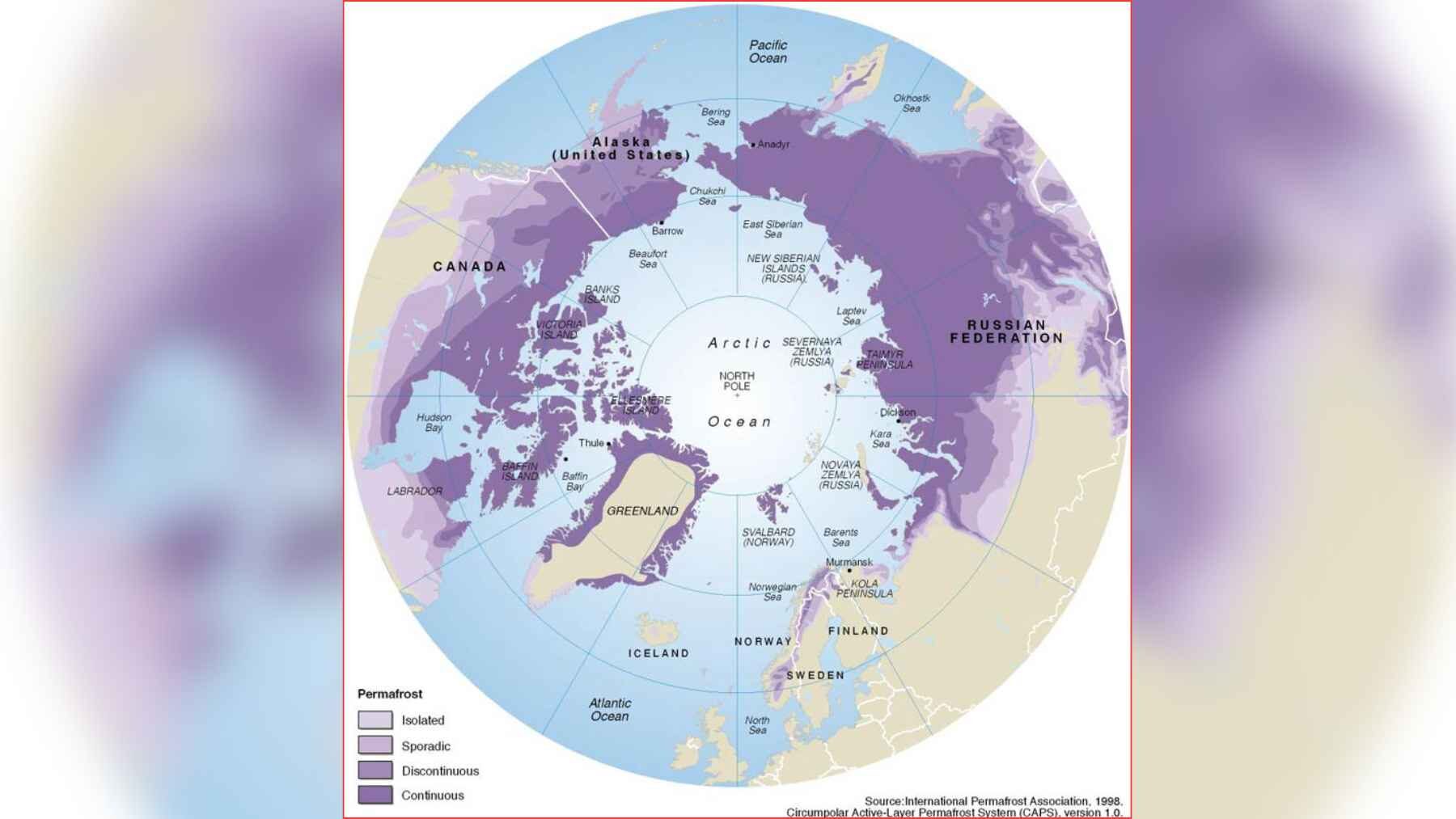
In the west, a winter circulation pattern centered near Scandinavia transports more heat and moisture into the region. That changes wetlands and the upper layers of permafrost, which is ground that stays frozen for at least two years.
Warmer and wetter soil creates good conditions for methane-producing microbes. They break down organic material in places with little oxygen and release methane in the process. This is known as methanogenesis.
Wildfires dominate the east
Eastern Siberia has a different problem. Fire.
Persistent high-pressure systems linked to the Arctic Oscillation can bring unusually warm and dry weather. That makes it easier for wildfires to start and spread.
And when vegetation burns, methane is released.
On average, methane emissions grew by roughly 440,000 U.S. tons per year in western Siberia and about 770,000 tons per year in the east.
Previous research has pointed in the same general direction. A 2022 study linked extreme Siberian fire seasons with early snowmelt and changes in the polar jet.
Put simply, the landscape is becoming easier to burn.
What does the 20% actually mean?
This is the big number. But it needs some context.
The 20% estimate comes from a very high-emissions scenario. Under that pathway, the extra methane coming from Siberia by 2050 could be comparable to the expected global increase from wetlands.
At the same time, it could offset about 20% of the human-caused methane cuts needed to meet climate targets.
Does that mean cutting methane emissions is pointless? No. Quite the opposite.
Natural methane from wetlands, thawing land, and wildfires is much harder to control than emissions from leaking gas infrastructure or other human activities. If natural sources grow, society may have to work even harder on the sources it can actually reduce.
The researchers also found that methane emissions respond somewhat faster as extreme temperatures rise. The relationship is not perfectly linear. In other words, another degree of warming does not always produce exactly the same increase in methane.
Why methane cuts still matter
Methane does not remain in the atmosphere for centuries like carbon dioxide. Its lifetime is much shorter.
But it packs a punch.
Over a 20-year period, methane can trap far more heat than the same amount of carbon dioxide. That makes reducing methane one of the faster ways of slowing near-term warming.
Most human-caused methane comes from areas such as fossil fuels, agriculture, and waste. Many of those emissions can be reduced through better equipment, fewer leaks, or changes in how waste and livestock are managed.
You cannot exactly repair a Siberian wetland with a wrench. That is the problem.
Important limits remain
The findings are significant, but there are still gaps.
Professor Neil Ross of Newcastle University called the work high quality and noted that satellite observations could help researchers decide where future field measurements are most urgently needed.
Professor Julian Murton of the University of Sussex pointed to one important weakness. There are limited direct measurements of active-layer thickness, permafrost thaw, and ground ice in western Siberia, even though those processes are part of the proposed explanation for rising methane emissions.
So the overall trend looks strong. Some of the finer details still need more boots on the ground.
The 20% estimate also applies to a very high-emissions future. It is not a prediction of what definitely will happen.
A feedback already underway
At its core, the study describes a climate feedback loop.
Warming changes wetlands, frozen ground, and wildfire conditions. Those changes release more methane. More methane then contributes to additional warming.
Round and round it goes.
That feedback is especially important in remote regions such as Siberia because natural emissions cannot be switched off in the same way as an industrial methane leak.
“If we ignore these regional, nonlinear feedbacks, estimates of the global methane budget could be seriously biased,” Liu said. “Changes in natural sources could also offset part of our mitigation efforts.”
Independent researchers agree that the study highlights a broader issue. Natural methane feedbacks are becoming increasingly important as the planet warms, even while countries try to bring human-caused emissions down.
That makes Siberia worth watching closely.
The official study was published in Science.