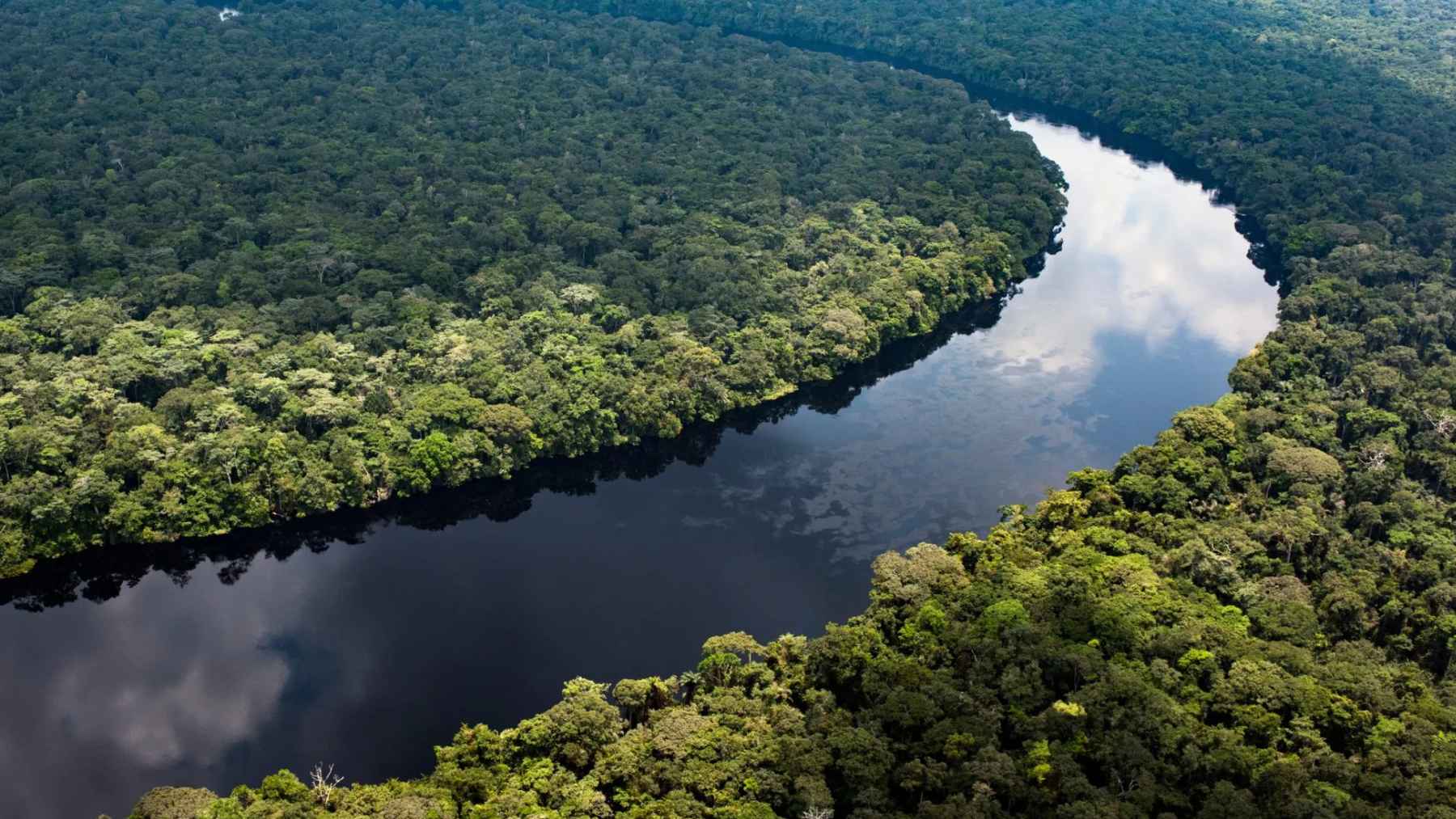
Two dark lakes in the Congo Basin are forcing scientists to rethink one of Earth’s biggest natural carbon stores. A new study shows that Lake Mai Ndombe and Lake Tumba are releasing carbon dioxide made partly from peat that had been locked away for thousands of years.
That matters because tropical peatlands have long been treated, for the most part, as slow-and-steady carbon vaults. Now, researchers say part of that old material is already moving through water, escaping into the air, and entering the modern climate system.
A carbon vault with a leak
The Congo Basin’s peatlands are not huge on a world map, but they carry a climate weight that is hard to overstate. They cover only about 0.3% of Earth’s land surface, yet they hold roughly one-third of the carbon stored in tropical peatlands, according to ETH Zurich.
Nature Geoscience reports that the larger central Congo peatland complex stores an estimated 29 billion metric tons of carbon, which is about 32 billion U.S. tons. So when even a small portion begins to leak, scientists pay attention.
The dark lakes tell the story
Lake Mai Ndombe and Lake Tumba sit inside a wetland world of swamp forests, lowland rainforest, and thick peat deposits. Mai Ndombe covers about 869 square miles, while Tumba covers about 286 square miles, and both are shallow lakes with an average depth of roughly 13 feet.
Their water is famously dark, almost like black tea. That color comes from dissolved plant material washing out of forests and soils, a natural process that also gave researchers a clue about what the lakes are carrying.
The surprise was not that the lakes release CO2. The surprise was how old some of that carbon is.
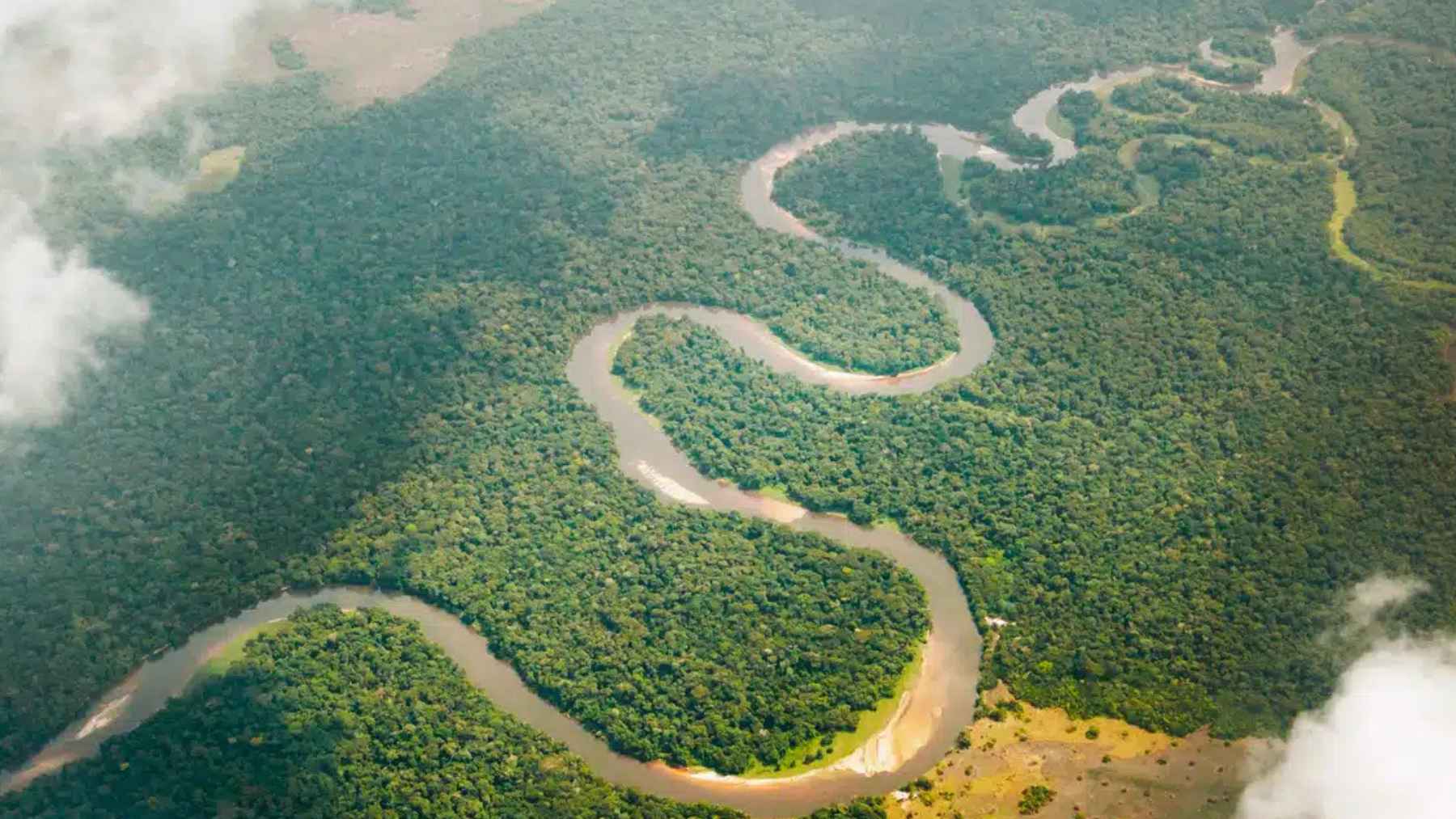
Ancient carbon is reaching the air
Using radiocarbon dating, the research team found that dissolved inorganic carbon in the two lakes was about 2,170 to 3,515 radiocarbon years old. Even more striking, 39% to 40% of that carbon appears to come from surrounding peatlands.
In everyday terms, this is like finding smoke from a fire that everyone assumed had been safely sealed underground. Lead author Travis Drake said, “We were surprised to find that ancient carbon is being released via the lake,” while co-author Matti Barthel described it as “the carbon reservoir has a leak.”
The study also suggests that Lake Mai Ndombe alone may release more than about 165,000 U.S. tons of peat carbon each year. That does not mean the whole Congo peatland system is collapsing, but it does show that old carbon has a pathway into the atmosphere.
Why scientists did not expect this?
For years, the basic assumption was simple. In waterlogged peatlands, low oxygen slows decay, helping dead plant material pile up instead of breaking down quickly.
That is why peatlands are so important. They act like a sponge for carbon, soaking it up across centuries and millennia.
But this study points to a more complicated picture. Microbes may be breaking down ancient peat carbon inside the wetland, after which the CO2 moves into lakes and escapes from the water surface into the air. The exact pathway is still not fully known.
Water levels could change everything
The team also looked at methane and nitrous oxide, two other greenhouse gases tied to lake and wetland systems. A parallel study in the Journal of Geophysical Research found that water levels have a strong influence on how much methane escapes from Lake Mai Ndombe.
When lake levels are high, methane-consuming microorganisms appear to work more effectively. When levels fall during the dry season, that natural brake weakens, and more methane can reach the atmosphere.
That is where climate change enters the picture. Longer or harsher dry periods could allow oxygen to push deeper into peat, speeding up the breakdown of once-stable organic material and adding more CO2 to the air.
Forest loss adds another risk
Climate is not the only pressure on this system. Changes in land use, especially clearing forest for farmland, could also make the region drier by reducing evaporation and cloud formation.
That may sound distant from daily life, but it is part of the same climate story that shows up in heat waves, heavy rains, and the electric bill when cooling costs rise. Wetlands are not just remote landscapes. They are part of the planet’s climate machinery.
The trouble is, the machinery is poorly mapped. ETH Zurich notes that tropical lakes and wetlands have been underrepresented in global climate models, which means the world may be missing an important piece of the carbon puzzle.
A warning, not a verdict
Scientists are not saying the Congo Basin has already crossed a point of no return. The key question is whether this release of old carbon is part of a long-running natural balance, offset by new peat formation, or an early warning of destabilization.
That distinction matters. If new peat replaces the lost carbon, the system may remain broadly balanced. If drying, warming, or deforestation push emissions higher, one of Earth’s great carbon stores could become a much larger source of greenhouse gases.
For now, the finding is a warning from two dark lakes in the heart of Africa. What was once thought safely buried is, to a measurable extent, already reaching the sky.
The study was published in Nature Geoscience.