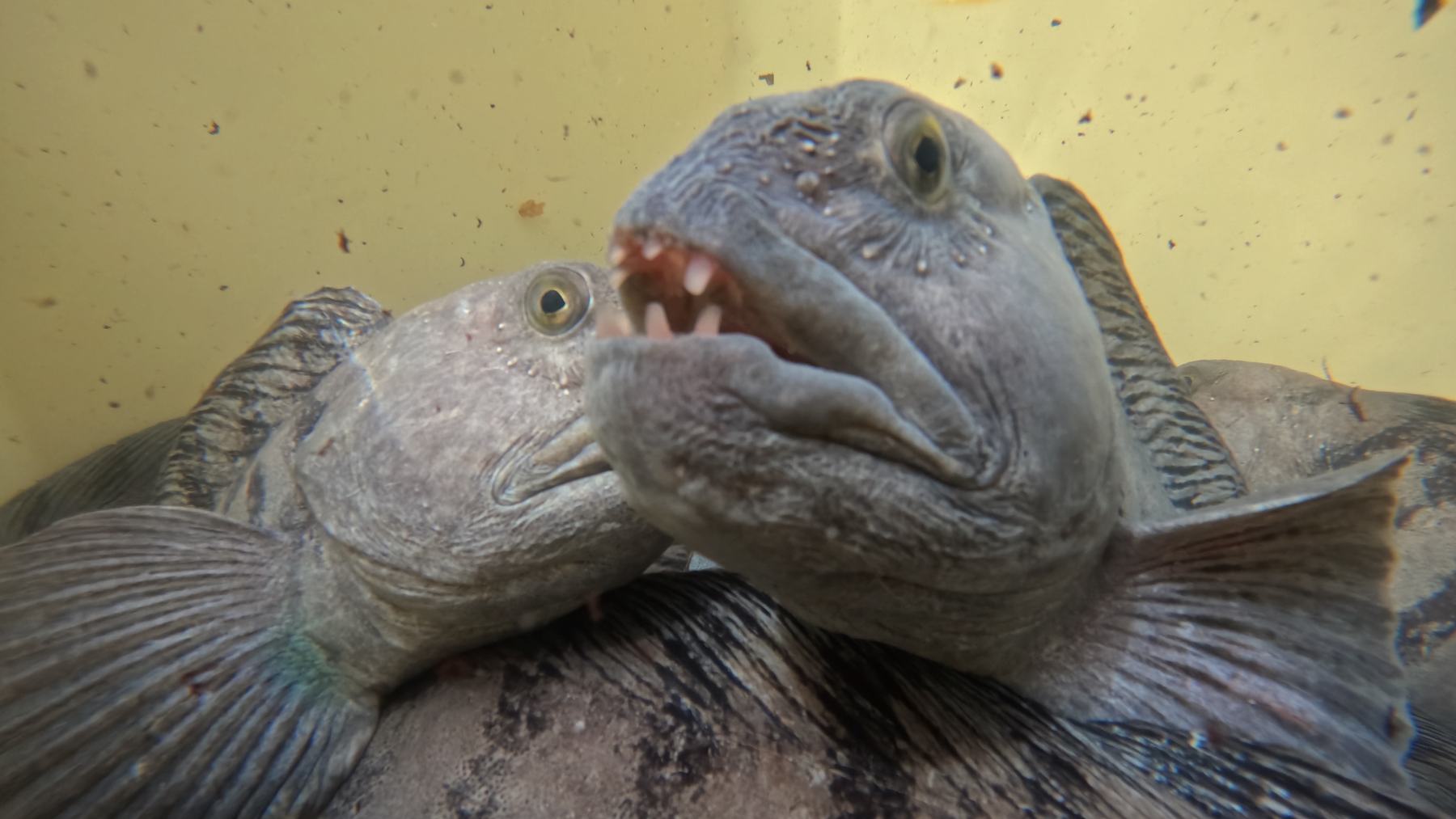
Researchers at Norway’s Institute of Marine Research tagged 20 Atlantic wolffish in 2025 and moved them from the coast near Loppa. They released them on artificial kelp reefs in Melkøysundet, a sound outside Hammerfest. In 2026 the seafloor receivers picked up nine of them at the same spot, or 45 percent.
The project aims to bring back a predator that eats the sea urchins stripping kelp from Norway’s northern coast. Early results look promising, the institute said in its update of September 10, 2026. Whether the fish have cut urchin numbers is another matter, and the team has not documented that yet.
Nine fish back in Melkøysundet
Only one of the nine wolffish stayed among the artificial kelp forests for the whole monitoring period. The other eight swam off for three months or longer in winter and then showed up again in the same place.
Hans Kristian Strand, a marine researcher on the team, cares as much about those comebacks as about the total. “The interesting thing is not only that several of the wolffish stay, but that fish that disappear in the winter come back,” he said.
In the institute’s Norwegian release, Strand goes a step further. “This suggests that Melkøysundet may have become part of their home range, even though they make seasonal migrations,” he said. Fish can roam and still come back, like steelhead returning to Oregon’s Deschutes River.
Urchins on the wolffish menu
Along the coasts of Troms and Finnmark, grazing sea urchins have turned kelp forests into barren seafloor. The coast has looked that way for decades. Young fish use kelp to hide, feed and grow, according to the institute.
The Atlantic wolffish, Anarhichas lupus, is a powerful predator with a taste for urchins. According to the institute, it also eats snails, mussels and crustaceans. NOAA Fisheries lists scallops, hermit crabs, Jonah crabs and sea urchins among its prey in U.S. waters.
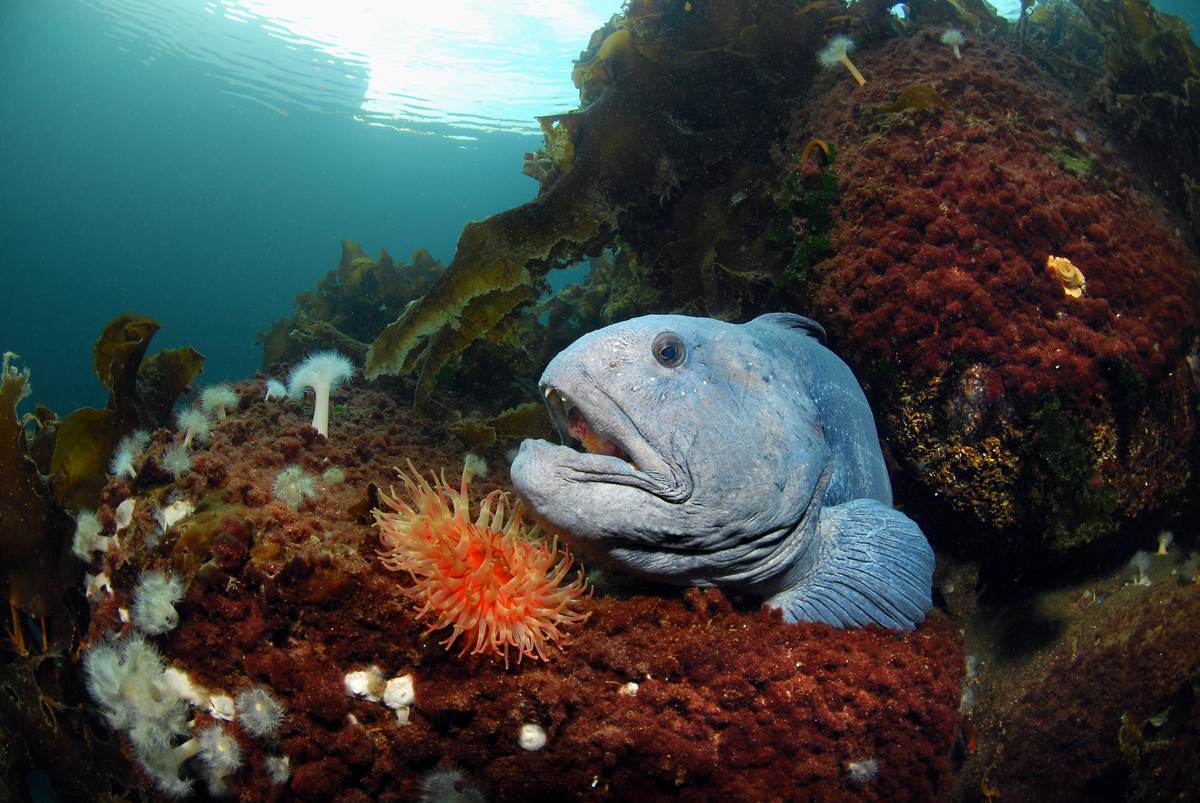
Strand said the species was once common in many northern Norwegian fjords, until fishing heavily depleted the local stocks. The team wants to return it to places where it once worked as a natural predator. Other coasts are trying to rebuild kelp too, as in Chile’s effort to revive underwater forests.
Transmitters and seafloor receivers
Each wolffish carries a small acoustic transmitter that researchers implanted in its belly. Receivers on the seafloor log the fish’s identity and depth whenever it swims within range. Scientists call this method acoustic telemetry.
The detections show when a fish arrives, leaves and comes back. They do not trace every movement. A silent tag only tells researchers that the animal is out of range, not what happened to it.
Kelp reefs grown in four months
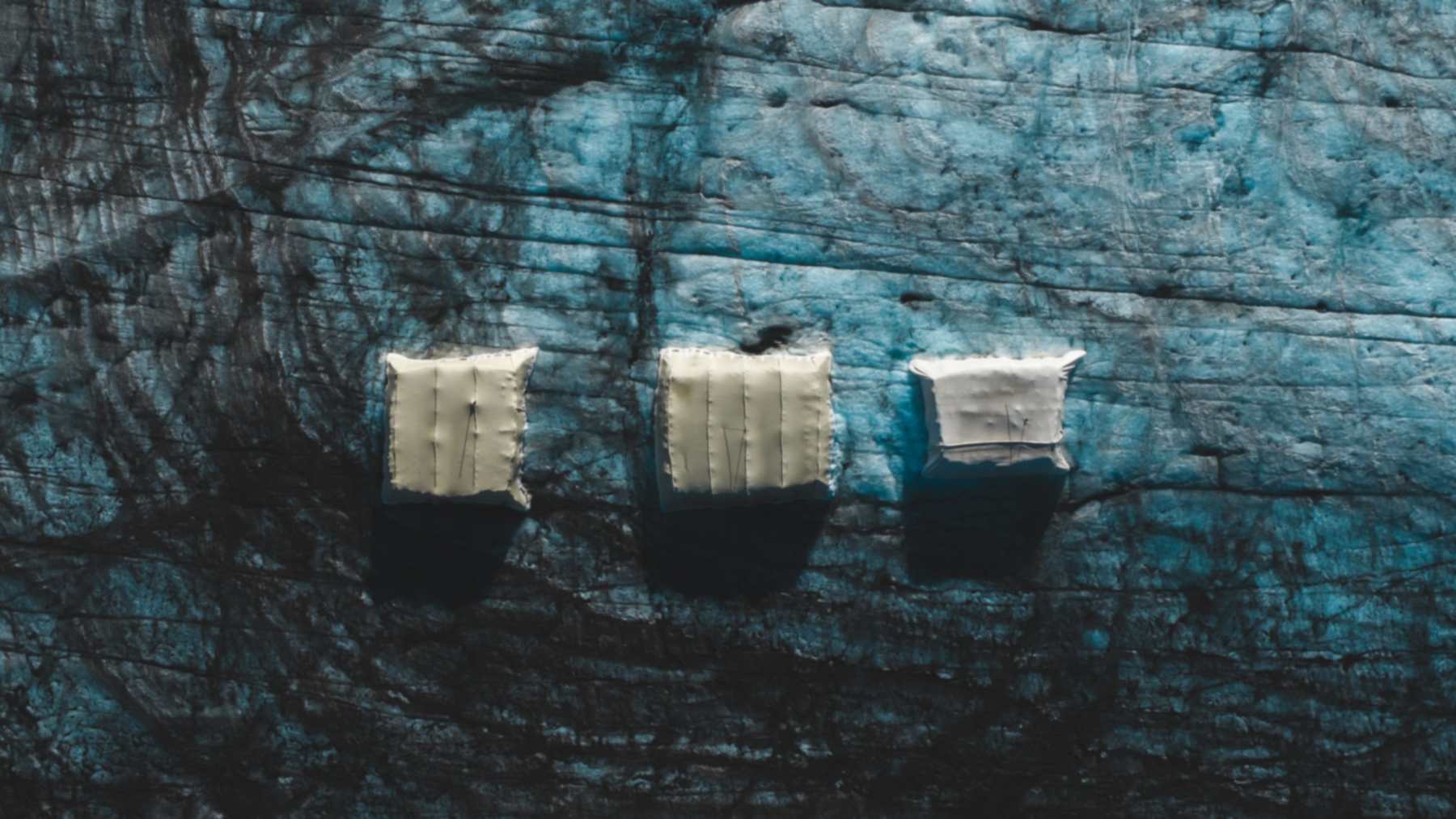
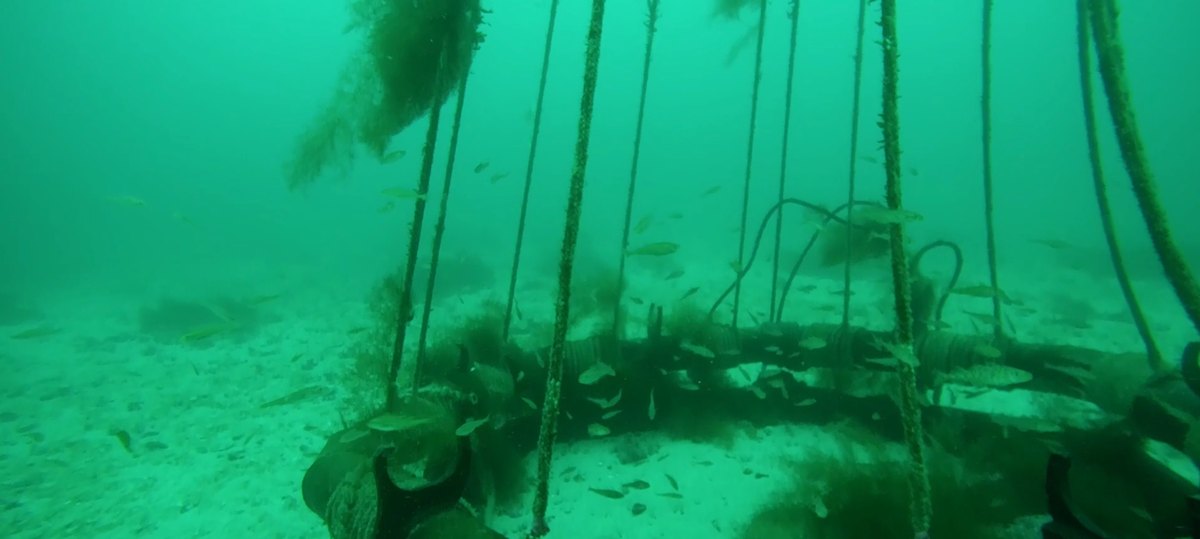
The institute lowered the reefs into Melkøysundet during the winter. They stand about 66 feet (20 meters) deep. Each one rises 33 to 49 feet (10 to 15 meters) toward the surface.
Divers checked them four months after the last units went in. Lush kelp covered every structure, according to an October 2025 update. Strand called it “record time.”
Large numbers of young cod and saithe, a fish Americans know as pollock, swam around the reefs. The firm GSG AS designed and built them. Polaralge AS supplied kelp plants grown in a laboratory.
Reefs have drawn fish elsewhere too, as with two artificial reefs off Western Australia. In Melkøysundet, though, the kelp grew before the wolffish arrived.
Olderfjorden trial, 2017 to 2019
Strand and his colleague Esben Moland Olsen had tested the idea before in Olderfjorden, part of Porsangerfjorden. Their study in the Canadian Journal of Fisheries and Aquatic Sciences followed 20 relocated wolffish. The fish measured 16.5 to 31.5 inches (42 to 80 centimeters).
A first group of seven was tracked for 14 months in 2017 and 2018. A second group of 13 was followed for four months in 2019. Up to 40 percent stayed in the fjord until monitoring ended, and the rest likely dispersed.
The authors saw reason for “cautious optimism” about moving wolffish. They also noted how hard it is to track animals that scatter in open water.
Cages, cameras and food
Local fisherman Rudi Naustvik-Vest and his boat Aurora helped catch, carry and store the wolffish alive. On the trip from Loppa, the fish lay close together in tanks without fighting. The trip caused no trouble as long as they had plenty of fresh seawater.
In 2026 the team changed the release method. Some fish spent a little over a week in special cages on the seafloor. There they got food and time to adjust to the water and the bottom.
Cameras recorded how the caged fish ate and behaved when several shared the space. The trial will test whether this short stay ties them more closely to the site than direct release.
Urchin counts still unmeasured
Strand summed up what the relocations have shown so far. “We have shown that it is possible to catch, transport and release wolffish, and that a significant share appears to accept the new area,” he said.
Nobody has yet shown that the moved fish ate enough urchins to bring back kelp. That will take several years of surveys. Olsen, who tags the fish and analyzes the receiver data, named the next hurdle.
“The next big question is whether we can achieve a high enough local density for the wolffish to actually affect the ecosystem,” he said. Equinor contributes funding, and Hammerfest municipality handles local contacts.
More data were due in September 2026, the Institute of Marine Research said. After that, the partners will weigh a larger trial with local fishermen starting in 2027.
Photo: Institute of Marine Research