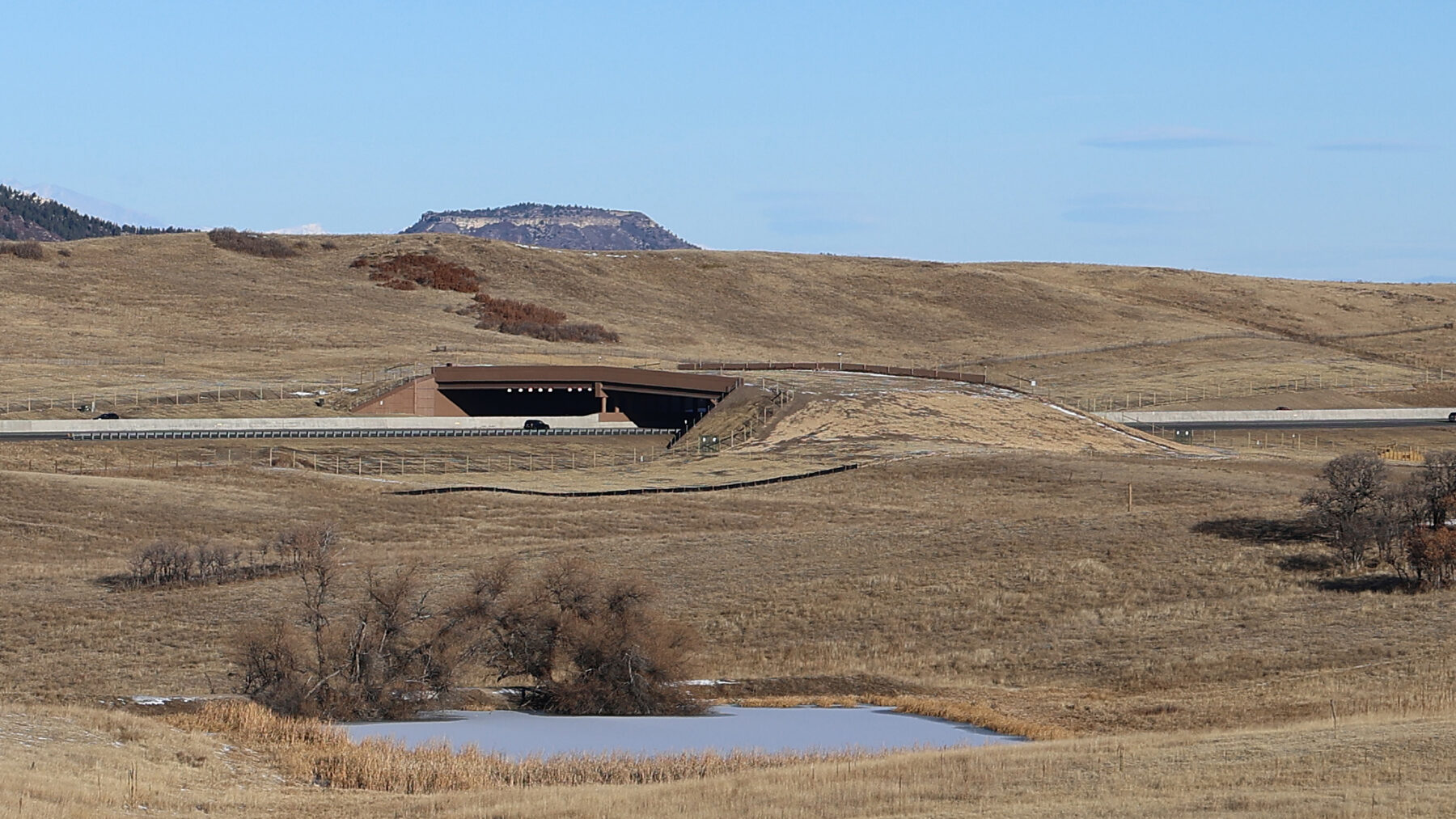
Colorado’s Greenland wildlife overpass has a big number attached to it. The 200-foot bridge over Interstate 25, which the state calls the largest in North America, is often credited with a 91 percent drop in wildlife-vehicle crashes. However, that drop was measured along the entire I-25 South Gap corridor in 2024, before the bridge was finished.
The figure is from a state monitoring study that was published in August 2025. The study credits the fences and underpasses that were built in earlier phases of the project. The report even says that the overpass “will not be completed until after the conclusion of this study.”
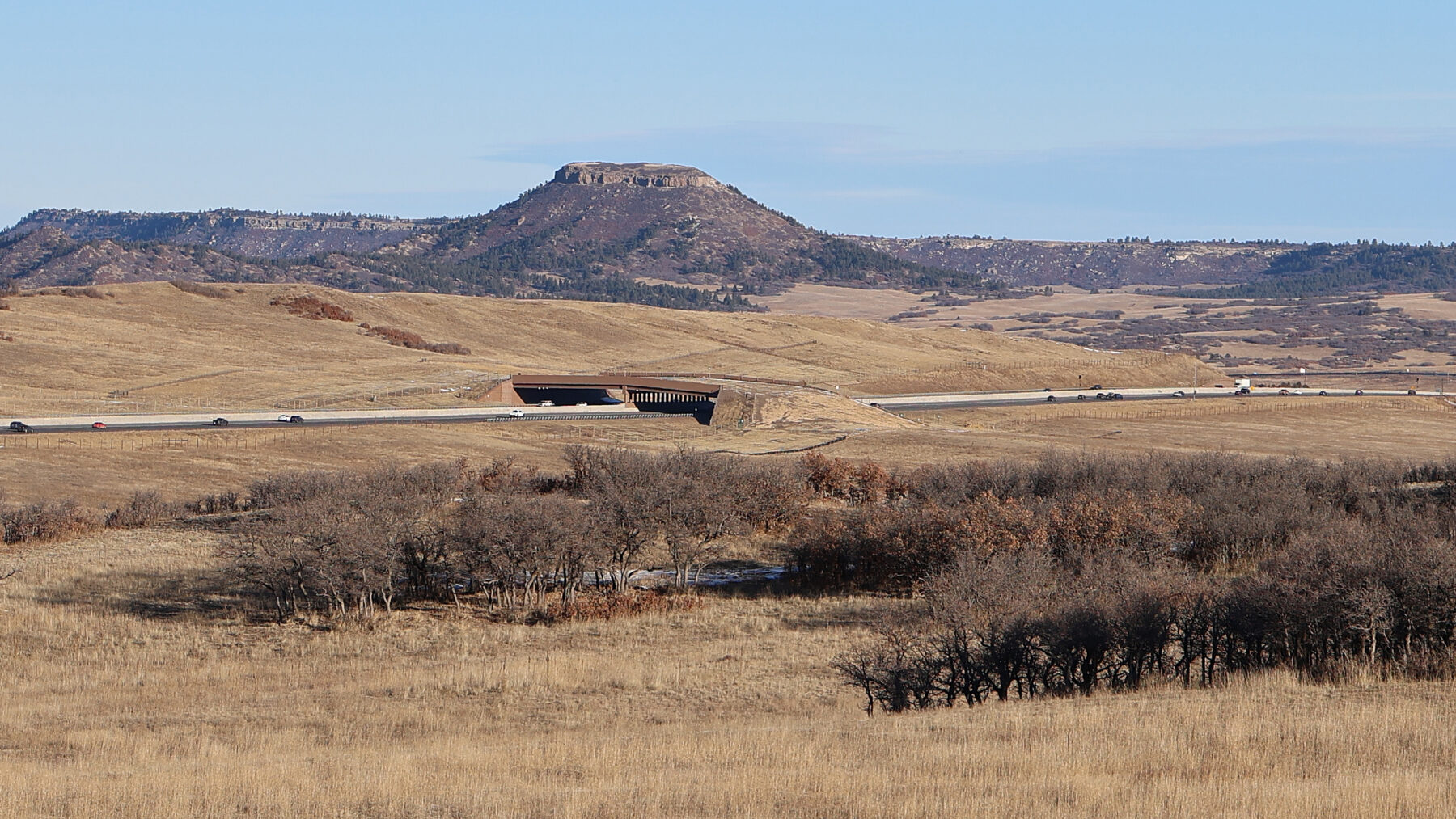
The bridge does exist, and it’s already in use. It spans six lanes of I-25 at milepost 165.4, between Larkspur and Monument in Douglas County. As for its size, the overpass measures 200 by 209 feet (61 by 63.7 meters). It cost $15 million.
There used to be a 3.7-mile (6-kilometer) gap between two underpasses on this part of the highway. The bridge closes it, connecting some 39,000 acres (about 61 square miles) of habitat on both sides of I-25. The Colorado Department of Transportation (CDOT) announced that it was complete in December 2025, and we reported on it when it opened.
Where did the 91 percent come from?
Julia Kintsch of ECO-resolutions led the study (CDOT-2025-08) with Colorado Parks and Wildlife and CDOT, and it’s available online. Kintsch’s team compared crash numbers from before and after construction. Between 2013 and 2017, there was an average of 32.2 reported crashes with wildlife each year. In 2024, there were three inside the fenced area.
According to the report, “in the final year of the study, WVC crashes were 91% lower than the 5-year pre-construction average.” WVC is short for wildlife-vehicle collision. For 2023 and 2024, the two years after construction, the average was 85 percent lower.
The drop came from a system of five underpasses and 14.1 miles (22.7 kilometers) of fencing. The fences steer animals toward the underpasses. From 2022 to 2024, cameras recorded 16,749 successful passages by mule deer, 1,791 by white-tailed deer, and 866 by elk.
CDOT was already using the 91 percent figure when the bridge opened. In December 2025, CDOT environmental manager Chuck Attardo told CBS Colorado that as of August 2025, the agency had cut wildlife-vehicle collisions in the corridor by 91 percent.
So what is the overpass for?
The overpass isn’t a failure. It was designed to be the last piece of the system, and CDOT projected that all of the crossings together would cut crashes by about 90 percent.
For animals, this corridor used to be “an effective wall that they had to play Frogger and try to get across,” Colorado Parks and Wildlife biologist Brandon Marette told CBS Colorado. More than 100,000 vehicles travel through this area every day, according to CDOT.
The underpasses did miss one species. During the study, pronghorn weren’t recorded using any of them. The bridge is changing that.
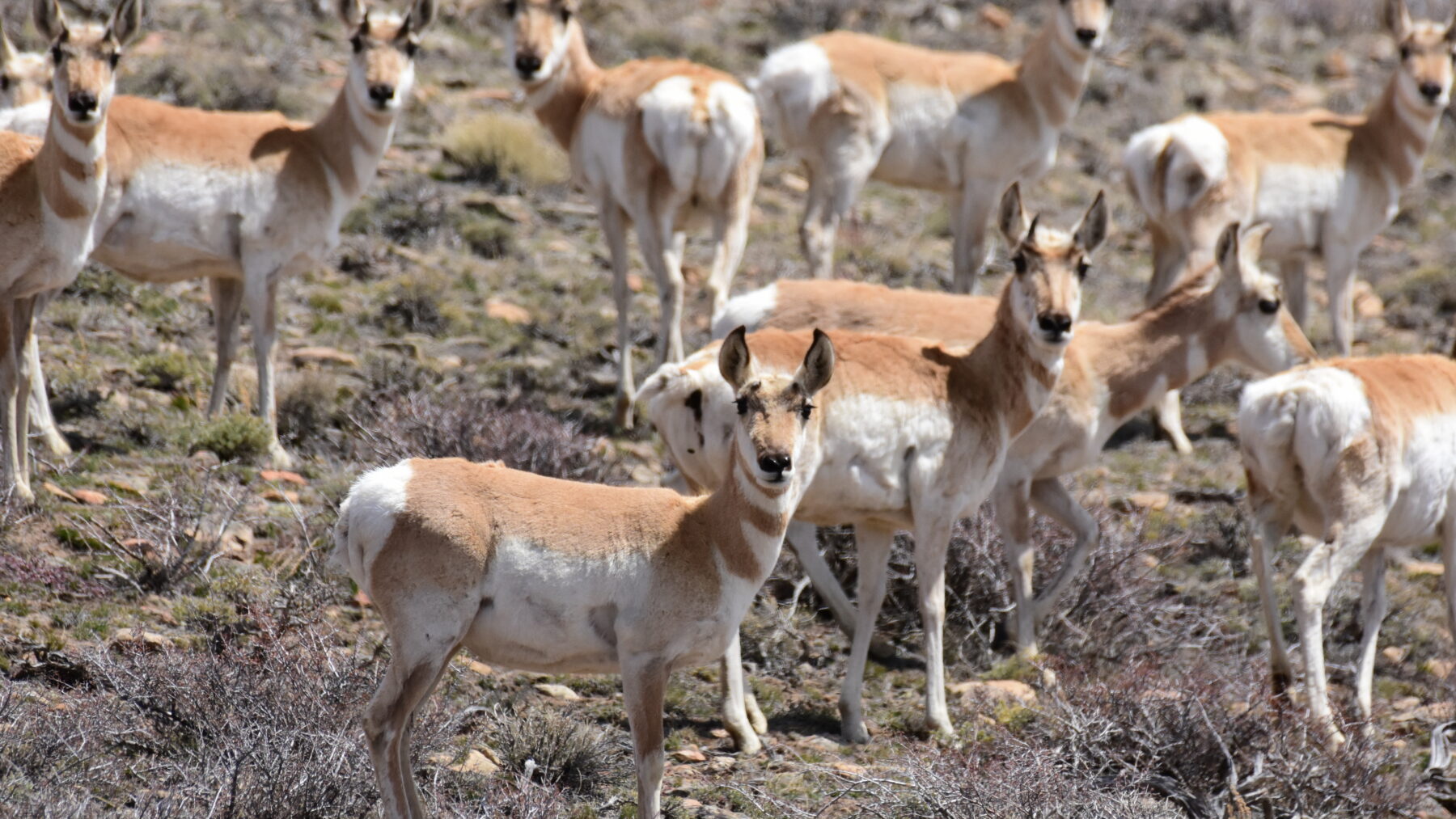
In September 2026, Attardo told CBS Colorado that pronghorn are crossing to the west side of I-25 “for the first time in decades,” thanks to the overpass. According to Attardo, the video feed CDOT is collecting shows a “huge success.”