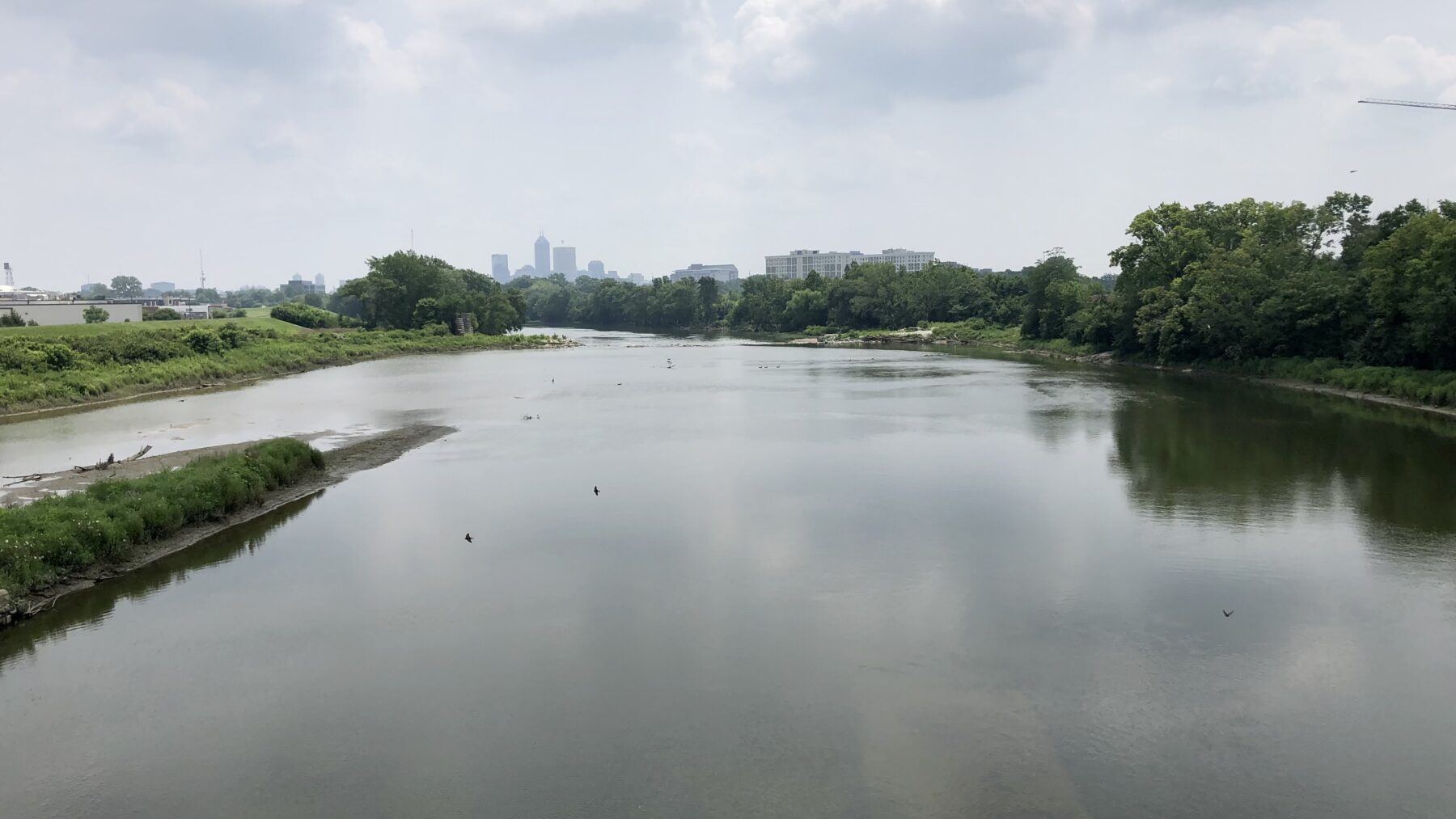
In 1899, Indianapolis wanted a boating lake for Riverside Park, so the city built a low-head dam across the West Fork of the White River to back up the water. Now, 127 years and several drownings later, crews are tearing the Emrichsville Dam out.
The dam stands just south of the 16th Street bridge, alongside the park. Crews with heavy equipment are working from the south bank, crossing the river on a temporary causeway, and by late October they were breaking up the dam’s concrete from its north end toward the south, according to the city’s weekly project updates. The city expects to wrap up the work in the river itself by December 18.
The reason the dam was built “does not provide a benefit or apparent need anymore,” says Gavin Merriman, design manager at the city’s Department of Public Works.
Meanwhile, it has blocked fish migrations for more than a century, and it’s been linked to several drownings. The most recent victims were two kayakers who died in 2024.
Emrichsville was never meant to hold back floods or supply water. Its job was to raise the river and create a lake where people could go boating. Building it cost about $40,000 at the time, which works out to more than $1.3 million today, according to IndyStar. Over the years, that stretch of water drew boaters and, later, water-skiers.
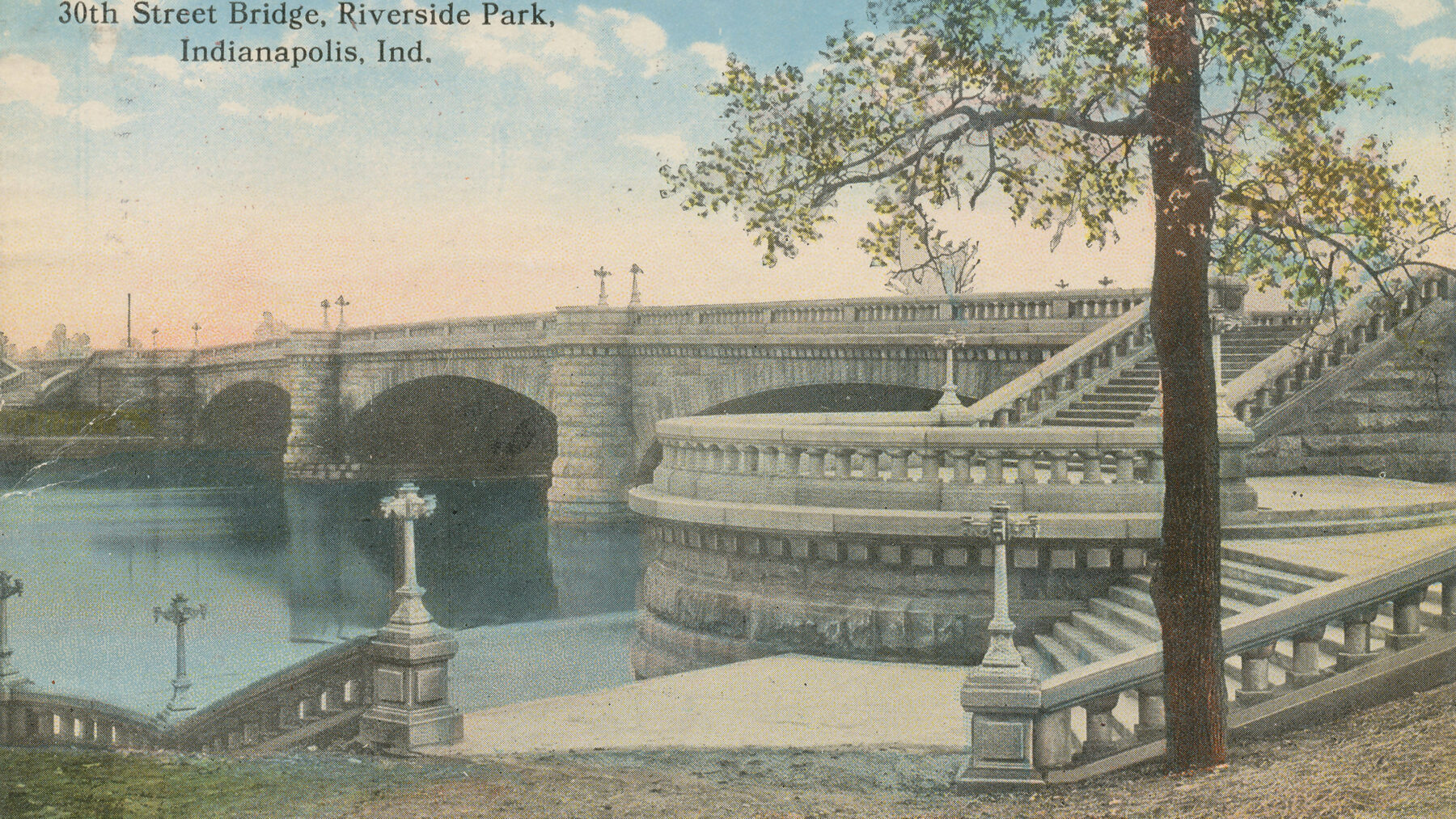
The Department of Public Works is in charge of the removal. In 2024, the U.S. Fish and Wildlife Service’s National Fish Passage Program awarded the project a $750,000 grant, and the Indiana Department of Natural Resources and The Nature Conservancy are backing it as well. All told, the grants come to about $875,000, IndyStar reports.
Crews will take out the weir, the concrete apron and the stilling basin. They’ll also clear the rock that was dumped into the breach (the hole left when part of the dam collapsed in October 2018).
Some pieces will stay put. After consultation with historic preservation agencies, the north turret tower and its limestone wall will remain, along with what’s left of the south tower.
The dam is about 250 feet long (76 meters). Sources disagree on its height, putting it somewhere between 8 and 10 feet. That’s enough to create a recirculating current, the looping churn of water that makes low-head dams so dangerous for anyone who goes over one.
A boy drowned at the dam in 1915. In March 2021, 17-year-old Kevin Rodriguez died after his canoe went over it. Then, on April 16, 2024, kayakers Marcus Robinson, 30, and Solomon Shirley, 22, died at the same spot. Their families filed a wrongful-death lawsuit against the city in March 2025. No ruling or settlement in that case has been reported.
“How many more people have to die before this dam comes out?” Scott Salmon, executive director of Friends of the White River, told WRTV when the federal grant was announced in 2024. He added that he hoped the answer would be zero.
The problem isn’t unique to Emrichsville. Indiana has about 170 low-head dams, which caused 25 deaths between 2010 and 2020, according to a 2025 study in the journal Water cited by IndyStar.
Fish pay a price, too. About 150 species live in the White River, and at least 85 percent of them need to migrate, upstream to their spawning grounds and downstream to spend the winter, Jerry Sweeten, a senior ecologist at the EcoSystems Connections Institute, tells IndyStar.
The dam’s effects reach more than four miles (6.4 kilometers) upstream. As for taking it out, Sweeten tells Mirror Indy that his research hasn’t turned up anything to suggest that removing a dam harms a stream.
The project’s paperwork should be closed out by February 2027. Then, for a year, the river will be monitored to see how it responds once water runs freely past 16th Street, where it’s been held back since 1899.
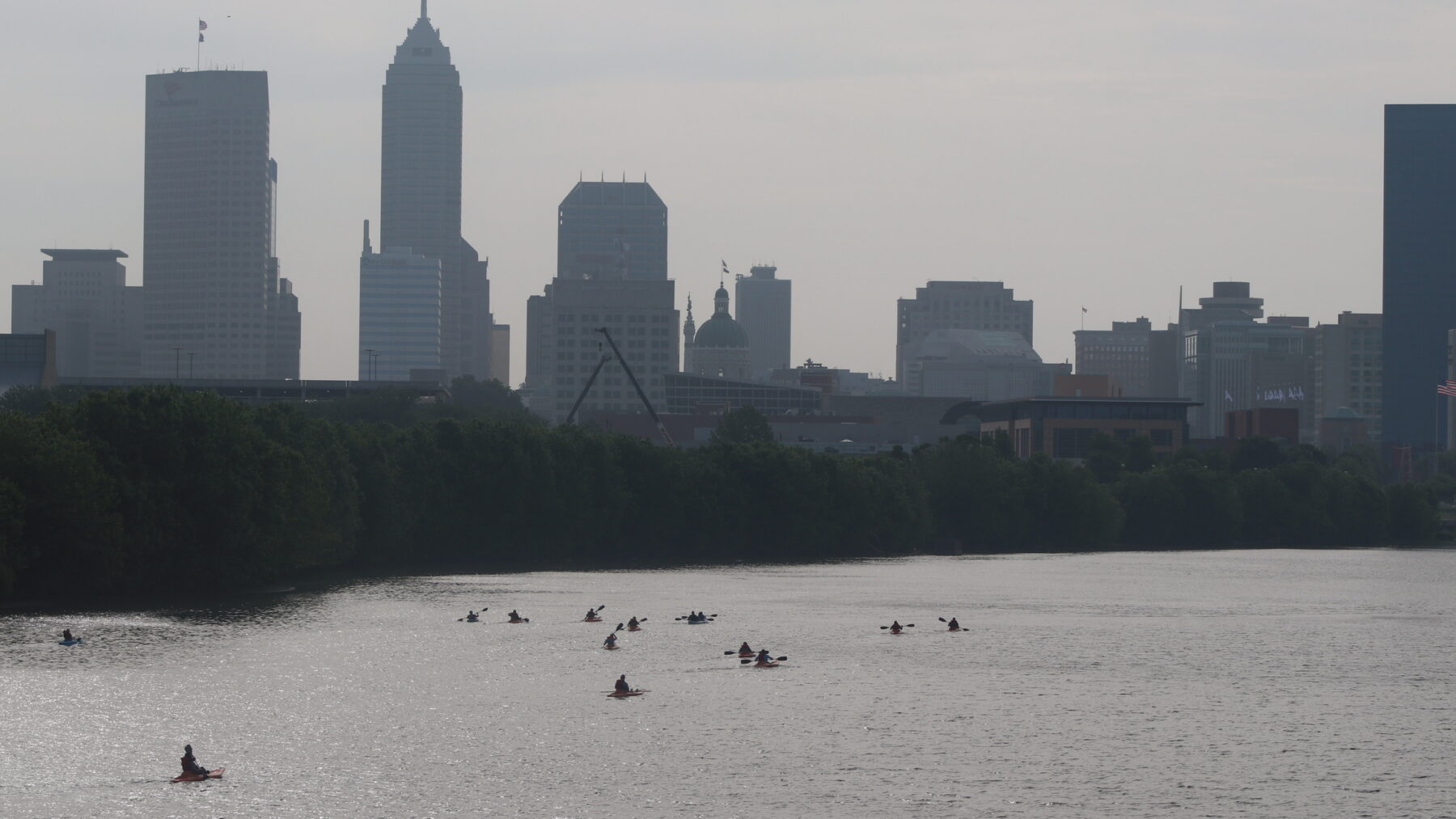
Greg Harger, a neighbor known locally as Coach, watched the machines from the riverbank. As he told Fox59 when demolition began: “Rivers are meant to flow and with a structure like this, you can’t.”