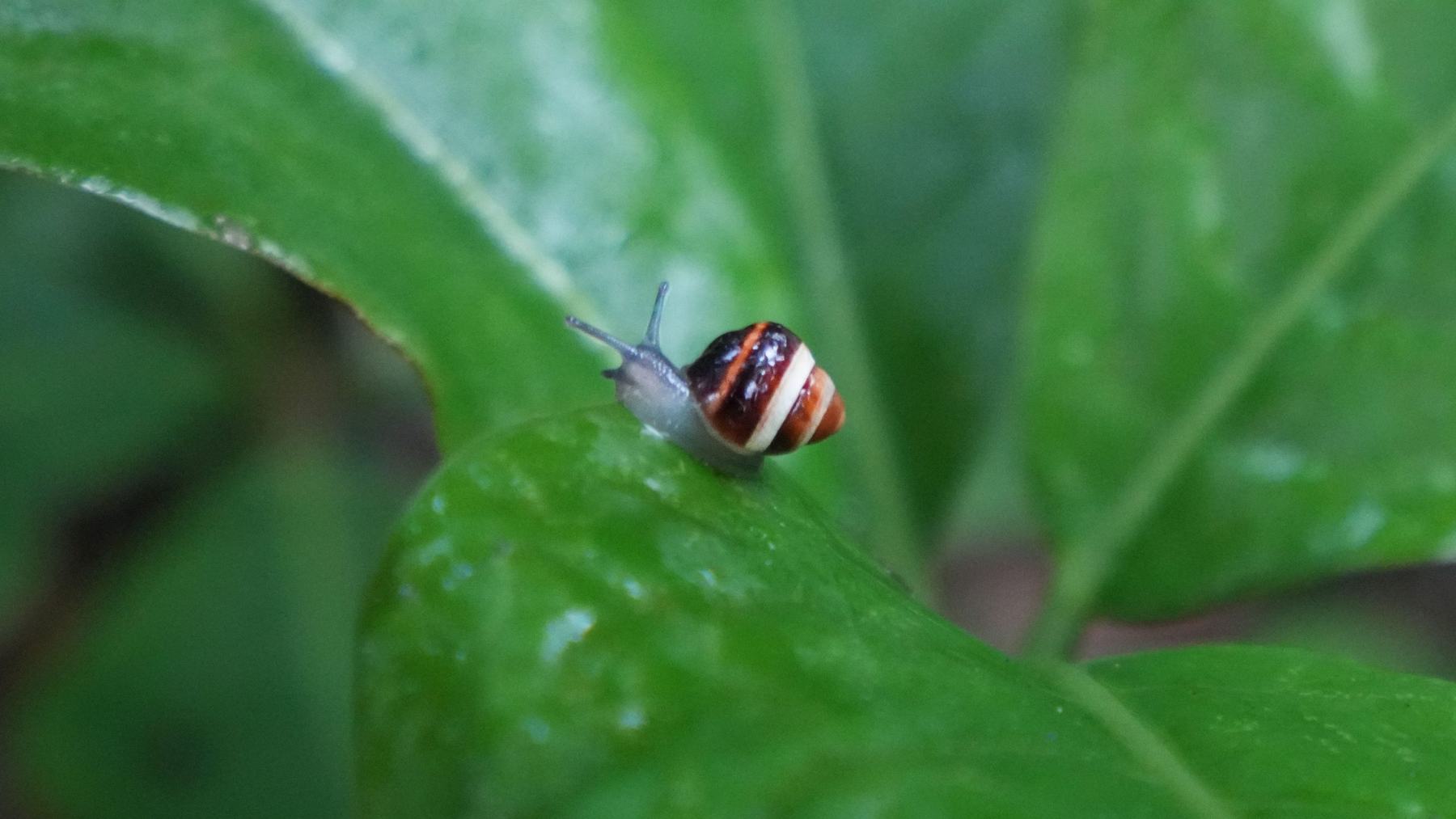
Hawaii’s state snail program has put a Hawaiian tree snail back into the wild after more than 33 years in a lab. On December 10, 2024, staff released the first 50 Achatinella fuscobasis into a fenced patch of forest in Oʻahu’s Koʻolau Mountains.
A state report from December 2025 now confirms the result. The Hawaii Department of Land and Natural Resources (DLNR) told the legislature that the snail is established in the Koʻolau Mountains. Before that, it had likely been extinct in the wild for over 30 years.
A 1955 fix for garden pests
In 1955, Hawaii introduced the rosy wolfsnail, Euglandina rosea, to fight the giant African snail. That invasive grazer damages crops such as papaya, according to a 2012 University of Hawaiʻi CTAHR publication.
Using one animal to suppress another is called biological control. Here it backfired. The same publication says the wolfsnails did not cut giant African snail numbers, “but native snail populations have been devastated.”
DLNR’s Snail Extinction Prevention Program (SEPP) calls the wolfsnail perhaps the worst of the introduced predators. It eats only other mollusks and has reached the islands’ highest, most remote forest reserves. Three species of rats and Jackson’s chameleons from Kenya add to the losses.
Eleven snails collected in 1991
In 1991, University of Hawaiʻi researcher Michael Hadfield collected the last 11 known A. fuscobasis. They came from the only known populations on Oʻahu. DLNR credits that decision with saving the species.
According to the federal Fish and Wildlife Service, Hadfield, now an emeritus biology professor at UH Mānoa, began with a single environmental chamber. It worked like a refrigerator, with programmable light and temperature cycles. Water wakes the snails up, so his team cut holes in the walls and added sprinklers.
Feeding them took more trial and error. The snails eat mold that grows on leaves, so the lab hauled ʻōhiʻa branches down from the mountains at least every other week. Later the team grew the mold in petri dishes and scraped it onto the terrarium walls.
Those 11 founders became a captive population of more than 1,000 snails. They lived at the SEPP lab in Pearl City, DLNR said in its release announcement of December 18, 2024.
Copper mesh and a hood barrier
The snails’ new home is a quarter-acre (about 1,000 square meters) parcel inside the Honolulu Watershed Forest Reserve. DLNR calls it an exclosure, because it keeps animals out rather than in. Five-foot (1.5-meter) polyethylene walls, angled flanges, copper wire mesh and a hood barrier block rats, chameleons and wolfsnails.
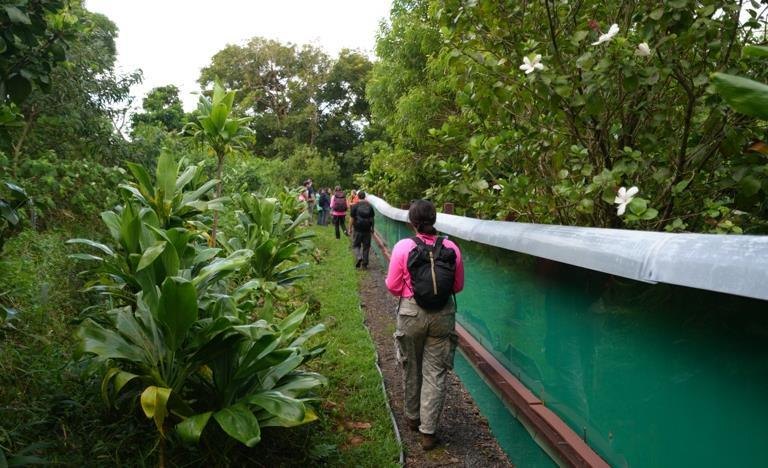
Getting the inside ready took roughly five years, the department said. SEPP staff, partners and community volunteers spent about 600 hours hunting predators within the walls. They also spent many hours on their knees pulling weeds and replanting native species.
SEPP coordinator David Sischo had first planned the release for late 2023, the Fish and Wildlife Service reports. Then Jackson’s chameleons got past the barrier, and the date slipped by about a year.
In a March 2025 update for Tentacle, the mollusk conservation newsletter, Sischo introduced a new helper named Crash. The detection dog is trained to find live Euglandina snails and chameleon droppings. Sischo wrote that Crash can find a single dropping inside an exclosure in minutes.
Tiny grazers with slow lives
The Fish and Wildlife Service describes Oʻahu tree snails as nocturnal grazers that scrape fungi off native leaves. They average about 3/4 inch (2 centimeters) long. Each adult is a hermaphrodite that bears one to four young a year and matures at five to seven years old.
At that pace, rebuilding a tiny population takes decades. In the DLNR announcement, Sischo called the snails “true public-trust jewels of nature and culture” and “drivers of ecosystem function, collectively cleaning and cycling nutrients in the forest.”
Sischo also pointed to their place in Hawaiian chant, hula and lei making. “Our immediate objective was to secure the species from extinction by getting their numbers up and having both captive and wild colonies,” he added.
Backup labs at museum and zoo
With Fish and Wildlife Service funding, SEPP set up public-facing rearing labs at Bishop Museum and the Honolulu Zoo. The state report says both opened during fiscal year 2025.
Sischo explained in Tentacle why the split matters. Populations that survive only in captivity are safer in several places, as a hedge against extinction. He added that the two sites are the only places in the world where Hawaiian land snails are on public display.
Across all species, the program reaches far beyond one forest patch. In fiscal 2025, SEPP and its partners released more than 500 imperiled snails into protected habitats. They also kept over 20,000 rare and endangered snails in captivity, according to the DLNR report to the legislature.
No survival count for the 50
The December 2025 report gives no survival or breeding figures for A. fuscobasis inside the exclosure. DLNR’s 2024 announcement said a second group was scheduled for February 2025, but it did not give the group’s size.
Rats, chameleons and wolfsnails still roam the Koʻolau forest around the fence. As in other predator-free refuges, one breach could undo years of work.
Sischo’s long-range goal appears in the same DLNR announcement. “Long-term, we would like to see thriving colonies back in the wild where they belong,” he said.
Photo: Hawaii DLNR