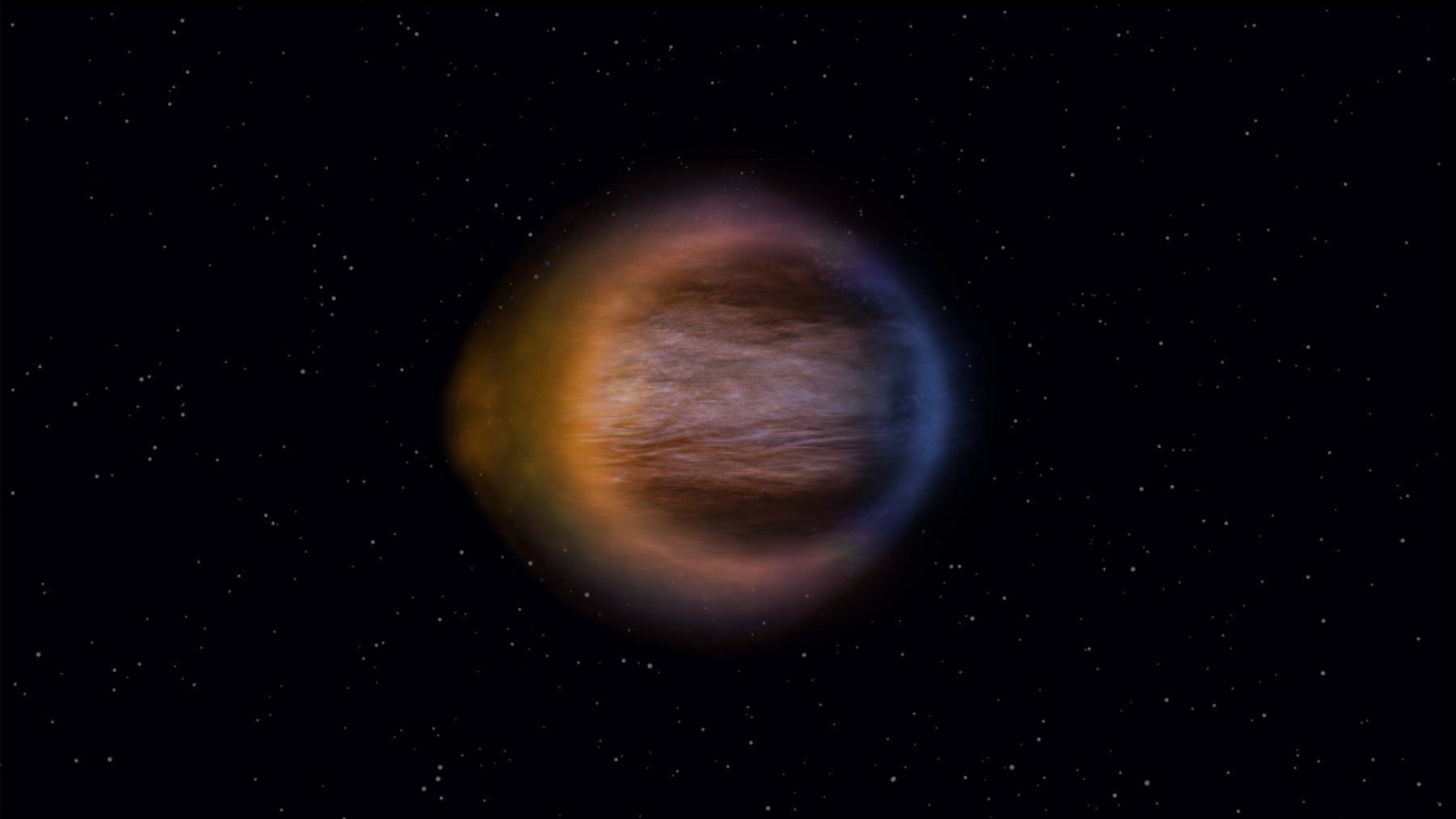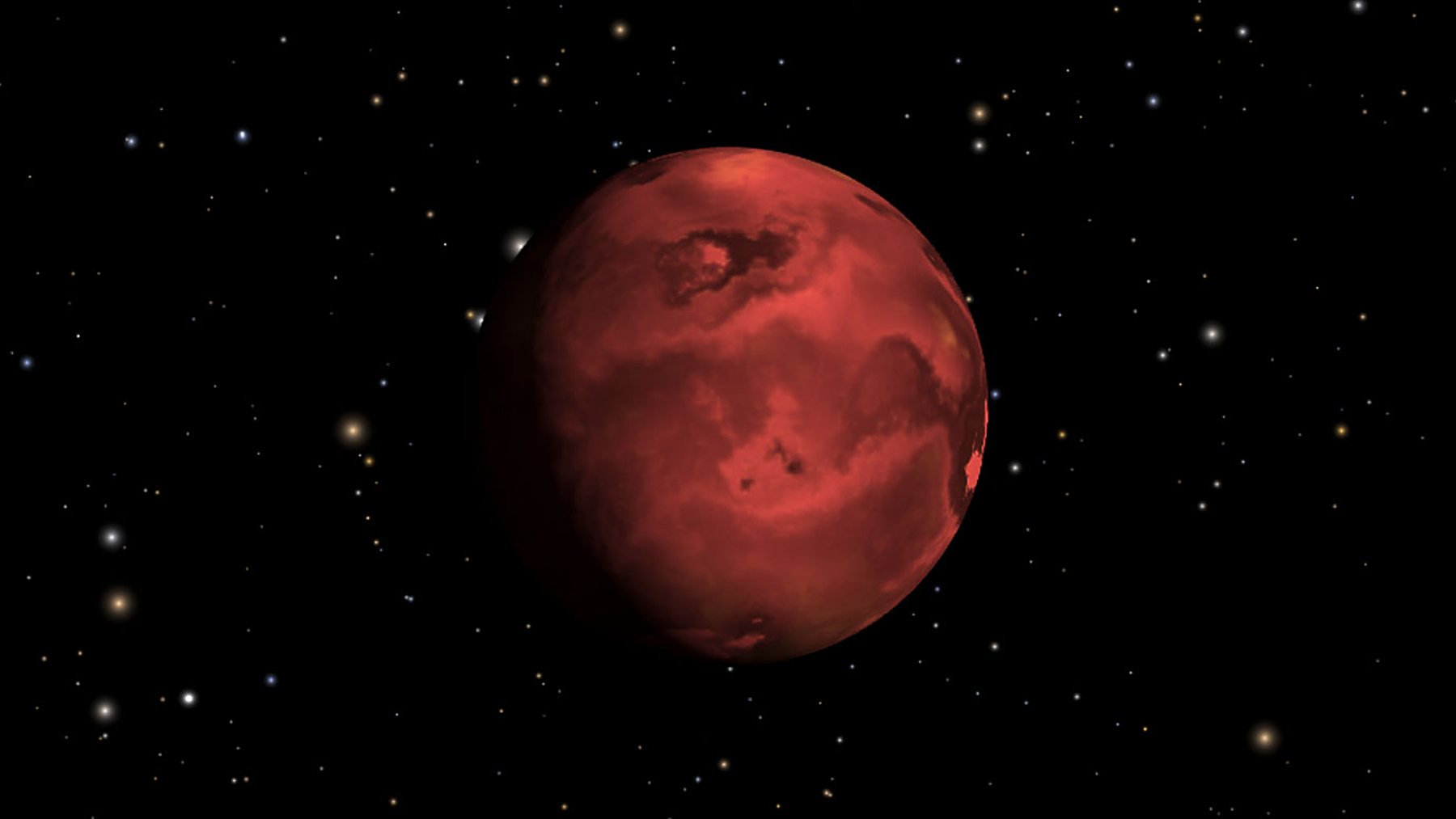
A rocky lava world called HD 3167 b seems to be holding on to an atmosphere. It lies about 154 light-years away in the constellation Pisces and circles its star in roughly 23 hours. A team led by University of Chicago graduate student Brandon Park Coy spotted the signal with the James Webb Space Telescope.
The evidence comes from a shortfall of heat. The planet’s dayside glows far more weakly in infrared light than dark bare rock would. The University of Chicago calls it the coldest lava world found so far with evidence of an atmosphere.
A year shorter than a day
HD 3167 b is a super-Earth, larger than our planet but smaller than Neptune. NASA’s exoplanet catalog lists a radius about 1.6 times Earth’s. Its mass is close to five Earths, and astronomers announced its discovery in 2016.
The planet orbits about 1.7 million miles (2.7 million kilometers) from its orange K-type star. That is less than one-twentieth of Mercury’s distance from the sun. A full year there passes in about 23 hours.
The paper defines a lava world as a small planet whose dayside can fully melt Earth-like rock. That takes roughly 1,500 kelvin, or about 2,240°F (1,227°C). Planets this close are also expected to keep one face turned toward their star.
Watching the planet vanish
Webb watched HD 3167 b on June 25, 2025, using its Mid-Infrared Instrument. The 4.3-hour exposure caught a secondary eclipse. In that moment the planet slips behind its star, and its own glow drops out of the signal.
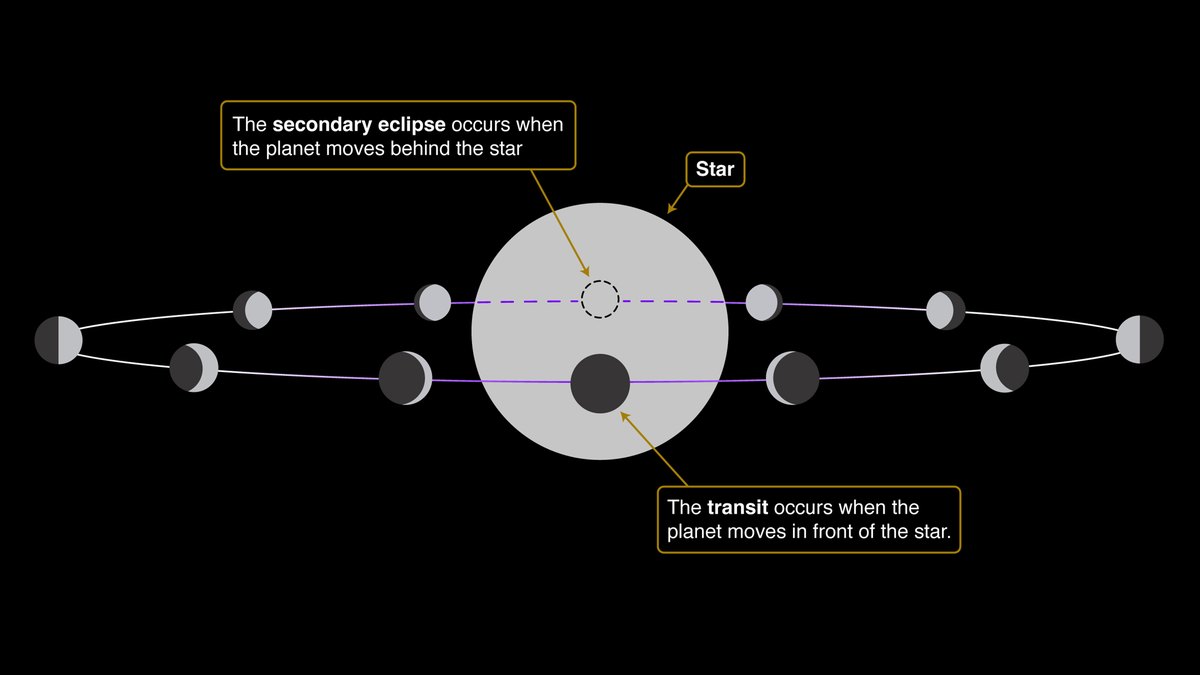
In a Q&A posted by the university, Coy said the light lost during the eclipse shows how much mid-infrared light comes from the planet itself. That amount, in turn, tells researchers how hot the planet is.
The dip measured 38 parts per million, plus or minus 11. For a dark, bare rock at full heat, the paper expected a deeper dip. The gap reached more than 5 sigma, a strong statistical signal by astronomy standards.
From that dip, the team worked out a dayside brightness temperature of about 1,300 kelvin. That is roughly 1,880°F (1,027°C), with a range from about 1,520°F to 2,200°F. Brightness temperature is the heat implied by the light, not a reading taken on the ground.
An albedo close to Venus
An atmosphere can cool a dayside in two ways, the university explains. Winds can carry heat to the night side, as they do on Venus. Clouds can also bounce starlight back into space before it warms the ground.
On HD 3167 b, moving heat around does not do the job alone. “Efficient heat redistribution alone is not enough to explain our observations,” the authors write. Even full redistribution needs an effective albedo of about 0.72, close to that of Venus.
Albedo is the share of incoming light a body reflects. A value that high would fit bright, reflective clouds over the molten surface, though the team has not confirmed any.
Could a shiny surface fool the telescope instead? Bare ground would need an albedo near 0.90, which the authors call extremely high. Lab tests show that molten metal oxides reflect far less light than their solid forms.
Pushing past the cosmic shoreline
“What’s so surprising is that the closer a rocky planet orbits its star, the harder it should be to have an atmosphere,” said Edwin Kite. He is an associate professor of geophysical sciences at the University of Chicago and a co-author. Stellar wind and high-energy light should strip such planets bare.
Astronomers call that boundary the cosmic shoreline. The paper notes that detections like this one challenge it. HD 3167 b now joins four hotter lava worlds with similar evidence: TOI-431 b, K2-141 b, 55 Cancri e and TOI-561 b.
Of that group, HD 3167 b gets the least starlight. That helps the team pin down a possible tipping point for thick or reflective atmospheres. They place it at an irradiation temperature between about 2,000 and 2,500 kelvin.
A 2024 study of 55 Cancri e, led by Renyu Hu of NASA’s Jet Propulsion Laboratory, found an atmosphere probably rich in carbon dioxide or carbon monoxide, which may be fed by a permanent ocean of magma. Nobody knows yet if the same happens on HD 3167 b.
A rehearsal for young Earth
Kite is blunt about what these worlds are not. “These planets are too hot for life, but by studying them, we can say something about the processes that matter for other rocky worlds,” he said.
Coy points to our own past. “We think early Earth might have looked a lot like a lava world,” he said. Collisions in the young solar system left Earth with a primordial magma ocean and a fully liquid surface.
Seeing how molten rock reacts with the gases above it could show how Earth’s air took shape. The university says that window covers Earth’s first couple of million years.
This is the first result from LAVA LAMPS, a Webb program that targets 10 ultra-hot lava worlds. Megan Weiner Mansfield of the University of Maryland leads it. Coy said the program wants to see if there is a critical temperature above which atmospheres start to show up.
Its gases remain unidentified
The Webb spectrum is too rough to show what the atmosphere contains, the authors write. Their models mix water, or oxygen and carbon dioxide, with 1 to 30 percent vaporized rock, and none of those blends has been detected.
“The makeup of HD 3167 b’s atmosphere is still up in the air,” Coy said. Right now the result hangs on one eclipse, and the authors call for more spectra with Webb’s NIRSpec instrument.
Good lab data on how molten rock reflects light near 1,300 kelvin do not exist yet.
The full study was published on July 9, 2026, in The Astrophysical Journal Letters.
Image: NASA / University of Chicago