Salmon and trout descend from a fish that doubled its entire genome 80 million to 100 million years ago. A study of 771 genetic datasets now shows how that event still steers their genes. Published September 29, 2026, in Nature Ecology & Evolution, it found that duplicated genes behave most alike at one stage of the embryo.
The work was led by the Roslin Institute at the University of Edinburgh and the Norwegian University of Life Sciences (NMBU). Marie-Odile Baudement is the first author, and the team’s gene maps of Atlantic salmon and rainbow trout are free for other scientists to use.
Four chromosome sets instead of two
Most evolutionary change happens in small steps, sometimes a single letter of DNA. A whole genome duplication copies everything at once. That includes the genes and the stretches of DNA that switch them on and off.
In the salmonid ancestor, the copy left each cell with four sets of chromosomes instead of two. Over millions of years, the four sets drifted back toward inheritance in pairs, a process biologists call rediploidization. In salmon and trout, some chromosome stretches finished the job long ago while others lagged far behind.
“Salmonids doubled their genome 100 million years ago, and half their current genes were retained in duplicated copies in the aftermath,” said Professor Dan Macqueen of the Roslin Institute. He spoke in a University of Stirling release, adding that “how these new genes evolved has remained poorly understood.”
Roughly half of all salmonid genes still come in such pairs. The same ancient doubling sits in the genome of steelhead, the sea-run form of rainbow trout, and of every other salmonid.
77.7 billion read pairs
The team sampled salmon and trout embryos at 14 stages of development. They also collected eight adult tissues, including brain, gill, liver, muscle and gonads. Fish of both sexes were sampled before and after sexual maturity.
RNA sequencing showed which genes were switched on. ATAC-seq flagged DNA left open for proteins to grab, and ChIP-seq tracked four chemical tags on the histones that DNA wraps around. In all, the datasets add up to 77.7 billion read pairs, the short pieces of DNA a sequencer reads.
From that data the researchers found 319,718 reliable open regions of DNA in salmon and 194,002 in trout. Plenty of them hold enhancers, bits of DNA that can sit a long way from a gene yet still decide when it fires.
Embryos at the pharyngula stage
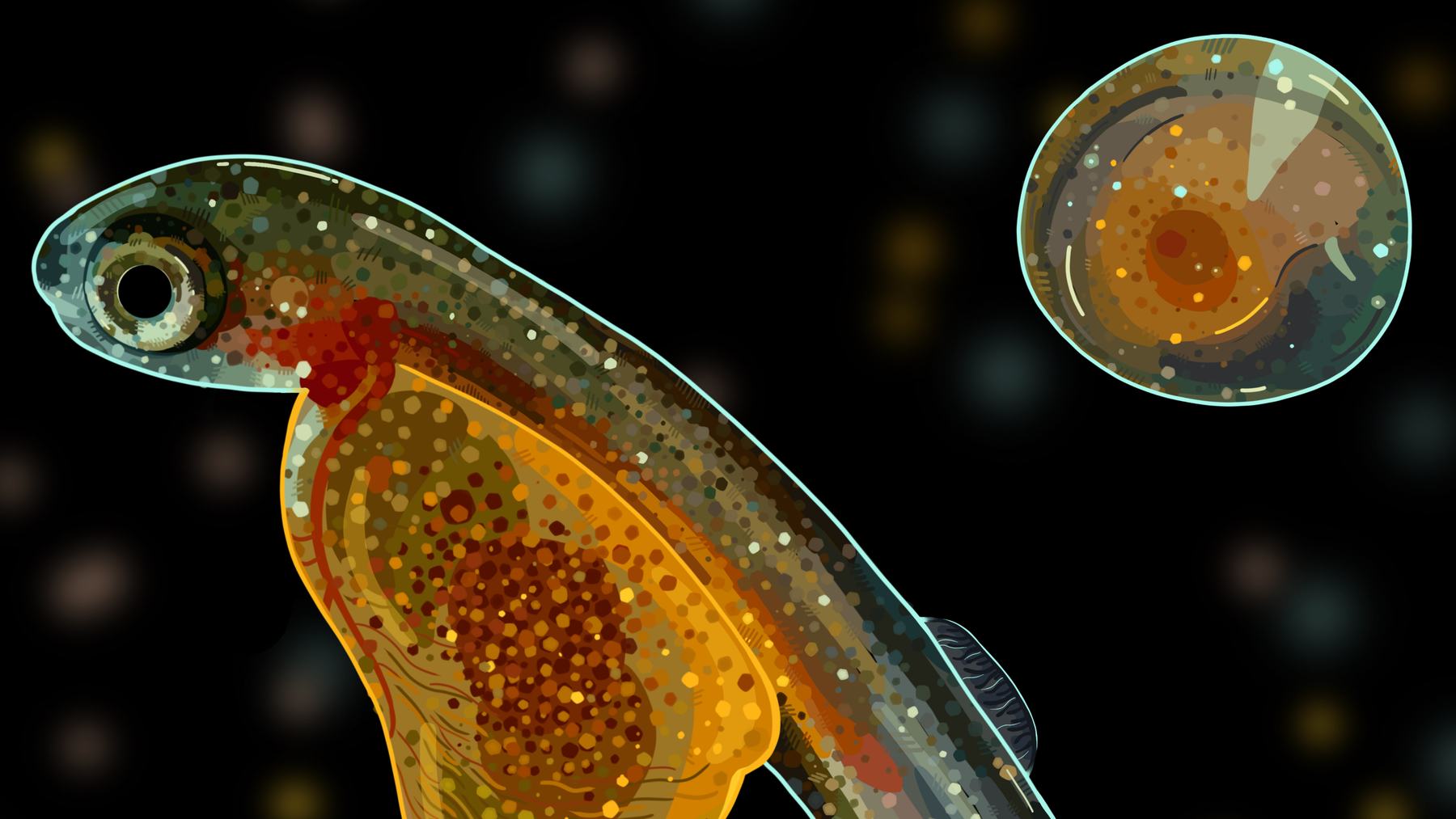
Within each pair of duplicated genes, the gap in activity was widest very early. That was before the embryo’s own genes take over from the mother’s. The gap then shrank and hit its lowest point at the pharyngula stages, late in embryonic development.
This window is called the phylotypic period, when embryos of animals with backbones look most alike. Earlier work found gene activity is most similar across species at this point. Salmon and trout repeat that pattern between the two copies inside one genome.
The authors point to genes that get recruited across several developing organs at the same moment. Altering one of them could upset more than one structure at a time. In the paper’s words, that creates “a highly interconnected regulatory environment proposed to limit evolvability.”
Brain steady, liver and gonads shifting
In adult fish, the brain showed the smallest difference between duplicated genes. The liver and the gonads showed the fastest regulatory change.
The study says that fast change may come from weaker pressure to keep copies identical. Selection for new roles could also play a part. Sexual maturity made little difference in most tissues, though mature testes diverged more than immature ones.
When one copy of a duplicated enhancer was lost, the paired genes could go separate ways. Mobile pieces of DNA called transposable elements also helped push copies apart. It echoes other cases where natural selection leaves a lasting mark on animals.
A €6 million European consortium
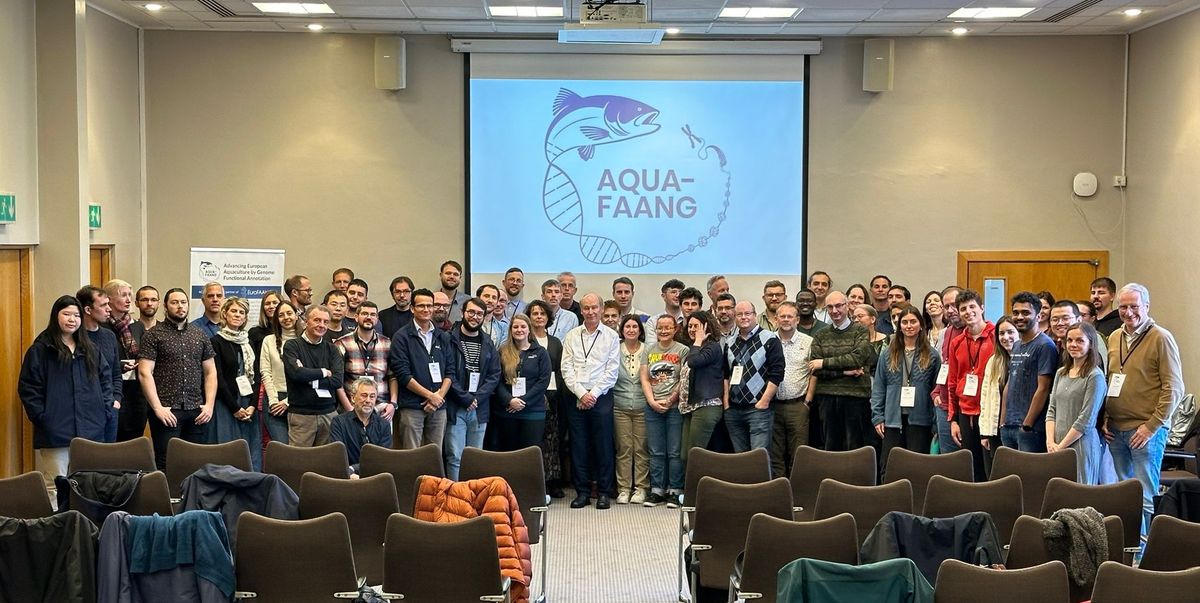
The study came out of AQUA-FAANG, a Horizon 2020 project coordinated by NMBU. It mapped the working parts of the genomes of Europe’s six most commercially important farmed fish. According to NMBU’s Professor Sigbjørn Lien, the project received six million euros from the European Union.
Lien also helped produce the 2016 reference genome of Atlantic salmon. That earlier work showed how the duplicated chromosomes had been reshuffled. The new atlas adds when and where each copy is used.
“This is especially important for understanding salmonids and how we can farm and conserve them better,” said Dr. Rose Ruiz Daniels of the University of Stirling. Wild fish face their own pressures, as with trout introduced to Tasmania’s rivers.
Single cells remain unmapped
The maps measure whole tissues and whole embryos, blending the signals of many cell types. The authors write that future studies should look at specific cell types. They also want to see how DNA folds inside the nucleus.
Our own ancestors went through genome doublings about 530 million years ago and later. The study argues those events probably followed a similar staggered path, though that remains an inference. The same deep past drives studies of the origin of complex life.
Macqueen said the work “has relevance to many lineages in the tree of life that similarly duplicated their whole DNA.” Linking specific DNA switches to traits such as disease resistance will need more research. The raw data sit on the FAANG data portal for anyone to use.
The full study was published in Nature Ecology & Evolution.
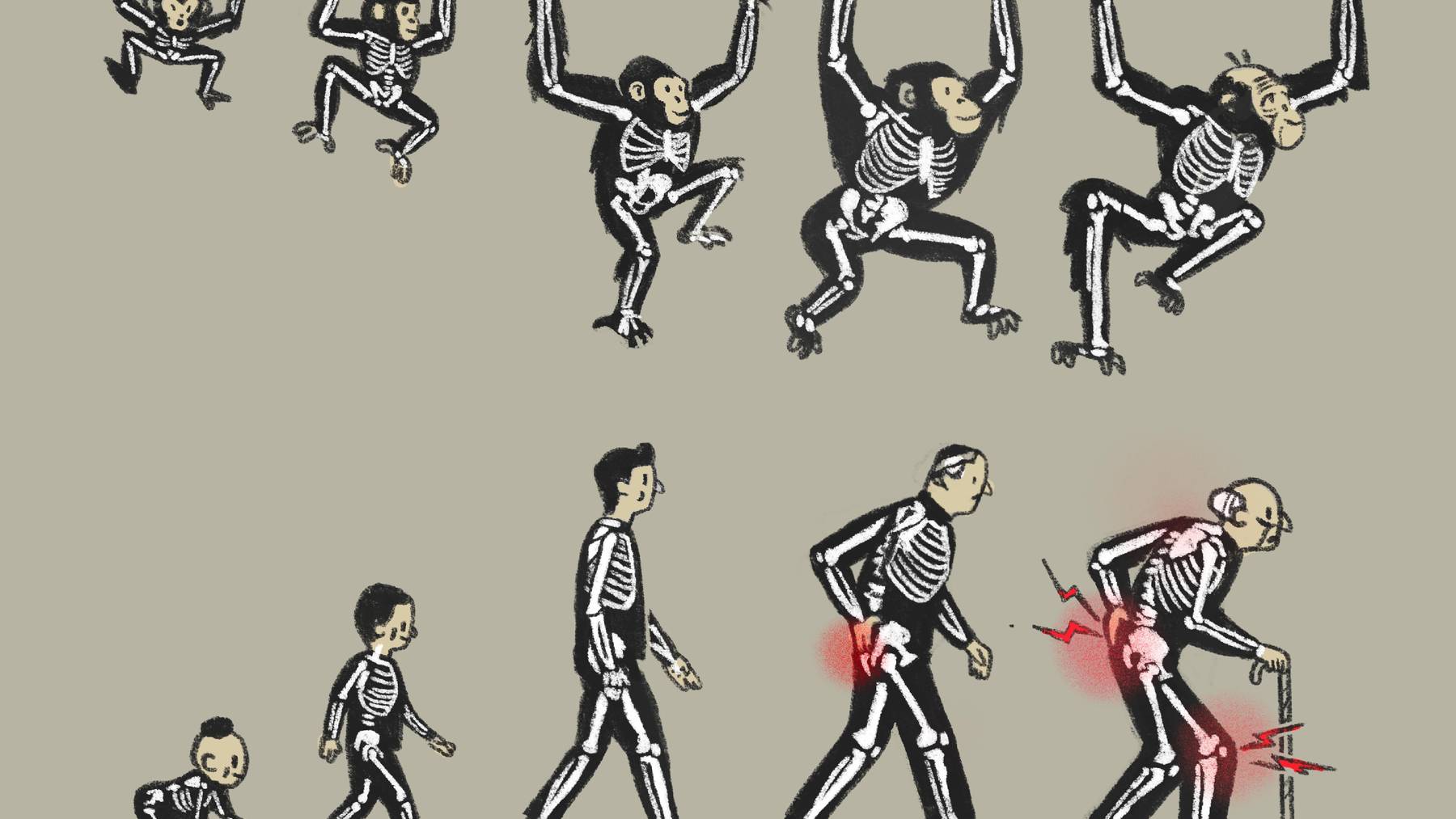
Image: Eilidh Rix, Roslin Institute, University of Edinburgh