Deer keds, flat brown flies that snap off their wings after landing on a deer, can carry Bartonella schoenbuchensis and a virus never before reported in the species, a British genetic survey of six flies shows. Bartonella is the bacterial group that includes the species behind cat-scratch disease.
Three of the flies came from roe deer in Oxfordshire and three from people in Somerset. Ben Jones of the U.K.’s Animal and Plant Health Agency led the work, which appeared on January 25, 2026, in the journal Parasites & Vectors. Denise Wawman of Oxford’s Edward Grey Institute and Nicholas Johnson, of the agency and the University of Surrey, co-wrote it.
Wings that come off on arrival
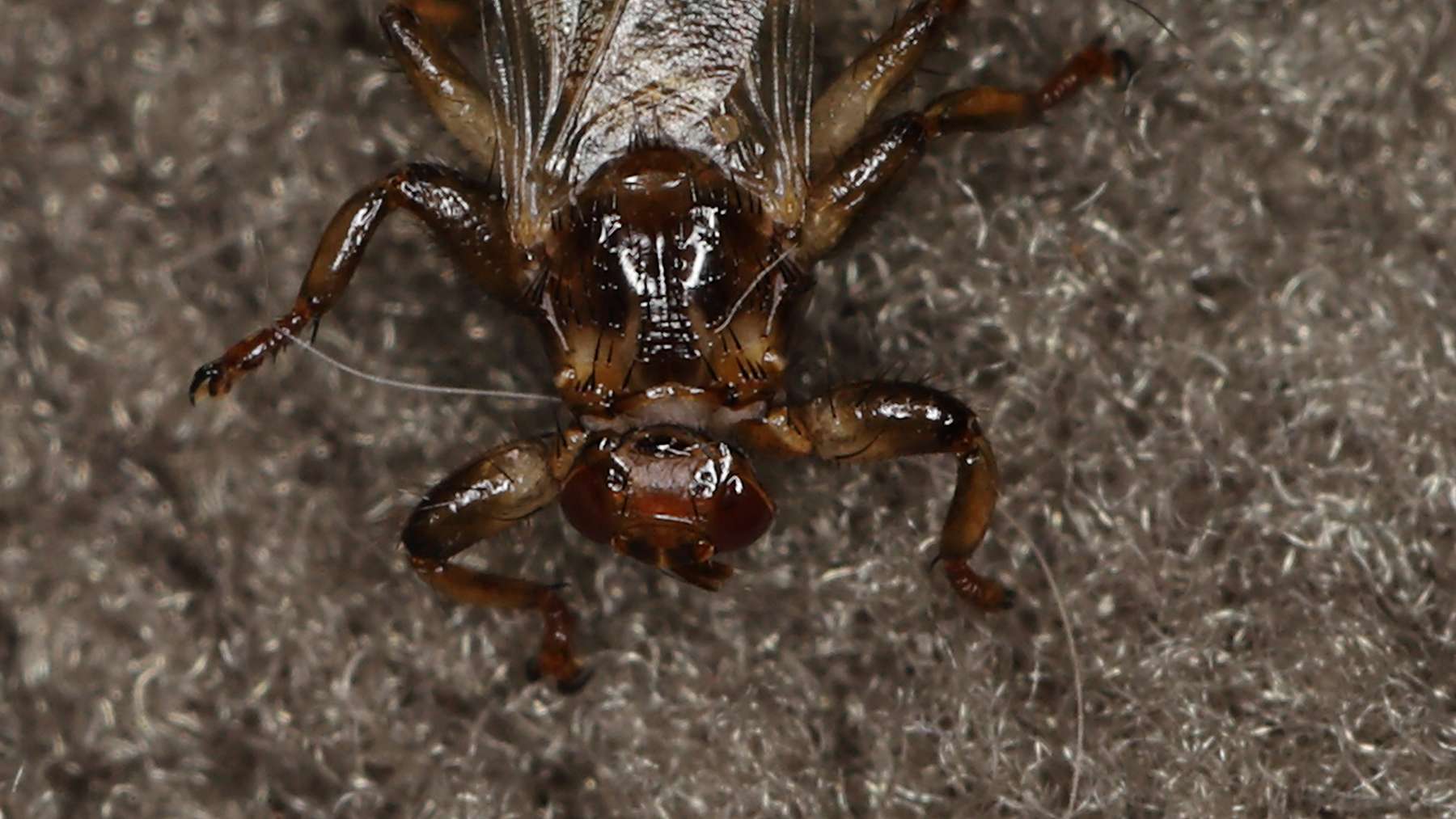
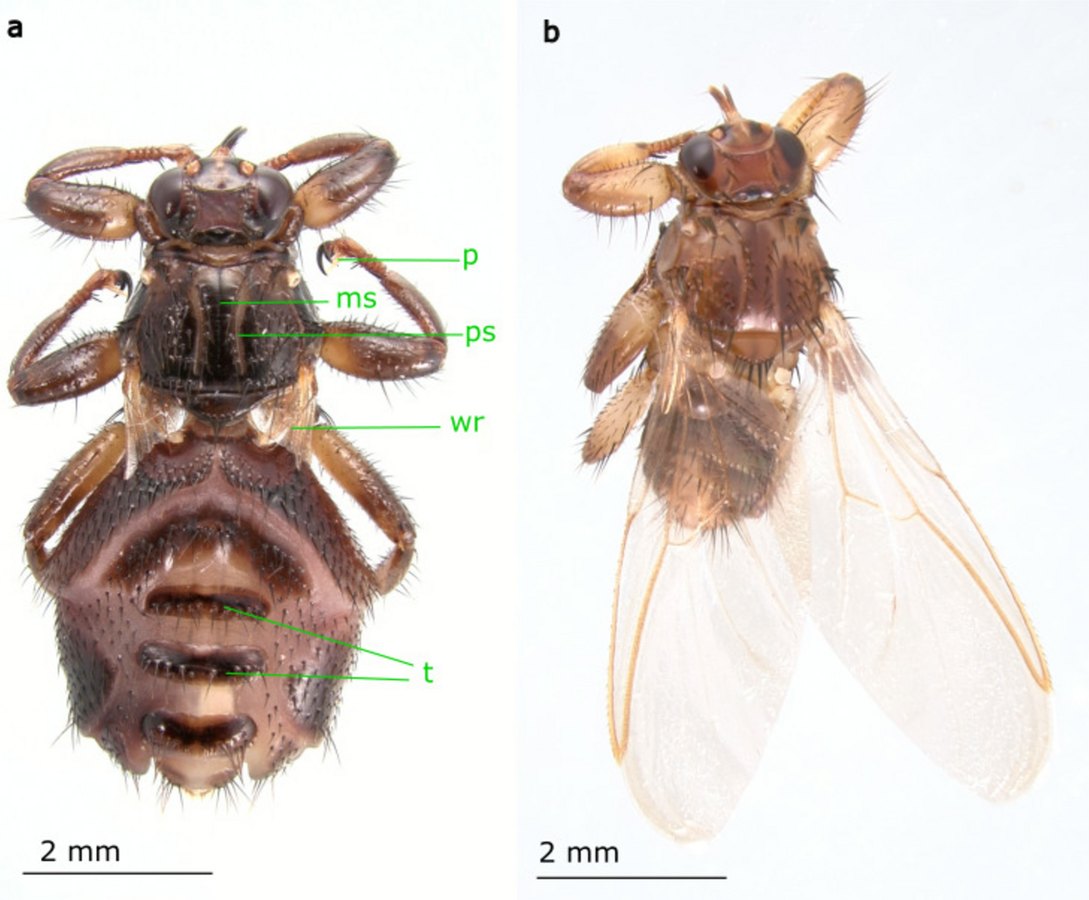
The European deer ked, Lipoptena cervi, leaves the leaf litter each fall as a winged adult. On warm days it heads for a mammal, lands, and drops its wings. According to Penn State Extension, that lets it climb fast through hair but can make keds look like “weird ticks.”
Males and females both drink blood, a habit they share with bedbugs and other blood-feeding insects. Their usual hosts are deer, elk and moose that now reshape whole forests. A ked can live on one animal for at least a year.
Each female carries one larva at a time and feeds it a milk-like secretion. The grown larva drops to the ground and turns into a pupa, which can rest in the soil for up to 11 months. Unlike mosquitoes and some ticks, keds ignore chemical cues like carbon dioxide and home in on movement, which is why they end up on hikers, hunters and butchers.
Six flies from Somerset and Oxfordshire
Sampling was part of a wider look at louse flies in the U.K. The Somerset keds were picked off people right after they landed, before any of them could feed. Two females and one male came from culled roe deer in Oxfordshire and had already taken a blood meal.
According to the paper, the researchers sequenced both DNA and RNA from each insect. Candidatus Arsenophonus lipoptenae dominated every RNA sample. This resident bacterium is believed to help the fly make B vitamins that a diet of pure blood lacks.
Bartonella schoenbuchensis turned up only in the three deer-fed flies. The bacterium lives in deer and other ruminants. The authors note that it “occasionally causes deer ked dermatitis,” a skin reaction similar to cat-scratch disease.
A 2004 study at the University of Basel in Switzerland had already pulled the same bacterium from deer keds. It sat in the insects’ midgut. Other flies that carry Bartonella bacteria have raised similar questions elsewhere.
A sigmavirus nobody had named
Five of the six flies also carried a new virus, which the team named Sigmavirus lipoptenae. Four of those samples gave nearly complete genomes. Its closest known relative came from a sheep ked sampled in Russia.
The sheep ked virus was passed through pig embryo kidney cells in the lab, so the authors hypothesize that the new one could infect vertebrates too. Whether it does remains open, and they write that “further research is required.”
Pennsylvania’s deer carry them too
European deer keds reached North America by accident and were first found in New Hampshire and Pennsylvania in 1907, Penn State Extension says. Today they range across most of the Northeast, west into Ohio and south into Virginia.
A separate study screened hundreds of keds collected in Pennsylvania, Penn State Extension reports. It found Bartonella schoenbuchensis in 80% of keds from 30 of 31 counties. Another 8.8% carried Anaplasma phagocytophilum, which causes human granulocytic anaplasmosis.
Michael Skvarla, who directs the Insect Identification Lab in Penn State’s Department of Entomology, pointed to the people most exposed in a 2019 university report. “Deer keds can run up your arm while you’re field dressing a deer and bite you,” he said. Pennsylvania has two million hunters.
Dark jackets draw more landings
In Norway, walking surveys from 2009 to 2013 found host-seeking keds from early August to mid-November. Activity peaked in late September.
Raine Kortet of the University of Oulu in Finland led trials with human volunteers as targets. Keds landed more often on dark and red clothing than on white, and they aimed mostly at the upper body and the back. Clothing color matters for mosquitoes as well.
In Penn State tests, keds ignored DEET, picaridin and IR3535, but all of them died within 20 minutes on permethrin.
A 2020 case report from eastern Poland described a woman bitten six times on the thigh. The swelling faded in five days, yet dark marks stayed for three months.
No one has tested a bite
Finding microbial DNA in a fly does not prove it can deliver a living pathogen. The British study never tested transmission to people. With six insects, it also cannot say how common the bacterium or the virus is.
Because the Somerset flies had not fed, feeding and place were tangled together. The authors write that “we could not determine whether feeding is critical to acquiring B. schoenbuchensis.” The bacterium may also be spread unevenly across southern England.
Skvarla summed up the gap in 2019: “We don’t know if deer keds transmit pathogens.” Penn State advises treating a ked bite like a tick bite. If flu-like symptoms show up in the weeks after, see a doctor.
The full study was published in Parasites & Vectors.
Photo: gbohne / Wikimedia Commons, CC BY-SA 2.0