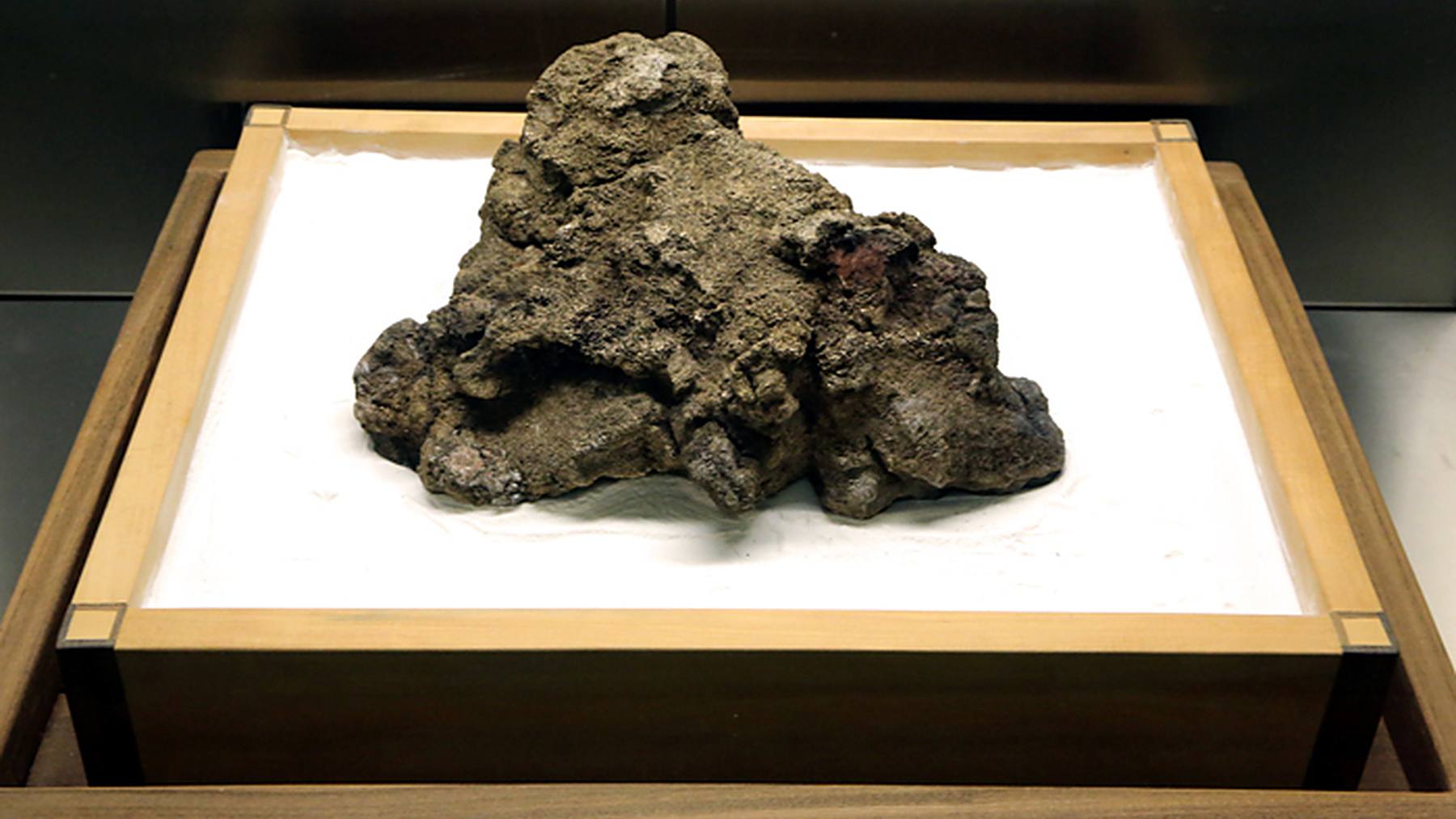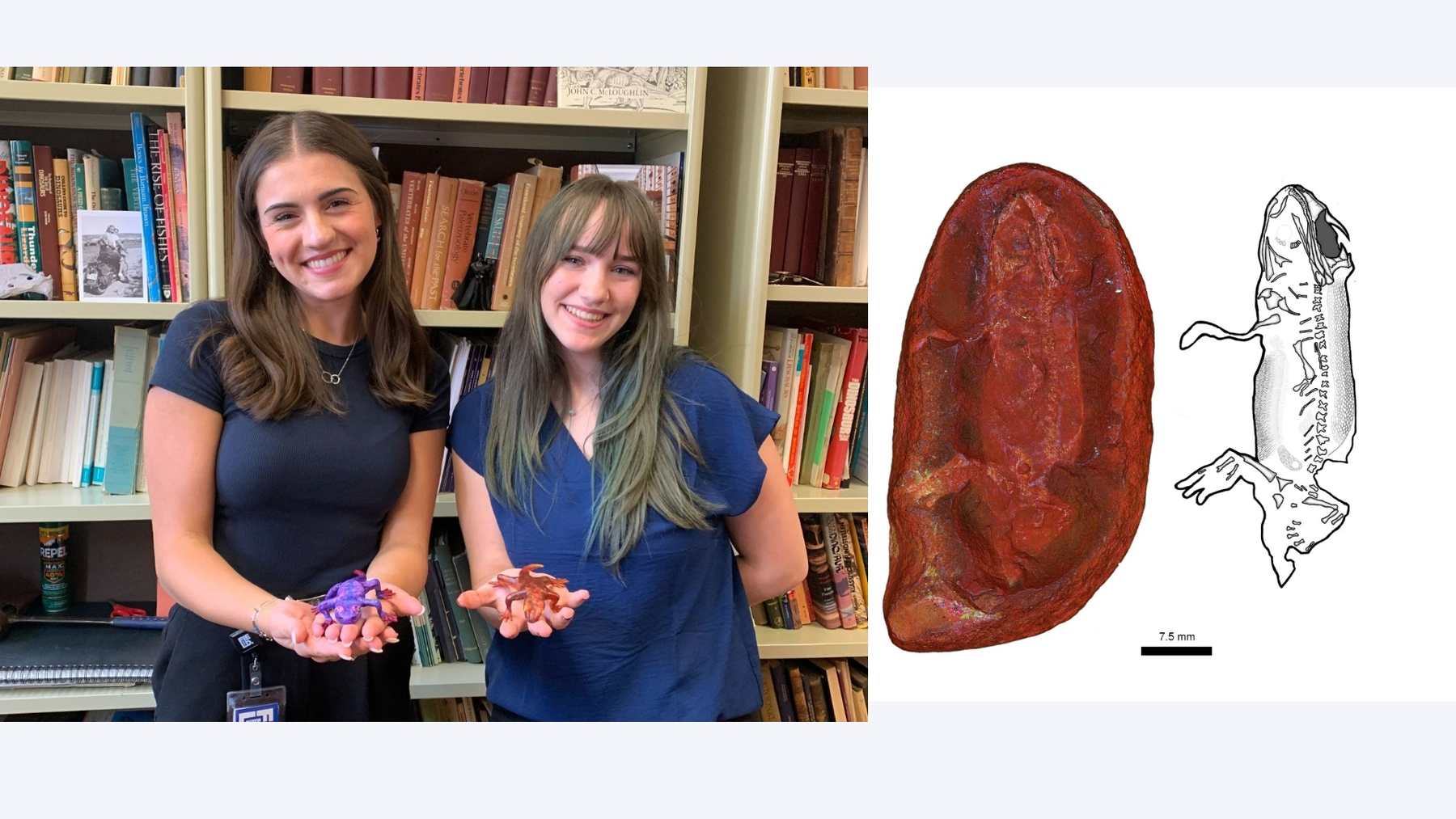
A 309-million-year-old fossil from Illinois has a new name, thanks to two student scientists at Chicago’s Field Museum. Allison Sefcovic and Payton Kohlberg co-led the description of Jeanerpeton mazonensis, an early amphibian relative. Their paper appeared on September 24, 2026, in the Journal of Vertebrate Paleontology.
Both students have mothers named Jean, so the genus name honors the two women. The Field Museum’s announcement translates the full name as “Jean’s crawler from Mazon Creek.” The second half points to the fossil site itself, which the museum ranks among the best in the world.
Pulled from a waste bin taxon
An amateur collector found the specimen many years ago and donated it to the museum. It went into the collection as Amphibamus grandiceps, a species already well known from the same region.
Paleontologists have a blunt term for a name that collects poorly studied specimens. They call it a waste bin taxon. A taxon is simply a named group of organisms, such as a species or a genus.
Cam So, a postdoctoral researcher at the Field and a co-author, says many fossils in the museum’s collection ended up under that one label. This specimen now stands apart from them. In the museum’s statement, So said, “With this publication, we officially pull Jeanerpeton out of this waste bin taxon.”
The published title of the paper marks it as both a new genus and a new species. Other museums have seen similar corrections, including a crocodile fossil from Egypt that spent nearly 100 years under the wrong name. London’s Natural History Museum kept a skull fragment bought in 1924 for almost a century before it turned out to be a new dinosaur.
Belly ribs and eye impressions
Museum staff offer a simple picture of the living animal. Imagine a salamander, they say, but squat and chubby like a frog. The announcement calls it an early relative of today’s amphibians.
Sefcovic, a 2025 Women in Science intern at the Field, pointed to the fine detail in the stone. “In the fossil of Jeanerpeton, we can see some of the scales on its back and tiny ‘belly ribs’ called gastralia. You can even see the eye impressions!” she said.
Fossils rarely keep such features, because delicate soft tissue usually disappears long before burial is complete. According to the Field Museum, the findings point to a 309-million-year-old origin for classic traits of modern frogs and salamanders.
Mud, bacteria and ironstone
During the Carboniferous, a swampy river delta covered the area around present-day Chicago. Early land-dwellers, giant insects and strange swimming animals all lived there, the Field Museum says.
The Illinois State Museum places the region a few degrees north of the equator at the time. Swampy lowlands sat next to shallow marine bays, and rivers carried mud into them.
That mud buried dead plants and animals quickly. Bacteria then broke down the remains and released carbon dioxide, which combined with iron from groundwater. The reaction produced siderite, an iron carbonate that formed a hard shell around each body.
These ironstone nodules come from the Francis Creek Shale. The main fossil area spreads across Grundy, Will, Kankakee and Livingston counties, and even soft-bodied organisms survive inside the nodules.
An internship that became authorship
Kohlberg and Sefcovic belonged to the museum’s 2025 group of Women in Science interns. The program encourages young women to pursue careers in science and museums.
Both worked with So in the lab of Arjan Mann, the Field’s assistant curator of fossil fishes and early tetrapods. Tetrapods are four-limbed vertebrates and their close relatives.
Kohlberg arrived with little background in the subject. “Before working in the Mann Lab, I didn’t know much about paleontology,” she said. The program, she added, made her more confident about trying something new.
She also described the nerves that came with the work. “It is scary to take on a project when you feel like you don’t know as much as you should,” Kohlberg said.
One specimen, several open questions
The museum’s announcement discusses a single fossil and leaves several basics out. It does not name the collector, the year of discovery or the exact spot where the specimen turned up.
Nor does it give a body length, a diet or the amount of time the animal spent on land. Dates need some care as well. The Field Museum says 309 million years for this animal, while the Illinois State Museum dates Mazon Creek fossils more broadly at about 300 million years.
More new names could follow, since So says other specimens at the Field were grouped the same way. The museum says such descriptions are building a detailed mosaic of life in Illinois more than 300 million years ago.
The full study was published in the Journal of Vertebrate Paleontology, with Sefcovic, Kohlberg, So and Mann as authors.
Photo: Arjan Mann; image: Allison Sefcovic / Field Museum