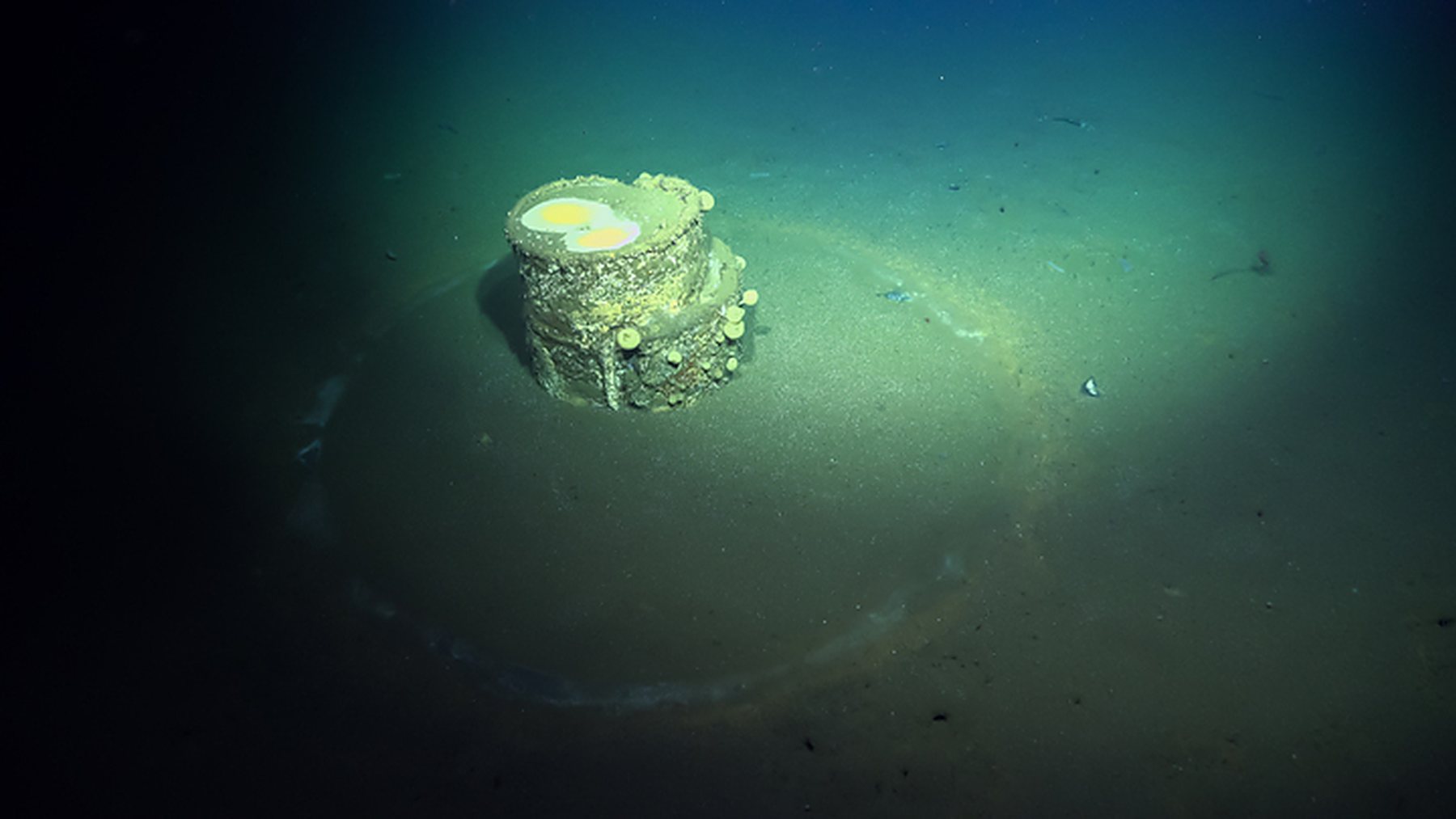
White halos around corroded waste barrels off Los Angeles mark places where caustic alkaline waste leaked into the seafloor, a Scripps study found. Mud sampled near those barrels reached a pH of around 12. The samples came from an average depth of 901 meters (about 2,950 feet) in the San Pedro Basin, near Catalina Island.
Johanna Gutleben, a postdoctoral scholar at UC San Diego’s Scripps Institution of Oceanography, was first author of the paper. Paul Jensen, an emeritus marine microbiologist there, was senior author. Their work appeared on September 9, 2025, and it points away from DDT as the cause of the rings.
Coring tools met hard ground
The samples date from 2021, when the team sailed on the Schmidt Ocean Institute’s research vessel Falkor. Its remotely operated vehicle, SuBastian, took sediment at set distances from five barrels. Three of those five had white halos.
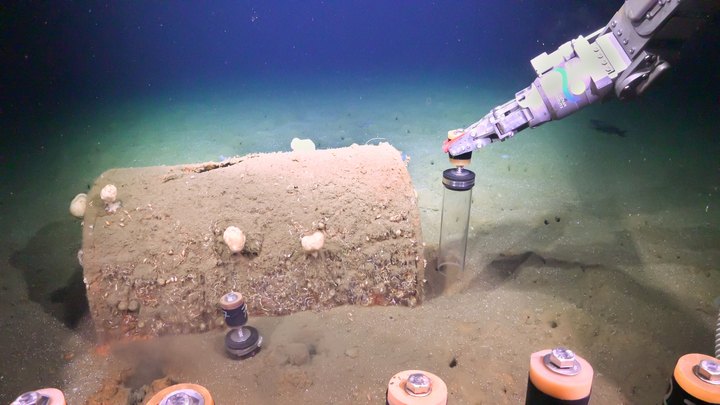
Inside the halos, Scripps says, the seafloor became like concrete and stopped the coring devices. According to the paper, a thin layer of sediment usually hid this hard surface. Earlier researchers had guessed at concrete ballast or a mineral called brucite, without evidence for either.
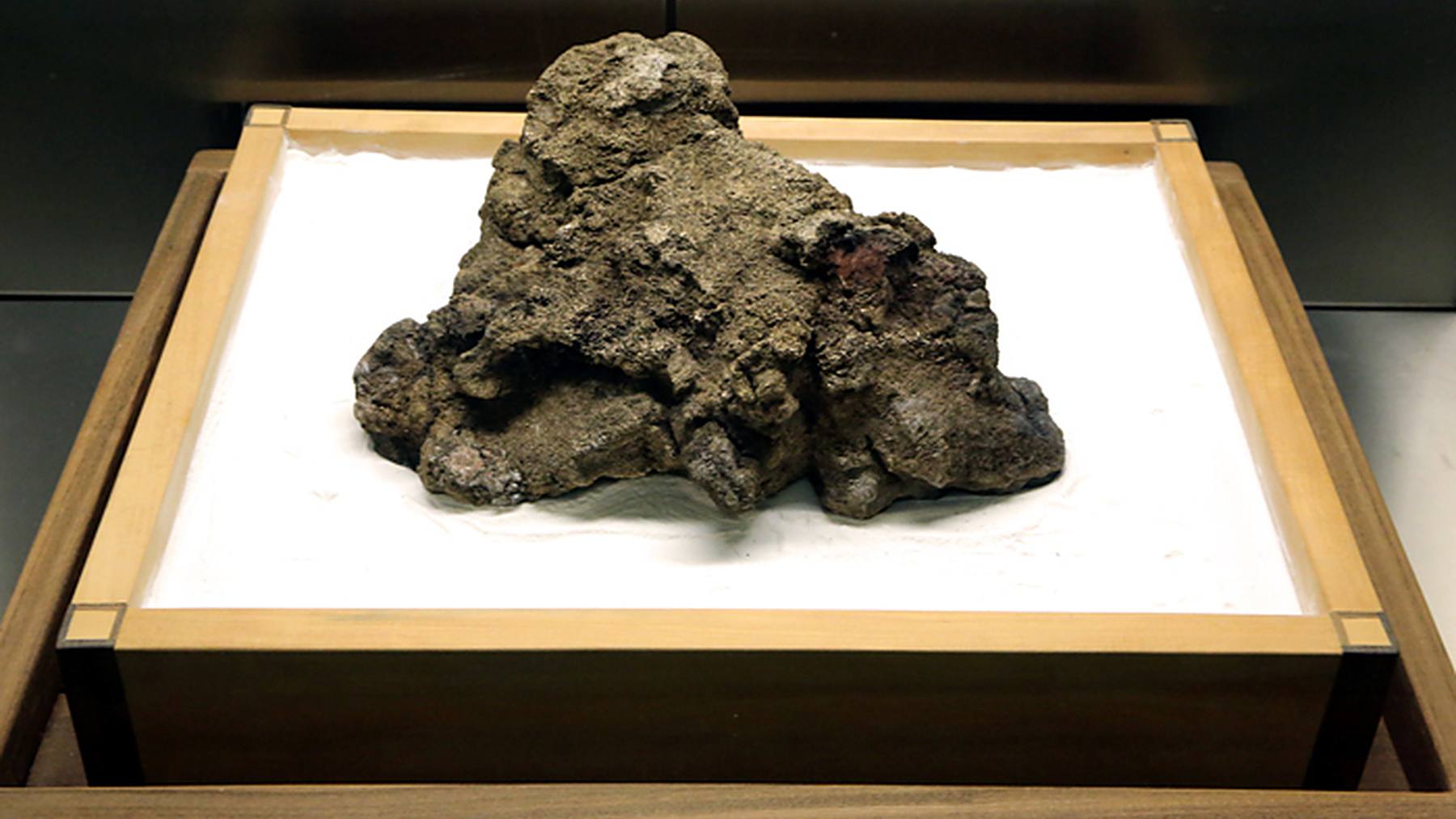
SuBastian’s robotic arm finally collected a piece of the crust from beside one barrel, and the team took it to the lab.
Missing DNA led to pH 12
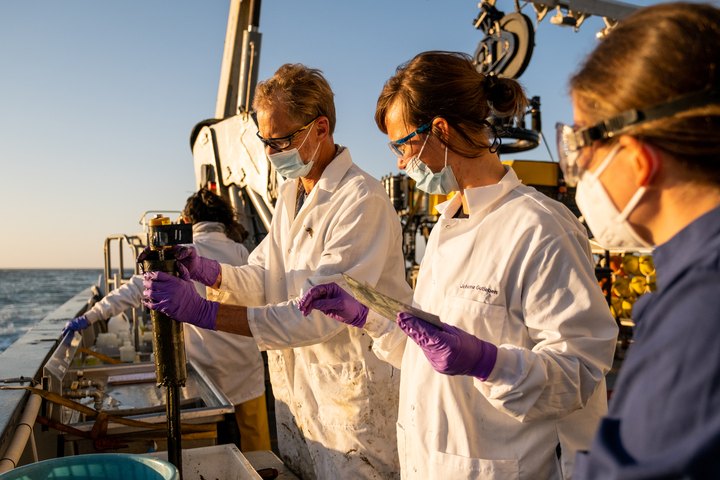
Back on land, Gutleben had trouble extracting microbial DNA from the samples taken through the halos. When troubleshooting failed, she tested the pH of one sample. It came back at around 12, far above the neutral value of 7.
Pore water is the liquid held between sediment grains. In the halo samples it measured from 8 to 12 on pH strips, with the top value “bordering on the limitations for life,” the authors write. Sediment away from the halos sat near pH 7, normal for the deep ocean.
Brucite set the crust
Analysis showed the crust was mostly brucite, a magnesium hydroxide mineral that forms at high pH. According to Scripps, the leaking waste reacted with magnesium in seawater. The brucite then cemented the sediment into a concrete-like shell.
That mineral is now slowly dissolving, which keeps the nearby sediment strongly alkaline. Where the high pH meets seawater, calcium carbonate settles as a white dust and forms the halo.
Using published dissolution rates for exposed brucite, the authors say the effects could take several thousand years to resolve. Jensen had expected the waste to disperse quickly in seawater. Instead, it has lasted more than half a century.
Vent microbes around steel drums
Bacterial diversity in the halo samples was low, and one group reached up to 55 percent of a community. Nearly identical bacteria have turned up in chimneys at the Lost City alkaline vents in the Atlantic.
Earlier work led by Lisa Levin, a Scripps emeritus biological oceanographer and co-author, had found reduced small animal diversity around the halo barrels. The new paper adds the microbial side of that picture.
DDT levels ignored the barrels
Concentrations of the pesticide did not rise closer to the barrels, which deepened the mystery of their contents. Scripps notes that DDT manufacturing produced alkaline as well as acidic waste. Oil refining in the region also generated alkaline waste.
“One of the main waste streams from DDT production was acid and they didn’t put that into barrels,” Gutleben said in the Scripps release. “It makes you wonder: What was worse than DDT acid waste to deserve being put into barrels?”
Between 1961 and 1964, the paper says, the Pacific Ocean Disposal Company dumped 1,382,000 gallons (about 5.2 million liters) of alkaline waste in the basin. Reports do not make clear how much of it went into containers. The EPA’s page on the disposal site lists 14 deep-water locations off Southern California used from the 1930s until the early 1970s.
California was not alone, as the search for some 200,000 radioactive barrels in the Northeast Atlantic shows. “We only find what we are looking for and up to this point we have mostly been looking for DDT,” Gutleben said.
Halo barrels remain uncounted
The authors estimate that 21 of the 61 barrels visually identified at the site, or 34 percent, held alkaline waste. Whether that share holds across the area is unclear, Scripps says. A sonar survey cited in the paper logged about 27,000 barrel-like objects, and very little of the deep seafloor has ever been seen.
The findings also cannot identify which chemicals filled the barrels, and the authors present the leak-to-crust sequence as a proposed mechanism. “We can’t quantify the environmental impact without knowing how many of these barrels with white halos are out there, but it’s clearly having a localized impact on microbes,” Jensen said.
The full study was published in PNAS Nexus, and Scripps summarized it in a news release the same day.
Gutleben and Jensen are now testing contaminated sediment for microbes that can break down DDT. Jensen says dredging would likely do more harm than good. The highest DDT levels lie about 2 inches (4 or 5 centimeters) down, and suction could stir them into the water.
Photo: Schmidt Ocean Institute