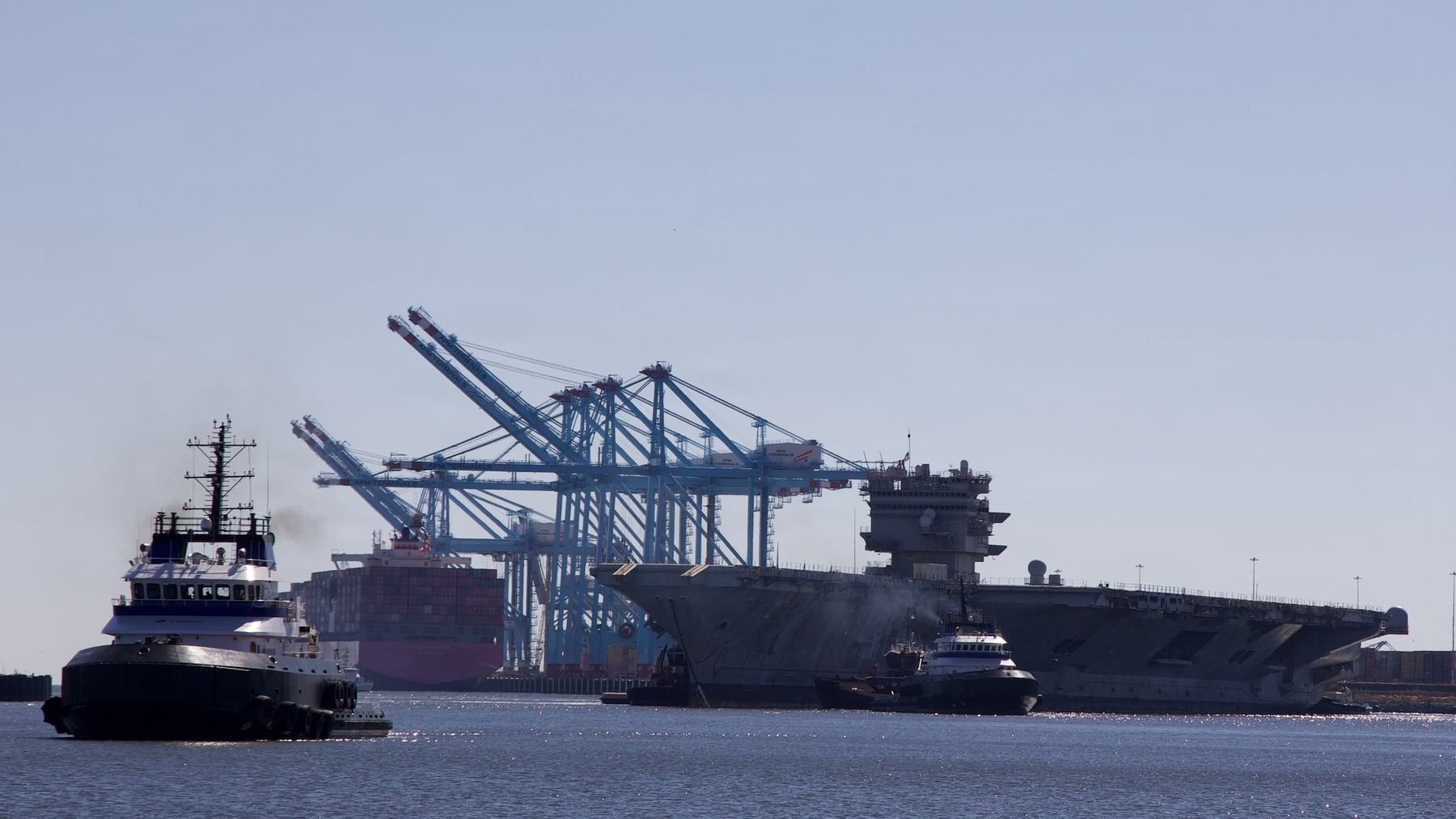
The former USS Enterprise, the first nuclear-powered aircraft carrier ever built, reached Mobile, Alabama, on November 13, 2026. Tugboats escorted the retired ship into Mobile Harbor toward MARRS’ Yard 8, where it will be dismantled, in a photo released that day by the Mobile District of the Army Corps of Engineers.
The tow began on November 2 at Newport News Shipbuilding in Virginia, the yard that built the carrier. According to the Navy, the ship “safely steamed more than 1 million nautical miles under nuclear power” during its career.
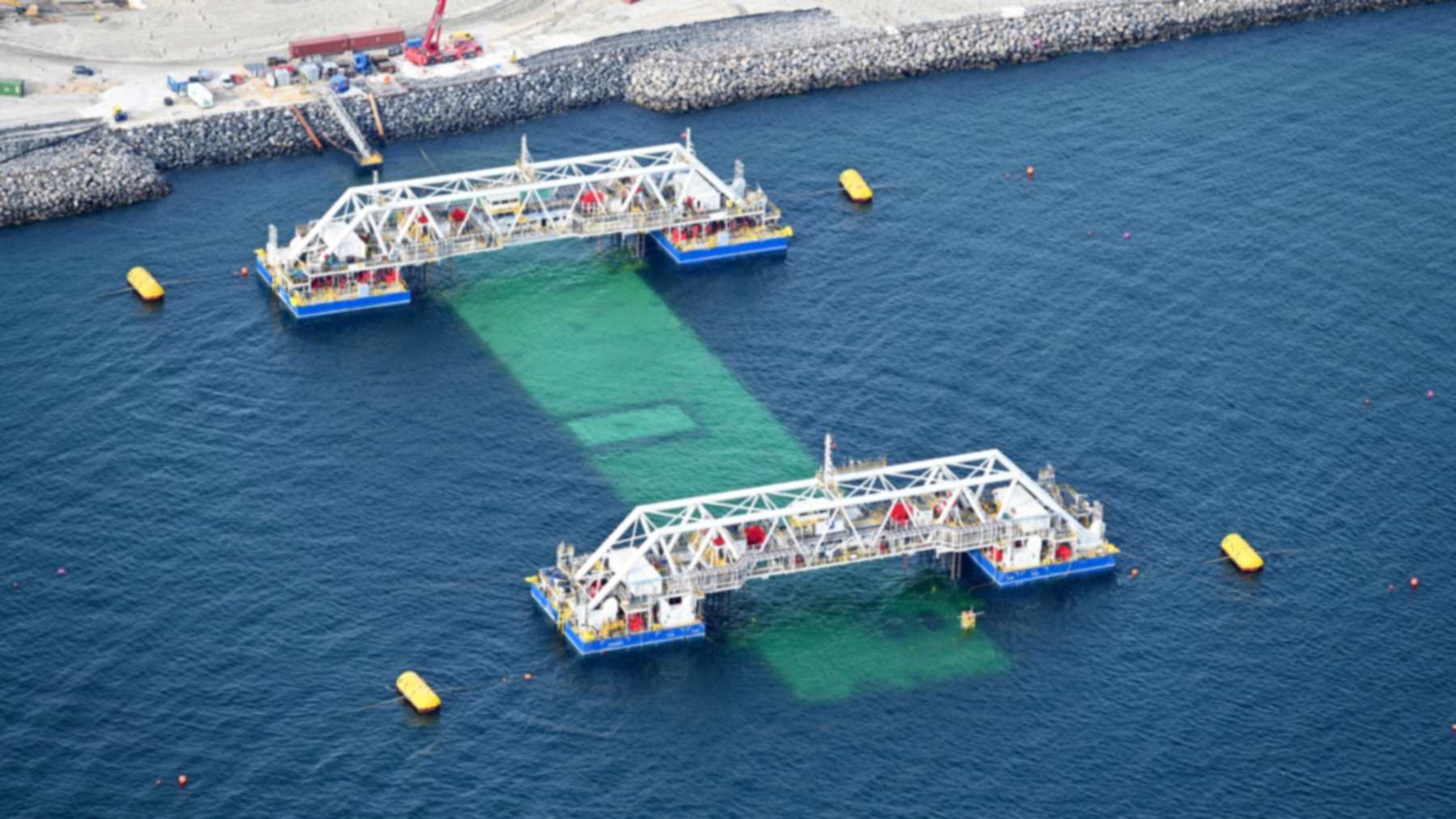
Before Enterprise could arrive, the Alabama yard needed changes to its waterfront. The Corps says it reviewed and authorized a deeper berth, dredging and a new ship ramp. Yard 8 needed that work to receive a vessel this size.
Tugboats into Mobile Harbor
Portfolio Acquisition Executive Maritime, the Navy office that delivers surface ships, announced the departure on the morning of November 2. Its release recalled the carrier’s role in the Cold War and the Vietnam War. Enterprise also took part in the operations in Afghanistan and Iraq after 9/11.
Kevin Cormier, the office’s deputy for aircraft carriers, used the statement to thank the crews. “All who served aboard and sustained this historic ship should take pride in the vital role they played in supporting the fleet,” he said.
From Virginia to the Gulf Coast, the trip took 11 days. In the Corps photo, several tugboats work around the gray hull. Behind it rise container cranes and a loaded cargo ship.
A deeper berth at Yard 8
Under Section 10 of the Rivers and Harbors Act of 1899, work in navigable waters needs federal review. The Mobile District also checked the project under Section 404 of the Clean Water Act. That law covers dredged or fill material.
Part of the work could affect a federal Civil Works project. For that reason, the review also had to meet a third set of rules, known as Section 408.
The outcome was an Individual Standard Permit. It covers berth deepening, maintenance dredging, a ship ramp, a bulkhead and relieving platforms. According to the Corps, the work gives the yard the draft capacity to receive, berth and dismantle the carrier.
Dana John Leach, a senior project manager for the Mobile District, said his team worked with the Coast Guard, the Navy and the Alabama Port Authority. “It was an exciting, once-in-a-lifetime opportunity to contribute to a project of national importance,” he said.
Mobile’s waterfront has taken on unusual ships before. The ocean liner SS United States was prepared there for its planned life as an artificial reef off Florida. Austal USA also built the Navy’s first new floating dry dock in 40 years in the city.
Eight reactors, emptied of fuel
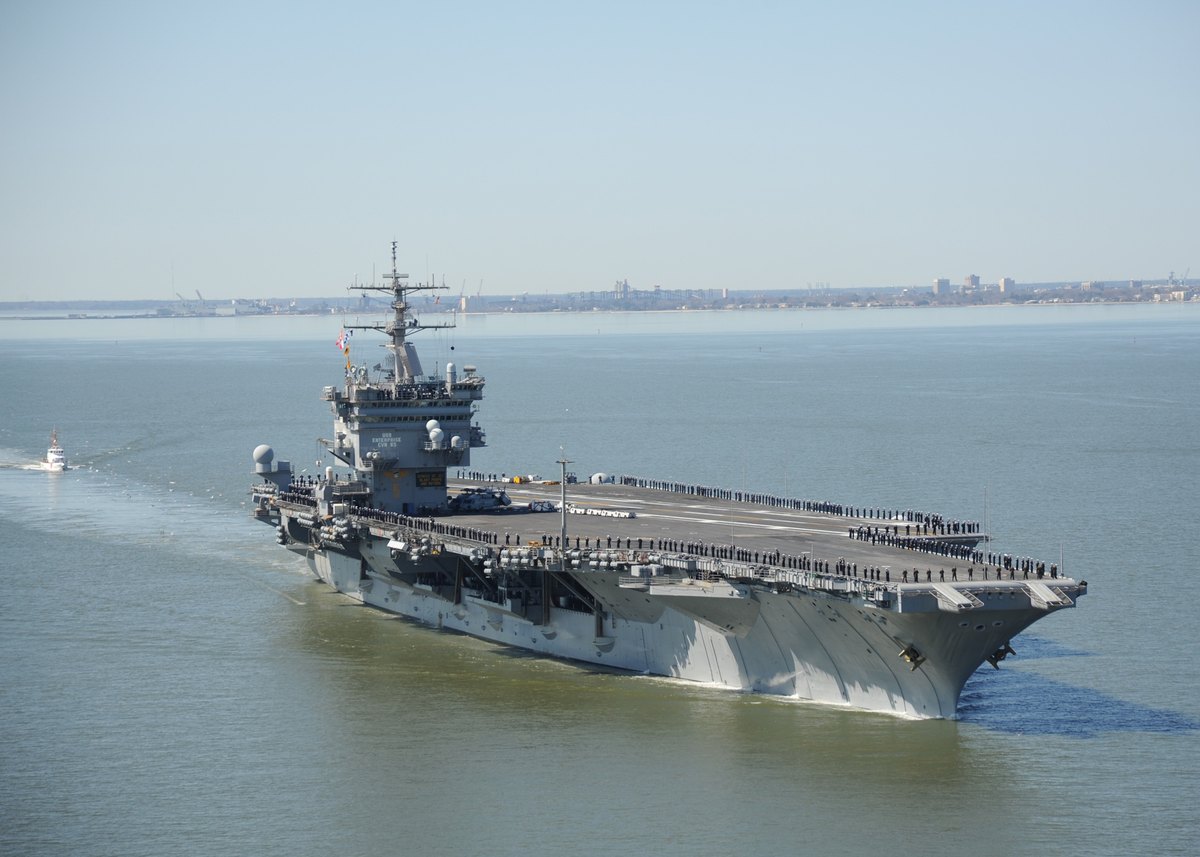
Enterprise left Naval Station Norfolk on its final deployment in March 2012 and was inactivated that December. Navy photos show tugboats moving it to Newport News Shipbuilding in June 2013.
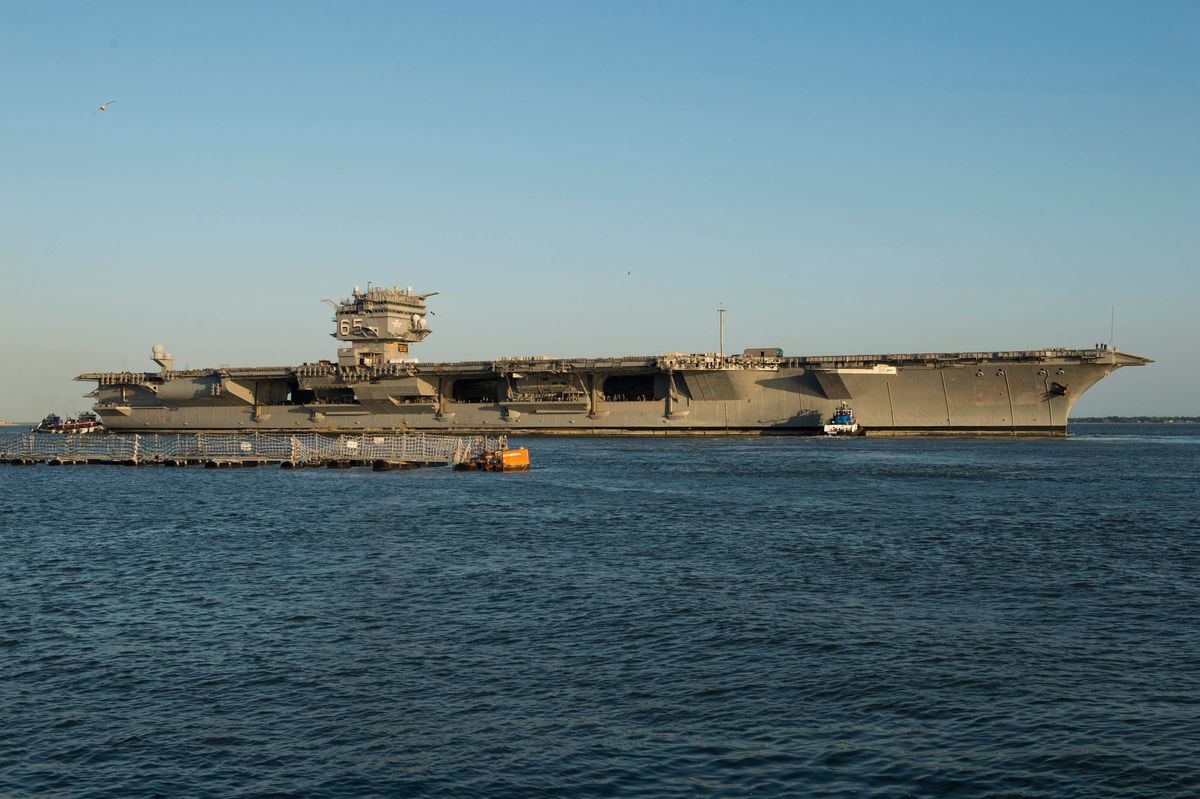
At Newport News, more than 1,000 shipbuilders defueled the carrier’s eight nuclear reactors. They also shut down its propulsion systems and prepared the hull for a final tow, Huntington Ingalls Industries said in April 2018. Chris Miner, then a vice president at the yard, called it a “bittersweet moment” for the company.
In the ship’s hangar bay on February 3, 2017, the Navy held the first decommissioning of a nuclear-powered carrier. Enterprise had been christened on September 24, 1960, by Bertha Irene Franke, wife of the Navy secretary at the time.
Eight Navy ships have carried the name, and the ninth will be the Ford-class carrier Enterprise (CVN 80). Retirement questions are now reaching later carriers too, as the Navy’s recent decision about the USS Nimitz showed.
Hundreds of small radioactive containers
Inside the hull, the eight reactor plants sit in four reinforced compartments. That detail comes from a 2022 draft environmental impact statement prepared by the Navy with the Department of Energy. The fuel is gone, but the plants are still aboard.
The draft compared several ways to dispose of the ship. Its preferred option was full dismantlement at a commercial yard in Virginia, Texas or Alabama. The reactor plants would be taken apart and packed into several hundred small containers.
Under that plan, the Nuclear Regulatory Commission would review the engineering documents and oversee the work. The draft listed three candidate sites for the low-level radioactive waste. They were Waste Control Specialists in Texas, EnergySolutions in Utah and the Energy Department’s Savannah River Site in South Carolina.
Earlier Navy reactor compartments went by barge to a burial trench at the Hanford Site in Washington. In 1999, a reactor vessel from Oregon’s Trojan plant made a similar trip.
No dismantling timeline made public
Neither the Corps nor the Navy gave a schedule for cutting up the carrier. Their November releases also left out how deep the new berth will be. Nor did they name the site that will take the radioactive parts.
The 2022 environmental document was a draft. Later decisions may have changed some of its choices, and those were not part of these announcements.
The Corps described the permit in a news release on November 13. The Navy announced the tow in a statement on November 2, and Huntington Ingalls Industries reported the end of the inactivation in an April 2018 release.
Photo: U.S. Army Corps of Engineers Mobile District / Jeremy Murray