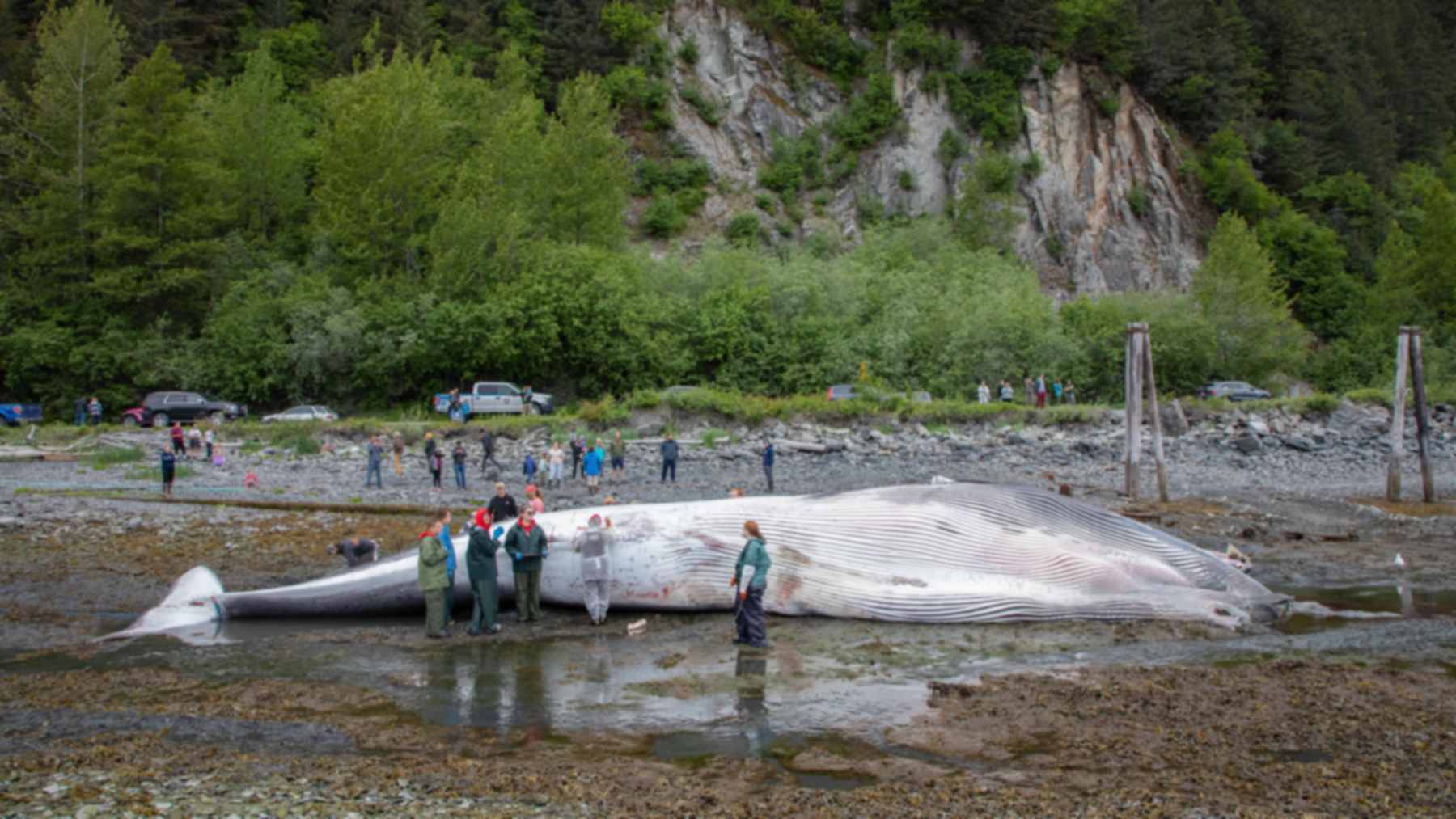
A fin whale found dead on the front of a cruise ship in Seward, Alaska, was pregnant, and her injuries were consistent with a vessel strike. NOAA Fisheries set out the findings in a feature story published on November 16. Her unborn calf died of the same blunt force trauma.
The 61-foot adult female was spotted on the bulbous bow of Royal Caribbean’s Ovation of the Seas. That is the rounded protrusion at the front of the hull. The whale was seen as the vessel docked in Seward on June 19, 2026.
What the necropsy found
NOAA’s marine mammal response staff carried out a necropsy, an animal autopsy, with the Alaska SeaLife Center and Alaska Veterinary Pathology Services. The work took place on a beach in Seward on June 20.
The first look showed the whale was freshly dead and in good nutritional condition. She was also pregnant, and fin whales are a species listed as endangered.
Final results identified severe blunt force injuries, including fractures to the jaw and spine and extensive bleeding. All of it was consistent with a vessel strike, according to NOAA.
A separate examination of the fetus found it was female. Its cause of death was also blunt force trauma, and a microscope exam showed bleeding in several tissues.
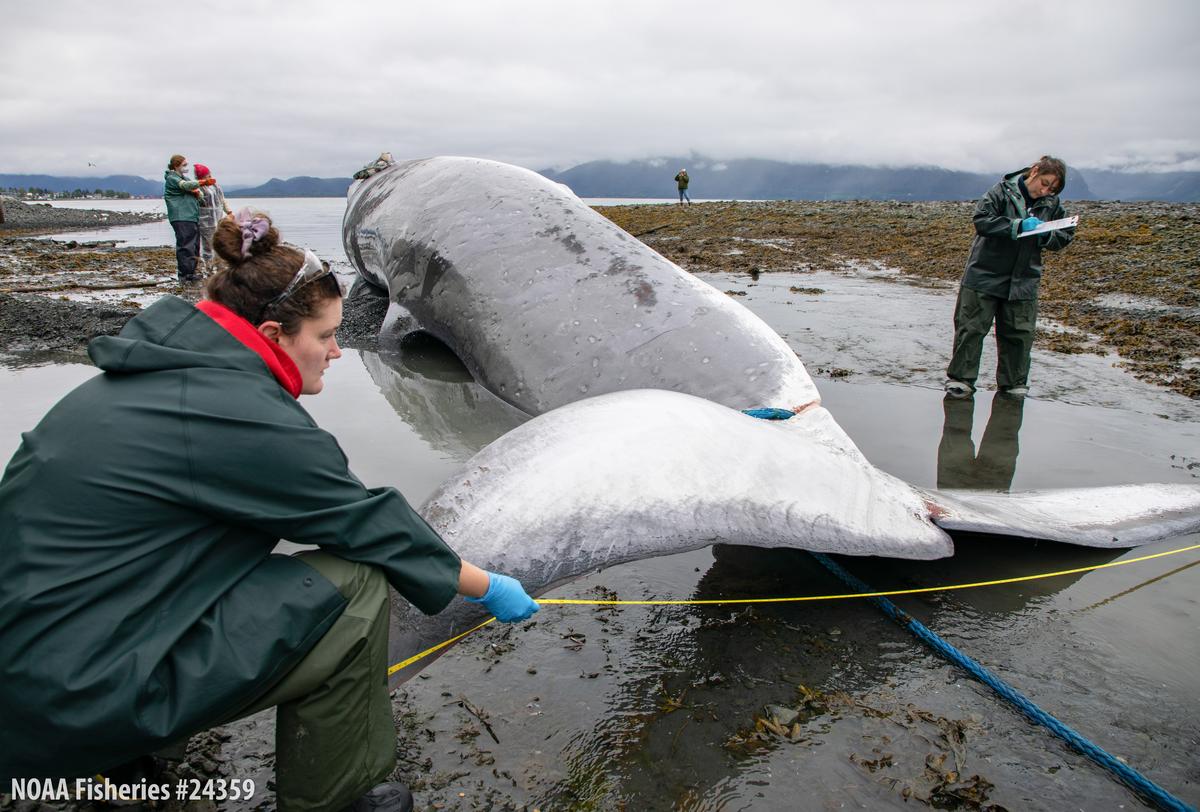
“Our necropsy findings are consistent with blunt force trauma, in this case from a vessel strike, as the cause of death for both the adult whale and her unborn calf,” said Dr. Emmanuelle Furst. She is the Alaska SeaLife Center veterinarian who conducted the necropsy.
An endangered giant
Fin whales are the second-largest whale species on Earth. They are listed as endangered under the Endangered Species Act and as depleted under the Marine Mammal Protection Act.
Even without ships, whale pregnancies do not always end well, as ECONEWS reported in the case of a humpback mother filmed beside her stillborn calf off Australia. In Seward, a single collision killed both mother and calf.
NOAA’s Office of Law Enforcement arrived shortly after the discovery. Its officers interviewed the captain and crew and reviewed the ship’s documents as part of their investigation.
Why many strikes go unseen
A vessel strike is any collision between a boat and a marine animal, according to NOAA. Vessels of any size can kill or injure marine life, and the bigger and faster the ship, the more likely a strike is fatal.
Cargo ships, cruise ships, whale-watching boats, ferries, military vessels and private craft have all been involved. Many strikes go unnoticed by the crew, happen in remote waters or leave carcasses that sink or drift away.
Eleven vessel strike incidents linked to cruise ships have been reported in Alaska since 2001, NOAA says. Not all were confirmed, and not all were shown to have killed the whale. Ships are not the only hazard, as shown by a young humpback freed from two crab pots near Juneau in May.
Slower ships, sharper eyes
“Accidental collisions with vessels are a serious threat to this endangered species,” said Dr. Anne Marie Eich, who leads NOAA Fisheries’ Alaska Region Protected Resources Division. NOAA says it is working with vessel operators to raise awareness of the importance of reducing speed where practicable in areas with many whales.
After the whale was brought into port, Royal Caribbean Group approached NOAA to explore stronger whale-strike avoidance efforts. Options include potential technology solutions, speed reduction protocols and other operational safeguards, NOAA says.
Reducing speed is the most important factor in lowering the risk of a collision, according to NOAA’s tips for mariners. The tips also include planning passages around whale concentrations and keeping a dedicated watch.
The agency also teaches vessel operators about responsible boating. By following its marine mammal viewing guidelines, it says, mariners play a vital role in cutting the risk of collisions with whales.
Mariners and the public can report live, dead or distressed whales through the free Whale Alert app. A separate network, Whale Alert Alaska, lets bridge officers on large ships share sightings along their routes.
What happened to the whale
NOAA worked with local Alaska Natives so they could harvest meat, blubber and baleen for subsistence and handicraft use. Those activities are permitted under federal wildlife law.
On June 24, five days after the ship docked, Storm Chasers Marine Services towed the remains out to sea to sink them. That ending was far quieter than Oregon’s infamous 1970 attempt to blow up a dead whale with dynamite.
Photo: Alaska SeaLife Center/Kaiti Grant (NOAA Fisheries permit #24359)