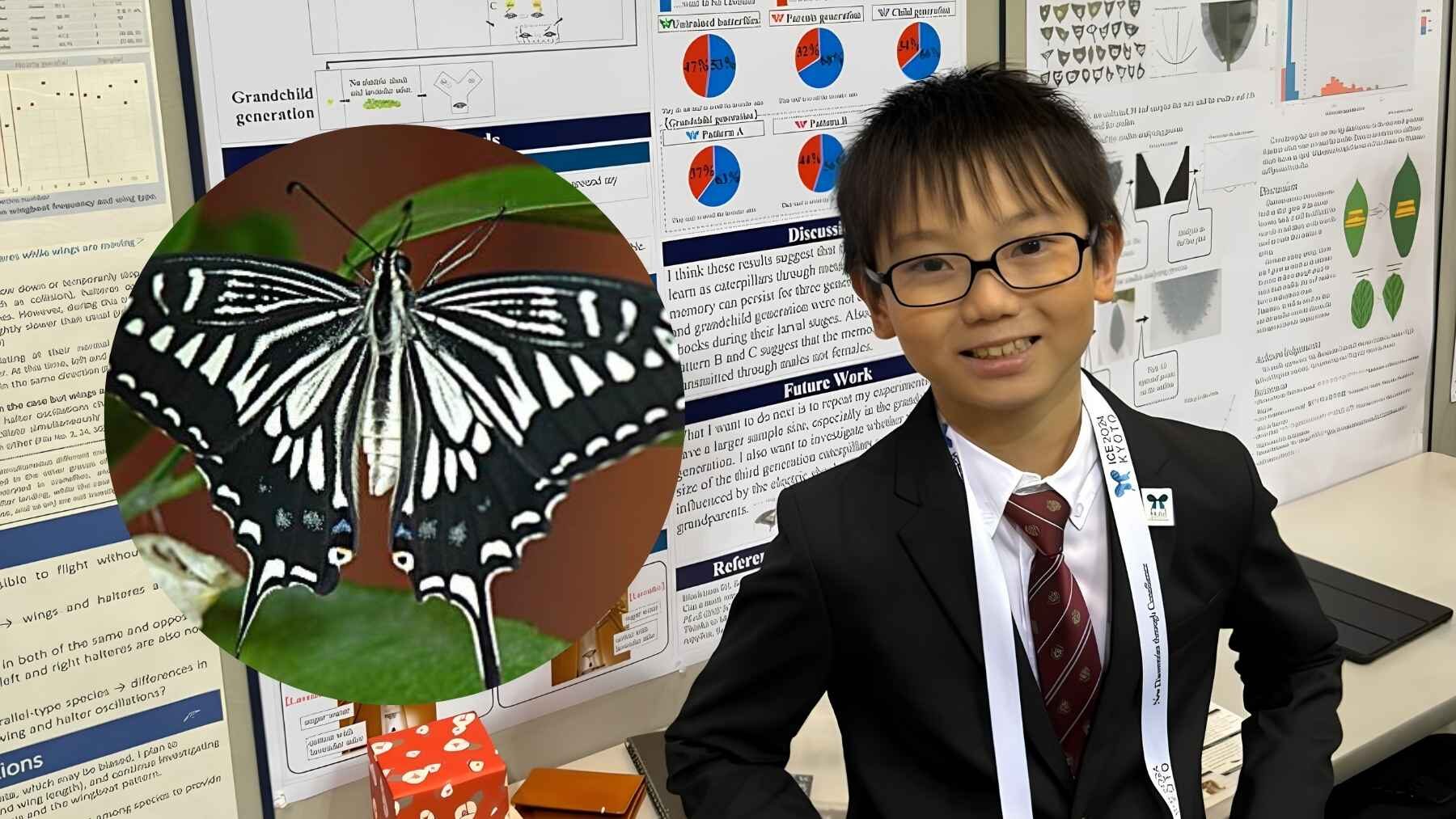
Jo Nagai was 10 years old when his swallowtail butterflies that he raised at home led him to a question that is really deep when we talk about biology and science in general. As it turns out, during their caterpillar stage, he associated the smell of lavender with a very unpleasant sensation (a small electric shock). And what was the result? Seven out of ten adult butterflies ended up avoiding that same smell. And probably this suggests something amazing: that the memory of a lesson might have survived metamorphosis. This is really revolutionary because the traditional idea was that inside the chrysalis, the caterpillars “melted” completely to become a butterfly.
So the question is: Can a butterfly carry a caterpillar’s lesson through the chrysalis?
A backyard question became a research project
All this started with an everyday observation in Kobe, Japan. Nagai butterflies used to fly around him when he tried to release them, so he asked himself: Do adult butterflies keep any memory from their “past lives”?
Taking his curiosity seriously he found a study from 2008 about moth-memory by Douglas J. Blackiston, Elena Silva Casey, and Martha R. Weiss. He did not doubt a minute to ask for guidance, leading to a correspondence that continued for many years. Together, they planned, conducted experiments, and checked the results of butterfly memory across multiple generations.
After all these investigations, Nagai on August 28, 2024 presented the project during a student poster session at the International Congress of Entomology in Kyoto. And what was really captivating was how the poster was presented: “Swallowtail butterflies remember what they learned as caterpillars, and the sex-linked memories persist for three generations.”
How the lavender experiment worked
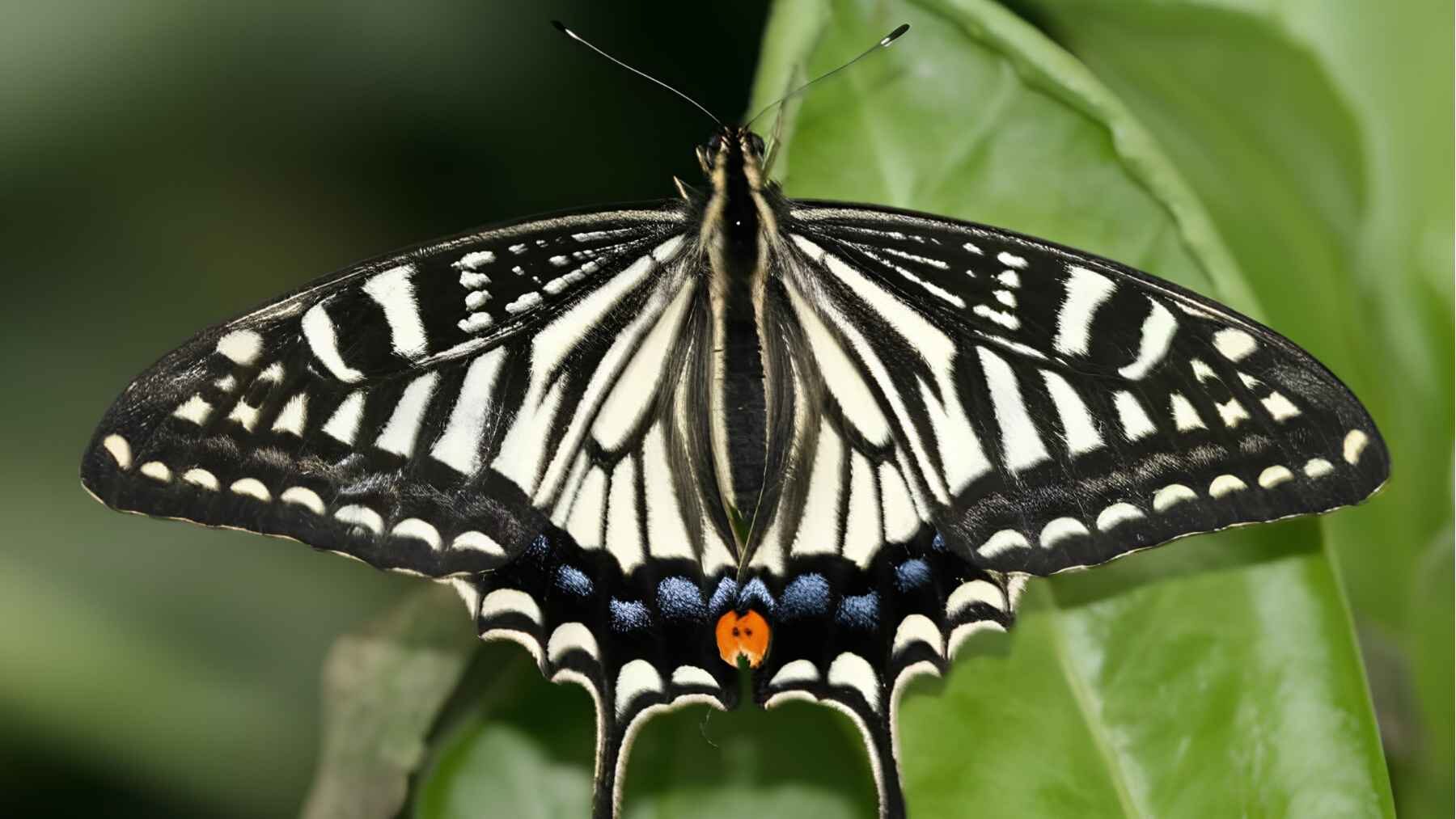
What about the species? Nagai used Asian swallowtail caterpillars, known scientifically as Papilio xuthus. He “taught” them to connect the smell of lavender with an electrical stimulus, teaching the insects that “lavender was an unpleasant experience”. Isn’t that amazing? Then he waited for them to pupate and emerge as butterflies.
With his investigation he suggested that their offspring and grandchildren “inherited” the fear of the smell without ever having received the electric shock.
What memory through metamorphosis means
Metamorphosis is the life-stage change that turns a caterpillar into a pupa and then an adult butterfly.
Earlier research shows why Nagai’s basic idea is scientifically reasonable. In the peer-reviewed 2008 PLOS ONE experiment, showed that tobacco hornworm caterpillars learned how to avoid the smell, and 77 percent of the resulting adult moths kept on avoiding it after the pupal period. But this study also revealed a limit: it only worked if the caterpillars “were trained” in their final stages of development.
The inherited memory claim needs caution
Maybe you are thinking that butterflies are not “remembering” the lavender the way a human would do: with images or thoughts. That is not the case. Actually, it works more as an inherited tendency to react differently to a smell, rather than a conscious memory.
Nagai said that this could be because of epigenetics. To make it clear, epigenetic processes can change how genes are used without rewriting the DNA sequence. Anyway, rejecting the smell by itself alone is not enough to confirm that this is the exact reason.
To confirm Nagai’s idea, the scientific community says that strong samples, statistical details and independent laboratory replications should be published.
Why the project drew scientific attention
It is really nice and inspiring that a kid turned a simple question from his garden into a serious experiment. He did not only challenge existing paradigms in biology, but also looked for experts for help and presented his work to professionals.
His age and background make the story unique. It is fascinating to see a 10-year-old child with this high level of curiosity and rigor.
What scientists need to see next
For now, everything that is available consists of conference presentations and abstracts, rather than a full, peer-reviewed paper in a major scientific journal. This means that other outside researchers still can not fully evaluate in depth the project’s design, statistics, or whether the generational pattern will hold up under different conditions.
If the results stand the test of time, this could deepen our understanding of how an insect’s early experiences influence an adult’s choices regarding food, host plants, and habitat.
Ultimately, science is always searching for greater precision, but what makes this story so remarkable is how a 10-year-old’s wonder managed to spark a question big enough for science to test.
The latest public abstract was published in the program of the Ecological Society of Japan’s 73rd annual meeting.