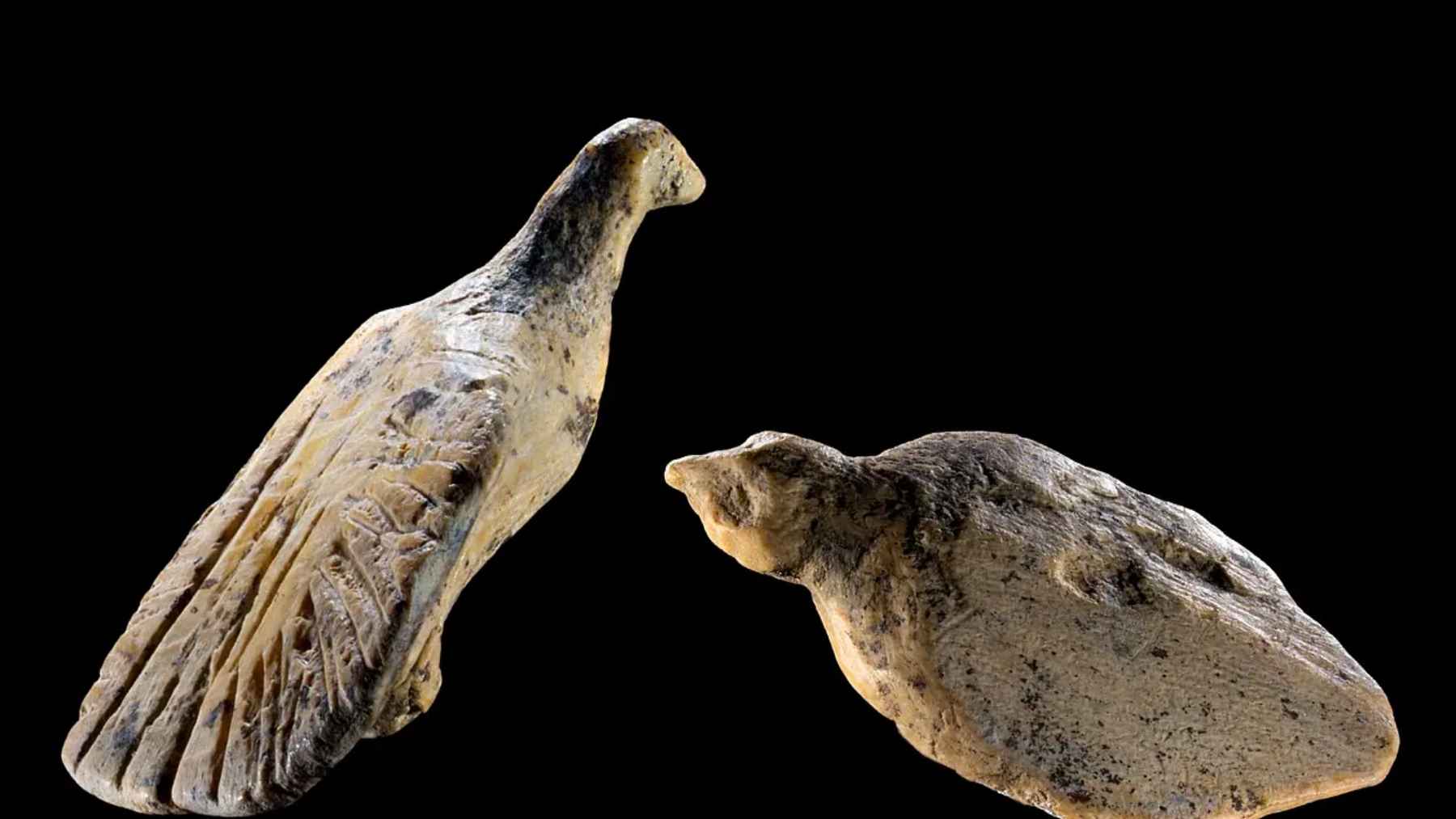
Archaeologists have found the smallest Ice Age artwork to date. Carved from mammoth ivory and discovered in Hohle Fels Cave in southwestern Germany, these two bird figurines are estimated at 40,000 years old.
About the size of thumbnails, one bird appears to be resting pensively, while the other is in flight or possibly displaying. The Swabian Jura World Heritage region was the search site where evidence of our ancestors’ keen interest in bird behavior was recorded. The fine, detailed carving on these artifacts serves as testament to their curiosity and observance.
Tiny carvings with remarkable detail
While most comparable Ice Age figurines are one to four inches long, the winged specimen stretches less than an inch in length. The carvings weigh 0.05 and 0.02 oz.
“The carvings are not highly stylized, but include many specific and unique details,” said excavation director Nicholas Conard, working in conjunction with Alexander Janas and Mohsen Zeidi at the University of Tübingen. Researchers can now discuss the species and actions depicted in the art.
Birds caught in motion
The rounded posture and tucked head of the complete figure suggests a bird possibly squatting over eggs. Researchers believe it to be a ptarmigan, whose cold-adapted body’s remains are commonly found in the cave.
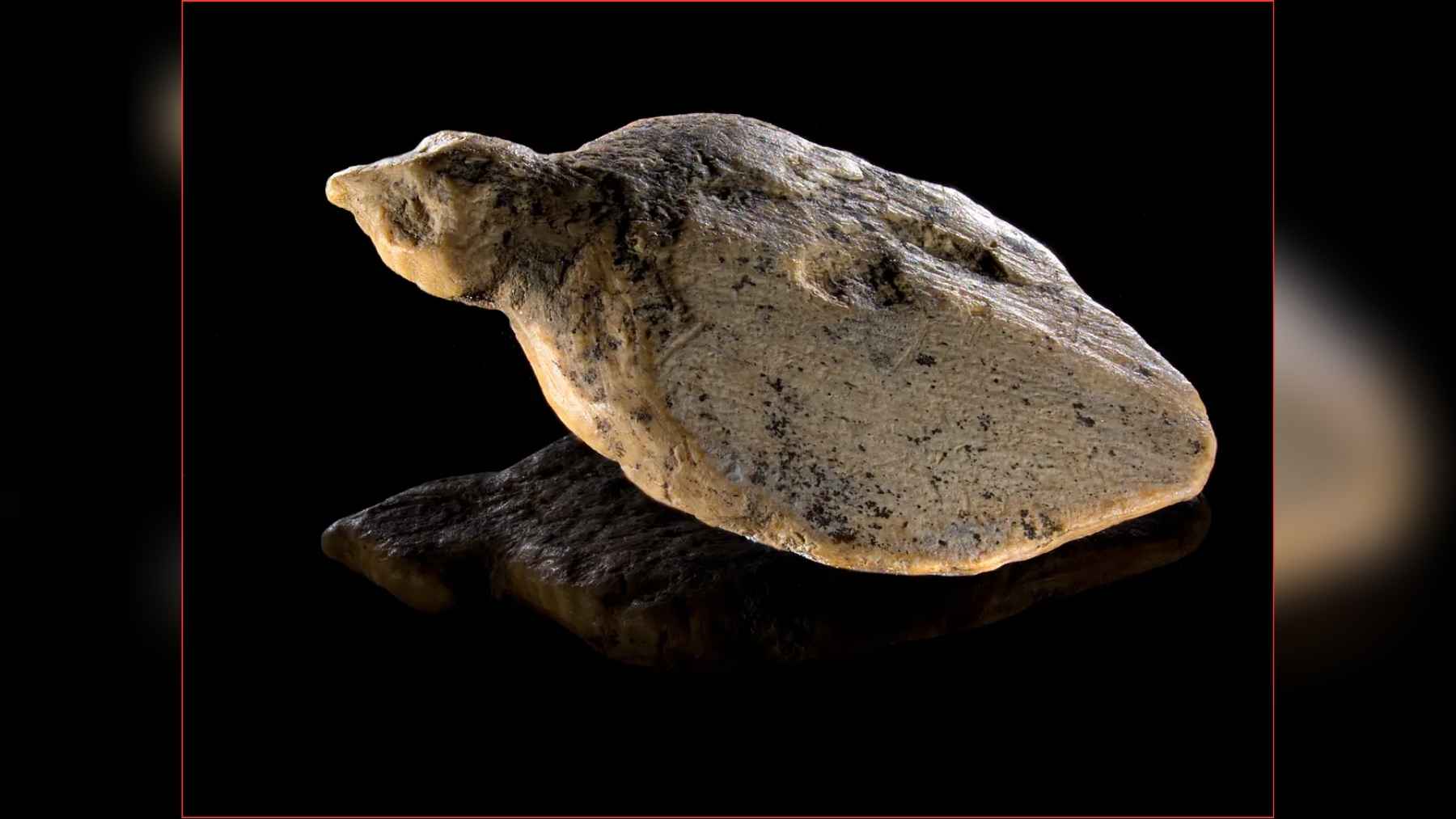
Scientists are unsure whether the incomplete figure depicts a grouse-like bird or bird of prey. It features spread wings and a long neck, with a well-defined bill. In flight, it appears to be landing on water, defending territory, or engaging in a show of courtship.
A signature of Hohle Fels
Discovered in the same Aurignacian layer/stratum only five feet apart, it is quite possible that they were carved by the same hand, although that is only speculation at this point. The Aurignacian people (or person) responsible for the artwork form part of early Upper Paleolithic nomads connected to humans migrating to Europe.
A water bird carving had been discovered prior to these two pieces, giving Hohle Fels three detailed bird depictions unearthed to date. Excavators have found mammoths, lions, bears, horses, fish, and bison at other Swabian Jura sites, but no birds. Analysts believe that different Ice Age tribes may have enjoyed different artistic trends.
What the figurines may have meant
No one is sure whether these artifacts served as tribal association markers, talismans, or just collector’s items carried by hunters and gatherers with sentimental value. In any case, small carvings can provide intriguing clues into the mindsets of early humans.
The pieces will be on display at the Museum of Prehistory and Ice Age Art in Blaubeuren until early April 2027. The museum works under the auspices of UNESCO’s list of caves and Ice Age art classification.
The official press release was published by the University of Tübingen.