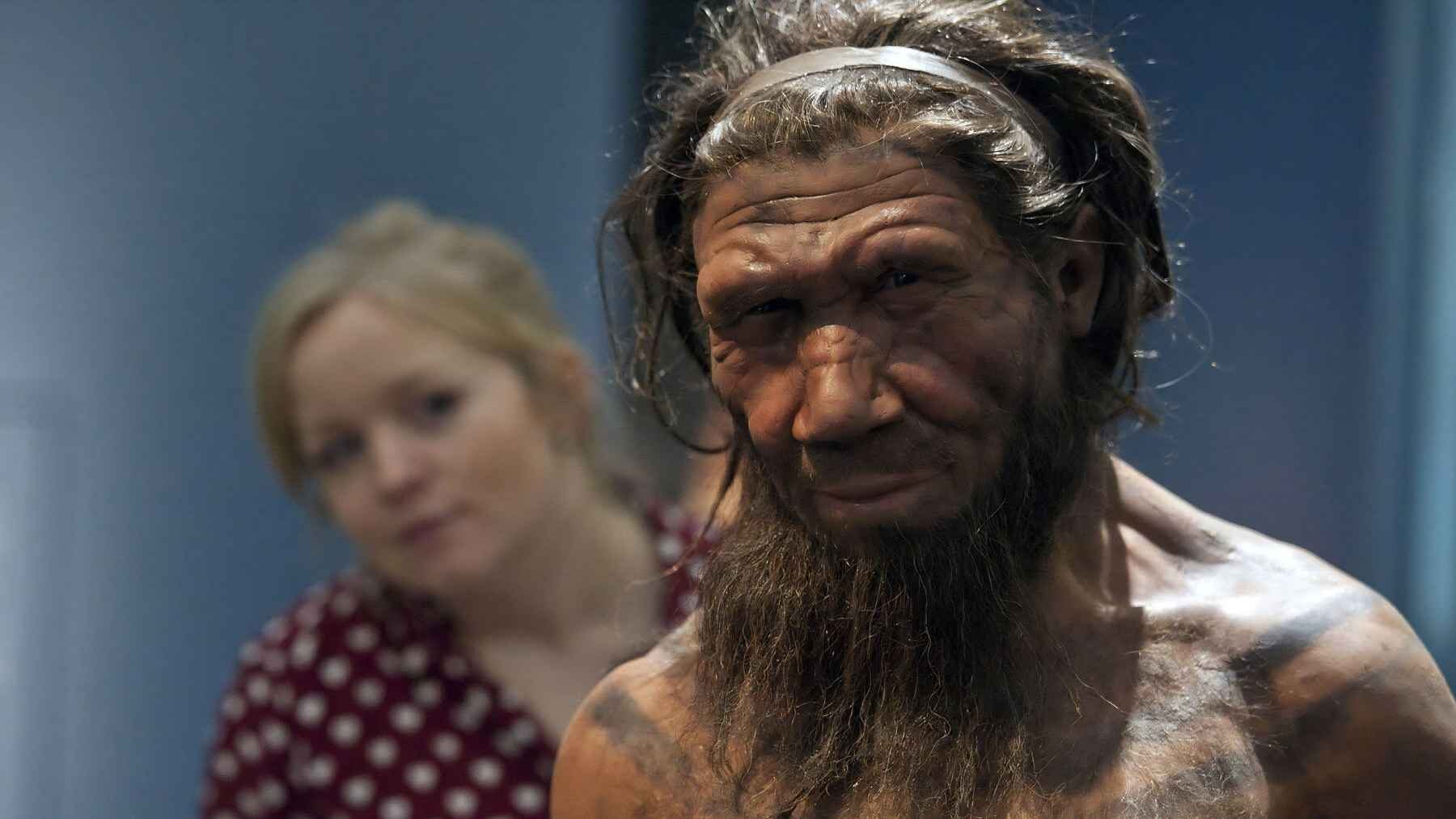
Mapping our evolution through hundreds of thousands of years can be like finding out you have 20 cousins you didn’t know about. New research led by the University of California, Berkeley has discovered genetic traces of two unknown archaic hominin groups alongside our well-known legacy of Neanderthals and Denisovans.
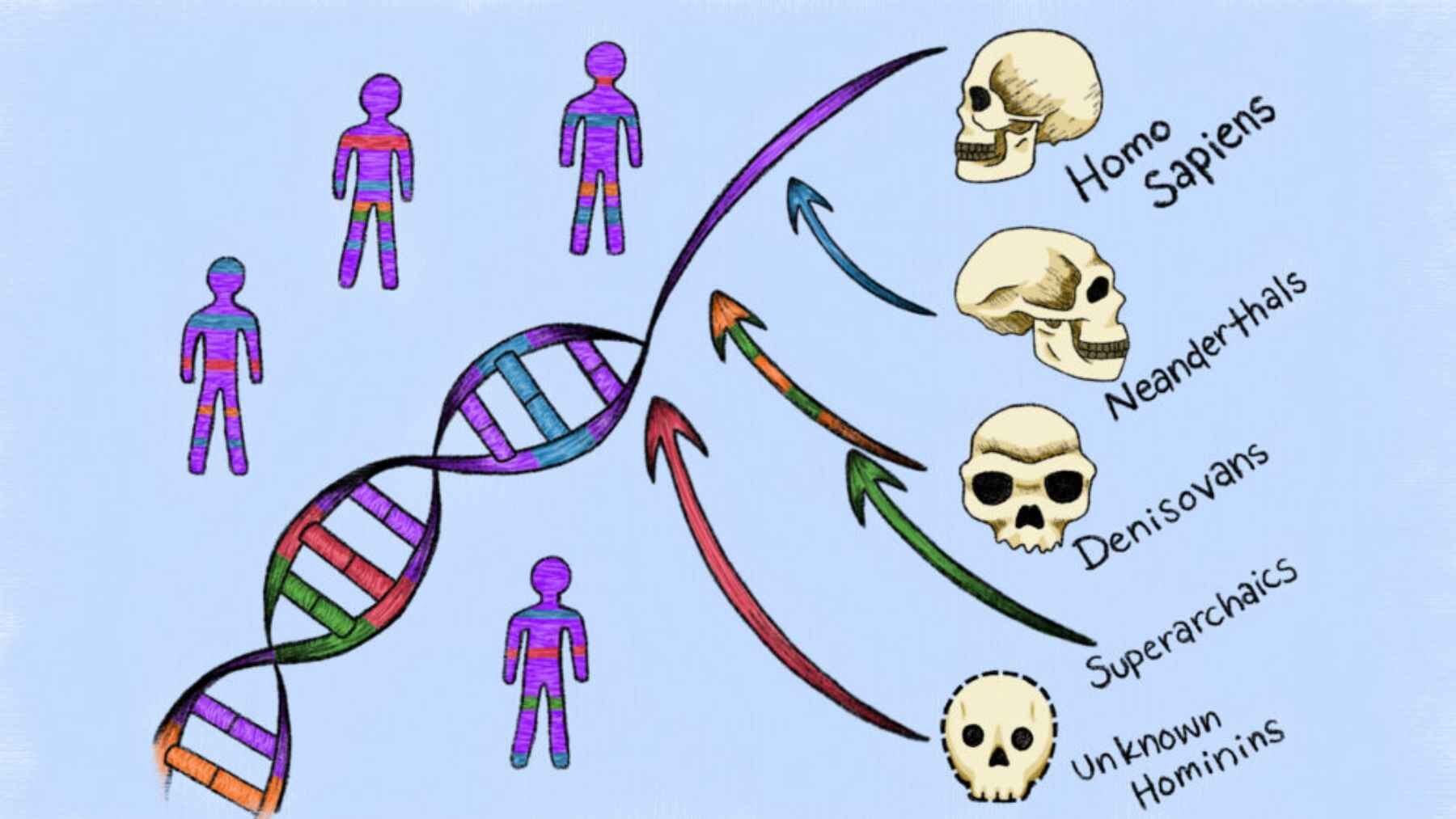
The findings push part of our genetic story much deeper into the past. A “ghost” lineage mixed with modern humans in Africa before the major movement into Europe and Asia more than 50,000 years ago, while a “super-archaic” population descended from a lineage stretching back about 1.8 million years. Across the archaic signals detected in the analysis, the team estimates that about 2% of the modern human genome is archaic in origin.
A hidden chapter in human DNA
An archaic hominin is an ancient member of the wider human family, including extinct groups closely related to us. Genome studies have already shown that most people with ancestry outside Africa carry about 1% to 2% Neanderthal DNA. Denisovan ancestry is lower in many populations but can reach several percent in parts of Asia and Oceania.
Those discoveries depended heavily on DNA recovered from ancient bones and teeth. The trouble is that usable DNA is rare, and heat, moisture, and time can erase it. That makes unknown populations especially difficult to detect when no fossil genome has survived.
How TRACE reads the past
The team developed a computational method called TRACE. Its name refers to tracking archaic contributions through ancestral recombination graphs, which are maps of how pieces of DNA are related through shared ancestors. Instead of comparing living people with a known fossil genome, the method reconstructs genealogical relationships across hundreds of present-day genomes and searches for stretches whose ancestry reaches unexpectedly far back.
Think of it as finding an old signature inside a book even though the person who wrote it is gone. The signature does not reveal a face or a species name, but it shows that somebody else was part of the story. Priya Moorjani called these methods “the next frontier in this field” because they can uncover hidden episodes without ancient DNA.
The African ghost lineage
Using TRACE, the scientists found a lineage that split from the branch leading to modern humans around 800,000 years ago.
It later mixed with Homo sapiens in Africa before the most recent large migration out of the continent. Because its DNA appears in African and non-African populations, the mixing likely happened before those populations spread widely across the world.
Yulin Zhang said the team could map the genomic locations and show that “this ghost ancestry is in all modern humans.” Each individual carries an estimated amount between half of 1% and 1% from this lineage.
Earlier research had already suggested that unknown archaic groups contributed DNA to some African populations, but the new work goes further by placing the event in time and tracing the segments across people with different ancestries.
A much older route through Denisovans
The second signal followed a more indirect path. This super-archaic population descended from a lineage dating back almost 2 million years and appears to have interbred with Denisovans in Eurasia more than 200,000 years ago.
When Denisovans later mixed with Homo sapiens, a small amount of that much older DNA came along.
The signal is strongest in people from Oceania, where Denisovan ancestry can be relatively high. Arjun Biddanda, a postdoctoral researcher at Johns Hopkins University, called the result especially striking because no DNA from the super-archaic population has ever been sequenced.
Its age overlaps with the presence of Homo erectus in Eurasia, but the study does not identify that species as the source.
Why some archaic DNA survived
Many of the ancient segments appear in parts of the genome linked to immune defenses and metabolism, the processes the body uses to turn food into energy. That pattern suggests some inherited variants may have helped people face unfamiliar pathogens or food sources. It does not prove that every segment was useful.
The researchers said interbreeding introduced new genetic variation, giving natural selection “additional raw material” to work with.
In practical terms, a helpful variant could become more common over many generations because its carriers were more likely to survive and have children. Some useful changes may have lasted, while other fragments may have persisted by chance.
Human evolution looks more like a web
The findings challenge the simple picture of human evolution as a series of clean branches that never touched again. Ancient populations moved, met, separated, and sometimes had children together. Our history now looks more like a complex web than a tidy tree.
Researchers hope that larger and more diverse genome databases will reveal even fainter signals from other unknown lineages. More Denisovan genomes would sharpen the picture, while recently recovered protein sequences from Homo erectus fossils may offer clues about the super-archaic ancestor. TRACE could also be used to investigate hidden ancestry in other species.
So, are these two groups the last unknown relatives hiding in our DNA? Probably not.
The full study was published online in Science.