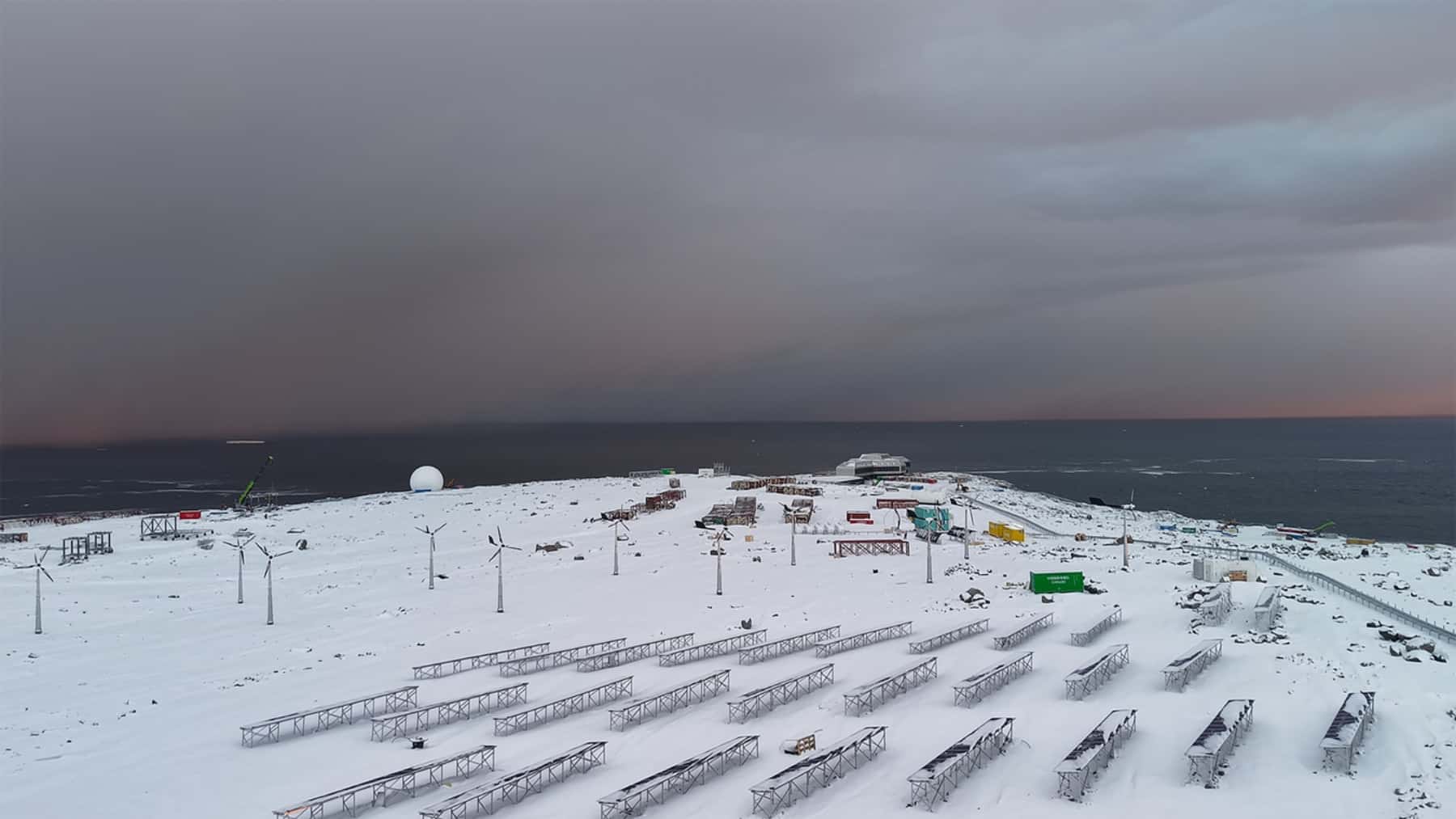
Imagine a place where the winds blow stronger than a hurricane, the temperature drops below -40°C, and the sun simply disappears for half a year. That place is Antarctica, and there, keeping a research station running is a nearly impossible challenge. Until now, most bases have survived on diesel generators, with all the cost, risk, and environmental impact that entails. But China has decided to change that. That’s because at its new Qinling station, located on Inexpressible Island, engineers have installed something many would call impossible: a clean energy system that continues to function even when winds reach 186 mph.
Antarctica’s energy nightmare
Let’s remember that Antarctica is by far the most hostile environment on the planet for any energy infrastructure. After all, temperatures of -50°C render standard batteries nearly useless, while wind gusts above 300 km/h destroy conventional turbines. Add to this the phenomenon of polar night, six months without sunlight, and the result is a true logistical nightmare.
Historically, the simplest solution has been to burn diesel. This is because it guarantees constant and reliable energy, but the price is extremely high. The reason is that the fuel needs to be transported once a year, on complex missions involving icebreakers and military aircraft. Not to mention the environmental risk: “Every station that has oil or other fuels has had spills,” recalls Daniel Kammen, a professor at the University of California, Berkeley.
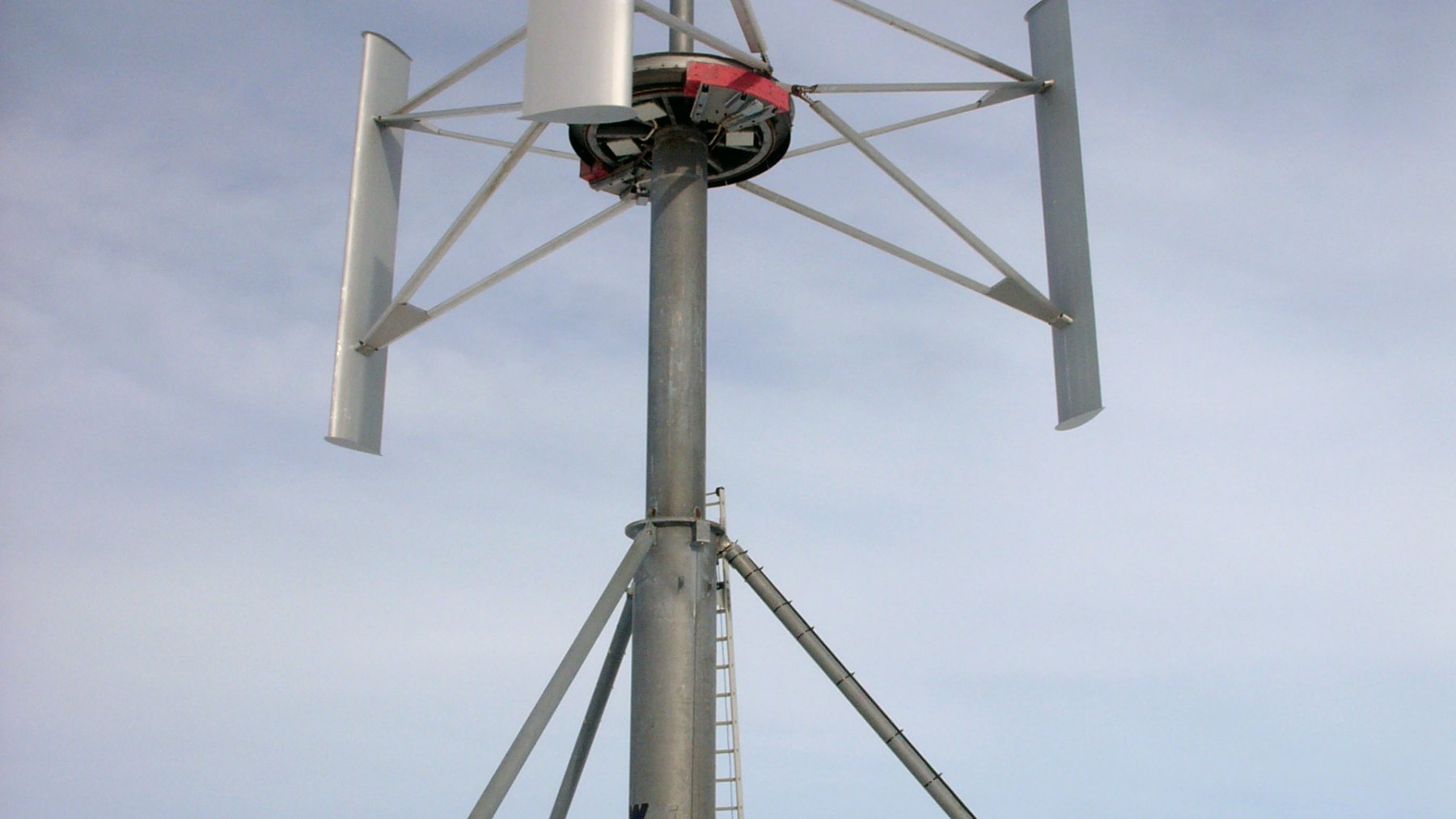
Thinking about wind turbines, they would need to withstand winds of up to 186 mph (300 km/h). In other words, conventional turbines would simply break. To overcome this, the Chinese team redesigned the equipment, using materials like carbon fiber and shorter, stronger structures. As Sun Hongbin, chief scientist at the China Polar Research Institute, explained:
“It was a huge challenge to build a system for the Earth’s coldest, darkest and most remote continent.”
Inside a lab in China, engineers tamed storms and freezing cold to power Antarctica
The real innovation began years earlier, inside a 2,000-square-meter laboratory at Taiyuan University of Technology, where engineers created artificial storms, gusts of 216 km/h, and temperatures of -50°C to test new solutions. This simulation gave rise to turbines with radical designs. Instead of long, pinwheel-like blades, some used the “eggeater” shape, which reduces wind pressure on the blades and lowers the center of gravity. Others maintained the traditional shape but with carbon fiber blades, capable of withstanding extreme cold without breaking.
Not stopping there, the batteries also needed to be changed. Standard lithium freezes and loses efficiency; the team adopted lithium-titanate batteries, enclosed in thermal boxes. The ingenious detail is that the system reuses the heat generated during the charging and discharging process to keep the batteries themselves warm. In other words, they use the cold against themselves. Remember, it was also in Antarctica that China found energy for millennia.
The secret weapon powering Antarctica through a year of darkness
But the real powerhouse of the system comes to the forefront here: hydrogen. So-called “frozen energy” is produced when excess electricity from turbines and panels splits water molecules into oxygen and hydrogen. The hydrogen is then stored in high-pressure tanks, ready for use during the months when the sun doesn’t rise. And this is the key, because unlike conventional batteries, which store energy for days, hydrogen can be stored for over a year.
And what does all this mean beyond Antarctica? It means that the technologies tested there can be adapted to polar regions, deserts, or any other place where maintaining stable power is expensive or risky. After all, if it works in the eternal cold, under 186 MPH winds, why wouldn’t it work anywhere else in the world? Speaking of strong winds, Japan recently launched a turbine that can survive even typhoons.
Disclaimer: Our coverage of events affecting companies is purely informative and descriptive. Under no circumstances does it seek to promote an opinion or create a trend, nor can it be taken as investment advice or a recommendation of any kind.