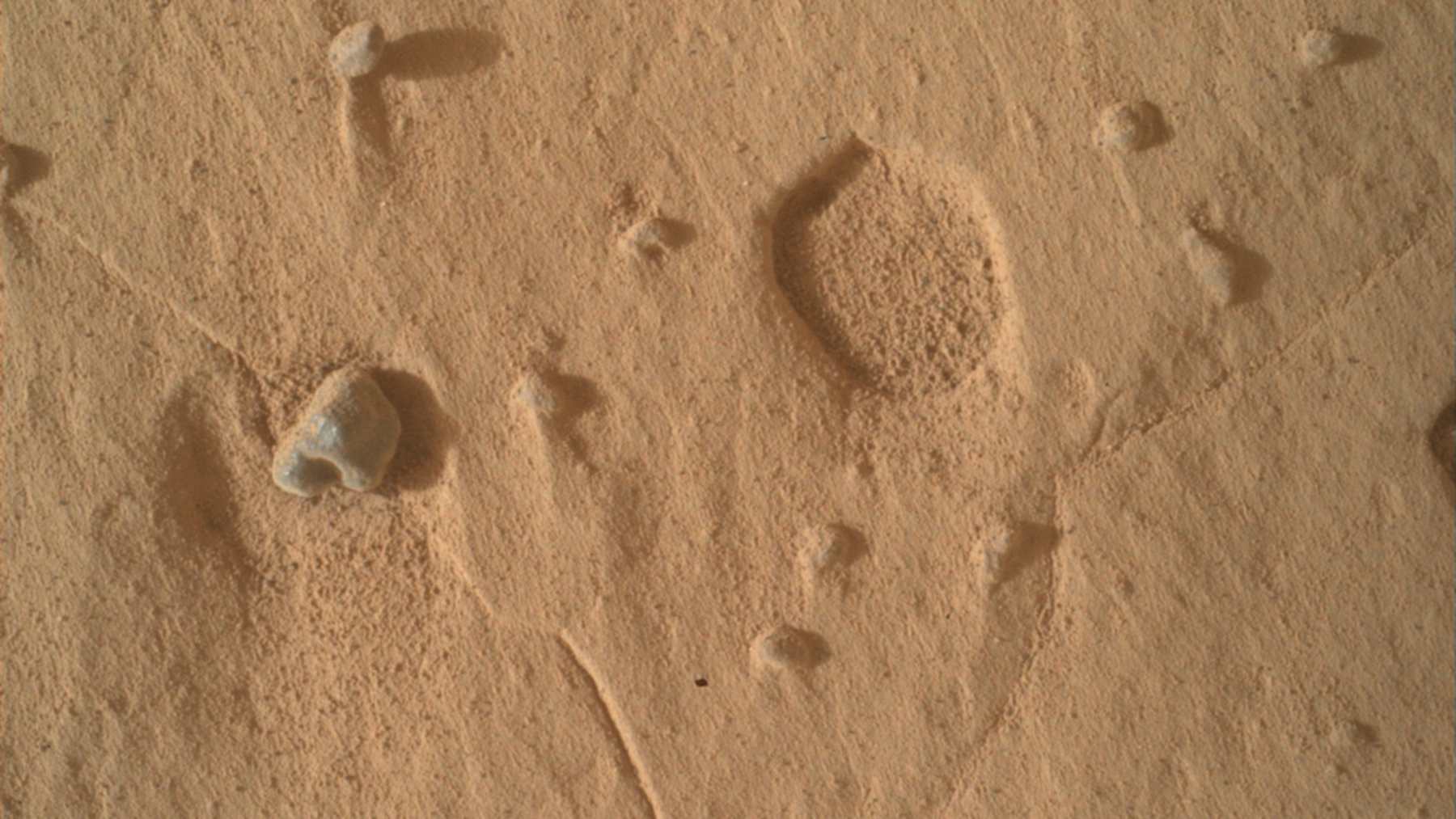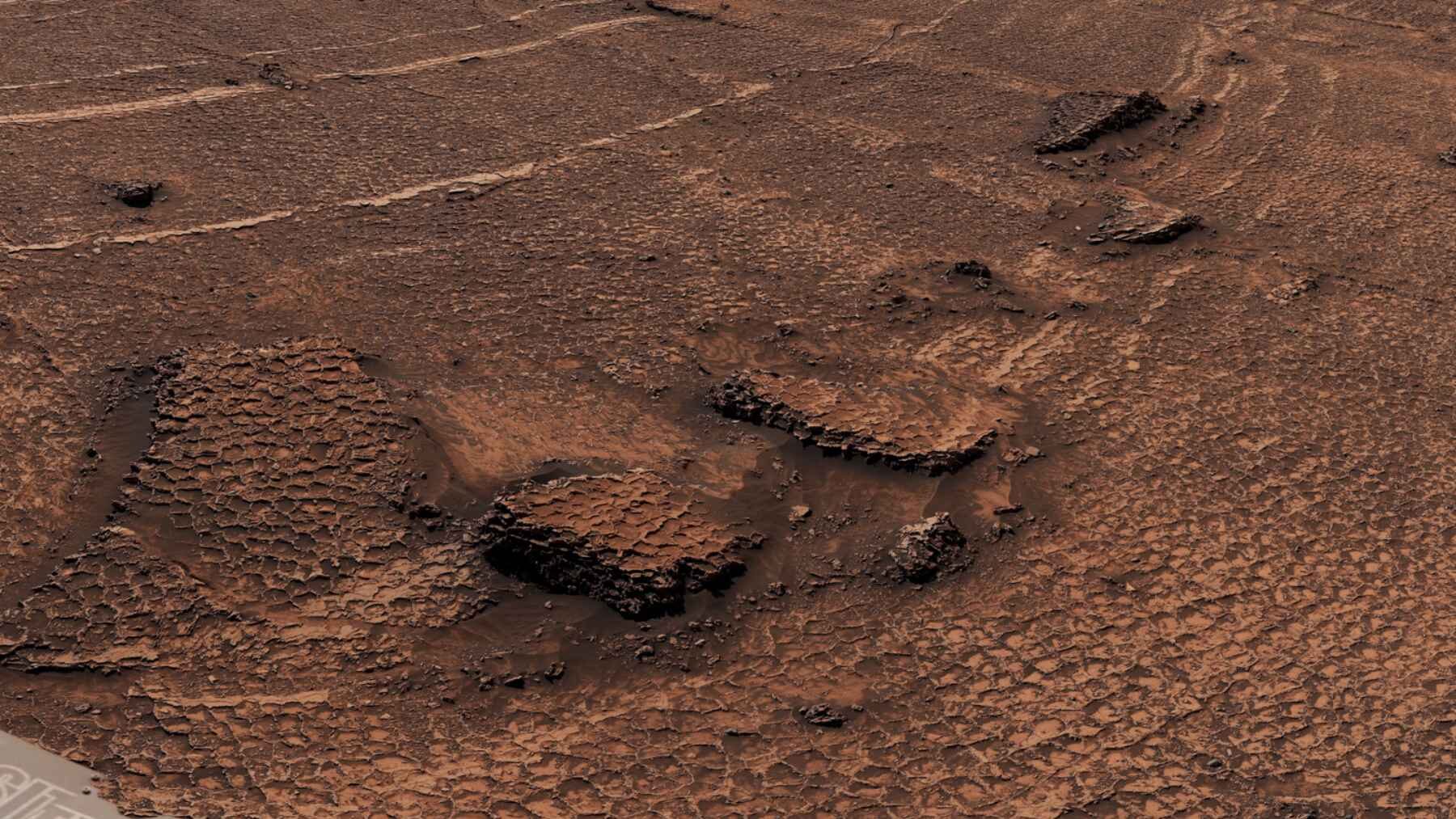
NASA’s Curiosity rover has entered a Martian landscape that looks as though someone pressed a honeycomb into stone. The newly photographed polygonal fractures extend across Valle Grande in Gale Crater, yet the individual cells are not giant at all, measuring only about 1.5 to 3 in. (4 to 8 cm) wide.
NASA detailed the discovery on July 29, 2026, but the main conclusion remains open. Curiosity had encountered small patches of similar geometry before, yet scientists still do not know which physical process created this extraordinary field.
A panorama full of polygons
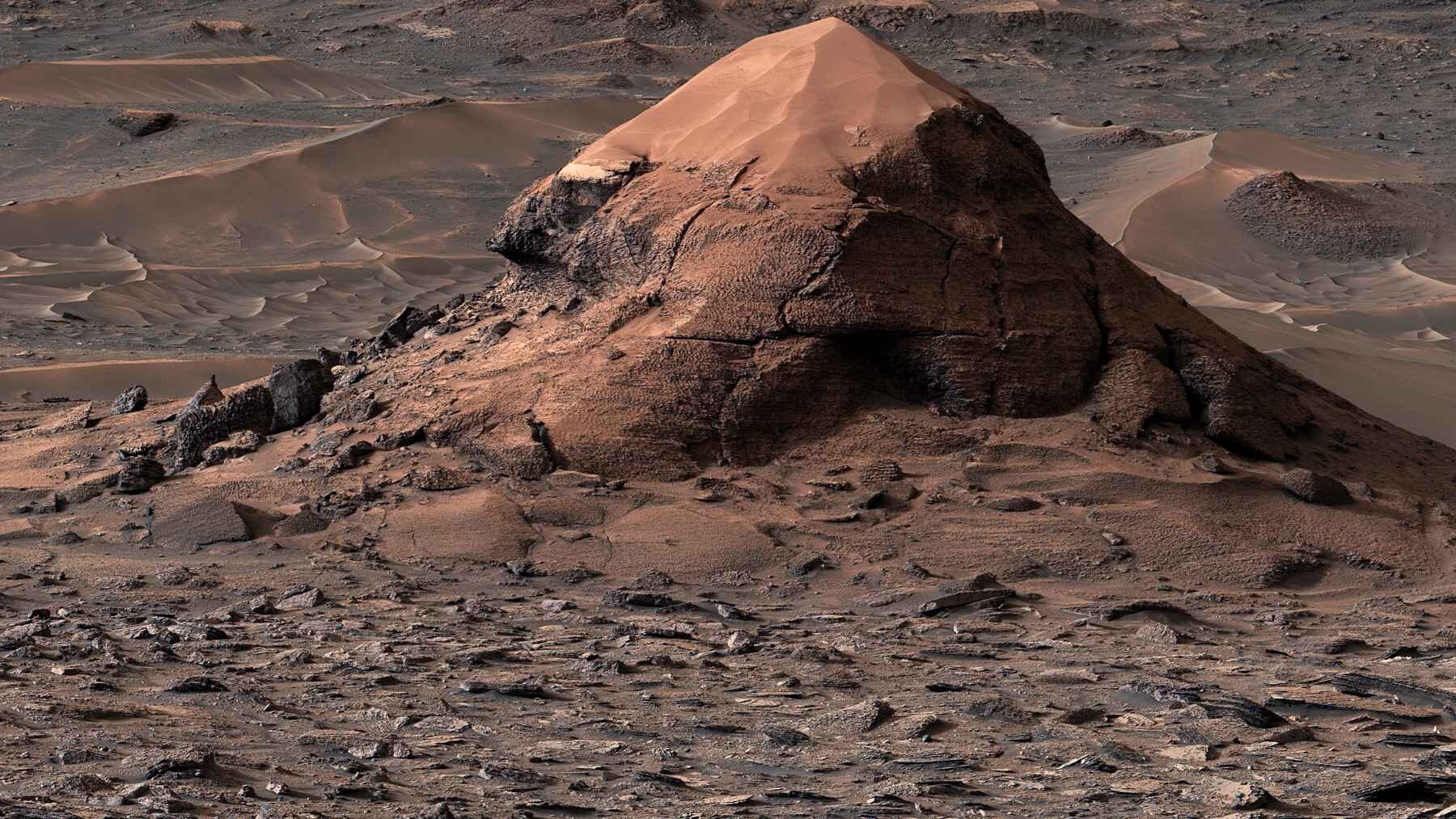
On June 19 and 20, 2026, during mission sols 4,930 and 4,931, Curiosity assembled a 360-degree panorama while beginning to climb the valley informally called Valle Grande. The polygons continue toward the horizon and curl around Miraflores, a nearby sand-capped butte about 20 ft. (6 m) high.
Mission project scientist Ashwin Vasavada said “this sea of polygons took our breath away.” That reaction makes sense when the view is seen at landscape scale, but the science will come from much closer comparisons of each raised edge and flatter center.
Huge field, small cells
The word “giant” can be misleading here. The field is immense from the rover’s point of view, while each polygon is only a few inches across, so the discovery is not a cluster of towering honeycomb structures but a broad rock surface divided into countless small shapes.
That distinction matters because the team is carefully measuring the shapes and chemistry of the formations. What resembles a decorative pattern in the panorama is really a collection of geological boundaries that may preserve information about how the surrounding sediment changed.
Three possible origins
What can make Martian rock break into such orderly shapes? Some earlier Curiosity polygons clearly began as mud cracks, while NASA says honeycomb textures can also develop through repeated warm and cold cycles or compression after burial, when overlying material squeezes water from sediment.
Valle Grande’s field has not yet been assigned to any of those explanations. Researchers are therefore comparing its geometry and chemical composition rather than immediately declaring it another ancient mudflat.
Curiosity reads the pattern
The mission team has directed Curiosity’s APXS, MAHLI, and ChemCam instruments toward both polygon ridges and centers, while Mastcam has surveyed the broader terrain. Comparing these neighboring areas could reveal whether the raised edges contain different materials from the flatter rock inside each cell.
This is the patient part of rover science. A dramatic panorama gets attention, but repeated measurements may help researchers distinguish between cracks that formed at the surface and structures produced later by burial, changing temperatures, or water moving through sediment.
An older clue from wet and dry Mars
The closest precedent comes from a different Curiosity site called Pontours. A 2023 study in Nature reported centimeter-scale polygonal ridges enriched in sulfates and joined at Y-shaped intersections, evidence that fresh mud experienced repeated wet and dry cycles under a sustained and possibly seasonal climate roughly 3.8 to 3.6 billion years ago.
Those findings make the Valle Grande field especially intriguing, but they do not settle its origin. Similar-looking polygons can emerge through different geological processes, so visual resemblance is a useful starting point rather than a final verdict.
What it says about habitability
Curiosity has already shown that ancient Gale Crater contained water, chemistry, and nutrients capable of supporting microbial life. Lakes and streams once crossed the lower slopes of Mount Sharp, and the rover has detected carbon-based molecules believed to be precursors to RNA and DNA.
Still, this honeycomb field is not evidence that organisms lived there. Its value lies in reconstructing the environment, including how water moved through the area, how sediment dried or compacted, and how these processes became preserved in rock.
Fourteen years into the mission
Curiosity landed on Mars in August 2012 and has been climbing Mount Sharp since 2014, reading its stacked rock layers like pages in a weathered planetary archive. Valle Grande shows why that long journey still matters, since terrain that appeared smooth in orbital observations turned out to be crowded with fine-scale structures once the rover arrived.
What comes next is less cinematic but more decisive. The shapes and chemistry must be analyzed together before scientists can say whether this stone honeycomb records drying mud, temperature stress, buried sediment losing water, or another chapter in Mars’complicated geological history.
The official statement was published on NASA’s website.